

Reading library
Books worth reading.
These are some books that I found worth reading or have read multiple times.
- Total
- 430
- Nonfiction
- 363
- Fiction
- 67
Search
Search all book notes
/ to focus
Search titles, authors and overview descriptions.
Category All categories
Collection
Nonfiction 363
A 28 titles
-
 A Confession PhilosophyView on Amazon
Details
In this concise spiritual autobiography, Leo Tolstoy recounts the existential crisis that followed his literary success, wealth, and family life. He tests scientific, philosophical, and pleasure-based answers against the fact of death, then turns toward the lived faith of ordinary people and a personally reconstructed Christianity as a source of meaning.
-
 A Gentle Introduction to Unqualified Reservations Politics & SocietyView on Amazon
Details
A 2009 eleven-chapter compilation of Mencius Moldbug’s Unqualified Reservations essays, presenting a sweeping critique of democracy, progressivism, and modern administrative government. Moldbug recasts politics as a problem of institutional control and argues for replacing democratic sovereignty with accountable, centralized rule—using provocative historical analogies, internet polemic, and a proposed “reactionary” program.
-
 A Guide to the Good Life : The Ancient Art of Stoic Joy PhilosophyView on Amazon
Details
William B. Irvine presents Stoicism as a practical philosophy for reducing unnecessary distress and increasing appreciation of ordinary life. Drawing especially on Roman Stoic writers, he explains exercises such as negative visualization, distinguishing controllable from uncontrollable outcomes, voluntary discomfort, self-observation, and rational responses to anger, grief, status, aging, and death.
-
 A Random Walk Down Wall Street Finance & InvestingView on Amazon
Details
Burton G. Malkiel’s classic case for disciplined, low-cost investing. Using market bubbles, investment theory, and evidence on professional performance, he argues that investors rarely beat markets consistently and should favor broad diversification, regular saving, and index funds. The book concludes with practical guidance on asset allocation across an investor’s life cycle.
-
 Accelerate : The Science of Lean Software and DevOps Technology & ProductView on Amazon
Details
A research-driven guide to improving software delivery and organizational performance. Forsgren, Humble, and Kim analyze four years of State of DevOps data, arguing that speed, stability, quality, employee well-being, and business outcomes reinforce one another when organizations invest in the right technical, architectural, managerial, and cultural capabilities.
-
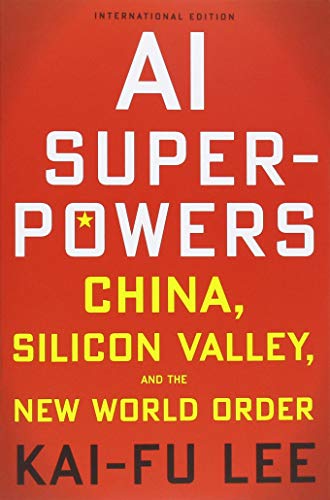 AI Superpowers : China, Silicon Valley and the New World Order Business & StrategyView on Amazon
Details
Kai-Fu Lee’s 2018 account of the U.S.–China AI race argues that China’s vast data, large market, aggressive entrepreneurs, and supportive state give it unusual advantages in applying AI, even as Silicon Valley retains research strengths. The book then examines AI-driven labor disruption and proposes human-centered ways to share responsibility and meaning with machines.
-
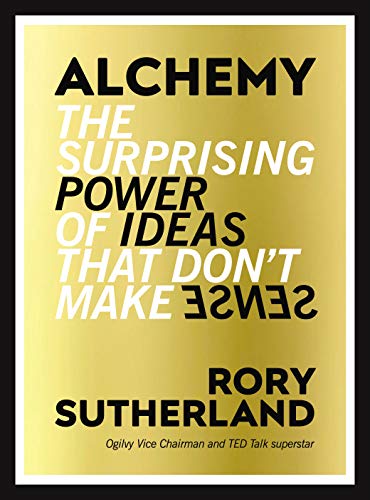 Alchemy : The Surprising Power of Ideas That Don't Make Sense Marketing & SalesView on Amazon
Details
Rory Sutherland argues that marketing, product design, and public policy improve when they account for how people actually perceive value—not how a rational model says they should. Using behavioral economics, advertising cases, and memorable anecdotes, he champions “psycho-logic”: testing counterintuitive ideas that change meaning, emotion, status, or experience rather than merely improving functional utility.
-
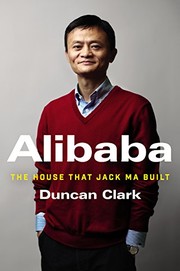 Alibaba : The House That Jack Ma Built Business & StrategyView on Amazon
Details
Duncan Clark’s insider-oriented account of Jack Ma and Alibaba traces the company from its 1999 apartment beginnings through the dot-com crash, SoftBank and Yahoo investments, Taobao’s defeat of eBay, and Alibaba’s 2014 IPO. Its larger subject is how China’s economic transformation created distinctive opportunities—and constraints—for internet entrepreneurs.
-
 All Marketers are Liars : The Power of Telling Authentic Stories in a Low-Trust World Marketing & SalesView on Amazon
Details
Seth Godin argues that marketing succeeds when it frames a product through a story customers already want to believe. The marketer’s task is not merely to list features, but to understand a target audience’s worldview, make a credible promise, and deliver an experience consistent with that promise. The provocative title ultimately points toward authenticity, not deception.
-
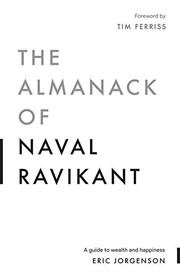 The Almanack of Naval Ravikant : A Guide to Wealth and Happiness Finance & InvestingView on Amazon
Details
Eric Jorgenson’s curated guide to Naval Ravikant’s ideas on wealth, judgment, and happiness, assembled from tweets, podcasts, interviews, and essays. Rather than offering a conventional financial plan, it presents compact mental models: pursue ownership and scalable leverage, develop distinctive skills, think long term, and reduce the desires that make happiness dependent on circumstances.
-
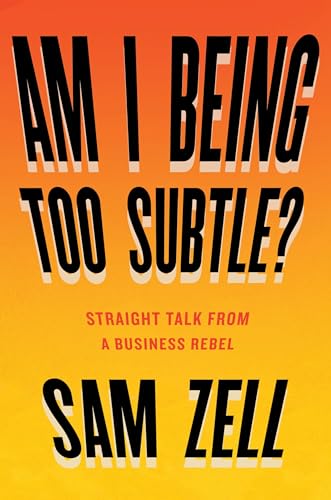 Am I Being Too Subtle? : Straight Talk From a Business Rebel Biography & MemoirView on Amazon
Details
Sam Zell’s memoir of building a diversified business empire through real estate, distressed assets, and contrarian investments. He combines career stories—including major successes, failures, and the Tribune episode—with blunt principles about risk, liquidity, ownership, negotiation, culture, and finding opportunity where conventional wisdom sees only trouble.
-
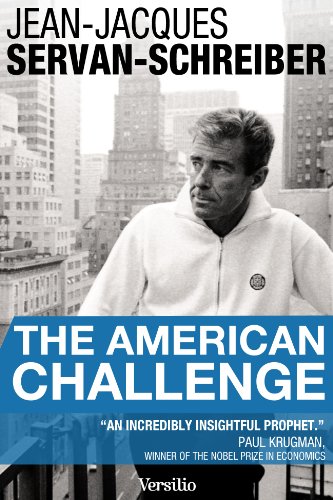 The American Challenge Business & StrategyView on Amazon
Details
A landmark 1967 diagnosis of Europe’s economic and technological vulnerability to the United States. Servan-Schreiber argues that Europe’s problem is not simply insufficient capital, but fragmented markets, weak management, inadequate research coordination, obsolete education, and political disunity. His proposed response is a more integrated Europe able to match American scale, innovation, and organizational capacity.
-
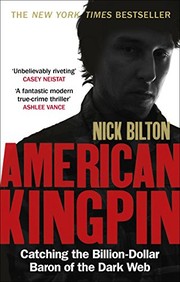 American Kingpin : Catching the Billion-Dollar Baron of the Dark Web Technology & ProductView on Amazon
Details
Nick Bilton’s narrative nonfiction account of Ross Ulbricht, the libertarian programmer behind Silk Road, and the international investigation that exposed his online drug marketplace. Combining cybercrime reporting with a suspenseful pursuit narrative, the book examines anonymity, Bitcoin, entrepreneurial ideology, law enforcement, and how technological systems can magnify both freedom and harm.
-
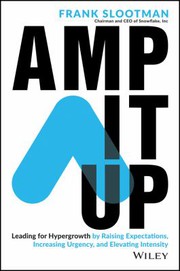 Amp It Up : Leading for Hypergrowth by Raising Expectations, Increasing Urgency, and Elevating Intensity Entrepreneurship & StartupsView on Amazon
Details
Frank Slootman’s leadership playbook for turning software companies into high-growth organizations. Drawing on his work at Data Domain, ServiceNow, and Snowflake, he argues that leaders create momentum by raising standards, aligning people, narrowing priorities, increasing urgency, and pursuing bolder strategies. The approach is practical, demanding, and especially suited to competitive technology businesses.
-
 Amusing Ourselves to Death : Public Discourse in the Age of Show Business Politics & SocietyView on Amazon
Details
Neil Postman argues that television does more than deliver information: it reshapes what a culture considers knowledge, public debate, education, religion, and politics. Comparing a print-centered “typographic” America with television’s image-driven culture, he warns that democratic life can decay not through censorship, but through distraction, trivialization, and entertainment becoming the dominant form of public discourse.
-
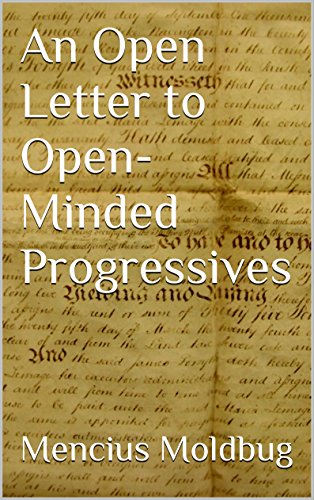 An Open Letter to Open-Minded Progressives Politics & SocietyView on Amazon
Details
A sprawling 2008 political polemic in which Mencius Moldbug asks readers to distrust inherited progressive assumptions about history, democracy, and government. He argues that modern states are ruled less by elected politicians than by an entrenched administrative-intellectual establishment, and proposes evaluating governments by performance rather than democratic legitimacy.
-
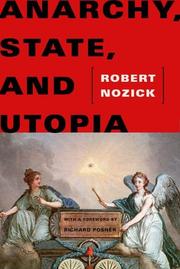 Anarchy, State, and Utopia PhilosophyView on Amazon
Details
Robert Nozick’s 1974 defense of individual rights, private property, and the minimal state. Moving from a Lockean state of nature through entitlement theory to a pluralistic account of utopia, Nozick argues that legitimate government may protect people from force, theft, and fraud but may not coercively redistribute holdings for patterned social goals.
-
 Antifragile : Things That Gain from Disorder PhilosophyView on Amazon
Details
Nassim Nicholas Taleb argues that resilience is not enough: some systems, organisms, strategies, and institutions improve when exposed to volatility, stress, and uncertainty. Drawing on probability, philosophy, economics, medicine, and biology, he develops practical principles for limiting ruin, benefiting from upside, and avoiding harmful overmanagement in a world that cannot be reliably predicted.
-
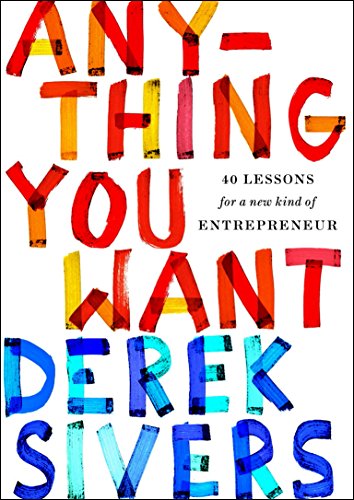 Anything You Want : 40 Lessons for a New Kind of Entrepreneur Entrepreneurship & StartupsView on Amazon
Details
Derek Sivers distills lessons from building CD Baby, an online marketplace for independent musicians, into a compact philosophy of entrepreneurship. The book argues that businesses should be designed around serving real people, personal autonomy, and “enough,” rather than growth for its own sake. It is part memoir, part practical manifesto, and part critique of conventional startup thinking.
-
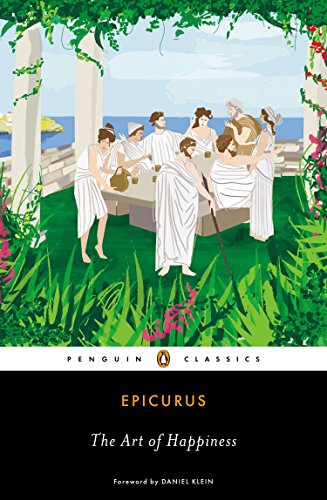 The Art of Happiness PhilosophyView on Amazon
Details
A compact Penguin Classics anthology of Epicurus’s surviving letters, doctrines, and sayings, translated and explained by George K. Strodach, with supporting passages from Lucretius and Diogenes Laertius and a foreword by Daniel Klein. It presents Epicureanism as a practical philosophy of tranquility grounded in desire-management, friendship, natural science, and freedom from fear.
-
 Art of Living : The Classical Mannual on Virtue, Happiness, and Effectiveness PhilosophyView on Amazon
Details
A brisk, contemporary rendering of Epictetus’s Stoic guidance on living well: distinguish what belongs to your agency from what does not, discipline judgments and desires, act honorably in your roles, and practice philosophy rather than merely discussing it. Sharon Lebell makes the material accessible, though this is an interpretive adaptation, not a scholarly translation.
-
 The Art of War PhilosophyView on Amazon
Details
An early Chinese treatise on strategy, command, intelligence, deception, logistics, and the political costs of war. Organized in thirteen compact chapters, it argues that effective victory comes from shaping circumstances before battle, preserving resources, and adapting to changing conditions rather than relying on brute force. The text’s authorship and exact date remain debated.
-
 Ask Iwata : Words of Wisdom from Satoru Iwata Nintendo's Legendary CEO Business & StrategyView on Amazon
Details
A compact collection of Satoru Iwata’s interviews, reflections, and leadership principles, assembled from Nintendo’s “Iwata Asks” series and concluding with tributes from Shigeru Miyamoto and Shigesato Itoi. Less a conventional biography than a portrait of how a programmer, designer, and executive approached creativity, teamwork, change, and responsibility.
-
 Atomic Habits : An Easy and Proven Way to Build Good Habits and Break Bad Ones PsychologyView on Amazon
Details
James Clear’s practical guide to changing behavior through small, repeatable actions. Atomic Habits presents habit formation as a design problem: clarify cues, make desired behaviors appealing and easy, reward progress, and reshape identity through repetition. Its strongest contribution is a memorable framework for turning vague intentions into environmental systems.
-
 Attached : The New Science of Adult Attachment PsychologyView on Amazon
Details
A popular, accessible guide to adult romantic attachment. Levine and Heller describe three relationship patterns—secure, anxious, and avoidant—and show how each shapes intimacy, communication, conflict, and partner choice. The book offers questionnaires, case examples, and practical “secure” strategies, while warning that anxious–avoidant pairings can intensify distress.
-
 The Autobiography of Malcolm X Biography & MemoirView on Amazon
Details
A posthumously published, first-person life story shaped from Malcolm X’s interviews with Alex Haley. It traces Malcolm’s childhood, criminal years, prison conversion, rise in the Nation of Islam, break with Elijah Muhammad, pilgrimage to Mecca, and evolving political vision. It is both testimony and a constructed literary collaboration.
-
 Average Is Over EconomicsView on Amazon
Details
Tyler Cowen argues that technological progress is not restoring a broad, stable middle class; it is creating a more polarized economy. Workers who complement intelligent machines may prosper, while others face low-wage service work or reduced opportunities. The book combines labor-market analysis, speculative forecasting, and practical advice for adapting to this divide.
-
 Awareness : The Perils and Opportunities of Reality PhilosophyView on Amazon
Details
A posthumously edited collection of Anthony de Mello’s talks on awakening from psychological and cultural conditioning. Drawing on Christian, Hindu, Buddhist, and psychological sources, de Mello examines attachment, desire, fear, happiness, love, religion, and language. Its central practice is observing experience directly rather than confusing beliefs, labels, or reactions with reality.

B 24 titles
-
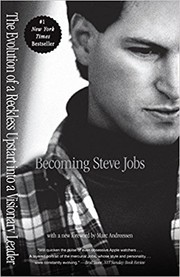 Becoming Steve Jobs Biography & MemoirView on Amazon
Details
A corrective biography of Steve Jobs that emphasizes development over destiny. Brent Schlender’s long relationship with Jobs, combined with Rick Tetzeli’s reporting and synthesis, presents a reckless, abrasive young founder who gradually became a more capable leader. The book stresses learning, collaboration, and institutional discipline behind Apple’s later achievements.
-
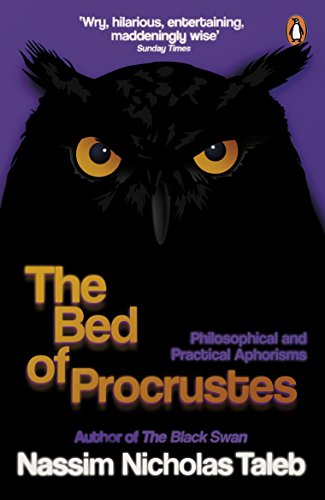 The Bed of Procrustes : Philosophical and Practical Aphorisms PhilosophyView on Amazon
Details
A compact, irreverent collection of philosophical and practical aphorisms about uncertainty, knowledge, modernity, status, taste, and human self-deception. Taleb argues that we routinely force messy reality into rigid categories, models, technologies, and narratives—the metaphorical “bed” of Procrustes—and should instead cultivate skepticism, robustness, independence, and tolerance for the unknown.
-
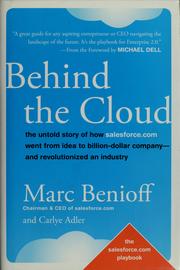 Behind the Cloud : The Untold Story of How Salesforce.com Went from Idea to Billion-Dollar Company-and Revolutionized an Industry Business & StrategyView on Amazon
Details
Marc Benioff and Carlye Adler present Salesforce’s early growth as a repeatable entrepreneurial playbook: challenge an entrenched software model, build a distinctive brand and culture, sell through customer advocacy, scale with partners, and embed philanthropy in the business. The account is energetic and practical, though strongly shaped by founder hindsight.
-
 Benjamin Franklin : An American Life Biography & MemoirView on Amazon
Details
Walter Isaacson’s full-scale biography presents Benjamin Franklin as a self-made printer, scientist, publisher, diplomat, and founding statesman whose curiosity and civic pragmatism helped shape American identity. It also examines the tensions behind the legend: Franklin’s ambition, political evolution, scientific importance, imperfect family life, and changing views on slavery.
-
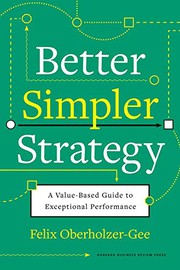 Better, Simpler Strategy : A Value-Based Guide to Exceptional Performance Business & StrategyView on Amazon
Details
Felix Oberholzer-Gee presents a deliberately compact framework for strategy: create more value for customers, employees, and suppliers, then concentrate resources on the few activities that matter most. Using the “Value Stick,” he connects willingness-to-pay, willingness-to-sell, productivity, trade-offs, and execution to exceptional performance.
-
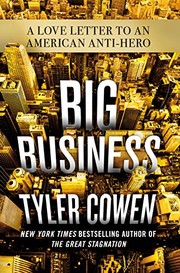 Big Business : A Love Letter to an American Anti-Hero EconomicsView on Amazon
Details
An evidence-rich, deliberately contrarian defense of large corporations as engines of innovation, employment, consumer abundance, and prosperity. Tyler Cowen answers familiar objections about fraud, CEO pay, workplace culture, monopoly, Big Tech, finance, and political influence, conceding some failures while arguing that critics systematically undercount business’s diffuse benefits.
-
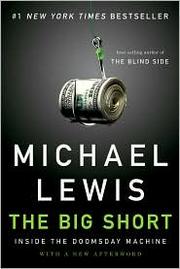 The Big Short : Inside the Doomsday Machine Finance & InvestingView on Amazon
Details
Michael Lewis reconstructs the 2000s housing and credit bubble through the investors who recognized that subprime mortgages were dangerously weak beneath layers of highly rated securities. The book explains how mortgage bonds, CDOs, credit-default swaps, institutional incentives, and collective denial transformed bad lending into a systemic financial crisis—and made a few contrarian investors rich.
-
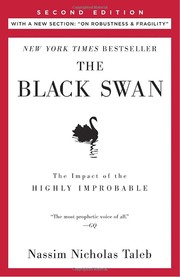 The Black Swan : The Impact of the Highly Improbable PhilosophyView on Amazon
Details
Nassim Nicholas Taleb’s influential examination of rare, high-impact events and our tendency to explain them only after they occur. Combining probability, philosophy, finance, history, and psychology, Taleb argues that conventional models systematically understate uncertainty and offers ways to make decisions less vulnerable to extreme surprises.
-
 Blink : The Power of Thinking Without Thinking PsychologyView on Amazon
Details
In Blink, Malcolm Gladwell examines rapid, largely unconscious judgment. Through stories about art authentication, expert prediction, policing, military strategy, relationships, and prejudice, he argues that “thin-slicing” can produce remarkably good decisions when perception is trained and conditions are familiar—but that snap judgments are also vulnerable to stereotypes, misleading context, and emotional distortion.
-
 Blitzscaling : The Lightning-Fast Path to Building Massively Valuable Companies Business & StrategyView on Amazon
Details
A strategy guide to “blitzscaling,” the deliberate choice to prioritize speed, market capture, and rapid organizational growth over efficiency when uncertainty and competitive pressure are high. Reid Hoffman and Chris Yeh explain how companies such as Amazon, Airbnb, LinkedIn, and Facebook navigate successive stages of scale, while acknowledging the approach’s substantial operational, financial, and ethical risks.
-
 Blood, Sweat, and Pixels : The Triumphant, Turbulent Stories Behind How Video Games Are Made Technology & FutureView on Amazon
Details
A reported behind-the-scenes account of ten video games, from solo indie projects to enormous AAA productions. Jason Schreier follows each title through conception, technical setbacks, management conflicts, crunch, cancellations, and release, showing why successful games are less the result of orderly plans than of repeated improvisation under pressure.
-
 Blue Ocean Shift : Beyond Competing Business & StrategyView on Amazon
Details
A practical sequel to Blue Ocean Strategy that turns market creation into a staged organizational process. Kim and Mauborgne combine tools for identifying noncustomers, reconstructing industry boundaries, and designing value innovation with methods for building confidence, securing commitment, and overcoming the cognitive, resource, motivational, and political barriers to strategic change.
-
 Blue Ocean Strategy : How to Create Uncontested Market Space and Make the Competition Irrelevant Business & StrategyView on Amazon
Details
W. Chan Kim and Renée Mauborgne argue that enduring growth comes less from defeating rivals in crowded “red oceans” than from creating new demand in “blue oceans”—market spaces with a different value proposition. The book combines this idea with practical tools for reconstructing industry boundaries, balancing differentiation with low cost, and executing strategy.
-
 Boom : Bubbles and the End of Stagnation Technology & ProductView on Amazon
Details
Boom argues that transformative innovation often emerges from bubble-like conditions: excessive funding, concentrated attention, weak accountability, strong collective belief, and willingness to pursue implausible goals. Through cases including the Manhattan Project, Apollo, semiconductors, corporate R&D, fracking, and Bitcoin, Hobart and Huber present bubbles as risky but potentially productive engines of progress.
-
 Born Standing Up : A Comic's Life Biography & MemoirView on Amazon
Details
A tightly focused memoir of Steve Martin’s development from Disneyland magic-shop worker and aspiring writer into an experimental stand-up comedian who became a major concert performer, then quit stand-up in 1981. Martin examines craft, originality, ambition, anxiety, loneliness, family tensions, mentorship, and the costs of building a public comic persona.
-
 Brand New Name : A Proven, Step-by-Step Process to Create an Unforgettable Brand Name Marketing & SalesView on Amazon
Details
Jeremy Miller’s practical guide to naming companies, products, services, and ideas. It treats naming as a strategic, collaborative process rather than a flash of individual creativity. The book combines principles about memorable names with a three-stage workflow—Plan, Sprint, Select—designed to help teams generate, evaluate, test, and confidently choose a name.
-
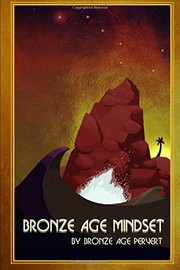 Bronze Age Mindset HistoryView on Amazon
Details
A provocative, self-published reactionary manifesto that blends Nietzschean vitalism, ancient Greek and Bronze Age imagery, anti-modern cultural criticism, masculinity, biology, and political insurgency. Bronze Age Pervert urges readers to recover physical vitality, hierarchy, courage, beauty, and male friendship while resisting what he portrays as a bureaucratic, therapeutic, technologically mediated “Iron Prison.”
-
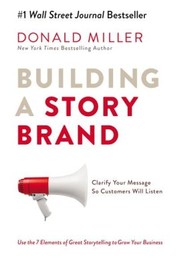 Building A Story Brand : Clarify Your Message So Customers Will Listen Marketing & SalesView on Amazon
Details
Donald Miller’s 2017 marketing guide presents the StoryBrand SB7 framework for making business communication easier to understand. It argues that customers should be treated as the heroes, while brands act as guides who clarify a problem, offer a plan, invite action, and show the consequences of success or inaction.
-
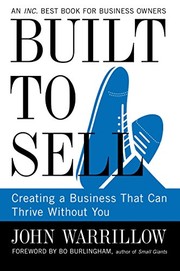 Built to Sell : Creating a Business That Can Thrive Without You Entrepreneurship & StartupsView on Amazon
Details
John Warrillow presents a practical parable about Alex Stapleton, an advertising-agency owner whose company is profitable but difficult to sell because it depends on him. Guided by mentor Ted, Alex specializes the business, documents its delivery process, develops recurring revenue, builds a management team, and makes the company transferable.
-
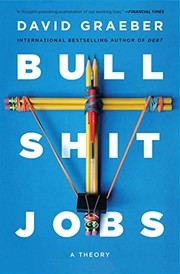 Bullshit Jobs : The Rise of Pointless Work, and What We Can Do About It Politics & SocietyView on Amazon
Details
David Graeber’s 2018 social critique argues that modern economies generate paid roles whose workers privately recognize them as unnecessary, pointless, or harmful. He distinguishes such “bullshit jobs” from merely unpleasant or exploitative work, classifies five recurring types, explores their psychological and political effects, and proposes reducing work’s dominance through policies such as universal basic income.
-
 The Burnout Society Business & StrategyView on Amazon
Details
A compact philosophical diagnosis of contemporary exhaustion. Byung-Chul Han argues that late-modern society has shifted from externally imposed discipline to internalized demands for achievement, optimization, and constant availability. The result is self-exploitation: individuals experience depression, attention fragmentation, and burnout as personal failures even when social conditions help produce them.
-
 Business Adventures : Twelve Classic Tales from the World of Wall Street Business & StrategyView on Amazon
Details
A collection of twelve New Yorker case studies about market panics, corporate misjudgment, regulation, insider trading, executive power, and organizational failure. John Brooks turns episodes involving the 1962 market crash, the Edsel, Xerox, GE, Piggly Wiggly, and sterling into character-driven lessons about incentives, communication, reputation, and institutional behavior.
-
 But What If We're Wrong? Thinking About the Present As If It Were the Past Culture & MediaView on Amazon
Details
A witty investigation of how confidently held ideas become historical curiosities. Moving through science, literature, music, film, sports, politics, and popular culture, Chuck Klosterman asks what future observers may misunderstand—or reject—about the present. The book’s real subject is epistemic humility: how to think clearly while knowing our frameworks are provisional.
-
 Buy Back Your Time : Get Unstuck, Reclaim Your Freedom, and Build Your Empire Productivity & Self-ImprovementView on Amazon
Details
Dan Martell’s entrepreneur-focused guide to escaping the founder bottleneck by deliberately delegating low-value work, structuring an ideal week, and reinvesting recovered time in high-impact activities. Its central promise is not conventional time management, but using money, systems, and people to create greater freedom while scaling a business.
C 25 titles
-
 Capitalism and Freedom EconomicsView on Amazon
Details
Milton Friedman’s 1962 defense of competitive capitalism as both an expression of economic freedom and a safeguard for political liberty. Moving from theory to policy, he examines money, trade, education, discrimination, monopoly, occupational licensing, income distribution, welfare, and poverty, advocating limited government, voluntary exchange, and market-based alternatives to centralized control.
-
 Capitalist Realism : Is There No Alternative? EconomicsView on Amazon
Details
In this concise political-cultural critique, Mark Fisher argues that contemporary capitalism presents itself not merely as dominant but as the only imaginable social order. Drawing on popular culture, education, work, bureaucracy, mental health, and the 2008 crisis, he identifies the habits of resignation that make alternatives seem unrealistic—and points toward collective ways of restoring political imagination.
-
 The Case for Trump Politics & SocietyView on Amazon
Details
A strongly sympathetic analysis of Donald Trump’s rise and first presidency. Victor Davis Hanson argues that Trump succeeded by recognizing the cultural and economic alienation of America’s interior, exploiting elite failures, and using outsider bluntness to break political taboos. The book combines political argument, historical analogy, and conservative criticism of institutional power.
-
 Chaos Monkeys : Obscene Fortune and Random Failure in Silicon Valley Technology & FutureView on Amazon
Details
A provocative memoir of Silicon Valley’s advertising economy, following Antonio García Martínez from Wall Street and startup founder to Twitter acquisition target and Facebook product manager. The book combines insider accounts of venture funding, office politics, ad technology, and corporate power with an intentionally abrasive portrait of ambition, luck, excess, and ethical compromise.
-
 The Checklist Manifesto : How to Get Things Right Productivity & Self-ImprovementView on Amazon
Details
Atul Gawande examines why highly trained people still fail in complex, high-pressure environments—and how well-designed checklists reduce preventable mistakes. Using aviation, construction, investing, disaster response, and especially surgery, he presents checklists as tools for memory, communication, coordination, and accountability rather than substitutes for expertise.
-
 Chuck Klosterman on Media and Culture : A Collection of Previously Published Essays Culture & MediaView on Amazon
Details
A 2010 digital anthology of thirteen previously published essays drawn from Sex, Drugs, and Cocoa Puffs, Chuck Klosterman IV, and Eating the Dinosaur. Klosterman examines advertising, pornography, journalism, celebrity, television, crime, piracy, video games, and popular music, using eccentric examples to question how media turns experience into narrative, identity, and commerce.
-
 Civilized to Death : The Price of Progress Politics & SocietyView on Amazon
Details
A provocative anti-progress argument claiming that agriculture, hierarchy, work discipline, and technological modernity have exchanged material control for poorer health, weaker communities, and diminished psychological well-being. Christopher Ryan contrasts contemporary civilization with an idealized picture of hunter-gatherer life, urging readers to question whether “progress” reliably improves human flourishing.
-
 The Coddling of the American Mind : How Good Intentions and Bad Ideas Are Setting Up a Generation for Failure PsychologyView on Amazon
Details
Greg Lukianoff and Jonathan Haidt examine how risk-averse parenting, declining childhood independence, social-media dynamics, and polarized campus politics may encourage psychological fragility and intellectual conformity. They organize the argument around three “Great Untruths” and propose resilience, viewpoint diversity, open inquiry, and institutional reforms as alternatives to overprotection and moralized conflict.
-
 Company of One : Why Staying Small is the Next Big Thing for Business Entrepreneurship & StartupsView on Amazon
Details
Paul Jarvis challenges the assumption that every business should pursue continual expansion. He presents the “company of one” as a deliberately small, profitable, and resilient business—often solo or lightly staffed—that prioritizes autonomy, simplicity, customer relationships, and a satisfying life over scale, investment, headcount, or growth for its own sake.
-
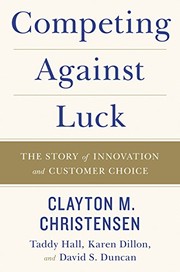 Competing Against Luck : The Story Of Innovation And Customer Choice Marketing & SalesView on Amazon
Details
Clayton Christensen and co-authors present Jobs to Be Done as a theory of innovation and customer choice. Rather than segmenting markets mainly by demographics or product categories, they argue that customers choose offerings to make progress in particular circumstances. The book translates this perspective into a practical lens for discovering opportunities, designing products, and improving growth decisions.
-
 The Complete Works of Epictetus PhilosophyView on Amazon
Details
Elizabeth Carter’s pioneering English translation of Epictetus’s surviving Discourses, Enchiridion, and fragments. The collection presents Stoicism as practical training in judgment, moral responsibility, freedom, social duty, and endurance. Its eighteenth-century language and devotional framing give the work historical character, though modern readers may find the translation less precise and the edition’s metadata unreliable.
-
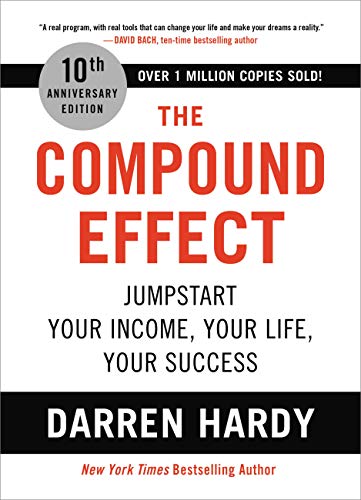 The Compound Effect Productivity & Self-ImprovementView on Amazon
Details
Darren Hardy presents success as the delayed result of ordinary choices repeated consistently. The book’s practical system focuses on taking responsibility, tracking behavior, shaping habits, building momentum, managing influences, and occasionally exceeding expectations. Its central message is simple: modest actions can produce major outcomes—or major problems—when sustained over time.
-
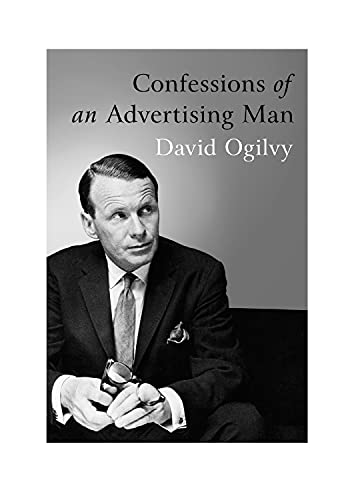 Confessions Of An Advertising Man Marketing & SalesView on Amazon
Details
David Ogilvy’s 1963 insider’s guide to advertising combines agency management, client development, research, copywriting, campaign construction, and career advice. Written as a practical playbook rather than a theory-heavy treatise, it presents advertising as disciplined persuasion: understand the customer, find the selling proposition, communicate clearly, and judge creative work by results.
-
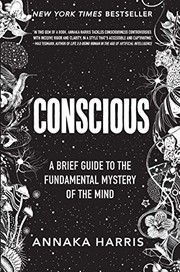 Conscious : A Brief Guide to the Fundamental Mystery of the Mind PsychologyView on Amazon
Details
A concise, provocative introduction to consciousness that examines subjective experience, the self, free will, brain-based explanations, and panpsychism. Annaka Harris uses neuroscience, philosophy, meditation, psychedelics, split-brain research, and biological examples to challenge the assumption that consciousness simply emerges from complex brains, while leaving the central mystery unresolved.
-
 The Consolations of Philosophy PhilosophyView on Amazon
Details
Alain de Botton presents philosophy as a practical resource for ordinary distress. Through Socrates, Epicurus, Seneca, Montaigne, Schopenhauer, and Nietzsche, he examines unpopularity, poverty, frustration, inadequacy, heartbreak, and adversity. The book is an accessible, illustrated commentary rather than an original philosophical system, translating selected ideas into modern advice.
-
 Console Wars : Sega, Nintendo, and the Battle that Defined a Generation HistoryView on Amazon
Details
A narrative history of Sega of America’s attempt to challenge Nintendo’s dominance in the 1990s console market. Centered on CEO Tom Kalinske and drawing on more than 200 interviews, Harris follows the strategic, marketing, technological, and organizational battles behind Genesis, Sonic, Super Nintendo, and the industry’s transition toward Sony-led competition.
-
 Conspiracy : Peter Thiel, Hulk Hogan, Gawker, and the Anatomy of Intrigue Politics & SocietyView on Amazon
Details
Ryan Holiday reconstructs the secret campaign through which Peter Thiel financed Hulk Hogan’s lawsuit against Gawker Media, turning a privacy dispute into the destruction of a media company. The book examines strategy, secrecy, leverage, media ethics, and the unpredictable moral costs of winning through proxies rather than public argument.
-
 Control Freak : My Epic Adventure Making Video Games Biography & MemoirView on Amazon
Details
A candid, sprawling memoir of Cliff Bleszinski’s rise from teenage game maker to Epic Games design star, tracing the creation of Unreal and Gears of War, the burdens of celebrity and creative control, and the collapse of his independent studio, Boss Key. It is part industry history, part confession, and part postmortem.
-
 The Courage To Be Disliked PsychologyView on Amazon
Details
A Socratic dialogue introducing Alfred Adler’s individual psychology through arguments about trauma, responsibility, approval, relationships, and purpose. Ichiro Kishimi and Fumitake Koga present happiness as something built through self-acceptance, contribution, and participation in the present—not secured by praise, status, or control over other people’s opinions.
-
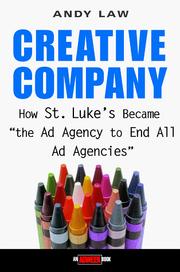 Creative Company : How St. Luke′s Became "the Ad Agency to End All Ad Agencies" Creativity & WritingView on Amazon
Details
Andy Law’s account of St. Luke’s, the London advertising agency he co-founded in 1995 after rejecting conventional agency culture. The book combines founding story, management philosophy, and case study: employee ownership, flat structures, flexible roles, collective decision-making, and creative work are presented as alternatives to hierarchical corporate organization.
-
 The Creative Gene : How books, movies, and music inspired the creator of Death Stranding and Metal Gear Solid Creativity & WritingView on Amazon
Details
An autobiographical essay collection in which Hideo Kojima traces the books, films, music, and personal experiences that shaped his creative sensibility. Rather than presenting a step-by-step method, Kojima explores how sustained cultural exposure, chance encounters, loneliness, memory, and selective judgment gradually become a creator’s distinctive voice.
-
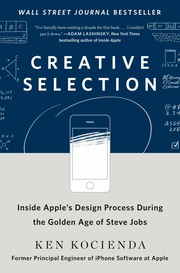 Creative Selection : Inside Apple's Design Process During the Golden Age of Steve Jobs Technology & ProductView on Amazon
Details
Ken Kocienda’s insider account of building Safari, the iPhone keyboard, and other Apple software during Steve Jobs’s final years at the company. Through vivid accounts of prototypes, demos, feedback, and difficult trade-offs, he explains Apple’s iterative design culture and identifies the habits—craft, taste, empathy, decisiveness, and persistence—that shaped its products.
-
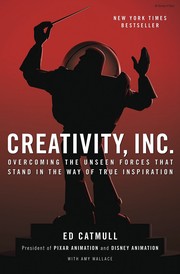 Creativity, Inc. : Overcoming the Unseen Forces That Stand in the Way of True Inspiration Creativity & WritingView on Amazon
Details
Ed Catmull’s management memoir and practical guide to sustaining creativity in organizations. Drawing on Pixar’s development process, he argues that leaders must remove fear, hierarchy, secrecy, and complacency; create candid feedback systems; protect experimentation; and continually inspect the systems that unintentionally obstruct talented people.
-
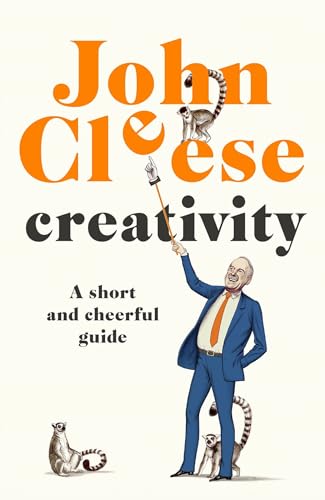 Creativity : A Short and Cheerful Guide Creativity & WritingView on Amazon
Details
A compact, lightly comic guide to making creativity more likely. Drawing on John Cleese’s experience as a writer and performer, the book emphasizes playfulness, psychological safety, patient incubation, and the disciplined editing needed to turn promising ideas into useful work. It is aimed especially at writers and other creative practitioners.
-
 The Culture Code : The Secrets of Highly Successful Groups Business & StrategyView on Amazon
Details
Daniel Coyle studies how unusually cohesive groups—from elite military units and sports teams to creative organizations—build trust and coordinate effectively. He distills their practices into three skills: creating belonging and psychological safety, using vulnerability to deepen cooperation, and repeatedly communicating a shared purpose through stories, behaviors, and visible cues.
D 26 titles
-
 Daily Rituals : How Artists Work Creativity & WritingView on Amazon
Details
A lively compendium of 161 writers, artists, composers, thinkers, and scientists, Daily Rituals examines the ordinary schedules and eccentric habits behind sustained creative work. Rather than prescribe a universal method, Mason Currey reveals how people protected attention, managed energy, tolerated distraction, and built idiosyncratic conditions in which difficult work could happen.
-
 David and Goliath : Underdogs, Misfits, and the Art of Battling Giants PsychologyView on Amazon
Details
Malcolm Gladwell reexamines the meaning of disadvantage through stories about athletes, students, lawyers, scientists, activists, parents, and communities. His central claim is that apparent weakness can create unconventional advantages, while size, prestige, authority, and certainty can impose hidden costs. The book is an engaging argument for questioning how contests are framed.
-
 The Decadent Society : How We Became the Victims of Our Own Success Politics & SocietyView on Amazon
Details
Ross Douthat diagnoses the contemporary West as prosperous but stalled: economic and technological stagnation, demographic decline, political sclerosis, cultural repetition, and spiritual exhaustion reinforce one another. He argues that this “sustainable decadence” can persist comfortably for decades, yet ultimately requires renewal—possibly through religious revival, technological breakthrough, or disruptive crisis.
-
 Deep Work : Rules for Focused Success in a Distracted World Productivity & Self-ImprovementView on Amazon
Details
Cal Newport argues that distraction-free concentration is a high-value skill: it helps knowledge workers learn difficult things faster and produce better results, yet modern workplaces erode it through constant communication and visible busyness. He offers four rules for rebuilding focus through deliberate scheduling, boredom training, technology restraint, and disciplined shutdowns.
-
 Deepfakes : The Coming Infocalypse Technology & FutureView on Amazon
Details
Nina Schick’s 2020 introduction to deepfakes argues that AI-generated and manipulated media will intensify an already damaged information ecosystem. Linking synthetic media to political disinformation, national security, fraud, harassment, and declining trust, Schick presents the “Infocalypse” as a systemic problem requiring technical authentication, responsible platforms, credible journalism, and institutional adaptation.
-
 Delivering Happiness : A Path to Profits, Passion, and Purpose Marketing & SalesView on Amazon
Details
A memoir and business manifesto tracing Tony Hsieh’s path from early entrepreneurial experiments and LinkExchange to Zappos. Its central lesson is that customer service, employee culture, and a meaningful purpose can reinforce one another—provided a company deliberately hires, trains, and organizes around the experience it wants to create.
-
 Demand-Side Sales 101 : Stop Selling and Help Your Customers Make Progress Marketing & SalesView on Amazon
Details
A practical introduction to applying Jobs-to-be-Done thinking to sales. Moesta and Engle replace feature-led persuasion with a buyer-centered process: understand the customer’s struggling moment, desired progress, anxieties, habits, and trade-offs, then help them decide whether your product fits the job they are trying to accomplish.
-
 Democracy - The God That Failed : The Economics and Politics of Monarchy, Democracy and Natural Order Politics & SocietyView on Amazon
Details
A radical libertarian critique of democracy that compares hereditary monarchy, electoral government, and Hoppe’s proposed “natural order” of private property and competing defense providers. Hoppe argues that democratic incentives encourage short-term spending, redistribution, centralization, and cultural decline, while acknowledging monarchy’s own coercive and expansionary defects. Published in 2001 as thirteen essays.
-
 The Demon-Haunted World : Science as a Candle in the Dark PhilosophyView on Amazon
Details
Carl Sagan’s 1996 defense of scientific skepticism argues that science is not merely a collection of facts but a disciplined way of thinking—one that tests claims, welcomes correction, and protects democratic society from superstition, pseudoscience, propaganda, and wishful certainty. He pairs analytical tools with a sustained argument for wonder, education, and intellectual humility.
-
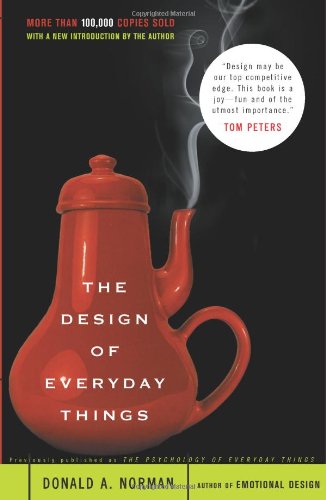 The Design of Everyday Things Technology & ProductView on Amazon
Details
A foundational guide to human-centered design that explains why ordinary products become confusing, error-prone, or satisfying. Donald Norman connects usability to cognitive psychology through discoverability, signifiers, mappings, constraints, feedback, conceptual models, and error-tolerant design. The 2013 revised edition substantially updates the original for digital products and modern development practices.
-
 Die With Zero : Getting All You Can from Your Money and Your Life Finance & InvestingView on Amazon
Details
Bill Perkins argues that personal finance should optimize lifetime fulfillment, not terminal wealth. Use money deliberately to create experiences while health, time, and relationships make them possible; give inheritances earlier when useful; and plan spending across life stages. The book is a provocative counterweight to endless accumulation, not a license for reckless undersaving.
-
 Digital Darwinism : Survival of the Fittest in the Age of Business Disruption Business & StrategyView on Amazon
Details
Tom Goodwin argues that digital transformation is not an IT upgrade but a wholesale rethink of how organizations create value. Using lessons from electrification, computing, design, and disruptive business models, he urges leaders to move beyond incremental improvements, challenge inherited assumptions, and build adaptable, human-centered businesses around emerging customer needs.
-
 Digital Minimalism : Choosing a Focused Life in a Noisy World Productivity & Self-ImprovementView on Amazon
Details
Cal Newport argues that the problem is not technology itself but unexamined, low-value use of it. He proposes digital minimalism: identify the values that matter most, remove optional digital tools for thirty days, then reintroduce only those that clearly serve those values. The book pairs this philosophy with practices for solitude, conversation, and richer leisure.
-
 Dilbert and the Way of the Weasel Culture & MediaView on Amazon
Details
A satirical field guide to workplace and everyday “weaseling”: the evasions, blame-shifting, status games, manipulative language, and low-effort strategies Adams sees operating in offices and society. Mixing commentary with Dilbert cartoons, it is less a systematic management guide than a cynical comic taxonomy of organizational behavior and self-protection.
-
 The Dilbert Future : Thriving on Stupidity in the 21st Century Culture & MediaView on Amazon
Details
A satirical collection of essays, cartoons, and deliberately unreliable predictions about the future of technology, work, politics, gender, aging, and everyday life. Adams argues that progress will not eliminate human foolishness; it will give foolishness faster tools, larger systems, and more impressive vocabulary. The book is more cultural comedy than serious forecasting.
-
 The Dilbert Principle : A Cubicle's-Eye View of Bosses, Meetings, Management Fads & Other Workplace Afflictions Business & StrategyView on Amazon
Details
A satirical tour of corporate life in which Scott Adams uses Dilbert strips, workplace anecdotes, and mock-management analysis to expose incompetent leadership, bureaucratic incentives, empty jargon, dysfunctional meetings, performance rituals, downsizing, and technology-driven confusion. It is more comic diagnosis than systematic management theory, but its observations remain useful as organizational cautionary examples.
-
 Dilla Time : The Life and Afterlife of J Dilla, the Hip-Hop Producer Who Reinvented Rhythm Biography & MemoirView on Amazon
Details
Dan Charnas’s expansive biography of James “J Dilla” Yancey combines Detroit hip-hop history, close musical analysis, and an account of the producer’s posthumous influence. Its central idea—“Dilla time”—describes a distinctive rhythmic feel created by shifting individual drum and sample elements away from a rigid grid, making programmed beats sound unstable, human, and newly alive.
-
 The Dip : A Little Book That Teaches You When to Quit (and When to Stick) Marketing & SalesView on Amazon
Details
A concise business book about making deliberate decisions to persist or quit. Seth Godin distinguishes the difficult middle phase of worthwhile work—the Dip—from dead ends that will not improve with more effort. Its central advice is to abandon low-potential pursuits early, then commit intensely to the promising few.
-
 Discrimination and Disparities EconomicsView on Amazon
Details
Thomas Sowell examines why groups and individuals achieve different economic and social outcomes. He argues that disparities do not, by themselves, prove discrimination, exploitation, or innate differences, and emphasizes history, geography, culture, incentives, selection, and cumulative advantage. The book also critiques policy responses that pursue equal outcomes without adequately considering costs and unintended consequences.
-
 Disrupted : My Misadventure in the Start-Up Bubble Technology & FutureView on Amazon
Details
A comic, caustic memoir of Dan Lyons’s year at HubSpot after losing his journalism job at age 51. Lyons uses the experience to examine startup mythology, venture-funded growth, workplace ageism, corporate jargon, precarious employment, and the gap between a company’s idealistic self-image and its everyday practices.
-
 The Diversity Delusion : How Race and Gender Pandering Corrupt the University and Undermine Our Culture Politics & SocietyView on Amazon
Details
A conservative critique of contemporary diversity, equity, and inclusion practices in American higher education and their spread into public life. Heather Mac Donald argues that identity-based admissions, gender politics, speech restrictions, and expanding diversity bureaucracies weaken merit, intellectual freedom, classical learning, and a shared civic culture, while proposing a return to open inquiry and common human standards.
-
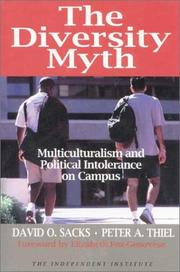 The Diversity Myth : Multiculturalism and Political Intolerance on Campus Politics & SocietyView on Amazon
Details
A polemical, Stanford-centered critique of 1990s multiculturalism in American higher education. David Sacks and Peter Thiel argue that programs advertised as increasing diversity instead produce ideological conformity, weaken common academic standards, politicize curricula, and restrict debate. The book combines campus reporting, institutional documents, and cultural criticism, but its advocacy and serious blind spots require careful qualification.
-
 Dogbert's Top Secret Management Handbook Business & StrategyView on Amazon
Details
A satirical management handbook in which Dogbert, Dilbert’s Machiavellian canine, instructs managers to exploit workplace rituals, empty incentives, bad communication, and organizational politics. Scott Adams uses short essays and comic strips to expose how managerial language and bureaucracy can conceal incompetence, self-interest, and the routine displacement of employee welfare.
-
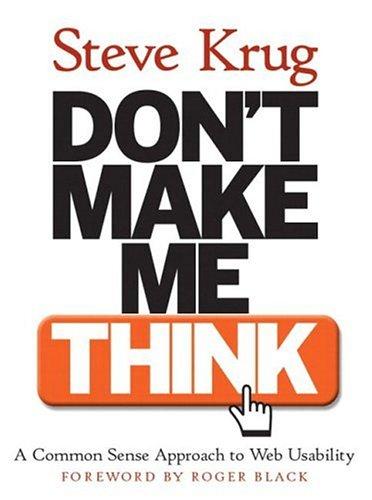 Dont Make Me Think and HTML World Wide Web Technology & ProductView on Amazon
Details
A practical introduction to web usability built around one governing idea: interfaces should be self-evident enough that users can act without stopping to decipher them. Krug explains how people scan, choose, navigate, and recover online, then recommends lightweight usability testing, clear content, accessible design, and mobile-aware decisions.
-
 Doom Guy : Life in First Person Biography & MemoirView on Amazon
Details
John Romero’s candid autobiography traces his escape from an abusive, chaotic childhood into pioneering work on Apple II games, Commander Keen, Wolfenstein 3D, DOOM, Quake, and Ion Storm. It combines personal history with reflections on programming, design, entrepreneurship, creative conflict, fame, failure, and the costs of building an influential game studio.
-
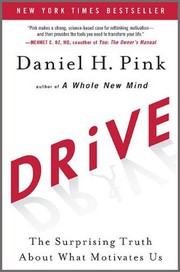 Drive : The Surprising Truth About What Motivates Us PsychologyView on Amazon
Details
In Drive, Daniel H. Pink argues that traditional reward-and-punishment systems explain only a limited form of motivation. For complex, creative, and knowledge-based work, he presents a stronger framework built around autonomy, mastery, and purpose, then translates that framework into guidance for workplaces, schools, families, and personal goals.
E 18 titles
-
 The E-Myth Revisited : Why Most Small Businesses Don't Work and What to Do About It Entrepreneurship & StartupsView on Amazon
Details
Michael E. Gerber’s classic small-business guide argues that technical skill does not equal business-building skill. Using the story of a struggling bakery owner, he explains how owners become trapped doing the work themselves and presents a systems-oriented method—built around clear roles, documented processes, and repeatable customer experiences—for creating a business that can operate beyond its founder.
-
 Economics in One Lesson EconomicsView on Amazon
Details
Henry Hazlitt’s 1946 primer teaches readers to test economic policies by following their effects beyond the immediately visible result. Drawing on Frédéric Bastiat, it applies this method to public spending, taxation, credit, tariffs, prices, wages, labor-saving technology, and trade. The book is clear, forceful, and intentionally partisan toward limited government and free markets.
-
 The Effective Executive Business & StrategyView on Amazon
Details
A concise classic on managing oneself for organizational results. Drucker argues that effectiveness is a learnable discipline, not a personality trait: executives must control their time, define their contribution, use strengths, set priorities, and make decisions that convert knowledge into measurable results.
-
 Ego Is The Enemy LifestyleView on Amazon
Details
Ryan Holiday’s 2016 Stoic-inflected guide argues that ego—an inflated, self-protective sense of importance—undermines learning, judgment, achievement, and recovery. Organized around aspiration, success, and failure, the book uses historical and contemporary examples to advocate quiet effort, continued apprenticeship, purposeful ambition, humility, and disciplined responses to setbacks.
-
 Elon Musk Biography & MemoirView on Amazon
Details
Walter Isaacson’s heavily reported biography portrays Elon Musk as a technically gifted, intensely driven, and deeply volatile entrepreneur. Following Musk from childhood through PayPal, Tesla, SpaceX, Neuralink, and Twitter/X, Isaacson examines how urgency, risk tolerance, obsession, and a need for control produced both extraordinary industrial achievements and destructive personal and organizational consequences.
-
 Elon Musk : Tesla, SpaceX, and the Quest for a Fantastic Future Biography & MemoirView on Amazon
Details
Ashlee Vance’s authorized, access-rich biography follows Elon Musk from a difficult South African childhood through Zip2 and PayPal to SpaceX, Tesla, and SolarCity. It presents Musk as a volatile, technically engaged entrepreneur whose grand civilizational ambitions coexist with ruthless management, extravagant promises, financial brinkmanship, and an unusually high tolerance for personal and organizational risk.
-
 Emotional Intelligence 2.0 PsychologyView on Amazon
Details
A practical 2009 guide to improving emotional intelligence through four trainable skills: self-awareness, self-management, social awareness, and relationship management. Bradberry and Greaves combine a commercial self-assessment with 66 behavioral strategies, emphasizing deliberate practice in everyday interactions rather than abstract theory. Its strongest value is as a workplace-oriented habit manual, not as a definitive scientific account of intelligence.
-
 Enough : True Measures of Money, Business, and Life Finance & InvestingView on Amazon
Details
A wide-ranging reflection by Vanguard founder John C. Bogle on what constitutes “enough” in investing, corporate conduct, professional ambition, and personal life. He contrasts measurable wealth and status with less visible goods—character, trust, service, relationships, and meaning—while restating his case for low-cost, long-term investing and responsible capitalism.
-
 Escaping the Build Trap : How Effective Product Management Creates Real Value Marketing & SalesView on Amazon
Details
Melissa Perri’s guide to replacing feature factories with outcome-focused product management. She explains how product teams can connect customer problems to business strategy, organize around durable products rather than temporary projects, test solutions iteratively, and create incentives that reward learning and measurable value—not simply shipping more features.
-
 Essays and Aphorisms PhilosophyView on Amazon
Details
A compact Penguin selection from Schopenhauer’s 1851 Parerga and Paralipomena, translated and introduced by R. J. Hollingdale. Across essays on suffering, religion, ethics, art, reading, writing, politics, women, and practical conduct, Schopenhauer develops his pessimistic account of desire while offering sharp, often contentious advice about preserving independence and reducing unnecessary misery.
-
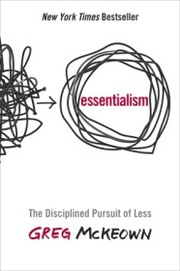 Essentialism : The Disciplined Pursuit of Less Productivity & Self-ImprovementView on Amazon
Details
Greg McKeown presents Essentialism as a disciplined method for identifying the few activities that matter most, eliminating attractive but nonessential commitments, and designing routines that make important work easier. Rather than maximizing busyness, the book argues for deliberate trade-offs, protected attention, clear boundaries, rest, and “less but better” contribution.
-
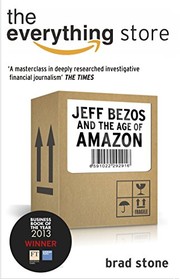 The Everything Store : Jeff Bezos and the Age of Amazon Finance & InvestingView on Amazon
Details
Brad Stone’s reported history of Amazon traces its transformation from an online bookstore into a diversified technology and retail giant. Through Jeff Bezos’s ambitions, Amazon’s near-collapse, and bets on Prime, Kindle, marketplaces, logistics, and cloud computing, Stone examines how customer obsession, scale, frugality, and relentless competition created extraordinary growth alongside serious human and market costs.
-
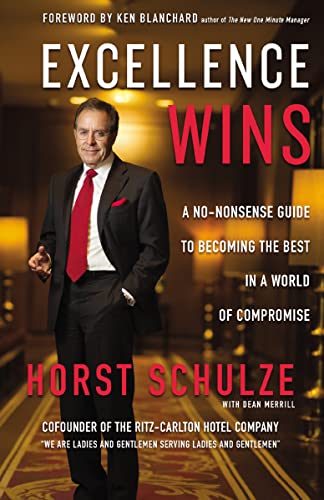 Excellence Wins : A No-Nonsense Guide to Becoming the Best in a World of Compromise Business & StrategyView on Amazon
Details
Horst Schulze, cofounder and former president of Ritz-Carlton, presents a practical leadership philosophy built around customer understanding, disciplined standards, employee engagement, and continuous improvement. Combining memoir with management guidance, the book argues that excellence is not a slogan or personality trait but a repeatable organizational system—though its hospitality examples can require adaptation elsewhere.
-
 Excellent Advice for Living : Wisdom I Wish I'd Known Earlier Productivity & Self-ImprovementView on Amazon
Details
A compact collection of more than 400 aphoristic lessons Kevin Kelly developed for his children, covering character, relationships, work, money, creativity, parenting, and everyday competence. Its central message is practical optimism: live generously, keep learning, accept responsibility, and build a life through small, repeatable choices rather than grand formulas.
-
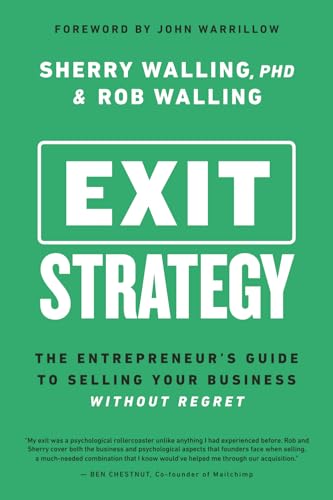 Exit Strategy : The Entrepreneur's Guide to Selling Your Business Without Regret Entrepreneurship & StartupsView on Amazon
Details
A practical and psychologically informed guide to selling a founder-led business. Rob Walling covers timing, preparation, deal mechanics, advisers, employees, and the transition after closing; Sherry Walling focuses on identity, relationships, stress, and the emotional disorientation that can accompany a major exit. The book is aimed especially at bootstrapped and small-business founders.
-
 Explosive Growth : A Few Things I Learned While Growing To 100 Million Users (And Losing $78 Million) Entrepreneurship & StartupsView on Amazon
Details
A candid founder memoir and growth manual about building SNAP Interactive’s dating products, exploiting Facebook’s early app platform, reaching roughly 100 million users, going public, and losing $78 million. Lerner mixes tactical case studies with hard lessons about distribution, experimentation, hiring, monetization, platform dependence, and the danger of confusing user growth with a healthy business.
-
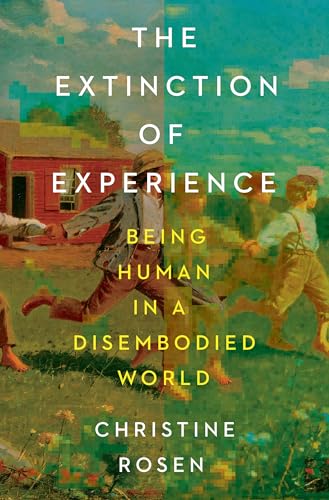 The Extinction of Experience : Being Human in a Disembodied World Culture & MediaView on Amazon
Details
Christine Rosen argues that digital technologies do more than distract us: by mediating interaction, pleasure, attention, waiting, and place, they gradually weaken embodied habits that help create a shared reality. Through examples ranging from smartphones and algorithms to handwriting and boredom, she makes a case for deliberate limits and renewed engagement with unmediated life.
-
 Extreme Ownership : How U.S. Navy SEALs Lead and Win Business & StrategyView on Amazon
Details
A leadership manual built from the authors’ experiences commanding Navy SEALs during combat in Ramadi, Iraq. Willink and Babin present a repeatable framework for taking responsibility, clarifying missions, empowering subordinate leaders, and making decisions under pressure, then translate each principle into business and organizational settings.
F 16 titles
-
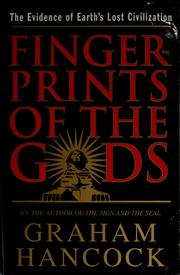 Fingerprints of the Gods : The Evidence of Earth's Lost Civilization HistoryView on Amazon
Details
Graham Hancock’s 1995 investigation argues that myths, monuments, maps, astronomical alignments, and geological clues preserve traces of a technologically sophisticated civilization destroyed near the end of the last Ice Age. Blending travel narrative with speculative archaeology, the book challenges conventional timelines but remains highly controversial and methodologically disputed.
-
 Finish Big : How Great Entrepreneurs Exit Their Companies on Top Entrepreneurship & StartupsView on Amazon
Details
Bo Burlingham examines how owner-founders can leave their companies with financial security, personal purpose, and confidence in the organization’s future. Drawing on dozens of entrepreneurial exit stories—successful, disappointing, and disastrous—the book argues that a good exit is not a final transaction but a long process of preparation, choice, execution, and transition.
-
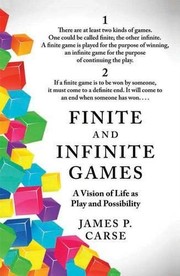 Finite and Infinite Games PhilosophyView on Amazon
Details
James P. Carse’s philosophical meditation distinguishes finite games, organized around winning under fixed conditions, from infinite play, organized around continuing the activity itself. Using examples from politics, war, sexuality, performance, culture, religion, science, and ordinary relationships, Carse asks how a broader commitment to ongoing play can change our understanding of competition, freedom, identity, and power.
-
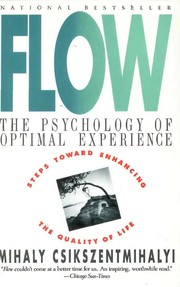 Flow : The Psychology of Optimal Experience PsychologyView on Amazon
Details
In Flow: The Psychology of Optimal Experience (1990), Mihaly Csikszentmihalyi explains why people feel most engaged and fulfilled when fully absorbed in challenging activities that match their abilities. He connects this state to attention, intrinsic motivation, creativity, work, relationships, and the broader project of building a meaningful life.
-
 Focus Productivity & Self-ImprovementView on Amazon
Details
In this brief “simplicity manifesto,” Leo Babauta argues that meaningful work and a calmer life require deliberate disconnection from constant information and communication. He recommends simplifying commitments, separating creating from consuming, working on one task at a time, narrowing priorities, and designing environments that make focused action easier.
-
 Fooled by Randomness : The Hidden Role of Chance in Life and in the Markets PhilosophyView on Amazon
Details
A philosophical and practical examination of how luck, randomness, and survivorship bias distort our judgments about success, skill, and risk. Using financial markets as its main setting, Taleb argues that people routinely construct persuasive explanations after the fact and mistake fortunate outcomes for evidence of competence. The book advocates probabilistic humility and skepticism toward track records.
-
 Forget the Funnel : A Customer-Led Approach for Driving Predictable, Recurring Revenue Marketing & SalesView on Amazon
Details
A concise growth framework for B2B SaaS teams that replaces funnel-focused marketing with systematic customer research, customer-journey mapping, and cross-functional action. Laudi and Suellentrop argue that recurring revenue depends on understanding how ideal customers experience value before, during, and after purchase—and operationalizing those insights across marketing, sales, product, and retention.
-
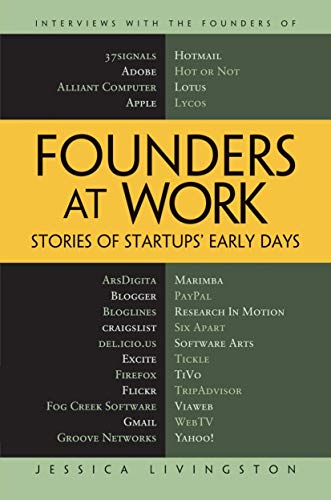 Founders at Work : Stories of Startups' Early Days Entrepreneurship & StartupsView on Amazon
Details
Jessica Livingston’s 2007 collection presents edited interviews with founders and early employees from more than thirty technology startups, including PayPal, Apple, Hotmail, Lotus, Yahoo, Blogger, Gmail, Firefox, TripAdvisor, and others. Rather than offering a unified method, it shows how ideas, products, teams, financing, and business models developed through highly contingent early decisions.
-
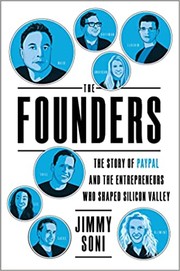 The Founders : The Story of PayPal and the Entrepreneurs Who Shaped Silicon Valley Entrepreneurship & StartupsView on Amazon
Details
Jimmy Soni’s deeply reported history of PayPal’s formation, from X.com and Confinity through merger battles, leadership changes, explosive user growth, regulatory threats, and eBay’s 2002 acquisition. More than a founder biography, it is a study of how a dense network of technically skilled, argumentative people built a consequential company under extreme uncertainty.
-
 Four Thousand Weeks : Time Management for Mortals Productivity & Self-ImprovementView on Amazon
Details
Oliver Burkeman reframes time management as an encounter with mortality rather than a method for fitting more tasks into each day. Drawing on philosophy, psychology, and personal experience, he argues that accepting limited time—and deliberately choosing what to neglect—can produce a more meaningful, attentive, and humane life.
-
 Freakonomics : A Rogue Economist Explores the Hidden Side of Everything EconomicsView on Amazon
Details
An accessible, provocative collection of data-driven investigations into cheating, crime, drug gangs, parenting, discrimination, and everyday decision-making. Levitt and Dubner argue that economics is less about markets than about incentives, information, and identifying hidden causes—while inviting readers to question confident explanations and conventional wisdom.
-
 Free Prize Inside : The Next Big Marketing Idea Marketing & SalesView on Amazon
Details
Seth Godin’s 2004 follow-up to Purple Cow argues that remarkable marketing often comes from a small, desirable “free prize” built into an otherwise ordinary offering. The book explains how to find such soft innovations through “edgecraft,” turn them into talk-worthy differences, and persuade cautious organizations to develop and launch them.
-
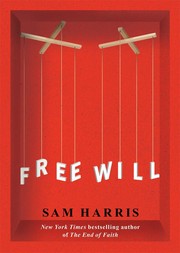 Free Will PsychologyView on Amazon
Details
In this concise philosophical essay, Sam Harris argues that free will—understood as conscious authorship independent of prior causes—is incoherent and illusory. Drawing on neuroscience, introspection, and determinism, he contends that thoughts and intentions arise unbidden, while defending practical compassion, social freedom, and consequential rather than retributive approaches to responsibility.
-
 Freemium Economics : Leveraging Analytics and User Segmentation to Drive Revenue Business & StrategyView on Amazon
Details
Eric Seufert’s practical guide to building and optimizing freemium software businesses. It explains how scale, analytics, segmentation, retention, monetization, virality, lifetime customer value, and user acquisition fit together. The book is especially useful for product managers and marketers who need a quantitative operating framework rather than generic advice about offering a free tier.
-
 Fresh Off the Boat Biography & MemoirView on Amazon
Details
A raw, irreverent memoir of growing up Taiwanese American in suburban Florida and resisting the pressures of assimilation, respectability, and the “model minority” ideal. Eddie Huang traces how family conflict, racism, hip-hop, street culture, legal trouble, travel, and an obsessive relationship with food eventually converge in Baohaus, his East Village restaurant.
-
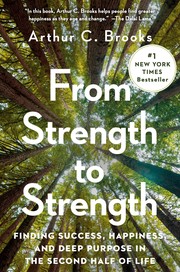 From Strength to Strength : Finding Success, Happiness, and Deep Purpose in the Second Half of Life PsychologyView on Amazon
Details
Arthur C. Brooks argues that aging need not mean a simple decline in achievement. As fluid intelligence and certain career advantages weaken, accumulated knowledge, judgment, teaching, service, relationships, and spiritual commitments can support a different form of success. The book offers a practical, values-oriented framework for making that transition deliberately.
G 8 titles
-
 Getting Real : The Smarter, Faster, Easier Way to Build a Successful Web Application Marketing & SalesView on Amazon
Details
A compact, opinionated guide to building web products by reducing scope, shortening feedback loops, and staying close to real customer needs. Fried, Hansson, and Linderman advocate small teams, simple software, rapid shipping, direct communication, and disciplined refusal—while treating marketing, support, and product design as parts of the same system.
-
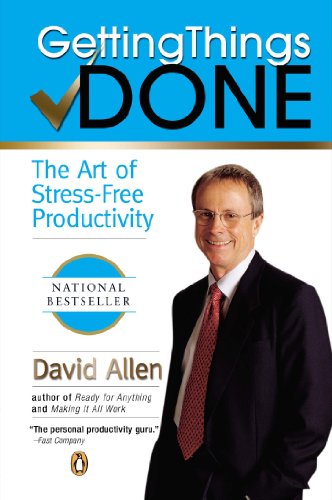 Getting Things Done : The Art of Stress-Free Productivity Productivity & Self-ImprovementView on Amazon
Details
David Allen’s classic productivity system argues that stress comes less from workload than from unclarified commitments. The remedy is to capture everything competing for attention, define desired outcomes and next actions, organize reminders in trusted external systems, review them regularly, and choose actions according to context, time, energy, and priority.
-
 Getting to Yes : How To Negotiate Agreement Without Giving In Communication & NegotiationView on Amazon
Details
A practical guide to principled negotiation that replaces positional bargaining with a problem-solving process. Fisher and Ury show how to protect relationships while pursuing substantive interests: separate people from problems, investigate underlying needs, create options for mutual gain, use fair standards, and strengthen your BATNA before deciding whether to agree.
-
 Going Infinite : The Rise and Fall of a New Tycoon Finance & InvestingView on Amazon
Details
Michael Lewis’s intimate account of Sam Bankman-Fried follows his ascent from quantitative trader and effective-altruism adherent to founder of FTX, one of crypto’s most celebrated exchanges, then examines the rapid collapse that exposed catastrophic governance and financial failures. The book is primarily a psychological portrait and narrative reconstruction, not a comprehensive technical history of cryptocurrency.
-
 Goodbye, Things : The New Japanese Minimalism LifestyleView on Amazon
Details
Part memoir, part practical guide, Goodbye, Things presents Fumio Sasaki’s shift from a cluttered, comparison-driven life to radical minimalism. He argues that owning fewer possessions can reduce maintenance, distraction, and status anxiety, while offering a detailed set of decluttering principles. The book emphasizes freedom and attention more than interior design.
-
 The Great CEO Within : The Tactical Guide to Company Building Entrepreneurship & StartupsView on Amazon
Details
A practical operating manual for startup founders and CEOs, covering personal effectiveness, decision-making, feedback, meetings, hiring, culture, goal-setting, metrics, and company infrastructure. Mochary presents reusable systems and templates rather than a narrative account, making the book especially useful as a checklist for technical founders scaling venture-backed companies.
-
 The Great Stagnation : How America Ate All the Low-Hanging Fruit of Modern History, Got Sick, and Will (Eventually) Feel Better EconomicsView on Amazon
Details
A concise, provocative explanation of America’s post-1970s slowdown. Tyler Cowen argues that earlier prosperity depended on unusually abundant “low-hanging fruit”—cheap land, broad educational gains, and transformative technologies—and that these advantages have diminished. He calls for greater respect for innovation while warning that political expectations have not adjusted to slower growth.
-
 Growth Hacker Marketing : A Primer on the Future of PR, Marketing, and Advertising Marketing & Sales
Details
Ryan Holiday’s concise introduction to growth hacking argues that marketing should be integrated into product design rather than treated as a late-stage promotion function. Through product–market fit, focused acquisition experiments, built-in virality, retention, and optimization, he presents growth as an iterative, measurable system rather than a one-time launch campaign.
H 19 titles
-
 The Hard Thing About Hard Things : Building a Business When There Are No Easy Answers Business & StrategyView on Amazon
Details
Ben Horowitz’s candid guide to leading a startup through crises, uncertainty, layoffs, executive failures, product setbacks, and near-death moments. Drawing on his experience running Loudcloud and Opsware, the book emphasizes judgment, communication, organizational design, and emotional endurance when standard management formulas stop helping.
-
 Hatching Twitter : A True Story of Money, Power, Friendship, and Betrayal Business & StrategyView on Amazon
Details
Nick Bilton’s fast-paced account of Twitter’s early years follows the service from Odeo’s failed podcasting venture to a global communications platform. It emphasizes the founders’ clashing personalities, shifting alliances, contested credit, executive coups, and the role of chance—offering a vivid business drama more than a technical history.
-
 Hate, Inc. : Why Today's Media Makes Us Despise One Another Politics & SocietyView on Amazon
Details
A polemical insider’s critique of American news as a commercial entertainment system. Matt Taibbi argues that cable networks, political journalism, and digital platforms monetize outrage by simplifying politics into tribal conflict, rewarding sensationalism, and distracting audiences from structural problems. He examines election coverage, the Iraq War, Russiagate, and the media’s incentives.
-
 Hell Yeah or No : What’s Worth Doing Productivity & Self-ImprovementView on Amazon
Details
A compact collection of Derek Sivers’s essays on choosing deliberately, changing self-conceptions, overcoming unhelpful assumptions, and turning intention into action. Organized around saying no, making things happen, changing perspective, and deciding what is worth doing, the book offers provocative mental models rather than a single productivity system.
-
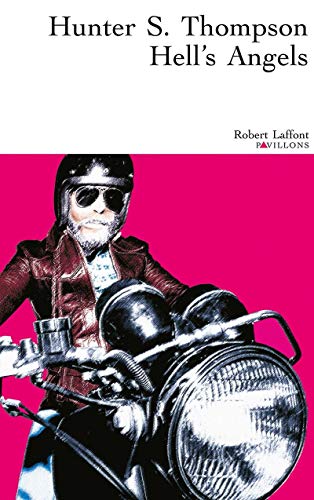 Hell's Angels HistoryView on Amazon
Details
Hunter S. Thompson’s 1967 nonfiction account of California’s Hells Angels combines immersion reporting, social observation, and intensely subjective narration. It examines the bikers’ rituals, violence, sexuality, camaraderie, media image, and antagonism toward mainstream society while also documenting the reporter’s unstable proximity to his subjects—and the risks of mistaking access for neutrality.
-
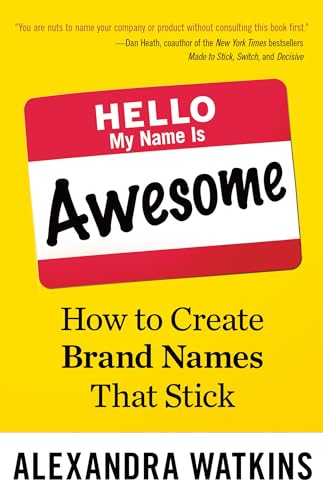 Hello, My Name Is Awesome : How to Create Brand Names That Stick Marketing & SalesView on Amazon
Details
Alexandra Watkins offers a compact, practical system for naming companies, products, and internal initiatives. She argues that effective names are easy to say, spell, recognize, and remember, while also carrying emotional and creative potential. The book combines the SMILE and SCRATCH tests with brainstorming exercises, creative briefs, domain-search advice, and group-decision guidelines.
-
 High Output Management Business & StrategyView on Amazon
Details
Andy Grove’s practical manual treats management as a production system: managers create output through the performance of their teams and neighboring groups. Using Intel-inspired examples and a “breakfast factory” analogy, Grove explains leverage, objectives, indicators, meetings, one-on-ones, motivation, training, decision-making, and performance evaluation.
-
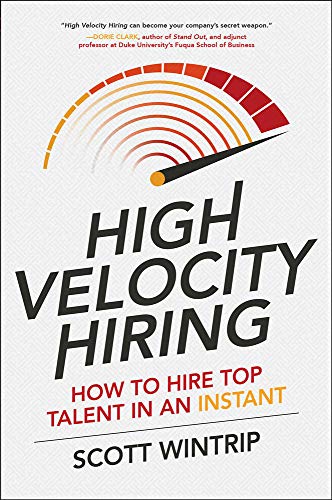 High Velocity Hiring : How to Hire Top Talent in an Instant Business & StrategyView on Amazon
Details
Scott Wintrip presents a system for replacing reactive, vacancy-driven recruiting with an always-on talent pipeline. The book’s Talent Accelerator Process combines clearer definitions of the right hire, continuous candidate sourcing, experiential interviews, a maintained talent inventory, automation, staffing partnerships, and durable diversity to make hiring faster without treating speed as the only measure of success.
-
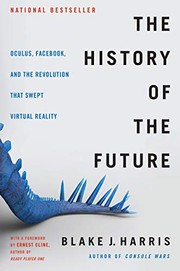 The History of the Future : Oculus, Facebook, and the Revolution That Swept Virtual Reality HistoryView on Amazon
Details
A reported history of Oculus from Palmer Luckey’s early experiments and 2012 Kickstarter through its rapid growth, recruitment of John Carmack, and Facebook’s 2014 acquisition. Harris presents virtual reality as a story of engineering ambition, founder conflict, funding, corporate power, and competing visions for who should control a new medium.
-
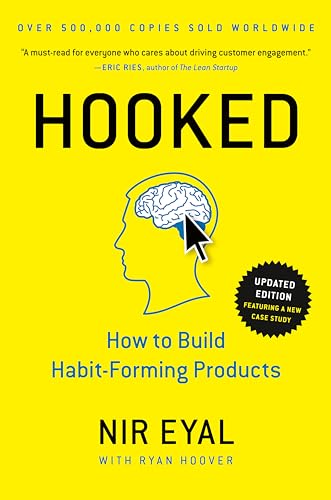 Hooked : How to Build Habit-Forming Products Marketing & SalesView on Amazon
Details
Nir Eyal’s practical guide to designing products that become part of users’ routines. It presents the Hook Model—trigger, action, variable reward, and investment—then applies it to digital products through examples from companies such as Twitter, Pinterest, Snapchat, and the Bible App. Its strongest use is as a behavior-design framework, not a complete theory of motivation.
-
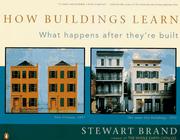 How Buildings Learn : What Happens After They're Built Technology & ProductView on Amazon
Details
An illustrated study of buildings as evolving systems rather than finished objects. Stewart Brand examines how occupants, maintenance, economics, technology, and changing uses reshape structures over time. His central framework—the “shearing layers” of site, structure, skin, services, space plan, and stuff—offers practical guidance for designing buildings that can adapt instead of becoming obsolete.
-
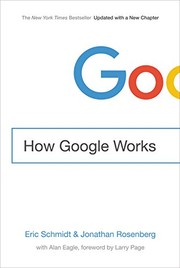 How Google Works Business & StrategyView on Amazon
Details
An insider’s management manual from Google’s early growth era. Eric Schmidt and Jonathan Rosenberg argue that technology-driven companies win by prioritizing exceptional, multidisciplinary “smart creatives,” user-focused products, rapid experimentation, open communication, and data-informed decisions. The book translates Google’s operating habits into memorable principles for culture, strategy, hiring, leadership, and innovation.
-
 How to Be a Stoic PhilosophyView on Amazon
Details
Massimo Pigliucci presents Stoicism as a practical philosophy for living well rather than as emotional suppression or passive resignation. Through imagined conversations with Epictetus, personal experience, and modern scientific criticism, he explains how to discipline desire, action, and judgment while making virtue—not wealth, health, status, or comfort—the measure of a good life.
-
 How to Fail at Almost Everything and Still Win Big Biography & MemoirView on Amazon
Details
A humorous memoir and unconventional success guide in which Scott Adams turns a long record of career misfires, health problems, and failed ventures into a practical philosophy: build systems rather than chase goals, cultivate complementary skills, protect your energy, and treat failure as information. Its advice is candid, contrarian, and highly personal.
-
 How To Live : 27 Conflicting Answers and One Weird Question Productivity & Self-Improvement
Details
Derek Sivers presents 27 miniature philosophies of living, each argued with conviction and each contradicting the others. The book moves from independence to commitment, present pleasure to long-term thinking, wealth to generosity, and creation to rest. Its deliberately unresolved structure encourages readers to treat life philosophies as tools rather than absolute rules.
-
 How to Live : A Life of Montaigne in One Question and Twenty Attempts at An Answer LifestyleView on Amazon
Details
Sarah Bakewell’s lively biography of Michel de Montaigne uses twenty recurring questions to connect his life, Essays, historical setting, and afterlife as a writer. Rather than presenting a fixed philosophy, it shows Montaigne testing ways of living—through skepticism, friendship, solitude, conversation, bodily experience, and acceptance of human inconsistency.
-
 How to Stop Worrying and Start Living PsychologyView on Amazon
Details
Dale Carnegie’s practical 1948 guide to managing worry through structured problem-solving, present-focused attention, acceptance, constructive action, and healthier daily habits. Drawing on anecdotes, philosophy, and case examples, it treats worry less as an intellectual puzzle than as a repetitive habit that can be interrupted by decisions and disciplined behavior.
-
 How to Think Like a Roman Emperor : The Stoic Philosophy of Marcus Aurelius PhilosophyView on Amazon
Details
Donald Robertson combines episodes from Marcus Aurelius’s life with Stoic philosophy and cognitive-behavioral therapy. The book presents Stoicism as a practical discipline for examining judgments, regulating anger and fear, preparing for adversity, accepting what cannot be controlled, and acting according to virtue rather than comfort, status, or emotional impulse.
-
 Hyperculture : Culture and Globalisation Culture & MediaView on Amazon
Details
In this compact series of philosophical essays, Byung-Chul Han argues that globalization and digital mediation are loosening culture from geographic origins, stable identities, and inherited boundaries. He names the resulting condition “hyperculture”: a rhizomatic space of hybridization, comparison, appropriation, and circulation, while questioning whether expanded cultural access also produces genuine belonging.
I 12 titles
-
 The Icarus Deception : How High Will You Fly? Marketing & SalesView on Amazon
Details
Seth Godin reframes the Icarus myth: the danger is not only excessive ambition but also flying too low. In a networked “connection economy,” he argues, safety increasingly comes from making meaningful, original contributions—“art”—rather than obeying rules, fitting in, or waiting for instructions.
-
 Icarus Fallen : The Search for Meaning in an Uncertain World PhilosophyView on Amazon
Details
A philosophical diagnosis of post-utopian Western culture. Delsol argues that modernity’s failed promises of limitless progress and self-transformation have left people distrustful of both religion and ideology, yet still hungry for meaning. She examines rights, democracy, equality, morality, risk, and individualism before proposing a more modest, vigilant way of inhabiting uncertainty.
-
 Ikigai : The Japanese Secret to a Long and Happy Life PsychologyView on Amazon
Details
Héctor García and Francesc Miralles combine interviews with older residents of Ogimi, Okinawa, reflections on the Japanese idea of ikigai, and accessible advice on health, purpose, stress, movement, diet, and community. The result is an engaging but loosely evidenced guide to building a meaningful, active life rather than a rigorous account of longevity.
-
 The Image : A Guide to Pseudo-Events in America HistoryView on Amazon
Details
Daniel J. Boorstin examines how modern American media, publicity, advertising, travel, and celebrity culture replace firsthand experience with manufactured representations. His central concept, the “pseudo-event,” describes happenings arranged chiefly to be reported. The book argues that Americans increasingly confuse visibility with significance, while mistaking attractive images for reality, achievement, and democratic truth.
-
 The Inevitable : Understanding the 12 Technological Forces That Will Shape Our Future Technology & FutureView on Amazon
Details
Kevin Kelly maps twelve mutually reinforcing technological trends—such as artificial intelligence, ubiquitous screens, digital access, tracking, remixing, and constant upgrading—that he expects to shape the next several decades. The book is an optimistic, idea-rich tour of how networked technology may change work, culture, ownership, knowledge, and human identity.
-
 Influence : The Psychology of Persuasion Marketing & SalesView on Amazon
Details
Robert Cialdini’s classic guide to why people agree to requests. Drawing on social-psychological research and observations of professional persuaders, it explains seven recurring influence principles—reciprocation, commitment and consistency, social proof, liking, authority, scarcity, and unity—and shows how to use them ethically while recognizing and resisting manipulation.
-
 The Innovation Stack : Building an Unbeatable Business One Crazy Idea at a Time Entrepreneurship & StartupsView on Amazon
Details
Jim McKelvey explains how Square survived Amazon by solving a chain of previously unsolved problems rather than copying established payment models. Using Square alongside Bank of Italy, IKEA, and Southwest Airlines, he argues that interconnected, necessity-driven innovations can open neglected markets and create businesses difficult to replicate.
-
 The Innovator's Solution : Creating and Sustaining Successful Growth Business & StrategyView on Amazon
Details
A practical sequel to The Innovator’s Dilemma, this book explains how companies can deliberately create new growth rather than merely defend existing businesses. Christensen and Raynor connect disruptive innovation to customer jobs, market entry, product architecture, organizational capabilities, strategy processes, and financing—offering managers a theory-based playbook for deciding what to build and how to manage it.
-
 Insanely Simple : The Obsession That Drives Apple's Success Technology & ProductView on Amazon
Details
Ken Segall’s insider account of Apple’s return to prominence argues that simplicity was not merely a design preference but an organizational discipline. Drawing on his work with Steve Jobs at NeXT and Apple, Segall examines how Apple used focus, small teams, direct communication, memorable language, and skepticism toward complexity in products, marketing, and decision-making.
-
 Intuitive Design : Eight Steps to an Intuitive UI Technology & ProductView on Amazon
Details
A practical framework for designing user interfaces that explain themselves to their intended users. Everett McKay replaces vague arguments about whether a UI feels “intuitive” with eight observable qualities—discoverability, affordance, comprehensibility, feedback, predictability, efficiency, forgiveness, and explorability—then connects them to the user’s interaction lifecycle across web, mobile, and desktop products.
-
 Invent and Wander : The Collected Writings of Jeff Bezos Biography & MemoirView on Amazon
Details
A sourcebook of Jeff Bezos’s Amazon shareholder letters, speeches, interviews, and public reflections, arranged to show how his ideas about customer obsession, long-term thinking, invention, experimentation, culture, and scale developed from 1997 through 2020. Walter Isaacson’s introduction frames Bezos as a curiosity-driven inventor, but the book is primarily Bezos speaking for himself.
-
 It Doesn't Have To Be Crazy at Work Business & StrategyView on Amazon
Details
Jason Fried and David Heinemeier Hansson present Basecamp’s operating philosophy as an alternative to hustle culture: protect attention, limit work in progress, communicate asynchronously, resist unnecessary growth, and define “enough.” The book is part management manifesto, part case study of how a small, profitable software company pursues calm, sustainable performance.
J 1 title
-
 Jony Ive : The Genius Behind Apple’s Greatest Products Biography & MemoirView on Amazon
Details
A reported biography of Jony Ive that traces his path from British industrial-design student to Apple’s most influential designer. Kahney emphasizes Ive’s partnership with Steve Jobs, Apple’s unusually powerful design culture, and the product-development choices behind the iMac, iPod, iPhone, iPad, and related technologies.
K 1 title
-
 Kitchen Confidential : Adventures in the Culinary Underbelly Biography & MemoirView on Amazon
Details
Anthony Bourdain’s breakout memoir takes readers behind the swinging doors of elite restaurant kitchens: their hierarchy, speed, danger, camaraderie, appetites, addictions, and compromises. Moving from his first formative meal in France through culinary school and New York kitchens, Bourdain combines confession, industry lore, practical kitchen wisdom, and sharply comic character sketches.
L 20 titles
-
 Lab Rats : How Silicon Valley Made Work Miserable for the Rest of Us Technology & FutureView on Amazon
Details
A sharp, reported critique of Silicon Valley’s influence on modern work. Dan Lyons argues that startup ideology—short-term financial incentives, relentless change, management fads, surveillance, and “fun” workplace theatrics—has weakened job security, dignity, and trust far beyond the technology industry. He also identifies more humane business models as alternatives.
-
 Latter-Day Pamphlets Politics & SocietyView on Amazon
Details
A vehement 1850 collection of eight political essays written after the European revolutions of 1848. Carlyle condemns parliamentary rhetoric, laissez-faire individualism, indiscriminate philanthropy, weak administration, and religious formalism. Against these, he proposes truthful perception, disciplined work, moral hierarchy, and leaders capable of acting according to reality rather than popularity.
-
 The Lean Startup Marketing & SalesView on Amazon
Details
Eric Ries presents a disciplined method for building products and businesses amid extreme uncertainty. Instead of treating a business plan as a prediction, founders formulate hypotheses, run small experiments, measure meaningful customer behavior, and use validated learning to decide whether to persevere or pivot. The framework emphasizes speed, evidence, and reduced waste.
-
 Leslie Nielsen : The Naked Truth Biography & MemoirView on Amazon
Details
A deliberately fabricated “autobiography” in which Leslie Nielsen and David Fisher send Nielsen’s screen persona through an outrageous Hollywood life story. Presented with deadpan confidence, it parodies celebrity memoirs, show-business mythology, and the expectation that famous people must tell the truth about themselves. Best read as comic fiction, not biography.
-
 The Lessons of History HistoryView on Amazon
Details
A compact, thematic synthesis of the Durants’ decades-long study of civilization. Rather than narrating events, the book asks what recurring forces—geography, biology, competition, wealth, religion, government, war, and inherited ideas—shape societies, and whether historical change amounts to genuine human progress.
-
 Letter to a Christian Nation PhilosophyView on Amazon
Details
In this brief, confrontational polemic, Sam Harris argues that Christian certainty is intellectually unjustified and politically dangerous when it shapes public policy. Addressing American Christians directly, he challenges biblical authority, faith-based morality, religious moderation, creationism, prayer, and restrictions on abortion and stem-cell research, while defending secular reasoning and scientific inquiry.
-
 Letters from a Stoic PhilosophyView on Amazon
Details
A selected collection of Seneca’s moral letters to Lucilius, written during the philosopher’s retirement from public life. Seneca uses ordinary subjects—time, friendship, grief, anger, wealth, illness, slavery, and death—to develop Stoic practice: cultivate virtue, examine judgment, reduce dependence on externals, and live deliberately despite unstable circumstances.
-
 Levels of the Game Culture & MediaView on Amazon
Details
John McPhee reconstructs the 1968 U.S. Open semifinal between Arthur Ashe and Clark Graebner, moving point by point through the match while tracing the players’ backgrounds, temperaments, politics, and racial identities. The result is a compact study of competition, perception, and character disguised as—and shaped by—the form of sports reportage.
-
 The Libertarian Mind : A Manifesto for Freedom EconomicsView on Amazon
Details
David Boaz’s revised primer presents libertarianism as a philosophy of individual liberty, voluntary cooperation, private property, free markets, toleration, and constitutional limits on state power. Moving from intellectual history to contemporary policy, Boaz argues that many social problems worsen when governments replace decentralized decision-making with coercive, centralized control.
-
 Life 3.0 : Being Human in the Age of Artificial Intelligence Technology & FutureView on Amazon
Details
Max Tegmark surveys how artificial intelligence could reshape work, warfare, law, economics, consciousness, meaning, and humanity’s long-term future. Using the progression from biological “Life 1.0” to human “Life 2.0” and technologically redesignable “Life 3.0,” he argues that beneficial AI is possible—but only if society addresses control, values, governance, and distribution before capability outruns wisdom.
-
 Life After Google : The Fall of Big Data and the Rise of the Blockchain Economy Finance & InvestingView on Amazon
Details
A sweeping 2018 critique of Google’s advertising-funded, centralized internet and a bullish forecast for blockchain-based computing, payments, and ownership. George Gilder connects technology, economics, information theory, monetary policy, and Christian metaphysics, arguing that decentralized networks will restore prices, privacy, security, and entrepreneurial freedom to the digital economy.
-
 The Life-Changing Magic of Tidying Up : The Japanese Art of Decluttering and Organizing LifestyleView on Amazon
Details
Marie Kondō presents the KonMari Method, a decluttering system built around completing a decisive “tidying festival,” sorting possessions by category rather than room, and keeping only what genuinely sparks joy. The book combines practical storage advice with a broader argument: organizing your belongings can clarify your values and reshape how you live.
-
 Life: The Movie : How Entertainment Conquered Reality LifestyleView on Amazon
Details
Neal Gabler traces how entertainment values migrated from popular theater and sensational journalism into politics, news, religion, art, celebrity culture, and everyday identity. Using cases such as O. J. Simpson, Clinton–Starr, Princess Diana, and Michael Jackson, he argues that modern public life increasingly rewards spectacle, emotional immediacy, personality, and narrative over substance.
-
 Linchpin : Are You Indispensable? Marketing & SalesView on Amazon
Details
Seth Godin’s 2010 career manifesto argues that routine, compliant work is increasingly replaceable, while people who exercise judgment, initiative, generosity, and creativity become “linchpins”—the connectors and problem-solvers organizations depend on. The book is a call to make distinctive contributions despite fear, bureaucracy, and the pressure to follow instructions.
-
 The Little Book of Common Sense Investing : The Only Way to Guarantee Your Fair Share of Stock Market Returns Finance & InvestingView on Amazon
Details
John C. Bogle’s concise, forceful case for owning the market through broad, low-cost index funds. He explains why investors collectively earn the market return before costs, why fees and taxes steadily erode it, and why disciplined buy-and-hold behavior usually beats attempts to select winning funds, stocks, or market-timing strategies.
-
 The Little Book of Hygge : The Danish Way to Live Well PsychologyView on Amazon
Details
Meik Wiking’s illustrated introduction to hygge, the Danish practice of creating comfort, sociability, presence, and everyday contentment. Combining cultural explanation, happiness research, and practical suggestions, it explores lighting, food, rituals, friendship, clothing, and home life. Its strongest contribution is treating well-being as something designed collectively, not merely consumed individually.
-
 The Long Hard Road Out of Hell Biography & MemoirView on Amazon
Details
A lurid, theatrically structured autobiography of Brian Warner’s transformation into Marilyn Manson, co-written with journalist Neil Strauss. Moving from a disturbing childhood and Christian-school upbringing through early band years, addiction, provocation, and commercial breakthrough, it presents fame as both deliberate performance and psychological entrapment.
-
 Loserthink : How Untrained Brains Are Ruining America PsychologyView on Amazon
Details
Scott Adams’s 2019 self-help guide to “loserthink,” his label for unproductive reasoning caused by narrow experience, ego, tribal identity, mind-reading, weak causal inference, and overreliance on words or slogans. It applies cross-disciplinary thinking techniques to arguments, media consumption, politics, decision-making, and everyday disagreements.
-
 Lost and Founder : A Painfully Honest Field Guide to the Startup World Entrepreneurship & StartupsView on Amazon
Details
A candid memoir and practical critique of startup mythology from Rand Fishkin, co-founder and former CEO of Moz. Drawing on Moz’s evolution from a debt-ridden family business into a substantial SaaS company, Fishkin examines venture capital, growth, leadership, hiring, product strategy, transparency, and the personal costs of building a company.
-
 Lying PhilosophyView on Amazon
Details
A concise philosophical case for treating honesty as a default rather than a social nicety. Harris focuses especially on “white lies,” arguing that even minor deceptions distort relationships, conceal useful information, and create burdens that grow as lies must be maintained. The revised edition also addresses reader objections and difficult exceptions.
M 18 titles
-
 The Machiavellians : Defenders of Freedom HistoryView on Amazon
Details
A 1943 work of political theory examining Machiavelli and four modern theorists—Gaetano Mosca, Georges Sorel, Robert Michels, and Vilfredo Pareto. Burnham argues that political analysis must begin with power, elites, organization, and historical reality rather than ideals alone, while maintaining that sober realism can help preserve democratic liberty.
-
 The Machinery of Freedom : Guide to a Radical Capitalism EconomicsView on Amazon
Details
David D. Friedman’s classic case for anarcho-capitalism argues that voluntary exchange and competition could replace most functions of government, including policing, courts, lawmaking, education, welfare, and defense. Drawing mainly on economic incentives rather than natural-rights theory, it asks whether a stateless society could be both workable and more protective of liberty.
-
 The Magic of Thinking Big PsychologyView on Amazon
Details
A 1959 motivational guide arguing that achievement is shaped not only by ability or circumstances but by the scale of one’s expectations, beliefs, habits, and actions. Schwartz offers practical techniques for replacing excuses with initiative, fear with confidence, and narrow goals with larger, purposeful plans for work and life.
-
 The Making of a Manager : What to Do When Everyone Looks to You Business & StrategyView on Amazon
Details
Julie Zhuo’s practical field guide to becoming an effective manager, drawn from her experience growing from a first-time design manager into a senior product-design leader. It covers the manager’s core responsibilities—team performance, trust, feedback, hiring, execution, delegation, and culture—while emphasizing that management is learned through deliberate practice.
-
 The Making of Prince of Persia : Journals 1985 - 1993 Technology & FutureView on Amazon
Details
A contemporaneous journal of Jordan Mechner’s struggle to create Prince of Persia and its sequel, from 1985 through 1993. The book follows programming, animation experiments, publisher negotiations, artistic uncertainty, commercial pressure, and the personal life surrounding a landmark game—offering an unusually immediate record of creative work before its success was assured.
-
 The Man Who Solved the Market : How Jim Simons Launched the Quant Revolution Finance & InvestingView on Amazon
Details
Gregory Zuckerman’s reported biography of mathematician Jim Simons and Renaissance Technologies, the exceptionally secretive firm that helped transform investing through data, algorithms, and scientific talent. The book combines business history, financial narrative, and institutional biography, while also tracing how Renaissance’s people and money shaped science, politics, and public life.
-
 Man's Search for Meaning PhilosophyView on Amazon
Details
Viktor Frankl’s classic 1946 memoir and introduction to logotherapy combines an account of imprisonment in Nazi concentration camps with a theory of psychological survival. Frankl argues that people are chiefly motivated by the search for meaning and can discover meaning through purposeful work, love, or a dignified stance toward unavoidable suffering.
-
 Masters of Doom : How Two Guys Created an Empire and Transformed Pop Culture Business & StrategyView on Amazon
Details
David Kushner’s fast-moving history of John Carmack, John Romero, and id Software follows their path from hacker culture and shareware to Wolfenstein 3D, Doom, and Quake. It explains how technical innovation, distribution, workplace culture, and clashing personalities reshaped PC games—and how extraordinary success destabilized the partnership that created it.
-
 Maverick : The Success Story Behind the World's Most Unusual Workplace Business & StrategyView on Amazon
Details
Ricardo Semler’s account of transforming Semco, his family’s Brazilian manufacturing company, by dismantling rigid hierarchy and giving employees unusual autonomy over decisions, work arrangements, pay, and evaluation. Maverick combines business autobiography with a practical argument for transparency, self-management, experimentation, and treating workers as responsible adults.
-
 Meditations PhilosophyView on Amazon
Details
A private notebook in which Roman emperor Marcus Aurelius repeatedly trains himself to live by Stoic principles: judge events clearly, accept what lies beyond his control, perform his social duties, and value virtue above status, pleasure, health, or reputation. Its fragmented, repetitive form records practice rather than a systematic argument.
-
 The Messy Middle : Finding Your Way Through the Hardest and Most Crucial Part of Any Bold Venture Entrepreneurship & StartupsView on Amazon
Details
Scott Belsky’s practical field guide to the unstable middle of ambitious work—the period after enthusiasm fades but before results are secure. Drawing on Behance, Adobe, investing, and interviews with founders and creative leaders, he organizes more than 100 brief lessons around enduring setbacks, optimizing what works, and navigating the final mile.
-
 The Metaverse : And How it Will Revolutionize Everything Technology & FutureView on Amazon
Details
Matthew Ball’s 2022 guide defines the metaverse as a persistent, interconnected layer of real-time 3D experiences rather than a single virtual world. He traces its technological predecessors, explains the infrastructure and standards required to build it, and considers how it could reshape entertainment, education, work, commerce, and social life.
-
 The Millionaire Next Door : The Surprising Secrets of America's Wealthy Finance & InvestingView on Amazon
Details
A data-driven portrait of American households with at least $1 million in net worth, arguing that wealth is usually accumulated through sustained saving, controlled consumption, time management, and business ownership rather than displayed through luxury. Stanley and Danko contrast genuine wealth with high income and conspicuous consumption, while offering benchmarks for evaluating financial progress.
-
 Mindset : The New Psychology of Success PsychologyView on Amazon
Details
Carol S. Dweck’s influential psychology book distinguishes a fixed mindset—the belief that ability is largely stable—from a growth mindset—the belief that ability can develop through learning, strategy, feedback, and persistence. It applies this framework to achievement, relationships, parenting, education, sports, and leadership, while its stronger intervention claims remain contested.
-
 The Minimalist Entrepreneur : How Great Founders Do More with Less Entrepreneurship & StartupsView on Amazon
Details
A practical, contrarian guide to building sustainable companies without defaulting to venture capital or hypergrowth. Drawing on Sahil Lavingia’s experience with Gumroad, the book emphasizes starting from an existing community, validating demand through direct sales, building only what is necessary, and designing a business that preserves the founder’s autonomy, energy, and time.
-
 The Mom Test : How to Talk to Customers & Learn If Your Business Is a Good Idea When Everyone Is Lying to You Entrepreneurship & StartupsView on Amazon
Details
Rob Fitzpatrick’s practical guide to customer discovery argues that founders should stop asking whether people like an idea and instead investigate real problems, past behavior, existing workarounds, and costly commitments. Through conversational rules and examples, it shows how to turn polite enthusiasm into evidence that can guide—or halt—product development.
-
 My Morning Routine : How Successful People Start Every Day Inspired Productivity & Self-ImprovementView on Amazon
Details
A practical, interview-driven guide to designing a morning routine that supports energy, focus, health, and calm. Benjamin Spall and Michael Xander draw on conversations with 64 accomplished people—including executives, athletes, artists, and public figures—to show that effective mornings vary widely, while offering recurring principles readers can adapt to their own circumstances.
-
 The Mythical Man-Month : Essays on Software Engineering Technology & ProductView on Amazon
Details
Fred Brooks’s classic essays on managing large software projects, drawn chiefly from his experience with IBM’s System/360 and OS/360. The book examines why effort does not scale linearly with staffing, how communication and design coordination create complexity, and why conceptual integrity, documentation, estimation discipline, and iterative learning matter more than managerial optimism.
N 9 titles
-
 Never Enough : From Barista to Billionaire Entrepreneurship & StartupsView on Amazon
Details
A candid entrepreneurial memoir about Andrew Wilkinson’s rise from a short stint as a barista and college dropout to cofounder of Tiny, a billion-dollar technology holding company. Alongside business lessons, Wilkinson examines ambition, wealth, status competition, relationships, mental health, and the unsettling discovery that financial success does not end dissatisfaction.
-
 Never Split the Difference : Negotiating As If Your Life Depended On It LifestyleView on Amazon
Details
Former FBI hostage negotiator Chris Voss, with Tahl Raz, presents a field-tested approach to negotiation built around emotional intelligence, active listening, and carefully designed questions. Rather than treating negotiation as a rational contest or aiming automatically for compromise, Voss emphasizes understanding the other party’s perceptions, uncovering hidden information, and shaping conversations toward workable agreements.
-
 The New Right : A Journey to the Fringe of American Politics HistoryView on Amazon
Details
Michael Malice offers an insider-adjacent, polemical tour of the American New Right: its online origins, ideological factions, historical influences, personalities, and relationship to Trump-era politics. The book is strongest as an introduction to how disparate anti-progressive movements understood themselves, but its claims and “unbiased” posture require substantial skepticism.
-
 The News : A User's Manual PsychologyView on Amazon
Details
Alain de Botton examines how modern news shapes attention, emotion, values, and political reality. Through recurring story types—disasters, crime, celebrity, politics, economics, and foreign affairs—he asks what news is for and proposes a more contextual, humane, psychologically useful journalism, while urging readers to become less compulsive consumers.
-
 The Nineties : A Book Culture & MediaView on Amazon
Details
Chuck Klosterman’s cultural history of the United States in the 1990s, blending political events, technology, music, television, film, sports, literature, and personal memory. Rather than treating the decade as a nostalgic playground, he examines how the era’s expanding media record, emerging internet, and anxiety about authenticity shaped the world that followed.
-
 No Filter : The Inside Story of Instagram Technology & FutureView on Amazon
Details
Sarah Frier’s reported history of Instagram follows Kevin Systrom and Mike Krieger from a small photo-sharing startup through Facebook’s $1 billion acquisition and the founders’ 2018 departure. It is simultaneously a startup story, a study of platform power, and an account of how Instagram reshaped celebrity, commerce, identity, and everyday visual culture.
-
 No More Mr. Nice Guy PsychologyView on Amazon
Details
Robert A. Glover’s 2003 self-help guide examines men who pursue approval through excessive agreeableness, conflict avoidance, and self-sacrifice. He argues that this strategy often produces resentment, dishonesty, loneliness, and sexual frustration rather than intimacy. The proposed alternative is an “Integrated Male” who accepts his needs, sets boundaries, takes risks, and acts more directly.
-
 Nonviolent Communication : A Language of Life LifestyleView on Amazon
Details
Marshall Rosenberg presents Nonviolent Communication (NVC) as a disciplined way to replace blame, judgment, and coercion with observation, emotional awareness, needs-based understanding, and clear requests. The book applies this framework to intimate relationships, self-talk, conflict, mediation, parenting, education, and social systems, emphasizing connection and voluntary cooperation over punishment or reward.
-
 Novelist as a Vocation Creativity & WritingView on Amazon
Details
In eleven autobiographical essays, Haruki Murakami explains how he became a novelist and how he sustains the work: cultivating originality, protecting solitude, reading widely, maintaining physical stamina, revising patiently, and trusting a private imaginative life. More personal portrait than universal writing manual, the book presents vocation as disciplined endurance shaped by temperament, luck, and persistence.
O 14 titles
-
 The Obstacle Is the Way PhilosophyView on Amazon
Details
Ryan Holiday’s practical introduction to Stoic resilience argues that adversity can become raw material for progress. Organized around perception, action, and will, the book shows how to interpret events clearly, respond deliberately, and persist without surrendering judgment. Historical examples make the philosophy accessible, though the presentation emphasizes achievement more than Stoicism’s broader ethical system.
-
 Obvious Adams : The Story of a Successful Businessman Marketing & SalesView on Amazon
Details
A short business parable, first published in 1916, about Oliver B. Adams, an ordinary-looking advertising man who advances by noticing what customers and situations plainly require, then pursuing the straightforward solution with persistence. Updegraff presents “obviousness” as disciplined observation, practical judgment, and follow-through—not flashy originality or intellectual brilliance.
-
 Obviously Awesome : How to Nail Product Positioning so Customers Get It, Buy It, Love It Marketing & SalesView on Amazon
Details
April Dunford presents a practical method for positioning products—especially B2B technology products—so buyers immediately understand what they are, why they matter, and when they are the best choice. The book turns positioning from vague branding language into a structured process based on competitive alternatives, differentiated capabilities, customer value, market context, and fit.
-
 Ogilvy on Advertising Marketing & SalesView on Amazon
Details
David Ogilvy’s practical, example-rich guide to creating advertising that sells, from research and positioning to headlines, print, television, direct mail, agency management, and client relationships. Written in 1983, it combines tested rules from his campaigns with strong opinions about professionalism, clarity, measurement, and the advertiser’s duty to respect consumers.
-
 Ogilvy on Advertising in the Digital Age Marketing & SalesView on Amazon
Details
Miles Young’s sequel to David Ogilvy’s advertising handbook explains how digital media changes advertising without making classic principles obsolete. It covers digital ecosystems, data, brands, content, creativity, social media, global markets, technology, and agency practice, using Ogilvy campaign history and Young’s international experience to connect strategy with contemporary marketing channels.
-
 On The Shortness of Life PhilosophyView on Amazon
Details
A compact Stoic essay arguing that life is not inherently too short; rather, people squander it through distraction, ambition, social obligations, luxury, and postponement. Seneca urges deliberate use of time, philosophical reflection, inner independence, and virtuous action. The 2024 Butler-Bowdon edition presents this classic for contemporary readers seeking purpose beyond busyness.
-
 On The Suffering of the World PhilosophyView on Amazon
Details
A compact selection from Schopenhauer’s later essays, centered on his philosophical pessimism: the world is driven by an insatiable Will, so striving produces recurrent frustration, pain, and boredom. He considers whether art, compassion, resignation, and the denial of desire can offer partial escape, while also revealing the limits and severity of his worldview.
-
 On Writing Creativity & WritingView on Amazon
Details
Stephen King combines memoir, craft instruction, and recovery narrative in this candid account of becoming a professional writer. He explains how reading, disciplined practice, clear prose, character, situation, revision, and persistence shape his work—while acknowledging that much of his advice reflects one highly successful novelist’s habits rather than universal rules.
-
 The ONE Thing : The Surprisingly Simple Truth Behind Extraordinary Results PhilosophyView on Amazon
Details
Gary Keller and Jay Papasan argue that extraordinary results come from identifying the highest-leverage priority and giving it focused attention before lesser tasks. The book combines prioritization, goal-setting, time blocking, habit formation, and a critique of multitasking, offering a practical but highly repetitive framework for reducing distraction and doing fewer things better.
-
 Only the Paranoid Survive : How to Exploit the Crisis Points That Challenge Every Company Business & StrategyView on Amazon
Details
Andy Grove’s practical account of how companies recognize and navigate “strategic inflection points”—moments when technology, competition, customers, suppliers, regulation, or business models change the rules. Drawing heavily on Intel’s shift from memory chips to microprocessors, the book argues that leaders must detect weak signals early, confront uncomfortable evidence, and redirect resources before crisis becomes collapse.
-
 Org Design for Design Orgs : Building and Managing In-House Design Teams Technology & ProductView on Amazon
Details
A practical guide to building in-house design organizations, covering their purpose, structure, staffing, hiring, career development, culture, and cross-functional relationships. Merholz and Skinner argue that design’s influence depends less on individual craft than on deliberate organizational conditions—clear leadership, user empathy, quality standards, effective operations, and genuine partnership with the rest of the business.
-
 Originals : How Non-Conformists Move the World PsychologyView on Amazon
Details
Adam Grant examines how people develop, promote, and protect ideas that challenge the status quo. Drawing on organizational psychology, entrepreneurship, politics, and social movements, he argues that originality is less a rare personality trait than a set of learnable behaviors involving experimentation, strategic risk, coalition-building, dissent, and timing.
-
 The Outsiders : Eight Unconventional CEOs and Their Radically Rational Blueprint for Success Business & StrategyView on Amazon
Details
William N. Thorndike examines eight unusually successful public-company CEOs—including Warren Buffett, John Malone, Henry Singleton, Katharine Graham, and Tom Murphy—to identify a shared discipline: rational, decentralized management paired with exceptionally careful capital allocation. The book is a set of executive case studies and a practical framework for judging leadership by long-term per-share value creation.
-
 Overcoming the Five Dysfunctions of a Team : A Field Guide for Leaders, Managers, and Facilitators Business & StrategyView on Amazon
Details
A practical companion to Patrick Lencioni’s team-dysfunction model. Rather than retelling the leadership fable, this field guide explains how leaders, managers, and facilitators can diagnose weak teamwork and intervene through assessments, meeting practices, structured exercises, and real-world implementation guidance. It is especially useful for intact teams willing to examine uncomfortable behaviors.
P 26 titles
-
 The Paradox of Choice : Why More Is Less PsychologyView on Amazon
Details
Barry Schwartz argues that modern abundance of options can undermine the freedom and happiness it promises. Drawing on psychology, economics, and consumer research, he explains how excessive choice produces paralysis, inflated expectations, regret, and self-blame—and proposes deliberate limits, realistic standards, and “good enough” decisions as ways to choose more effectively.
-
 Parkinson's Law, and Other Studies in Administration Business & StrategyView on Amazon
Details
A witty 1957 collection of ten essays about administrative behavior: expanding staffs, ineffective committees, executive selection, office design, social influence, organizational paralysis, career success, and retirement. Parkinson presents deliberately “scientific” laws and formulas as satirical tools for recognizing how institutions protect hierarchy, manufacture work, and confuse procedure with effectiveness.
-
 The PayPal Wars : Battles with eBay, the Media, the Mafia, and the Rest of Planet Earth Business & StrategyView on Amazon
Details
An insider’s account of PayPal’s rapid evolution from Confinity-era startup to eBay acquisition, told through its battles over product direction, growth, fraud, competition, regulation, organized crime, and financing. Eric M. Jackson emphasizes how entrepreneurial strategy emerged under severe pressure—and how external institutions could threaten a company as much as direct competitors.
-
 Perennial Seller : The Art of Making and Marketing Work that Lasts Marketing & SalesView on Amazon
Details
Ryan Holiday’s guide to creating creative work with lasting demand rather than chasing launch-day attention. He argues that enduring success comes from integrating quality, positioning, audience-building, and sustained promotion from the beginning. Drawing on examples from books, music, film, business, and art, the book presents a practical framework for building a durable career around “perennial” work.
-
 Permission Marketing : Turning Strangers Into Friends And Friends Into Customers Marketing & SalesView on Amazon
Details
Seth Godin’s 1999 marketing classic argues that advertising should move from interruption to consent. Instead of repeatedly buying attention from indifferent audiences, marketers should earn permission, deliver anticipated and relevant value, and deepen the relationship over time until prospects become trusted customers. The book anticipates opt-in email, lead nurturing, and other relationship-based marketing practices.
-
 The Peter Principle : Why Things Always Go Wrong Business & StrategyView on Amazon
Details
A satirical management classic by Laurence J. Peter and Raymond Hull, first published in 1969. It argues that hierarchical organizations commonly promote people because they succeed in their current roles, eventually placing them in jobs requiring different abilities—where they may become ineffective. The book examines the symptoms, organizational consequences, and possible evasions of this process.
-
 Play Nice : The Rise, Fall, and Future Of Blizzard Entertainment Technology & FutureView on Amazon
Details
Jason Schreier’s reported history of Blizzard Entertainment follows the studio from its 1991 founding through its era-defining successes in Warcraft, Diablo, StarCraft, World of Warcraft, and Overwatch, then examines how mergers, managerial pressure, canceled projects, workplace misconduct allegations, and the Microsoft acquisition reshaped the company and its creative culture.
-
 Playing to Win : How Strategy Really Works Business & StrategyView on Amazon
Details
A.G. Lafley, former Procter & Gamble CEO, and strategy adviser Roger L. Martin present strategy as a disciplined set of integrated choices rather than a vision statement, forecast, or collection of best practices. Using P&G cases including Olay, Tide, Gillette, and Swiffer, they show how leaders choose where to compete and how to win.
-
 The Pluri Society Politics & SocietyView on Amazon
Details
A self-published collection of 171 concise reflections on becoming a more deliberate, creative, and fully realized person. Sherry Ning considers self-stewardship, purpose, beauty, ambition, relationships, attention, and inner development in a conversational, aphoristic style. It is closer to a philosophical journal or annotated companion for reflection than to conventional political nonfiction or systematic self-help.
-
 The Pmarca Blog Archives Entrepreneurship & Startups
Details
A curated ebook of Marc Andreessen’s 2007–2009 blog essays on startups, hiring, management, careers, productivity, entrepreneurial psychology, luck, and technology culture. It is less a unified book than a set of forceful operating memos: practical, contrarian, and often deliberately overstated to sharpen judgment. The official edition preserves the original posts with limited editing.
-
 Poor Charlie's Almanack : The Essential Wit and Wisdom of Charles T. Munger Business & StrategyView on Amazon
Details
A wide-ranging collection of Charlie Munger’s speeches, observations, and investment teachings, edited by Peter D. Kaufman and introduced by Warren Buffett. Its central lesson is to build a multidisciplinary “latticework” of mental models, then use patience, incentives, inversion, and disciplined judgment to make better decisions in business and life.
-
 Positioning : The Battle for Your Mind Marketing & SalesView on Amazon
Details
Al Ries and Jack Trout’s classic marketing book argues that success depends less on communicating every product benefit than on securing a simple, distinctive place in the prospect’s mind. It explains how leaders defend positions, followers find openings, and companies avoid dilution through weak names, gratuitous extensions, and head-on competition.
-
 Possible Minds : Twenty-Five Ways of Looking at AI Technology & FutureView on Amazon
Details
An edited anthology of twenty-five essays on artificial intelligence, bringing together scientists, philosophers, technologists, and entrepreneurs to examine machine learning, intelligence, consciousness, control, human values, and social risk. Framed by Norbert Wiener’s warnings, the collection is most useful as a map of competing perspectives rather than a single theory of AI’s future.
-
 The Power of a Positive No : How to Say No and Still Get to Yes Communication & NegotiationView on Amazon
Details
William Ury presents a practical framework for refusing requests, demands, and behaviors without surrendering important interests or unnecessarily damaging relationships. His method—affirm what matters, state a firm boundary, then invite a workable alternative—combines self-respect with constructive negotiation. The book applies this approach to work, family, personal habits, and broader conflicts.
-
 The Power of Habit : Why We Do What We Do, and How to Change PsychologyView on Amazon
Details
Charles Duhigg explains habits as learned loops linking cues, routines, rewards, and cravings. Through stories about individuals, companies, and social movements, he argues that habits can often be redirected rather than simply suppressed. The book offers a practical framework for diagnosing behavior while showing how institutions and marketers deliberately shape it.
-
 The Power of No : Because One Little Word Can Bring Health, Abundance, and Happiness Productivity & Self-ImprovementView on Amazon
Details
A practical, highly personal guide to using “no” as a boundary and selection tool. James and Claudia Altucher apply refusal to health, relationships, anger, distraction, scarcity thinking, and self-sabotage, arguing that declining what depletes you creates room for more deliberate choices, creativity, love, and opportunity.
-
 The Power of Now : A Guide to Spiritual Enlightenment Philosophy
Details
Eckhart Tolle’s spiritual guide argues that psychological suffering is intensified by identification with compulsive thought, past-future narratives, and the egoic self. Through attention to immediate experience, bodily awareness, acceptance, and surrender, Tolle presents “presence” as a route toward inner peace and enlightenment, while grounding the discussion in an eclectic, nonsectarian mysticism.
-
 Powerful : Building a Culture of Freedom and Responsibility Business & StrategyView on Amazon
Details
Patty McCord distills lessons from her fourteen years helping shape Netflix’s culture into a provocative guide to hiring, candor, decision-making, and organizational design. She argues that high performance depends less on elaborate HR programs than on excellent people, clear business goals, direct feedback, and the freedom—and obligation—to act responsibly.
-
 The Practice : Shipping Creative Work Marketing & SalesView on Amazon
Details
In The Practice, Seth Godin argues that creative success depends less on inspiration, talent, or guaranteed results than on a repeatable commitment to making and shipping work. Aimed at artists, writers, marketers, and entrepreneurs, the book reframes creativity as generous, useful action directed toward a specific audience—not private perfectionism.
-
 Predictably Irrational PsychologyView on Amazon
Details
Dan Ariely’s accessible introduction to behavioral economics argues that people do not make random mistakes: predictable forces—including anchors, social norms, “free” offers, arousal, ownership, expectations, and self-control failures—systematically shape decisions about money, consumption, relationships, and health. The book replaces the idealized rational consumer with a more psychologically realistic model of choice.
-
 Present Shock : When Everything Happens Now Politics & SocietyView on Amazon
Details
A cultural critique of life under “presentism”: the always-on media environment compresses past, future, and present into an anxious, continuous now. Rushkoff examines how this shift affects storytelling, identity, finance, politics, entertainment, and collective expectations, arguing that digital immediacy can overwhelm our ability to build meaning, sustain attention, or imagine long-term alternatives.
-
 Press Reset : Ruin and Recovery in the Video Game Industry Technology & FutureView on Amazon
Details
An investigative account of why successful video-game studios collapse and how developers rebuild afterward. Through case studies involving BioShock Infinite, Epic Mickey, Dead Space, 38 Studios, and others, Jason Schreier examines layoffs, corporate ownership, unstable financing, burnout, and the human cost of an industry that treats creative teams as disposable.
-
 The Prince Politics & SocietyView on Amazon
Details
Niccolò Machiavelli’s compact Renaissance treatise analyzes how rulers acquire, secure, and expand political power. Addressing hereditary, newly acquired, and mixed states, it emphasizes military capacity, popular support, reputation, adaptability, and the strategic use of coercion and deception. Its stark realism challenges traditional advice that political success depends on personal virtue.
-
 Principles : Life and Work Finance & InvestingView on Amazon
Details
A memoir and operating manual from Bridgewater founder Ray Dalio. The book turns his investing and management experience into explicit rules for thinking, learning from mistakes, making decisions, and designing organizations around truth-seeking, transparency, and evidence. Its strongest value is as a framework for reflection—not as a universal blueprint for workplaces or investing.
-
 The Psychopath Test : A Journey Through the Madness Industry PsychologyView on Amazon
Details
Jon Ronson’s comic investigation into psychopathy follows the Hare checklist from prisons and psychiatric institutions to corporate boardrooms and the wider mental-health system. Through encounters with clinicians, patients, executives, and self-styled experts, Ronson questions how confidently society labels abnormality—and how easily diagnostic tools, media narratives, and institutional power can turn complex behavior into a frightening category.
-
 The Purple Cow : Transform Your Business by Being Remarkable Marketing & SalesView on Amazon
Details
Seth Godin argues that traditional mass marketing is losing power because consumers are overwhelmed by ordinary choices and advertisements. Businesses must instead build products and experiences remarkable enough to attract attention, earn discussion, and spread through interested customers. The book is a provocative framework for designing, launching, and continually renewing differentiated offerings.
Q 2 titles
-
 Quiet : The Power of Introverts in a World That Can't Stop Talking PsychologyView on Amazon
Details
Susan Cain argues that modern American culture overvalues sociability, confidence, rapid speech, and visible participation—the “extrovert ideal”—while undervaluing reflection, sensitivity, sustained concentration, and independent work. Combining psychology, history, biography, and practical guidance, she makes the case for designing schools, workplaces, relationships, and personal habits that let both introverts and extroverts contribute well.
-
 Quit Like a Millionaire : No Gimmicks, Luck, or Trust Fund Required Finance & InvestingView on Amazon
Details
A memoir-driven FIRE guide from Kristy Shen and Bryce Leung, arguing that financial independence depends less on extraordinary investment returns than on controlling expenses, increasing savings, using low-cost index investing, and designing retirement around flexibility. It combines Shen’s immigrant story with practical frameworks for accumulation, market-risk management, tax planning, and geographic arbitrage.
R 10 titles
-
 The Referral Engine : Teaching Your Business to Market Itself Marketing & SalesView on Amazon
Details
A practical small-business marketing guide for turning word-of-mouth into a designed system. John Jantsch argues that referrals grow from a distinctive promise, useful education, excellent customer experience, coordinated employees, and strategic relationships—not from occasional requests for introductions. Its central framework follows customers from knowing a business to trusting, buying, repeating, and referring it.
-
 Reframe Your Brain : The User Interface for Happiness and Success PsychologyView on Amazon
Details
Scott Adams presents reframing as a practical way to alter the meaning—and therefore the emotional impact—of everyday situations. Through more than 160 short “usual frame / reframe” examples covering work, health, relationships, confidence, and luck, he argues that deliberately chosen interpretations can make action easier, optimism more available, and setbacks less costly.
-
 Remote : Office Not Required Business & StrategyView on Amazon
Details
A practical, strongly argued case for distributed work from the founders of Basecamp. Fried and Hansson challenge the assumption that offices are necessary for collaboration, then discuss hiring, communication, management, time zones, motivation, and work habits. The book is most useful as an operating philosophy and checklist, not a universal remote-work blueprint.
-
 The Revolt of The Public : The Crisis of Authority in the New Millenium EconomicsView on Amazon
Details
Martin Gurri argues that the internet and mobile devices have overturned the information advantage once held by governments, media, political parties, and other industrial-era institutions. The resulting “revolt of the public” can expose failure and topple authority quickly, but often lacks a constructive program for replacing what it rejects.
-
 Rework Business & StrategyView on Amazon
Details
A contrarian guide to building a small, sustainable business without defaulting to elaborate plans, outside funding, rapid hiring, or growth for its own sake. Drawing chiefly on the authors’ experience at 37signals, Rework favors simplicity, focused products, direct communication, fast execution, and profitability over business-theater conventions.
-
 Rich Dad Poor Dad : What the Rich Teach Their Kids About Money—That the Poor and Middle Class Do Not! Finance & InvestingView on Amazon
Details
Robert T. Kiyosaki contrasts his highly educated biological father with an entrepreneurial mentor he calls “Rich Dad” to argue that financial independence depends less on salary than on financial literacy, ownership, cash flow, and mindset. The book is an accessible provocation, but its investing guidance is broad, anecdotal, and not a complete financial plan.
-
 The Richest Man in Babylon Finance & InvestingView on Amazon
Details
A 1926 personal-finance classic that teaches wealth-building through parables set in ancient Babylon. George S. Clason emphasizes saving before spending, controlling expenses, increasing earning power, investing cautiously, protecting capital, repaying debts, and seeking competent advice. Its enduring value is behavioral simplicity rather than modern investment detail.
-
 The Ride of a Lifetime : Lessons in Creative Leadership from 15 Years as CEO of the Walt Disney Company Business & StrategyView on Amazon
Details
A memoir and leadership primer from Robert Iger’s fifteen years running Disney. He explains how optimism, candor, decisiveness, humility, risk-taking, and respect for creative talent shaped major strategic bets—including Pixar, Marvel, Lucasfilm, and 21st Century Fox—while acknowledging the pressures and compromises of leading a global media company.
-
 The Right Stuff HistoryView on Amazon
Details
Tom Wolfe’s vivid, satirical history of the test-pilot culture behind America’s first manned space program. Beginning with Chuck Yeager and the dangerous pursuit of speed, it follows the selection, training, public elevation, and early flights of NASA’s Mercury Seven—while asking what kind of courage, status, and masculine code made these men willing to risk their lives.
-
 The Road to Serfdom EconomicsView on Amazon
Details
Friedrich Hayek’s 1944 defense of liberal democracy argues that comprehensive economic planning threatens political freedom because it concentrates coercive power, suppresses pluralism, and requires continual controls. Hayek distinguishes legitimate state action from central direction, but his historical warnings and “road” metaphor remain controversial for overstating how inevitably intervention produces dictatorship.
S 30 titles
-
 Seasteading : How Floating Nations Will Restore the Environment, Enrich the Poor, Cure the Sick, and Liberate Humanity from Politicians EconomicsView on Amazon
Details
A manifesto for seasteading—the creation of permanent, semi-autonomous communities on floating platforms. Joe Quirk and Patri Friedman combine libertarian political theory, ocean engineering, entrepreneurship, and profiles of “aquapreneurs” to argue that competing jurisdictions at sea could accelerate innovation, expand individual choice, create new industries, and test alternatives to conventional government.
-
 Self-Reliance PhilosophyView on Amazon
Details
A compact selection of Emerson’s transcendentalist essays and one address, combining the famous call for independent judgment with reflections on history, friendship, spiritual intuition, poetry, religious experience, and uncertainty. The volume draws from Essays (1841), Essays: Second Series (1844), and the 1838 Harvard Divinity School Address.
-
 The Shallows : What the Internet Is Doing to Our Brains Culture & MediaView on Amazon
Details
Nicholas Carr argues that internet use does more than deliver information: it trains attention toward rapid scanning, interruption, and fragmented browsing. Drawing on media history, neuroscience, psychology, and personal experience, he defends sustained reading and contemplation while acknowledging that technologies also expand access, memory, and intellectual capability.
-
 Shape Up : Stop Running in Circles and Ship Work that Matters Technology & Product
Details
Ryan Singer documents Basecamp’s product-development method: shape uncertain ideas before work begins, fund projects by appetite rather than estimates, and give small teams uninterrupted six-week cycles with flexible scope. The approach replaces backlog-driven scheduling with deliberate bets, autonomous execution, and cooldown periods for recovery, exploration, and deciding what matters next.
-
 Shoe Dog : A Memoir by the Creator of Nike Biography & MemoirView on Amazon
Details
Phil Knight’s candid, fast-moving memoir of building Nike from Blue Ribbon Sports, a small importer of Japanese running shoes, into a publicly traded company by 1980. More startup adventure than conventional autobiography, it emphasizes cash crises, regulatory battles, loyal collaborators, improvisation, persistence, and the emotional cost of pursuing an “unreasonable” ambition.
-
 Show Your Work! : 10 Ways to Share Your Creativity and Get Discovered Creativity & WritingView on Amazon
Details
Austin Kleon’s illustrated guide to making creative work visible without treating self-promotion as performance. Across ten concise chapters, he recommends sharing process, useful discoveries, and ongoing experiments; cultivating peers rather than chasing “networking”; crediting influences; handling criticism; and building a durable, findable body of work online.
-
 Sid Meier's Memoir! : A Life in Computer Games Biography & MemoirView on Amazon
Details
A warm, technically grounded memoir of Sid Meier’s career from early computer experimentation through MicroProse, Civilization, and Firaxis. Meier uses stories about particular games, collaborators, business decisions, and design failures to explain how accessible systems, historical simulation, iteration, and player choice shaped one of computer gaming’s most influential bodies of work.
-
 Side Hustle : From Idea to Income in 27 Days Entrepreneurship & StartupsView on Amazon
Details
Chris Guillebeau’s practical 2017 guide to creating a small, low-risk income stream while keeping a day job. Organized as a 27-day action plan, it helps readers generate ideas, evaluate demand and profitability, craft an offer, launch quickly, and improve through customer feedback rather than extended planning.
-
 The Simple Path to Wealth : Your Road Map to Financial Independence and a Rich, Free Life Finance & Investing
Details
J.L. Collins’s case for financial independence through disciplined saving, debt avoidance, and low-cost index investing. Written originally as letters to his daughter, the book combines a philosophy of money with a practical U.S.-focused investing framework: accumulate broadly diversified stock-market exposure, ignore market noise, and use wealth to make work optional. The revised and expanded edition adds updated material, FAQs, tools, and tax-account guidance.
-
 Skin in the Game : The Hidden Asymmetries in Daily Life PhilosophyView on Amazon
Details
In this volume of the Incerto, Nassim Nicholas Taleb develops an ethical and practical rule for dealing with uncertainty: people who make decisions should bear consequences if those decisions go badly. Through discussions of risk, politics, expertise, religion, business, and social norms, he attacks systems that privatize rewards while socializing losses.
-
 The Slight Edge : Turning Simple Disciplines into Massive Success and Happiness Productivity & Self-ImprovementView on Amazon
Details
Jeff Olson’s self-improvement philosophy argues that extraordinary outcomes usually emerge from ordinary actions repeated consistently. The book explains how small choices compound, why progress is often invisible at first, and how habits, mentors, reading, goal review, and persistence can turn modest daily disciplines into long-term gains in work, health, finances, and relationships.
-
 Slow Productivity : The Lost Art of Accomplishment Without Burnout Productivity & Self-ImprovementView on Amazon
Details
Cal Newport argues that knowledge work has mistaken visible busyness for meaningful progress. Drawing on historical examples and contemporary workplace problems, he proposes “slow productivity”: deliberately doing fewer things, working at a sustainable pace, and holding oneself to a high standard of quality. The goal is durable accomplishment without chronic overload.
-
 Small Giants : Companies That Choose to Be Great Instead of Big Entrepreneurship & StartupsView on Amazon
Details
Bo Burlingham profiles privately held companies that deliberately resist growth for its own sake. Through businesses such as Anchor Brewing, Clif Bar, Righteous Babe Records, Union Square Hospitality Group, and Zingerman’s, he examines how leaders define greatness through craft, culture, customer relationships, employee commitment, community, independence, and a sustainable relationship with work.
-
 The Smart Business Exit : Getting Rewarded for Your Blood, Sweat and Tears Entrepreneurship & StartupsView on Amazon
Details
An Australian guide to planning, increasing the value of, and ultimately transferring or selling a privately held business. Geoff Green argues that owners should treat exit as a long-term strategic project rather than a last-minute transaction, combining case studies, practical exercises, and an exit-planning framework aimed at improving both business value and owner choice.
-
 The Smartest Money Book You'll Ever Read : Everything You Need to Know About Growing, Spending, and Enjoying Your Money Finance & InvestingView on Amazon
Details
Daniel R. Solin’s 2011 personal-finance guide presents a streamlined plan for Americans: define financial goals, control spending and debt, choose insurance deliberately, invest cheaply and broadly, and prepare for retirement and major life events. Its appeal is clarity and actionability; its limitation is that some product, tax, and technology guidance is dated.
-
 So Good They Can't Ignore You : Why Skills Trump Passion in the Quest for Work You Love Productivity & Self-ImprovementView on Amazon
Details
Cal Newport challenges “follow your passion” as a career strategy. Through examples of people who built satisfying working lives, he argues that rare, valuable skills create career capital, which can later be exchanged for autonomy, meaningful missions, and better opportunities. The book offers a framework for deliberately crafting work rather than discovering a perfect calling.
-
 The Sovereign Individual : Mastering the Transition to the Information Age EconomicsView on Amazon
Details
A provocative 1997 forecast of how computing, communications, and declining transaction costs might weaken the nation-state and empower mobile, highly skilled individuals. Davidson and Rees-Mogg combine historical “megapolitics” with libertarian economics, predicting tax competition, cybermoney, fragmented sovereignty, greater inequality, and a turbulent transition whose benefits would accrue unevenly.
-
 Spark Joy : An Illustrated Master Class on the Art of Organizing and Tidying Up LifestyleView on Amazon
Details
Marie Kondō’s illustrated companion to The Life-Changing Magic of Tidying Up. Spark Joy restates the KonMari method, then supplies more detailed guidance for deciding what to keep, handling difficult categories, folding and storing possessions, and maintaining a home organized around an imagined, joy-filled way of living. Published by Ten Speed Press in 2016.
-
 Sprint : How to Solve Big Problems and Test New Ideas in Just Five Days Technology & ProductView on Amazon
Details
A practical guide to the Google Ventures design sprint: a tightly facilitated, five-day process for turning an important, uncertain problem into a focused prototype and testing it with real users. Knapp, Zeratsky, and Kowitz emphasize time-boxing, individual work before group discussion, rapid prototyping, and evidence over opinion.
-
 Start with Why : How Great Leaders Inspire Everyone to Take Action Business & StrategyView on Amazon
Details
Simon Sinek’s 2009 leadership and marketing book argues that influential organizations communicate from the inside out: first their purpose or belief (“why”), then their guiding principles (“how”), and finally their products or actions (“what”). Using examples such as Apple, Martin Luther King Jr., the Wright brothers, and Southwest Airlines, Sinek presents purpose as a source of loyalty and sustained action.
-
 Status Anxiety PhilosophyView on Amazon
Details
Alain de Botton examines why modern people are so vulnerable to judgments about success, income, work, and social position. He links status anxiety to lovelessness, rising expectations, meritocratic ideals, comparison, and dependence on others’ opinions, then considers philosophy, art, politics, religion, and bohemian values as ways to loosen status’s grip.
-
 Steal Like an Artist : 10 Things Nobody Told You About Being Creative Creativity & WritingView on Amazon
Details
A concise, illustrated manifesto about building a creative practice through influence, experimentation, sharing, and persistence. Austin Kleon argues that originality emerges from transforming what you study and love—not from creating in isolation. The book offers ten memorable principles for artists, writers, and anyone seeking a more active, sustainable relationship with creative work.
-
 Steve Jobs Biography & MemoirView on Amazon
Details
Walter Isaacson’s authorized biography traces Steve Jobs from adoption, counterculture, and Apple’s founding through exile, Pixar, his return to Apple, and his final years. It presents a contradictory figure: visionary product creator, demanding editor of ideas, manipulative manager, and emotionally damaging partner whose standards helped reshape technology and popular culture.
-
 Stillness Is the Key PhilosophyView on Amazon
Details
Ryan Holiday argues that stillness—deliberate calm, attention, and self-command—is a prerequisite for clear judgment, creativity, virtue, and sustained achievement. Drawing mainly on Stoic and Buddhist ideas alongside historical examples, he organizes practical guidance around the mind, spirit, and body, presenting stillness not as inactivity but as disciplined readiness.
-
 Stolen Focus : Why You Can't Pay Attention PsychologyView on Amazon
Details
Johann Hari investigates why sustained attention feels harder in contemporary life. Drawing on interviews with researchers, technologists, educators, and activists, he argues that distraction is not merely a personal discipline problem but the product of interacting pressures: digital design, exhaustion, stress, poor environments, commercial incentives, and weakened social conditions.
-
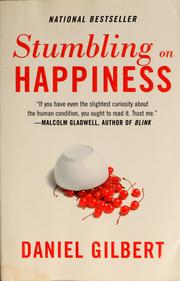 Stumbling on Happiness PsychologyView on Amazon
Details
In this witty introduction to affective forecasting, Harvard psychologist Daniel Gilbert explains why people systematically misimagine future experiences and misjudge what will make them happy. Drawing on psychology, neuroscience, philosophy, and behavioral economics, he examines imagination’s limits—and argues that other people’s lived experience may predict our future feelings better than our own fantasies.
-
 The Subtle Art of Not Giving a F*ck : A Counterintuitive Approach to Living a Good Life Productivity & Self-Improvement
Details
A blunt, provocative self-help book about directing attention toward values that genuinely matter rather than chasing universal approval, constant positivity, or status. Manson argues that a good life still contains pain, limits, failure, and responsibility; the aim is not to eliminate these problems but to choose more worthwhile ones.
-
 Super Pumped : The Battle for Uber Entrepreneurship & StartupsView on Amazon
Details
Mike Isaac’s investigative history of Uber’s rise from a smartphone-enabled transportation experiment to a global technology powerhouse—and Travis Kalanick’s ouster in 2017. The book examines the company’s growth-at-all-costs strategy, regulatory battles, investor pressure, driver economics, toxic workplace culture, and the Silicon Valley ideology that helped make Uber both extraordinarily successful and deeply unstable.
-
 Sweat the Technique : Revelations on Creativity from the Lyrical Genius Creativity & WritingView on Amazon
Details
Part memoir and part creativity guide, Sweat the Technique presents Rakim’s approach to lyric writing, rhythm, storytelling, and artistic identity. Drawing on his musical influences, spiritual outlook, and career, it frames strong writing as a disciplined practice: develop consciousness, study language, find purpose, and repeatedly refine technique.
-
 SYSTEMology : Create time, reduce errors and scale your profits with proven business systems Entrepreneurship & StartupsView on Amazon
Details
David Jenyns presents a practical, seven-stage method for reducing owner-dependence in small businesses. Rather than asking the owner to document everything, SYSTEMology prioritizes the customer journey, captures existing team knowledge, turns it into usable minimum-viable systems, embeds those systems in daily work, and improves them over time.
T 19 titles
-
 Tao of Charlie Munger : A Compilation of Quotes from Berkshire Hathaway's Vice Chairman on Life, Business, and the Pursuit of Wealth Finance & InvestingView on Amazon
Details
A thematic primer on Charlie Munger’s views about investing, business, learning, and living well. David Clark organizes 138 Munger quotations—drawn from interviews, speeches, shareholder meetings, and related sources—into four broad sections, then adds brief interpretive commentary. It is best used as a compact reminder of Munger’s mental habits, not as a complete investment guide.
-
 The Tao of Pooh PhilosophyView on Amazon
Details
Benjamin Hoff’s accessible, playful introduction to Taoism uses Winnie-the-Pooh and the inhabitants of the Hundred Acre Wood to illustrate naturalness, simplicity, balance, and wu wei—acting without forced effort. Its memorable analogies make Taoist ideas approachable, though its selective, Americanized presentation should be treated as an invitation to further study rather than a definitive account.
-
 Technopoly : The Surrender of Culture to Technology Politics & SocietyView on Amazon
Details
Neil Postman traces the movement from cultures that use tools, through technocracy, to “technopoly,” where technological efficiency, measurement, and expert systems become the chief authorities for public life. He examines how this shift reshapes education, medicine, journalism, politics, religion, and ideas of intelligence, truth, and human purpose.
-
 That Will Never Work : The Birth of Netflix and the Amazing Life of an Idea Entrepreneurship & StartupsView on Amazon
Details
A candid account of Netflix’s uncertain beginnings, told by co-founder and first CEO Marc Randolph. The book follows the company from a loose collection of unlikely ideas through DVD-by-mail experiments, subscription-model breakthroughs, painful setbacks, and eventual public offering—while extracting practical lessons about testing, persistence, leadership, and entrepreneurial judgment.
-
 Things Hidden Since the Foundation of the World Politics & SocietyView on Amazon
Details
A wide-ranging dialogue in which René Girard, joined by psychiatrists Jean-Michel Oughourlian and Guy Lefort, presents his mature theory of mimetic desire, rivalry, scapegoating, sacrifice, myth, and Christianity. The book links anthropology, psychology, literature, and biblical interpretation into one ambitious account of how societies generate order from collective violence.
-
 Think Simple : How Smart Leaders Defeat Complexity Business & StrategyView on Amazon
Details
Ken Segall broadens his Apple-based argument for simplicity into a cross-industry leadership study. Drawing on interviews with more than 40 business leaders, he examines how mission, culture, leadership, hiring, branding, product choices, and intuition can reduce organizational complexity—while acknowledging that creating simple experiences often requires substantial hidden effort.
-
 Thinking, Fast and Slow PsychologyView on Amazon
Details
Daniel Kahneman synthesizes decades of research with Amos Tversky and others to explain how intuitive judgments and deliberate reasoning interact. The book examines predictable errors in estimation, probability, choice, memory, and forecasting, while offering practical ways to structure decisions. It is influential, but some cited priming findings have since faced replication problems.
-
 This Is Marketing Marketing & SalesView on Amazon
Details
Seth Godin reframes marketing as the ethical work of helping a particular group make a desired change. Rather than pursuing mass attention, marketers should understand people’s worldviews, choose a smallest viable audience, build trust and permission, create meaningful tension, and offer products and stories that help customers become who they want to be.
-
 The Time Paradox : The New Psychology of Time That Will Change Your Life PsychologyView on Amazon
Details
Philip Zimbardo and John Boyd explain how learned attitudes toward past, present, and future shape judgment, motivation, health, relationships, and risk. Using the Zimbardo Time Perspective Inventory, they distinguish several recurring temporal biases and argue that wellbeing depends less on living only in the present than on developing a flexible, balanced time perspective.
-
 The Tipping Point : How Little Things Can Make a Big Difference PsychologyView on Amazon
Details
Malcolm Gladwell’s 2000 debut examines why social, commercial, and behavioral changes sometimes spread abruptly rather than gradually. Using case studies from fashion, crime, disease, advertising, children’s television, and history, he proposes that epidemics depend on a few influential people, memorable messages, and environments that amplify small causes.
-
 Too Soon Old, Too Late Smart : Thirty True Things You Need to Know Now PsychologyView on Amazon
Details
Psychiatrist and Vietnam veteran Gordon Livingston distills thirty lessons about living, loving, grieving, changing, and accepting limits. Drawing on clinical experience and profound personal loss—including the deaths of two sons—he argues for behavioral honesty, emotional courage, patience, and purposeful action rather than self-deception or passive hope.
-
 Traction : How Any Startup Can Achieve Explosive Customer Growth Marketing & SalesView on Amazon
Details
A practical startup-growth manual arguing that product development and customer acquisition must advance together. Weinberg and Mares catalog nineteen traction channels, then offer the Bullseye framework for testing them systematically, finding the most promising channel, and concentrating resources on repeatable customer growth rather than scattered marketing activity.
-
 Tribe of Mentors : Short Life Advice from the Best in the World Productivity & Self-ImprovementView on Amazon
Details
Tim Ferriss asks more than 100 accomplished people—from athletes and artists to investors, entrepreneurs, and writers—the same set of practical questions about books, habits, decisions, failure, learning, and priorities. The result is a browsable anthology of condensed advice: useful less as a unified system than as a prompt for better questions and experiments.
-
 Tribes : We Need You to Lead Us Marketing & SalesView on Amazon
Details
A compact leadership-and-marketing manifesto arguing that people can create change by gathering a “tribe”: a community connected to one another, a leader, and a shared idea. Godin emphasizes passion, communication, dissent, and voluntary leadership over hierarchy, while offering stories and provocation more than a systematic how-to method.
-
 Trillion Dollar Coach : The Leadership Playbook of Silicon Valley's Bill Campbell Business & StrategyView on Amazon
Details
A tribute and practical leadership guide built from the methods of Bill Campbell, the former football coach and Silicon Valley adviser to leaders at Apple, Google, Intuit, and other major companies. The authors translate his relationship-centered coaching into principles for building trust, strengthening teams, giving candid feedback, and developing leaders.
-
 Trump : The Art of the Deal Business & StrategyView on Amazon
Details
A highly stylized 1987 memoir and business manifesto presenting Donald Trump’s rise through New York real estate, illustrated by projects such as Trump Tower, Wollman Rink, and the Commodore deal. Its practical advice emphasizes branding, leverage, persistence, publicity, and aggressive negotiation, but its self-promotional narrative and disputed authorship require critical distance.
-
 Trust Me, I'm Lying : Confessions of a Media Manipulator Politics & SocietyView on Amazon
Details
Ryan Holiday’s 2012 exposé of online media examines how traffic incentives, rushed publishing, sensational headlines, and weak verification let publicists manufacture news. Drawing on his own work manipulating blogs and journalists, Holiday explains how stories can be seeded in small outlets, amplified by larger ones, and transformed into apparently independent public reality.
-
 The Truth : An Uncomfortable Book About Relationships PhilosophyView on Amazon
Details
A provocative memoir about Neil Strauss’s struggle to reconcile sexual freedom, infidelity, commitment, and intimacy. Moving through sex-addiction treatment, monogamy, and experiments with polyamory, Strauss investigates whether relationship problems come from the structure of a relationship—or from unresolved insecurity, compulsive behavior, and inherited emotional patterns.
-
 Turning the Flywheel : A Monograph to Accompany Good to Great Business & StrategyView on Amazon
Details
A concise follow-up to Good to Great that develops the flywheel as a practical model for organizational momentum. Collins explains how to identify a sequence of mutually reinforcing activities, align people and resources around it, maintain disciplined repetition, and renew the system as conditions change. Examples span corporations, nonprofits, hospitals, arts organizations, and schools.
U 6 titles
-
 The Unabomber Manifesto : Industrial Society and Its Future Politics & SocietyView on Amazon
Details
A 1995 anti-industrial manifesto arguing that modern technological systems erode autonomy, intensify psychological strain, damage the natural world, and become increasingly difficult to control. Kaczynski links these effects to a “power process” of striving toward meaningful goals, and advocates revolutionary opposition to the industrial-technological system rather than gradual reform.
-
 Understanding Media : The Extensions of Man Culture & MediaView on Amazon
Details
Marshall McLuhan’s landmark 1964 study of how media technologies reorganize human perception, social relationships, and institutions. Moving from the alphabet and print to the telegraph, telephone, film, radio, television, and automation, McLuhan asks readers to examine each medium’s structural effects—not merely the messages it carries.
-
 The Unpublished David Ogilvy Marketing & SalesView on Amazon
Details
A curated anthology of David Ogilvy’s private memos, letters, lists, speeches, management papers, and a late-life interview. Rather than presenting a single theory of advertising, it shows how Ogilvy thought in practice: research before persuasion, write clearly, respect the audience, develop talent, and use disciplined creativity. The 2012 Profile edition expands the original 1986–87 publication.
-
 Unreasonable Hospitality : The Remarkable Power of Giving People More Than They Expect Business & StrategyView on Amazon
Details
A memoir-driven leadership guide from Will Guidara, former co-owner of Eleven Madison Park. He argues that exceptional organizations combine technical excellence with deliberate hospitality: making people feel seen, empowering employees to create memorable moments, and building a culture whose standards apply internally as seriously as they do to customers.
-
 Useful Not True Productivity & Self-Improvement
Details
A compact guide to reframing: Derek Sivers argues that many beliefs, explanations, rules, and self-judgments are perspectives rather than absolute truths. By questioning first impressions, considering alternative frames, and choosing ideas for their usefulness, readers can make better decisions, act more effectively, understand others with greater empathy, and revise their thinking deliberately.
-
 UX for Beginners : A Crash Course in 100 Short Lessons Technology & ProductView on Amazon
Details
A fast, humorous introduction to user-experience design that moves from psychology and user research through information architecture, interaction design, visual communication, persuasion, analytics, testing, and UX careers. Marsh presents 100 standalone lessons as a practical map of the field rather than a deep treatment of any one method.
V 2 titles
-
 Vagabonding : An Uncommon Guide to the Art of Long-Term World Travel LifestyleView on Amazon
Details
Rolf Potts combines practical planning with a philosophy of slow, independent travel. He argues that long-term travel is less about wealth, escape, or exotic destinations than about deliberately creating time, simplifying possessions, staying open to unfamiliar people and places, and treating travel as a way to revise one’s assumptions about ordinary life.
-
 The Virtue of Selfishness : A New Concept of Egoism PhilosophyView on Amazon
Details
Ayn Rand’s 1964 collection presents the ethical core of Objectivism: rational self-interest, individual rights, productive achievement, and a rejection of altruism as a moral obligation. Essays move from first principles in ethics to emergencies, compromise, government, racism, and life in an irrational society, showing how Rand connects personal morality to laissez-faire politics.
W 14 titles
-
 Waking Up : A Guide to Spirituality Without Religion PsychologyView on Amazon
Details
Sam Harris argues that spirituality can be understood as disciplined investigation of consciousness rather than belief in God or religious doctrine. Drawing on meditation, neuroscience, Buddhist and Hindu traditions, psychedelic experience, and philosophy, he focuses on suffering, attention, and the possibility of recognizing the self as a mental construction.
-
 Walden : Or, Life in the Woods Politics & SocietyView on Amazon
Details
A literary account of Henry David Thoreau’s two years living in a cabin near Walden Pond, combining practical experiments in economy with reflections on work, attention, solitude, nature, reading, society, and moral independence. The book is less a wilderness manual than a philosophical challenge to inherited habits and unnecessary consumption.
-
 Wanting : The Power of Mimetic Desire in Everyday Life PsychologyView on Amazon
Details
Luke Burgis introduces René Girard’s theory of mimetic desire: people often learn what to want by observing models, which can produce rivalry, anxiety, consumerism, and group conflict. He combines philosophical anthropology, entrepreneurial experience, cultural examples, and practical exercises for turning borrowed, “thin” desires toward more deliberate, relational, and meaningful forms of wanting.
-
 The War of Art : Winning the Inner Creative Battle Creativity & WritingView on Amazon
Details
Steven Pressfield’s compact manifesto on the inner obstacles that derail creative work. He personifies procrastination, fear, self-doubt, perfectionism, and self-sabotage as “Resistance,” then argues that the remedy is to adopt a professional identity: show up consistently, treat creativity as craft, tolerate discomfort, and work regardless of inspiration.
-
 The Way of the Turtle : The Secret Methods that Turned Ordinary People into Legendary Traders Finance & InvestingView on Amazon
Details
Curtis Faith’s insider account of Richard Dennis’s Turtle experiment and the systematic trend-following methods taught to its recruits. The book combines trading memoir, rules for entries, exits, position sizing, diversification, and risk control, with broader lessons about probability, discipline, backtesting, and the psychological demands of following a strategy through losses and uncertainty.
-
 White HistoryView on Amazon
Details
A provocative 2019 collection of memoiristic essays and cultural criticism in which Bret Easton Ellis examines artistic freedom, social media, political polarization, Hollywood, identity politics, and changing standards of public speech. Part personal history, part polemic, White argues against enforced likeability and ideological conformity while exposing the author’s own generational and cultural blind spots.
-
 Who Moved My Cheese? An Amazing Way to Deal with Change in Your Work and in Your Life LifestyleView on Amazon
Details
A brief workplace-and-life parable about four maze-dwellers whose cheese—representing desired security, success, relationships, health, or purpose—disappears. Spencer Johnson argues that people cope better with uncertainty when they notice change early, release outdated expectations, experiment quickly, and treat adaptation as an ongoing practice rather than a crisis.
-
 Why Liberalism Failed Politics & SocietyView on Amazon
Details
Patrick J. Deneen argues that liberalism’s current crisis is not an accidental failure but the consequence of its underlying logic. By elevating individual autonomy, market choice, technological mastery, and centralized administration, liberalism weakens the communities, traditions, civic habits, and forms of shared meaning that make freedom possible.
-
 Why Taiwan Matters : A Short History of a Small Island That Will Dictate Our Future HistoryView on Amazon
Details
Kerry Brown traces Taiwan’s transformation from contested colonial territory and Nationalist refuge into a prosperous democracy whose identity is distinct from, yet historically entangled with, China. He argues that Taiwan’s semiconductor industry, strategic location, democratic system, and ambiguous international status make the island a potential trigger for a wider U.S.–China war.
-
 Why We Sleep : Unlocking the Power of Sleep and Dreams LifestyleView on Amazon
Details
Matthew Walker’s accessible tour of sleep science argues that sleep is not passive downtime but a biological necessity supporting memory, emotional regulation, metabolism, immunity, and health. The book explains sleep timing, stages, dreams, deprivation, and disorders, then offers practical guidance—though several dramatic claims and statistics have been challenged by later scrutiny.
-
 Win Bigly Marketing & SalesView on Amazon
Details
Scott Adams analyzes Donald Trump’s 2016 campaign as a case study in high-impact persuasion. He argues that emotion, imagery, identity, repetition, and attention often shape belief more powerfully than facts alone, then turns those observations into a practical vocabulary for marketing, sales, leadership, and resisting manipulation.
-
 Wisdom of Life PhilosophyView on Amazon
Details
In this practical essay from Parerga and Paralipomena (1851), Schopenhauer develops a deliberately modest “eudaemonology”: guidance for arranging life to reduce suffering and increase contentment. He emphasizes health, temperament, possessions, reputation, relationships, solitude, self-knowledge, and realistic expectations—while acknowledging that his everyday advice compromises his deeper pessimistic metaphysics.
-
 Witness to Roswell : Unmasking the Government's Biggest Cover-up HistoryView on Amazon
Details
Thomas J. Carey and Donald R. Schmitt argue that the 1947 Roswell incident involved the recovery of an extraterrestrial craft and bodies, followed by a coordinated military cover-up. The book builds its case from witness interviews, later testimonies, affidavits, military records, and competing explanations, while offering little sustained engagement with skeptical interpretations.
-
 Work Rules! : Insights from Inside Google That Will Transform How You Live and Lead Business & StrategyView on Amazon
Details
Laszlo Bock’s account of Google’s People Operations argues that organizations perform better when they replace excessive managerial control with trust, rigorous hiring, transparent information, experimentation, and evidence-based people practices. The book combines Google examples with research and practical recommendations, while also revealing how difficult—and context-dependent—it is to reproduce Google’s culture elsewhere.
Y 1 title
-
 Your Money or Your Life Finance & InvestingView on Amazon
Details
A practical and philosophical personal-finance program for treating money as stored life energy. Joe Domínguez and Vicki Robin guide readers through tracking every financial exchange, calculating the true cost of employment, aligning spending with values, increasing income, eliminating debt, and investing toward financial independence. The book emphasizes enoughness over conventional consumer success.
Z 2 titles
-
 ZAG : The #1 Strategy of High-Performance Brands Marketing & SalesView on Amazon
Details
A compact brand-strategy guide arguing that crowded markets reward radical differentiation rather than incremental improvement. Marty Neumeier presents a practical process for finding an unoccupied position, expressing it clearly, aligning the entire brand system around it, and renewing that position as competition, technology, and customer expectations change.
-
 Zero to One : Notes on Startups, or How to Build the Future Entrepreneurship & StartupsView on Amazon
Details
Peter Thiel’s contrarian startup guide argues that durable value comes from creating something genuinely new—moving from “zero to one”—rather than copying existing businesses. Founders should seek defensible, initially narrow monopolies, uncover overlooked truths, plan for a definite future, and treat distribution, organizational design, and long-term technological progress as strategic problems.
# 12 titles
-
 "Surely You're Joking, Mr. Feynman!" : Adventures of a Curious Character Biography & MemoirView on Amazon
Details
An episodic memoir assembled from Richard Feynman’s recorded conversations with Ralph Leighton, this book follows the Nobel-winning physicist from childhood and education through Los Alamos, teaching, research, music, practical jokes, and unconventional adventures. Its real subject is less chronology than a style of living: intensely curious, skeptical, playful, and resistant to authority.
-
 The $100 Startup : Reinvent the Way You Make a Living, Do What You Love, and Create a New Future Entrepreneurship & StartupsView on Amazon
Details
Chris Guillebeau’s practical guide to building a small, profitable business around an existing skill, a clear customer need, and a simple offer. Through dozens of case studies, he argues that many “freedom businesses” require little capital, experimentation rather than elaborate planning, and a deliberate focus on usefulness, pricing, and lifestyle design.
-
 1 Liter of Tears Biography & MemoirView on Amazon
Details
Aya Kitō’s diary records six years of life with spinocerebellar degeneration, from the first signs of illness in adolescence through progressive loss of movement, speech, and independence. Written while she could, the book combines intimate self-observation with a persistent search for dignity, purpose, connection, and reasons to keep living.
-
 The 1-Page Marketing Plan Marketing & SalesView on Amazon
Details
Allan Dib presents a compact marketing system for small and midsize businesses: identify a narrowly defined target market, communicate a compelling offer, generate and nurture leads, convert them into customers, then increase retention, repeat purchases, and referrals. The framework organizes these activities into nine linked steps on a single page.
-
 100 Plus : How the Coming Age of Longevity Will Change Everything, From Careers and Relationships to Family and Faith LifestyleView on Amazon
Details
Sonia Arrison’s 100 Plus explores how regenerative medicine and life-extension technologies could make healthy lives beyond 100 increasingly plausible. Rather than treating longevity as a medical issue alone, Arrison examines its consequences for work, education, marriage, childbearing, family structure, economics, population, religion, and personal purpose.
-
 12 Rules for Life : An Antidote to Chaos PsychologyView on Amazon
Details
A wide-ranging self-help book that combines clinical psychology, evolutionary ideas, biblical stories, mythology, and personal anecdotes into twelve prescriptions for living. Peterson’s central counsel is to assume responsibility, impose workable order, pursue meaning rather than comfort, speak truthfully, and balance stability with openness to uncertainty.
-
 The 22 Immutable Laws of Marketing Marketing & SalesView on Amazon
Details
A compact, provocative guide to positioning brands in customers’ minds. Ries and Trout argue that marketing success depends less on product superiority than on mental availability, category ownership, focused claims, and strategic sacrifice. Its memorable “laws” are useful heuristics, though the authors present contestable historical patterns as universal rules.
-
 The 4 Hour Work Week Productivity & Self-ImprovementView on Amazon
Details
Tim Ferriss’s controversial guide to “lifestyle design” argues that freedom matters more than maximizing income or postponing life until retirement. Using the DEAL sequence—Define, Eliminate, Automate, Liberate—it combines productivity tactics, small-business experimentation, outsourcing, remote work, and mobility, while often presenting unusually favorable entrepreneurial examples as broadly reproducible.
-
 The 48 Laws of Power Politics & SocietyView on Amazon
Details
Robert Greene and Joost Elffers present 48 deliberately provocative principles for gaining, preserving, interpreting, and resisting power. Drawing on historical figures, strategic texts, court politics, warfare, and social maneuvering, the book treats power as a recurring human pattern—while its anecdotal method and amoral framing remain central points of criticism.
-
 The 5 Love Languages : The Secret to Love That Lasts PsychologyView on Amazon
Details
Gary Chapman’s relationship guide presents five broad ways partners may express and perceive love: words of affirmation, quality time, gifts, acts of service, and physical touch. Its central advice is to identify a partner’s preferred mode and deliberately offer care in that form, while recognizing that the framework is practical popular psychology rather than well-validated relationship science.
-
 The 7 Habits of Highly Effective People : Powerful Lessons in Personal Change Productivity & Self-ImprovementView on Amazon
Details
Stephen R. Covey’s classic framework for lasting personal and interpersonal effectiveness. Rather than treating productivity as a collection of techniques, Covey argues that reliable results grow from character, principles, deliberate priorities, empathic communication, mutual benefit, cooperation, and continual renewal. The habits progress from self-mastery to interdependence and sustained growth.
-
 7 Powers : The Foundations of Business Strategy Business & StrategyView on Amazon
Details
Hamilton Helmer presents a compact theory of durable competitive advantage. Businesses create lasting value when they develop “Power”: a benefit that improves cash flow and a barrier that prevents competitors from copying it away. The book identifies seven recurring forms of Power and explains how timing, invention, and strategic choices determine whether they emerge.
Collection
Fiction 67
A 7 titles
-
 The Alchemist Literary & Philosophical FictionView on Amazon
Details
Paulo Coelho’s brief philosophical fable follows Santiago, an Andalusian shepherd who crosses cultures and landscapes in pursuit of a dream about treasure near the Egyptian pyramids. Along the way, mentors, setbacks, love, and chance reshape his understanding of destiny, attention, courage, and what it means to recognize a meaningful life.
-
 American Psycho Transgressive & Satirical FictionView on Amazon
Details
Bret Easton Ellis’s 1991 transgressive novel follows Patrick Bateman, a wealthy Manhattan investment banker whose immaculate yuppie lifestyle coexists with extreme violence. Through repetition, consumer catalogues, black comedy, and radically unreliable narration, the book satirizes 1980s privilege while confronting misogyny, dehumanization, identity, and the limits of representing brutality.
-
 Animal Farm Dystopian & Political FictionView on Amazon
Details
George Orwell’s 1945 political fable follows the animals of Manor Farm as they overthrow human rule and attempt to build an equal society. Through allegory, satire, and increasingly distorted language, the novella examines how revolutionary ideals are captured by ambitious leaders, how history is rewritten, and why oppressed people may accept new forms of domination.
-
 Anthem Dystopian & Political FictionView on Amazon
Details
Ayn Rand’s 1938 dystopian novella imagines a society that has abolished individuality, private choice, and even the language of personal identity. Written as a compressed philosophical fable, it follows a young person’s movement from obedient collectivism toward self-recognition, intellectual independence, and a radically individualist view of human purpose.
-
 Atlas Shrugged Dystopian & Political FictionView on Amazon
Details
Ayn Rand’s 1957 dystopian novel follows railroad executive Dagny Taggart as industry, invention, and public life deteriorate under coercive regulations and moral condemnation of achievement. Structured as a mystery around the disappearance of society’s most capable producers, the novel dramatizes Rand’s defense of reason, individualism, rational self-interest, and laissez-faire capitalism.
-
 The Average American Male Transgressive & Satirical FictionView on Amazon
Details
Chad Kultgen’s 2007 debut is a deliberately abrasive, first-person satire of a sexually compulsive Los Angeles man who treats women, relationships, and everyday life through a relentlessly objectifying inner monologue. Its provocation lies in the ambiguity: confession, caricature, or critique of contemporary masculinity?
-
 The Average American Marriage Transgressive & Satirical FictionView on Amazon
Details
Chad Kultgen’s sequel to The Average American Male follows an unnamed, sexually preoccupied husband and father whose boredom with marriage, resentment of domestic responsibility, and attraction to a younger coworker expose the gap between social roles and private impulses. It is deliberately crude, bleak satire—but critics disagree whether its provocation becomes meaningful social criticism.
B 3 titles
-
 The Baron in the Trees Literary & Philosophical FictionView on Amazon
Details
Italo Calvino’s whimsical philosophical novel follows Cosimo di Rondò, an eighteenth-century Italian nobleman who climbs into the trees at twelve and refuses ever to return to the ground. From this impossible vantage point, he pursues independence, love, learning, civic responsibility, and an alternative relationship to society.
-
 The Boys Comics & Graphic NovelsView on Amazon
Details
Garth Ennis and Darick Robertson’s opening collection introduces a government-backed team policing a corrupt, celebrity-driven superhero culture. Through Wee Hughie’s recruitment and Billy Butcher’s ruthless leadership, the book combines grotesque satire, brutal action, and genuine unease about power without accountability. It collects the first six issues of the series.
-
 Brave New World Dystopian & Political FictionView on Amazon
Details
Aldous Huxley’s 1932 dystopian satire imagines a World State that achieves stability by engineering people, conditioning desire, abolishing family bonds, and pacifying discontent with pleasure and consumption. Through outsiders who cannot comfortably fit its system, the novel asks whether comfort, efficiency, and social order are worth the loss of freedom, art, truth, and moral choice.
C 6 titles
-
 Casino Royale Spy & Thriller FictionView on Amazon
Details
Ian Fleming’s 1953 debut novel introduces a literary James Bond who confronts Soviet-linked financier Le Chiffre at the baccarat table in Royale-les-Eaux. More psychologically intimate and morally unsettled than the later films, it combines espionage, gambling, romance, torture, and Cold War anxiety while establishing Bond as both professional instrument and vulnerable man.
-
 Convenience Store Woman Literary FictionView on Amazon
Details
Sayaka Murata’s unsettling, darkly comic novel follows Keiko Furukura, a 36-year-old Tokyo convenience-store worker who finds purpose in the store’s precise routines but becomes an object of concern because she does not pursue marriage, children, or a conventional career. A sharp study of conformity, identity, labor, and social usefulness.
-
 The Course of Love : A Novel Literary FictionView on Amazon
Details
A philosophical novel about Rabih and Kirsten, an ordinary couple whose attraction develops into marriage, parenthood, conflict, and the ongoing work of staying together. De Botton combines intimate domestic scenes with essay-like reflections on romantic ideals, childhood patterns, sex, fidelity, disappointment, and the psychological skills required by long-term love.
-
 Crime and Punishment Literary FictionView on Amazon
Details
Fyodor Dostoyevsky’s psychological novel follows Rodion Raskolnikov, an impoverished former student who commits murder to test a theory about exceptional people and morality. Set in a feverish, impoverished St. Petersburg, the story examines guilt, isolation, pride, compassion, faith, and whether moral renewal can be achieved through suffering and human connection.
-
 Crooked Little Vein Transgressive & Satirical FictionView on Amazon
Details
Warren Ellis’s first prose novel is a hard-boiled road mystery in which washed-up private investigator Michael McGill searches for a supposedly secret American Constitution. The investigation becomes a grotesque tour through sexual subcultures, political corruption, conspiracy, and internet-age voyeurism—a deliberately excessive satire of what “mainstream” America hides, tolerates, or consumes.
-
 The Curse of Lono Cult & Experimental FictionView on Amazon
Details
An illustrated gonzo account of Hunter S. Thompson’s 1980 Hawaii assignment to cover the Honolulu Marathon, which rapidly mutates into a hallucinatory expedition involving Hawaiian mythology, Captain Cook, fishing, tourism, violence, and self-parody. Ralph Steadman’s artwork amplifies the book’s collision of travel writing, satire, memoir, and cultural critique.
D 2 titles
-
 Daytripper Comics & Graphic NovelsView on Amazon
Details
Fábio Moon and Gabriel Bá’s lyrical graphic novel follows Brás de Oliva Domingos, a Brazilian obituary writer, through decisive moments that may each become his final day. Moving nonchronologically across love, family, friendship, parenthood, and artistic ambition, Daytripper uses recurring death not as a puzzle but as a way to examine how ordinary life becomes meaningful.
-
 The Death of Ivan Ilyich Literary FictionView on Amazon
Details
Leo Tolstoy’s 1886 novella follows Ivan Ilyich, a successful Russian judge whose apparently respectable life is unsettled by a fatal illness. As professional status, domestic comfort, and social convention lose their protective power, Tolstoy examines mortality, self-deception, suffering, compassion, and the difficult possibility of living authentically.
E 4 titles
-
 Earthlings Literary FictionView on Amazon
Details
Sayaka Murata’s unsettling novel follows Natsuki, a lonely girl who imagines herself an alien and finds refuge with her cousin Yuu. As childhood trauma, family dysfunction, and social expectations accumulate, their outsider identities harden into a radical rejection of “normal” life. The book combines deadpan narration, speculative fantasy, psychological horror, and social critique.
-
 The Elementary Particles Literary & Philosophical FictionView on Amazon
Details
Michel Houellebecq’s controversial second novel follows half-brothers Bruno, a sexually desperate teacher, and Michel, an emotionally detached molecular biologist. Their contrasting responses to family abandonment, the sexual revolution, and modern individualism form a bleak philosophical fiction about loneliness, desire, scientific rationality, and the possibility—or danger—of escaping human nature.
-
 Ender's Game Science FictionView on Amazon
Details
Orson Scott Card’s military science-fiction novel follows Andrew “Ender” Wiggin, a gifted child recruited into an orbital Battle School to prepare humanity for another attack by the Formics. Through competitive games, isolation, and escalating adult manipulation, Ender becomes both an extraordinary strategist and a test case for the moral costs of turning children into weapons.
-
 Eumeswil Literary FictionView on Amazon
Details
Ernst Jünger’s philosophical dystopian novel follows Manuel Venator, a historian and night steward serving the dictator of a technologically advanced city-state in a post-catastrophic future. Through Venator’s historical reflections, political observations, and cultivated detachment, the novel develops Jünger’s ideal of the “Anarch”: an inwardly sovereign person who remains free while living under power.
F 5 titles
-
 Factotum Transgressive & Satirical FictionView on Amazon
Details
Published in 1975, Charles Bukowski’s picaresque novel follows Henry Chinaski, his fictional alter ego, through the dead-end jobs, cheap rooms, drinking, sex, and rejection that define his early adulthood. Set during the 1940s, Factotum is less a conventional coming-of-age story than a bitterly comic study of work, freedom, and artistic self-preservation.
-
 Fahrenheit 451 Dystopian & Political FictionView on Amazon
Details
Ray Bradbury’s 1953 dystopian novel follows Guy Montag, a fireman whose society burns books and replaces reflection with speed, entertainment, and conformity. As Montag encounters people who still notice, remember, and question, he begins to recognize the emotional and political cost of a culture that has surrendered curiosity and judgment.
-
 Fear and Loathing in Las Vegas Transgressive & Satirical FictionView on Amazon
Details
Hunter S. Thompson’s hallucinatory, semi-fictional road narrative follows journalist Raoul Duke and Dr. Gonzo through Las Vegas on an assignment that becomes a savage examination of drugs, spectacle, violence, journalism, and the collapse of 1960s counterculture. Ralph Steadman’s grotesque illustrations intensify the book’s attack on the American Dream.
-
 Fight Club Transgressive & Satirical FictionView on Amazon
Details
Chuck Palahniuk’s 1996 debut is a compressed, abrasive satire of consumer culture, emotional numbness, and masculine alienation. An unnamed narrator’s insomnia and dissatisfaction lead him toward an underground community organized around violence, ritual, and rebellion. The novel’s fragmented style and unstable perspective make its critique both provocative and deliberately difficult to contain.
-
 The Fountainhead Literary FictionView on Amazon
Details
Ayn Rand’s 1943 novel follows Howard Roark, an uncompromising modernist architect whose work and principles collide with professional conventions, public opinion, and rival visions of success. Through Roark, Dominique Francon, Peter Keating, Ellsworth Toohey, and Gail Wynand, Rand dramatizes creative independence, egoism, conformity, power, and the moral costs of living through others.
G 2 titles
-
 God's Debris : A Thought Experiment Cult & Experimental FictionView on Amazon
Details
A compact philosophical novella in which a delivery driver encounters an apparently omniscient old man and hears an unsettling theory about God, consciousness, probability, free will, and human purpose. The narrative is mainly a vehicle for dialogue and speculation, inviting readers to identify weaknesses in an explanation that initially seems to unify everything.
-
 The Greatest Salesman in the World Cult & Experimental FictionView on Amazon
Details
Og Mandino’s 1968 motivational parable follows Hafid, a poor camel boy who receives ten ancient scrolls from his mentor and learns to become an exceptional merchant—and a more disciplined, loving, purposeful person. Part sales manual, part spiritual fable, it presents success as the result of practiced habits, persistence, emotional mastery, and service.
H 3 titles
-
 Ham on Rye Transgressive & Satirical FictionView on Amazon
Details
Charles Bukowski’s 1982 semi-autobiographical novel follows Henry Chinaski from childhood through adolescence in Depression-era Los Angeles. Abuse at home, humiliating illness, schoolyard violence, poverty, reading, sex, and alcohol shape an anti-coming-of-age story whose blunt humor exposes the gap between American ideals and lived experience.
-
 Haunted Transgressive & Satirical FictionView on Amazon
Details
A grotesque, comic novel built from twenty-three stories told by aspiring writers trapped at a supposedly private retreat. As the group’s manufactured ordeal intensifies, Palahniuk satirizes literary ambition, reality television, celebrity, consumer culture, and the market for personal trauma—while testing how far storytelling can go before shock becomes spectacle.
-
 The Hitchhiker's Guide to the Galaxy Science FictionView on Amazon
Details
Douglas Adams’s 1979 science-fiction comedy follows ordinary Englishman Arthur Dent after Earth is abruptly destroyed and he is swept into a wildly illogical interstellar journey. Combining deadpan British humor, playful pseudo-science, comic bureaucracy, and genuine existential questions, the novel treats cosmic catastrophe as an opportunity to examine how humans search for order and meaning.
I 2 titles
-
 Ichi The Killer Manga
Details
Hideo Yamamoto’s psychologically extreme yakuza thriller follows Ichi, a seemingly helpless man whose tears precede explosive violence, and Kakihara, a sadomasochistic enforcer drawn toward pain and spectacle. The manga uses grotesque brutality, unstable identities, and criminal power struggles to probe cruelty, desire, humiliation, and the human appetite for revenge.
-
 Imperial Bedrooms Transgressive & Satirical FictionView on Amazon
Details
A bleak, elliptical sequel to Less Than Zero, Imperial Bedrooms follows screenwriter Clay’s return to Los Angeles, where casting a film draws him back into old friendships, sexual rivalries, celebrity culture, and a threatening atmosphere of surveillance. Ellis turns Hollywood’s polished surfaces into a noir landscape of desire, manipulation, and moral vacancy.
J 1 title
-
 Jurassic Park Science FictionView on Amazon
Details
Michael Crichton’s 1990 techno-thriller imagines a Costa Rican theme park populated by cloned dinosaurs. As the park’s designers try to turn a complex living system into a controlled commercial attraction, scientific ambition, corporate secrecy, and unpredictable animal behavior combine to produce a relentlessly escalating crisis.
L 7 titles
-
 The Last Question Science Fiction
Details
Isaac Asimov’s 1956 science-fiction short story follows humanity’s repeated attempts, across immense stretches of cosmic time, to answer whether the universe’s inevitable running-down can be reversed. As successive generations merge with increasingly powerful computers, the story becomes a sweeping meditation on entropy, technological transcendence, mortality, and the persistence of human curiosity.
-
 Less Than Zero Transgressive & Satirical Fiction
Details
Bret Easton Ellis’s 1985 debut follows Clay, a detached college student returning to affluent Los Angeles for Christmas. Moving through parties, clubs, drugs, and damaged friendships, the novel presents privilege as a culture of emotional vacancy. Its power lies less in conventional plot than in its unnervingly flat, accumulating atmosphere.
-
 The Little Prince Literary & Philosophical FictionView on Amazon
Details
A philosophical illustrated novella in which a stranded aviator encounters a young prince from a tiny asteroid. Through the prince’s travels, friendships, and questions, Antoine de Saint-Exupéry examines loneliness, love, responsibility, imagination, and the limitations of adult notions of knowledge and importance. First published in the United States in 1943.
-
 Lolita Literary FictionView on Amazon
Details
Vladimir Nabokov’s 1955 novel presents the confession of Humbert Humbert, a cultivated but predatory European intellectual obsessed with Dolores Haze, whom he calls “Lolita.” Its central achievement is the collision between dazzling language and moral horror: the reader must detect the abuse that Humbert’s wit, erudition, and self-presentation continually disguise.
-
 The Lost World Science FictionView on Amazon
Details
In this 1995 sequel to Jurassic Park, Ian Malcolm returns to investigate Isla Sorna, where InGen once bred dinosaurs away from public view. A scientific expedition becomes a contest among researchers, corporate predators, and evolving animals. Crichton combines survival-thriller momentum with arguments about extinction, animal behavior, scientific ambition, and humanity’s tendency to misread complex systems.
-
 The Lottery Cult & Experimental FictionView on Amazon
Details
Shirley Jackson’s “The Lottery” is a tightly controlled American horror story about a seemingly ordinary village ritual whose violence is protected by custom, social pressure, and selective memory. First published in The New Yorker in 1948, it remains a compact study of conformity, scapegoating, and the moral danger of treating tradition as justification.
-
 Lunar Park Literary FictionView on Amazon
Details
A metafictional ghost story in which a fictionalized Bret Easton Ellis moves into suburban family life and finds his fame, childhood, previous novels, and buried guilt returning in uncanny forms. Combining mock memoir, domestic drama, satire, and horror, the novel asks whether art can expose—or perpetuate—the damage of its maker.
M 1 title
-
 Men, Women, and Children Transgressive & Satirical FictionView on Amazon
Details
Chad Kultgen’s darkly comic, sexually explicit novel interweaves the lives of junior-high students and their parents in an American suburb. As pornography, gaming, social networking, surveillance, and sexual self-presentation reshape everyday behavior, the book examines how technology intensifies loneliness while making intimacy, privacy, and responsibility increasingly difficult to sustain.
N 2 titles
-
 The New Atlantis Dystopian & Political FictionView on Amazon
Details
An unfinished utopian fable in which European travelers reach Bensalem, an orderly Christian island whose governing ideal is organized investigation of nature. Through the remarkable institution of Salomon’s House, Bacon imagines how disciplined research, ethical purpose, secrecy, and state support might transform society—while leaving unresolved the political costs of rule by knowledge.
-
 No One Is Talking About This Literary FictionView on Amazon
Details
Patricia Lockwood’s formally daring debut follows a woman whose identity, work, and relationships have been shaped by “the portal”—the internet’s endless stream of outrage, jokes, images, and crisis. When a private family emergency demands sustained attention, the novel shifts from satirical digital fragmentation toward an intimate meditation on embodiment, care, grief, language, and love.
O 1 title
-
 On Love Literary FictionView on Amazon
Details
Alain de Botton’s debut novel follows an unnamed London architect who meets Chloe on a flight from Paris and becomes absorbed in an intense affair. Told through numbered, essay-like sections, diagrams, philosophical digressions, and comic analysis, it examines how desire, projection, insecurity, and romantic ideals shape—and distort—the experience of love.
P 6 titles
-
 Post Office Transgressive & Satirical FictionView on Amazon
Details
Charles Bukowski’s 1971 debut novel follows Henry Chinaski through years of work for the U.S. Postal Service, presenting bureaucratic labor as repetitive, absurd, and coercive. Chinaski’s drinking, gambling, sexual appetites, and refusal of respectability create a comic but bleak portrait of survival, alienation, and the costs of preserving personal freedom.
-
 Preacher Comics & Graphic NovelsView on Amazon
Details
Garth Ennis and Steve Dillon’s Preacher: Gone to Texas launches a profane supernatural Western about Reverend Jesse Custer, whose crisis of faith becomes a violent search for God and accountability. Combining road-movie momentum, black comedy, horror, romance, and grotesque satire, it establishes the series’ central friendships, antagonisms, and theological provocations.
-
 Project Hail Mary Science FictionView on Amazon
Details
Andy Weir’s hard-science space adventure follows Ryland Grace, an amnesiac astronaut confronting a civilization-scale threat far from Earth. As he reconstructs his mission and applies problem-solving, the novel expands from solitary survival into an inventive first-contact story about cooperation, communication, sacrifice, and the practical limits of human knowledge.
-
 The Prophet Literary & Philosophical FictionView on Amazon
Details
Kahlil Gibran’s 1923 prose-poem follows Almustafa, a prophet awaiting passage home from the city of Orphalese, as its people ask him to speak about love, work, freedom, sorrow, beauty, friendship, and death. Mystical, aphoristic, and illustrated by Gibran, the book presents spiritual counsel through poetic paradoxes rather than narrative development.
-
 Pulp Transgressive & Satirical FictionView on Amazon
Details
Charles Bukowski’s final completed novel is a deliberately shabby, surreal parody of hard-boiled detective fiction. Private investigator Nicky Belane drifts through seedy Los Angeles while pursuing the supposedly dead writer Céline and the mysterious Red Sparrow. Beneath the crude jokes and genre machinery, the book turns toward mortality, artistic failure, and the absurdity of meaning.
-
 The Punisher MAX Comics & Graphic NovelsView on Amazon
Details
A brutal, darkly comic Punisher MAX spin-off centered on Barracuda, Garth Ennis’s grotesquely charismatic mercenary. After surviving an attempted execution by Frank Castle, Barracuda pursues revenge through a destabilized Central American republic, turning political violence, criminal opportunism, and exploitation into an outrageous black comedy. Mature readers only.
R 2 titles
-
 Ready Player One Science FictionView on Amazon
Details
Ernest Cline’s 2011 science-fiction adventure follows Wade Watts, a teenager in a troubled 2045, as he hunts for a fortune hidden inside the OASIS, a vast virtual world. Its puzzle-driven quest combines dystopian escapism, gaming culture, 1980s nostalgia, friendship, identity, and the question of whether virtual freedom can substitute for a livable reality.
-
 The Rum Diary Transgressive & Satirical FictionView on Amazon
Details
Hunter S. Thompson’s first novel follows young journalist Paul Kemp amid the drunken, corrupt newspaper world of late-1950s San Juan. Part love story, part expatriate farce, it contrasts youthful idealism with commercial exploitation, colonial privilege, and the seductive self-destruction of bohemian freedom. Begun in 1959 and published in 1998.
S 6 titles
-
 Screwjack Transgressive & Satirical FictionView on Amazon
Details
A compact triptych of Hunter S. Thompson stories: a drug-fueled first-person descent, a grotesque account of violence and friendship, and a feverish Raoul Duke narrative about desire, identity, and intimacy. Originally issued as a scarce 1991 limited edition, Screwjack later became a trade publication.
-
 The Silver Eggheads Science FictionView on Amazon
Details
Fritz Leiber’s comic science-fiction satire imagines a future publishing industry run by “wordmills,” machines that manufacture best-selling fiction while human authors perform celebrity roles. When the system collapses, writers, publishers, robots, and preserved literary geniuses compete to determine whether creativity is an art, a commodity, a performance—or simply another industrial process.
-
 Slaughterhouse-Five Literary FictionView on Amazon
Details
Kurt Vonnegut’s 1969 novel follows Billy Pilgrim, an ordinary American soldier who becomes “unstuck in time” after surviving the firebombing of Dresden. Blending autobiography, science fiction, satire, and black comedy, it examines war’s absurdity, trauma’s distortions, and the human desire to impose order on catastrophe without romanticizing combat.
-
 Steppenwolf Literary & Philosophical FictionView on Amazon
Details
Hermann Hesse’s 1927 novel follows Harry Haller, an isolated intellectual who imagines himself divided between civilized humanity and untamed instinct. Through encounters with music, sensuality, friendship, and a destabilizing “magical” realm, the book questions fixed identity, self-loathing, bourgeois respectability, and whether inner conflict can become a path toward fuller life.
-
 Stories of Your Life and Others Science FictionView on Amazon
Details
Ted Chiang’s debut collection gathers eight precise, idea-driven stories spanning science fiction, fantasy, alternate history, and speculative social fiction. Its characters confront radical changes in knowledge, language, faith, intelligence, technology, and perception—while Chiang keeps the emotional consequences as important as the intellectual puzzles.
-
 Submission Dystopian & Political FictionView on Amazon
Details
Michel Houellebecq’s politically provocative dystopian novel follows François, a disillusioned literature professor, through France’s 2022 electoral crisis and the rise of a Muslim-led government. Using Huysmans, academic satire, sexual alienation, and cultural decline, the novel examines how exhausted individuals and institutions may trade freedom for order, belonging, and material comfort.
U 1 title
-
 Uzumaki MangaView on Amazon
Details
Junji Ito’s psychological horror manga follows Kirie Goshima and Shuichi Saito as their coastal hometown, Kurouzu-cho, becomes consumed by a supernatural fixation on spirals. Told through escalating episodes that gradually form a larger pattern, Uzumaki turns an ordinary geometric shape into a source of bodily distortion, social collapse, obsession, and cosmic dread.
W 3 titles
-
 Wake in Fright Literary FictionView on Amazon
Details
Kenneth Cook’s 1961 Australian outback novel follows John Grant, a schoolteacher stranded in Bundanyabba while trying to reach Sydney. Over several feverish days, hospitality becomes coercion, camaraderie becomes complicity, and Grant’s contempt for the town collides with his own susceptibility. A compact, disturbing study of alienation, masculinity, alcohol, and moral surrender.
-
 The Woman in the Dunes Literary FictionView on Amazon
Details
Kōbō Abe’s surreal, claustrophobic novel follows an amateur entomologist who is stranded in a remote coastal village and forced to live at the bottom of a sand pit, where he must help fight the dunes’ relentless advance. Blending suspense, myth, and existential philosophy, it examines freedom, identity, labor, desire, and adaptation.
-
 Women Transgressive & Satirical FictionView on Amazon
Details
Charles Bukowski’s 1978 novel follows Henry Chinaski, a fifty-year-old poet whose new literary success brings money, sexual opportunity, and emotional complications. Told in blunt, comic, deliberately abrasive prose, it examines desire, loneliness, masculine self-mythology, and the difficulty of intimacy while inviting—and frustrating—readers who must decide how much of Chinaski’s swagger is performance, confession, or self-indictment.
Y 2 titles
-
 Y : The Last Man Comics & Graphic NovelsView on Amazon
Details
Brian K. Vaughan and Pia Guerra’s completed 60-issue Vertigo series follows Yorick Brown, the only apparent human male survivor of a worldwide catastrophe that kills every other male mammal. Part road story, part political thriller, and part relationship drama, it uses speculative disaster to examine gender, power, identity, grief, and social reconstruction.
-
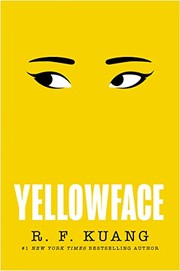 Yellowface Literary FictionView on Amazon
Details
R. F. Kuang’s sharp, unsettling satire follows June Hayward, a struggling white writer who claims a dead rival’s manuscript about Chinese laborers in World War I. As June’s career flourishes, the novel probes plagiarism, cultural appropriation, racial gatekeeping, publishing economics, online outrage, and the self-serving stories people tell about their own innocence.
# 1 title
-
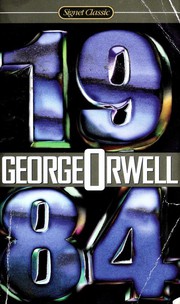 1984 Dystopian & Political FictionView on Amazon
Details
George Orwell’s 1949 dystopian novel follows Winston Smith, a minor official in a totalitarian state that controls language, history, work, privacy, and even inner belief. His private resistance—through memory, forbidden desire, and a search for truth—tests whether individual freedom can survive a regime determined to make reality whatever power declares it to be.