
In one sentence
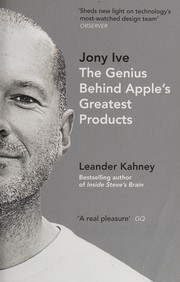
Apple’s celebrated products emerged from the interaction of a distinctive designer, a demanding design-centered organization, close collaboration with Steve Jobs, and manufacturing processes capable of realizing ambitious simplicity. Kahney presents Ive as central to that system, though the book’s admiration sometimes exceeds its critical distance.
Overview
Kahney follows Ive from a childhood shaped by making and dismantling objects, through British design education, Roberts Weaver, and the founding of Tangerine Design, to his Apple consultancy and eventual leadership of the Industrial Design team. The main narrative then moves through Apple’s recovery under Jobs and the design of the iMac, iPod, iPhone, iPad, and other products. The book is both biography and an accessible account of Apple’s design-and-manufacturing culture.
Core ideas
Design is a strategic function, not surface decoration
Ive’s importance in Kahney’s account comes from treating form, materials, interface, packaging, and manufacturing as one product problem. Design helps determine what a product is, how it is used, and what kind of relationship users have with it.
Simplicity is achieved through elimination and engineering
The apparent simplicity of Apple products depends on removing visible complexity while solving difficult internal problems. Minimalism is therefore not merely an aesthetic preference; it requires restraint, prototyping, technical compromises, and close cooperation with manufacturing.
A strong design team needs organizational authority
Apple’s industrial designers were given unusual influence and protected from being reduced to decorators for engineering or marketing. Kahney links the team’s impact to its proximity to top leadership and to Jobs’s willingness to make design central to product decisions.
Jobs and Ive functioned as complementary partners
Jobs supplied urgency, judgment, commercial focus, and a relentless standard; Ive supplied sustained attention to objects, materials, details, and user experience. The book’s recurring model is not solitary genius but a demanding creative partnership.
Manufacturing capability expands the design space
Processes and materials such as unibody construction and precision machining matter because they make certain forms, thinness, solidity, and assembly methods possible. Apple’s designs cannot be understood separately from the production systems built to support them.
The biography is also a history of Apple’s product mythology
The narrative explains why products became cultural symbols, not merely successful electronics. It connects industrial design to brand loyalty, launch rituals, emotional attachment, and the idea that a company can express values through physical objects.
Practical takeaways
- Treat design as a whole-system discipline: user experience, physical form, software, packaging, service, and production should reinforce one another.
- Use prototypes and visual thinking to make disagreements concrete; objects can reveal problems that verbal specifications conceal.
- Pursue genuine improvement rather than novelty. A new feature or appearance is not automatically a better product.
- Give the people responsible for product coherence enough authority to make trade-offs across departmental boundaries.
- Work backward from the desired user experience to materials, tolerances, tools, and manufacturing processes.
- Protect long-term quality from short-term organizational pressure—but recognize that this requires leadership willing to fund experimentation and accept delayed payoff.
Caveats and counterpoints
- Kahney did not have Jony Ive as a direct, fully participating interview subject; the account relies heavily on former colleagues, Apple insiders, experts, public material, and reconstruction. That makes the early-career reporting more independent than the portrait of Ive’s inner life.
- The book is strongly favorable toward Ive and Apple. Kirkus explicitly characterized it as admiring, while Publishers Weekly called it a respectful tribute; readers and reviewers have noted that it can feel more like a chronology or design-process account than a deeply probing biography.
- The Jobs–Ive partnership receives more interpretive attention than alternative explanations involving large engineering, operations, software, retail, and executive teams. The ‘genius’ framing can therefore over-concentrate credit in two famous individuals.
- Published in 2013, the book ends during Ive’s Apple peak and cannot assess his later departure from Apple or subsequent work. It is best read as a period account of Apple’s rise, not a complete career biography.
Questions worth revisiting
- When does simplifying a product improve the experience, and when does it merely remove user control or repairability?
- How much of Apple’s success came from Ive’s design judgment versus Jobs’s product strategy and the company’s operations and software teams?
- Can a design team preserve a distinctive vision once its methods become institutionalized or imitated by competitors?
- What hidden costs—labor, environmental, financial, or social—can be obscured by a beautifully integrated product?
- Which elements of Apple’s design culture could realistically transfer to an organization without Apple’s resources or executive structure?
Return to this when…
Return to these notes when evaluating design-led companies, reading about Apple’s product history, or thinking about the difference between visual minimalism and genuine simplicity. Pair with a more critical Apple history or a firsthand account from an engineer or designer to balance Kahney’s admiring perspective.