
In one sentence
People often decide through efficient psychological shortcuts rather than evaluating every fact from scratch. Persuasion becomes more effective when a request activates a relevant shortcut—especially one grounded in a genuine relationship, commitment, social cue, authority, identity, or limitation. The same mechanisms can also make people vulnerable to compliance tactics.
Overview
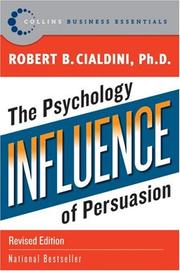
The 2021 “new and expanded” edition revises Cialdini’s earlier work and adds the principle of unity, which concerns influence based on a shared identity or sense of “we.” The book combines research, memorable cases, and examples from sales, fundraising, advertising, and everyday interactions. Each principle is presented both as a tool for ethical persuasion and as a warning system for detecting pressure.
Core ideas
Influence relies on shortcuts
Under time pressure, uncertainty, or information overload, people use cues that are usually useful but can be exploited. Cialdini’s central practical move is to notice which cue is being activated before automatically complying.
Reciprocation
People feel pressure to return gifts, favors, concessions, or attention. In negotiation, an initial concession can invite a reciprocal concession; the defense is to distinguish genuine generosity from a tactic designed to create obligation.
Commitment and consistency
Once people make a public, written, or effortful commitment, they tend to behave consistently with it—even when the original basis weakens. Small commitments can therefore lead to larger ones. Reassess whether the commitment still reflects your present interests.
Social proof
When uncertain, people look to what comparable others are doing, particularly when those others seem numerous or similar to them. Social proof is informative when the group is relevant and independent; it is weak evidence when popularity is manufactured or everyone is copying the same source.
Liking
Agreement is easier when the requester is attractive, familiar, complimentary, cooperative, or associated with positive experiences. Separate liking the messenger from the merits of the proposal.
Authority
Titles, credentials, uniforms, status signals, and confident presentation can trigger deference. Authority is useful when expertise is relevant and trustworthy, but status symbols are not substitutes for evidence.
Scarcity
Limited availability and threatened loss increase perceived value and urgency. Scarcity can reveal genuine opportunity costs, but artificial deadlines and “last chance” framing are reasons to slow down rather than rush.
Unity
The expanded edition adds influence based on shared identity: belonging to the same family, community, group, cause, or social category. Shared identity can build trust, but it can also encourage favoritism and lower scrutiny of insiders.
Practical takeaways
- Before saying yes, ask: Which principle is being activated—reciprocity, consistency, social proof, liking, authority, scarcity, or unity?
- Treat unsolicited gifts, samples, favors, and concessions as potentially informative but not binding.
- When a request escalates, revisit your original reason for agreeing instead of defending consistency for its own sake.
- Check whether the “crowd” is comparable to you, independently formed, and responding to reliable information.
- Verify authority directly: What is the person’s relevant expertise, and does the evidence support this specific claim?
- Convert urgency into a pause: compare alternatives, total cost, reversibility, and whether the scarcity claim is independently verifiable.
- Use the principles ethically: make true claims, offer real value, disclose relevant interests, and preserve the other person’s ability to decline.
Caveats and counterpoints
- The book’s principles are best treated as recurring influence patterns and practical heuristics, not universal laws that produce the same result in every culture, relationship, or decision context.
- The framework can make persuasion seem more mechanical than it is. Motivation, emotion, identity, prior beliefs, power differences, and the quality of the offer also matter.
- Ethical intent does not automatically make a tactic ethical: a persuasive request can still exploit vulnerability, conceal material information, or undermine informed choice.
- The expanded edition updates examples and adds digital applications, but readers should not assume that every classic finding generalizes unchanged to modern platforms or every online environment.
Questions worth revisiting
- Which influence cue most often makes me comply before I examine the substance?
- When have I mistaken popularity, confidence, familiarity, or urgency for evidence?
- What would transparent, non-coercive use of these principles look like in my marketing or sales work?
- Which commitments deserve revision because their original rationale no longer holds?
- How can I design a decision process that forces a pause when several principles are activated at once?
Return to this when…
Return when evaluating a sales page, pitch, negotiation, fundraising appeal, hiring decision, or social-pressure situation. The most useful refresher is the seven-principle diagnostic: identify the cue, test whether it is genuine and relevant, then decide on the merits rather than the pressure.
References
- Influence: Science and Practice
- Influence, new and expanded : the psychology of… — Kalamazoo Public Library
- Influence, New and Expanded: The Psychology of Persuasion - Robert B. Cialdini, PhD - Google Books
- influenceatwork.com
- simonandschuster.com
- simonandschuster.net
- annualreviews.org
- library.hekima.ac.ke
- betaglyph.com
- booksmartbusiness.com
- hbr.org
- onlinelibrary.wiley.com