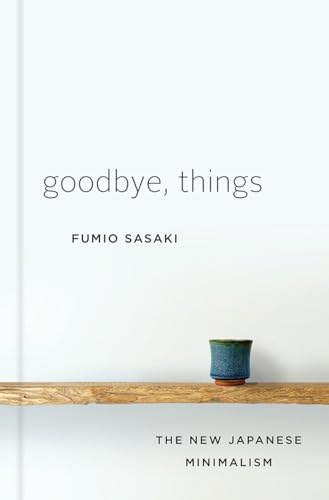

In one sentence
Sasaki’s central claim is that excess possessions often consume attention, money, space, and emotional energy without delivering lasting happiness. By deliberately discarding what is unnecessary—and changing the habits and beliefs that produced the clutter—we can regain freedom, focus, gratitude, and time. His case is primarily personal and experiential, not a controlled demonstration that minimalism universally produces happiness.
Overview
The book moves through three stages: why people accumulate, how to let things go, and what Sasaki believes changed afterward. His starting point is not expert authority but dissatisfaction: he describes himself as stressed, insecure, and prone to comparing himself with others. His small Tokyo apartment becomes the practical test case for a life organized around essentials rather than acquisition.
Core ideas
Minimalism is attention management
The target is not an aesthetically empty home for its own sake. Fewer objects mean fewer things to clean, maintain, organize, move, insure, and mentally process. The resulting benefit is reclaimed attention: more ability to notice the present and direct energy toward people, activities, and purposes.
Possessions can become status proxies
Sasaki connects accumulation to comparison and insecurity. Objects may function as evidence of success, taste, identity, or imagined future selves; when they fail to resolve those feelings, people buy again. Discarding therefore requires questioning what an item represents, not merely whether it is useful.
Use a low-friction decision rule
His practical method favors action over prolonged self-analysis: discard items that are unused, replaceable, duplicated, or retained mainly from guilt, sunk cost, or fantasy. Begin with obvious excess, make decisions quickly, and avoid creating a large “maybe” category that preserves the clutter.
Sentimental value is not the same as present value
An object can commemorate a person or period without needing to remain in daily physical space. Sasaki’s approach is to preserve the memory through photographs or deliberate remembrance when appropriate, rather than allowing every memory to become a storage obligation.
Consumption and decluttering are linked
A successful purge is temporary if the acquisition loop continues. Minimalism therefore includes changing shopping behavior: delay purchases, distinguish desire from need, and recognize the continuing costs of ownership. Technology, cloud storage, and sharing can sometimes provide access without permanent possession, though they introduce their own dependencies.
The book’s evidence is autobiographical
Sasaki reports improvements in freedom, focus, gratitude, housekeeping, and social life after reducing his belongings. The persuasive force comes from the vivid personal example and practical specificity, not from systematic psychological or economic evidence.
Practical takeaways
- Treat every possession as a recurring claim on space, attention, maintenance, and money—not only as an object with a purchase price.
- Start with categories containing obvious excess: duplicates, unused clothing, outdated media, broken items, and things kept solely because they were expensive.
- Ask: “Would I choose to acquire this today?” and “Does this support my current life, or an imagined future identity?”
- Photograph meaningful objects before discarding them if the memory matters more than the physical item.
- After decluttering, make replacement difficult: use a waiting period, a one-in/one-out rule, or a finite storage limit.
- Do not copy Sasaki’s final quantity of possessions. Use his principles to decide what level of ownership supports your responsibilities, health, relationships, work, and enjoyment.
- Measure success by reduced friction and increased agency—not by an impressive object count.
Caveats and counterpoints
- Sasaki’s transformation is a single-person account. His reported happiness and focus cannot establish that radical decluttering causes those outcomes for everyone.
- The book can make extreme minimalism appear broadly accessible, but housing size, income, family obligations, disability, climate, occupation, and cultural practices strongly affect what “necessary” means.
- Discarding is not always the responsible choice: replacement costs, environmental waste, safety equipment, useful archives, and obligations to other household members matter.
- Minimalism can become another status system or perfectionist project if owning very little becomes a source of comparison and self-worth—the same dynamic Sasaki criticizes in consumerism.
- The book’s strongest material is its practical and reflective guidance; claims about happiness, social life, or the wider minimalist movement should be read as Sasaki’s interpretation rather than settled research conclusions.
Questions worth revisiting
- Which possessions create the most recurring maintenance or mental noise in my current life?
- Am I keeping this because it is useful now, because it preserves a memory, or because it symbolizes who I wish to be?
- What purchasing habit would recreate the same clutter six months after a purge?
- What would I refuse to discard because of work, health, family, cultural, or environmental reasons?
- Could I pursue the book’s benefits—less distraction and more freedom—without adopting its more radical degree of reduction?
Return to this when…
Return when a home feels crowded or when buying, organizing, and maintaining possessions are taking attention from more important activities. Revisit the core distinction between reducing objects and reducing the beliefs and habits that make excess possessions accumulate.
Highlights
The Dutch philosopher Baruch de Spinoza observed that when people say something is impossible, they’ve already decided that they don’t want to do it.
Author Daisuke Yosumi writes that we should consider stores as our personal warehouses. All those stores out there pay good sums of money to secure space so they can stock all sorts of goods for us, and they manage their items with care. Convenience stores welcome us around the clock. Yosumi suggests we should not think of these places as shops where we buy goods, but instead as our warehouses where we go to get something when we need it.
I can understand people’s desires to have a big, comfortable couch in the middle of a big, comfortable living room. I wouldn’t mind having something like that myself. But I don’t think it has to be set up in our homes. My “living room” is a diner in my neighborhood that has couches that are always comfortable and inviting, not to mention clean and tidy, where I can sit and relax for as long as I like. There’s another coffee shop I frequent where they never complain no matter how many hours I sit there and chat with friends over cups of freshly brewed coffee.
A key way to gauge your passion for something you own is to ask yourself, “If I were to somehow lose this, would I want to buy it again at full price?”
When you realize there is nothing lacking, the whole world belongs to you. —LAO TZU
I’m as proud of what we don’t do as I am of what we do. —STEVE JOBS
Steve Jobs was not a minimalist simply because he always wore the same thing and removed excess from his products. Minimalism really did guide almost everything he did. The first thing that Jobs is said to have done after making his comeback to Apple was to donate old documents and machines that were almost covered by cobwebs to a museum. He started out by parting with material objects. He wanted to focus on producing products that would change the world, so he got rid of everything else that wasn’t important. He reduced the number of people who took part in company meetings. He would see someone who he didn’t think was needed for a meeting and say to them without hesitation, “Thanks, but you don’t have to take part in this meeting.” He liked to make decisions with the minimum number of talented people. I’ve heard that Apple respected ideas more than it did processes, which follows the same principle. In many companies, a designer could come up with a fantastic concept but it would eventually be watered down as it went through marketing, advertising, sales, and so on. Jobs despised such processes and did away with them. He believed that the more signatures you need to approve a product, the more boring the idea is going to become, and the more time it’s going to take for it to become a finished product. In almost everything he did, Jobs started not by prioritizing what he would do but rather by focusing first on what not to do. In that sense, he really was the perfect minimalist. He dedicated himself to getting rid of things.
A table, a chair, a bowl of fruit and a violin; what else does a man need to be happy? —ALBERT EINSTEIN
The distinction between the past, present and future is only a stubbornly persistent illusion. —ALBERT EINSTEIN
There are only two ways to live your life. One is as though nothing is a miracle. The other is as though everything is. —attributed to ALBERT EINSTEIN