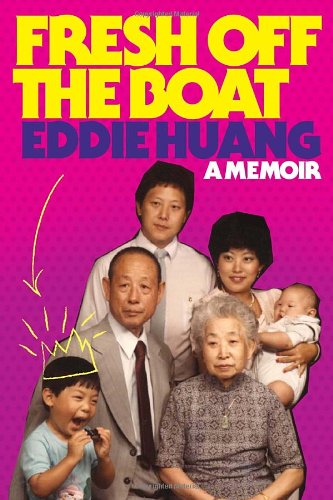

In one sentence
Huang presents identity not as a choice between Taiwanese heritage and American culture, but as an unruly synthesis made from both—often through conflict, experimentation, and refusal to become legible to other people.
Overview
The memoir moves from Huang’s childhood in Orlando and his parents’ immigrant ambitions through adolescence, racial hostility, fights, drugs, and alienation; his brief legal career and experiments with fashion and comedy; and his eventual discovery that food gives his competing influences a usable form. Food is both memory and cultural argument: a way to preserve Taiwanese traditions while absorbing Southern, Caribbean, Japanese, Korean, and Black American influences. Reviewers emphasize the book’s distinctive voice and treatment of race and assimilation, while also noting that its accounts of violence can sometimes seem glamorized.
Core ideas
Assimilation is not the same as belonging
Huang rejects the expectation that Asian Americans should prove their Americanness through quiet achievement, conformity, or respectability. His story suggests that belonging can involve confrontation, cultural borrowing, and making a public identity that does not ask permission.
Food is a form of autobiography
Dishes carry family history, migration, class, labor, and memory. Huang’s culinary identity emerges by placing Taiwanese food in conversation with the foods and subcultures that shaped him in Florida and New York—not by treating tradition as sealed or pure.
Rage can be both protective and destructive
Anger helps Huang resist racism, paternal authority, and stereotypes, but it also contributes to reckless behavior and damaged relationships. The memoir’s energy comes partly from this tension: defiance is a survival strategy that repeatedly threatens to become self-sabotage.
Subculture supplies an alternative education
Hip-hop, streetwear, sports, nightlife, and food communities give Huang models of masculinity, style, history, and resistance outside the institutions that fail to recognize him. These influences are not decorative; they help him construct a language for his experience.
Entrepreneurship becomes self-definition
Baohaus is more than a restaurant success story. It becomes a physical place where Huang can combine family inheritance, immigrant hustle, New York culture, and his own taste—turning marginality into a deliberately designed public identity.
The memoir is deliberately provocative
Huang writes with bravado, slang, pop-cultural references, and sharp judgments. That style creates immediacy and authenticity for some readers, but its performance of hardness can obscure vulnerability and make certain episodes—especially violence—feel insufficiently examined.
Practical takeaways
- When a category feels imposed on you, examine what it is designed to reward—and what it makes invisible.
- Treat cultural identity as something you can actively compose from inherited traditions and lived influences.
- A craft or practice can become a meeting point between conflicting parts of your history.
- Distinctive work often comes from combining experiences that conventional institutions keep separate.
- Notice the difference between productive defiance and behavior that merely repeats harm.
- Do not confuse a compelling voice with complete self-understanding; memoir is shaped, selective, and argumentative.
Caveats and counterpoints
- This is not a neutral or comprehensive account of immigrant life; it is one highly stylized, confrontational perspective.
- Huang’s critique of assimilation is powerful, but his own identity is also shaped by seeking recognition within the cultures he embraces.
- The memoir’s treatment of family conflict and violence is uneven. Kirkus specifically viewed some violence as thoughtfully explored and some street violence as too readily glorified.
- The later ABC sitcom is only a loose adaptation and should not be used as a substitute for the memoir’s darker, more confrontational account.
Questions worth revisiting
- Which parts of Huang’s identity are chosen freely, and which are reactions against other people’s expectations?
- Does the book successfully distinguish cultural exchange from appropriation, or does it leave that tension unresolved?
- When does Huang’s anger clarify an injustice, and when does it narrow his understanding of others?
- Is Baohaus primarily a business, an artistic project, a family inheritance, or a stage for public self-invention?
- How might the memoir read differently if narrated by one of Huang’s family members or former friends?
Return to this when…
Return to this memoir when thinking about immigrant identity, assimilation, cultural hybridity, food as memory, or the relationship between anger and creative ambition.
Highlights
From a young age, that single event, my grandmother’s unbinding, taught me to appreciate education and challenge conventions—just because everyone else is doing it, doesn’t mean you shouldn’t flip it over, look around, poke at its flaws, and see it for what it is yourself. I mean, damn, if my great-uncle wasn’t a curious motherfucker, my grandma wouldn’t have had feet.
“Man, you ran around shanking people with Uncle Xiao Hei in Taiwan and you’re telling me you can’t grow your hair out?” “Look, difficult to explain, but I tell you this way. In America, you can ‘sports fuck.’ ” Emery couldn’t help himself. This type of shit was his wheelhouse. “Sports fuck? That sounds awesome, what’s that?” “You’re too young. Eddie, you’re too young, too. Evan, this guy definitely too young, but keep in your memory. In Taiwan, girls only ‘make love.’ You have to take them out, lie to them, tell them you love them, etc. But in America, it’s like sports! They’ll fuck you for fun … or practice! When you guys are old enough, you gotta take advantage. Sports fuck, don’t forget it.” That was my dad.
respect your parents, respect your family, speak Chinese at home, take off your shoes at home, be polite at other people’s homes, don’t borrow money from people, but if other people need it from you lend it to them, as long as it’s inconsequential. Don’t fight, but if someone calls you a chink, fight.
“A Modest Proposal” by Jonathan Swift.
We got to read Siddhartha, the Tao Te Ching, and Socrates.
Teresa de Lauretis, Audre Lorde, Booker T. Washington, W.E.B. Du Bois, and Toni Morrison,
One of the most influential texts I read was Emerson’s “American Scholar.” The one passage that really stuck with me was his line about young men in libraries: Meek young men grow up in libraries, believing it their duty to accept the views, which Cicero, which Locke, which Bacon, have given, forgetful that Cicero, Locke, and Bacon were only young men in libraries, when they wrote these books.
we consulted Bill Cosby, who famously said, “I don’t know the key to success, but the key to failure is trying to please everyone.”