
In one sentence
Restaurant kitchens are demanding, often dysfunctional workplaces whose excellence depends less on glamorous individual genius than on discipline, timing, hierarchy, teamwork, ingredients, and the ability to function under pressure. Bourdain’s love of food coexists with an unsparing account of the personal and institutional damage the industry can produce.
Overview
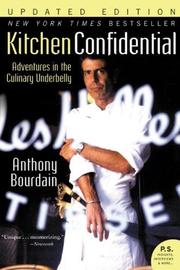
First published in 2000, the book expands Bourdain’s 1999 New Yorker essay “Don’t Eat Before Reading This.” It is not a conventional, linear autobiography: career episodes, kitchen portraits, trade advice, warnings to aspiring cooks, and reflections on food are arranged as a fast-moving account of professional kitchen culture. The narrative covers his early food awakening, culinary training, restaurant jobs, drug addiction, recovery, and work as executive chef at Les Halles.
Core ideas
The restaurant is a system, not a stage
The dining room presents polished dishes, but the kitchen depends on invisible coordination: preparation, station discipline, communication, timing, supply chains, and mutual dependence. A successful service is collective performance rather than the work of a solitary “artist.”
Mise en place is a general operating principle
Preparation before service—organizing tools, ingredients, tasks, and contingencies—makes speed and consistency possible. Bourdain treats readiness as the foundation of professional competence, not a minor technical detail.
Hierarchy can be functional and abusive
Clear authority and demanding standards help a kitchen move quickly, but the same hierarchy can normalize humiliation, intimidation, substance abuse, unsafe practices, and exploitation. The book often shows the two sides together rather than separating them cleanly.
Food is the serious center beneath the bravado
The profanity, pranks, sex, drugs, and grotesque anecdotes are not the book’s whole point. Bourdain repeatedly returns to sensory pleasure, ingredient quality, craft, and the emotional power of memorable meals—especially the formative experience of eating an oyster in France.
Professionalism is demonstrated through reliability
Bourdain’s implied test for an aspiring cook is not fashionable vocabulary or culinary ambition but sustained dependability: showing up, working cleanly, learning the station, respecting ingredients, and contributing during the rush.
The memoir is also self-indictment
Bourdain criticizes restaurant culture while admitting his own complicity in its excesses. His authority comes partly from having occupied several roles within the system, including addict, unreliable employee, chef, and observer.
The book demystifies culinary glamour
High-end cooking is presented as physically exhausting, repetitive, hazardous, poorly balanced with ordinary life, and populated by damaged or unconventional people. The trade may provide belonging and purpose, but it is not automatically a path to prestige or happiness.
Practical takeaways
- Prepare completely before beginning demanding work; speed is usually the visible result of prior organization.
- Respect the whole chain of production, including dishwashers, prep cooks, porters, servers, and suppliers.
- Judge a workplace by its standards and treatment of people, not by its reputation or glamour.
- Treat craft as repetition under pressure: consistency matters more than occasional brilliance.
- Learn the difference between useful intensity and abuse disguised as professional rigor.
- Be skeptical of romantic stories about addiction, macho behavior, and dangerous working conditions; surviving them does not make them good practices.
- For home cooking, Bourdain’s professional perspective favors simple equipment, good ingredients, strong preparation, and attention to timing over elaborate presentation.
Caveats and counterpoints
- Bourdain writes as a highly stylized narrator: the book is memoir and performance, not a neutral sociological survey. Some episodes and portraits may be compressed, exaggerated, or shaped for comic effect.
- Its portrait is especially tied to late-20th-century New York and high-end restaurant culture; conditions, norms, and public awareness of workplace abuse have changed since 2000.
- The book can romanticize the very macho excesses—intoxication, harassment, cruelty, and self-destruction—that it exposes. Read its energy as rhetoric, not as a management model.
- The famous warning about avoiding fish on Mondays became widely associated with the book but was later treated as outdated or retracted; it should not be used as current food-safety guidance.
- The episodic structure is strongest as a sequence of vivid observations and character studies; readers seeking a tightly plotted recovery memoir may find the middle sections digressive.
Questions worth revisiting
- Where does Bourdain distinguish genuine culinary standards from theatrical toughness?
- Which parts of the kitchen culture does he expose, and which does his storytelling inadvertently celebrate?
- How much of excellence in the book comes from talent, and how much from systems, repetition, and team discipline?
- What would this memoir look like if told by a dishwasher, server, woman, immigrant worker, or person harmed by the kitchen hierarchy?
- Which pieces of Bourdain’s practical advice remain useful outside restaurants, and which depend on the specific pressures of professional service?
Return to this when…
Return to it when you need a vivid reminder that polished public experiences often rest on invisible labor, coordination, and sacrifice—or when you want to examine how an entertaining narrator can both criticize and glamorize the world he describes.
References
- goodreads.com
- en.wikipedia.org
- Kitchen Confidential: Adventures in the Culinary Underbelly - Anthony Bourdain - Google Books
- Kitchen Confidential: Adventures in the Culinary Underbelly by Anthony Bourdain
- bloomsbury.com
- books.google.com
- books.google.co.uk
- compulsivereader.com
- goodreads.com
- catalog.cclsny.org
- catalog.camdencountylibrary.org
- barnesandnoble.com
- time.com