
In one sentence
Alibaba’s rise was not simply the result of Jack Ma’s charisma or imitation of Western technology. Clark presents it as the product of an unusually favorable combination: China’s enormous emerging consumer market, weak existing retail infrastructure, entrepreneurial improvisation, foreign capital and expertise, and Ma’s ability to recruit, persuade, and adapt. Alibaba became powerful by building an ecosystem suited to Chinese conditions rather than copying Amazon or eBay.
Overview
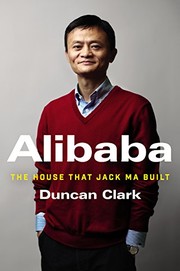
Published in 2016, the book is a business biography and a condensed history of China’s internet economy. Clark draws on his early-adviser perspective, interviews, and knowledge of China’s technology sector. The narrative moves from Ma’s background as an English teacher and early internet ventures to Alibaba’s founding, the dot-com collapse, SoftBank’s backing, Taobao’s competition with eBay, Yahoo’s investment, and the company’s growing ambitions in logistics, finance, entertainment, and overseas markets. The chapter structure culminates in the open question of whether Ma is an enduring corporate builder or an overextended icon.
Core ideas
Context is a strategic asset
Alibaba exploited a gap between China’s rapidly expanding demand and its underdeveloped retail, payments, trust, and delivery systems. The opportunity was not merely “put shopping online”; it was to construct the missing infrastructure around online commerce.
The “iron triangle”
Clark emphasizes the interaction of e-commerce, logistics, and finance. A marketplace becomes much more defensible when the company also helps sellers reach customers, move goods, and complete trusted payments. The model points toward an ecosystem rather than a standalone website.
Localization beats direct imitation
Taobao’s contest with eBay illustrates the danger of importing a successful foreign model without adapting it. Alibaba understood local sellers, language, consumer behavior, regulation, and the importance of reducing transaction anxiety. Free listings and relationship-building helped Taobao gain traction while eBay pursued a more conventional monetization approach.
Trust can be designed into a marketplace
In a market where buyers and sellers lacked established online trust, Alibaba’s tools and practices—especially escrow-style payment through Alipay, ratings, messaging, and seller competition—helped make transactions possible at scale. The strategic lesson is that marketplaces must manufacture trust, not assume it.
Capital changes the feasible strategy
SoftBank and Yahoo supplied more than money: they gave Alibaba time, credibility, and room to prioritize market share and ecosystem development over immediate profitability. External capital enabled aggressive defense against eBay, but also introduced governance complications and dependence on powerful outside stakeholders.
Jack Ma’s role is organizational, not merely technical
Clark portrays Ma less as the engineer who invented a breakthrough technology than as a high-energy interpreter of opportunity: recruiting talent, articulating a mission, managing investors, and turning setbacks into narratives of persistence. His leadership helped align people around an uncertain, rapidly changing strategy.
Alibaba is a window into China’s transformation
The company’s story matters because it links entrepreneurship to China’s urbanization, rising consumption, expanding middle class, state policy, and integration into global capital markets. The book’s broader value lies in showing how a corporate history can illuminate structural economic change.
Success creates a new category of risk
The final chapters question whether Alibaba can extend its dominance into finance, entertainment, logistics, and foreign markets without losing focus or provoking political and regulatory resistance. The same ambition that creates an ecosystem can produce complexity, overreach, and concentration-of-power concerns.
Practical takeaways
- Study the missing infrastructure around a market, not just the visible customer problem.
- When entering a new country or sector, adapt the operating model to local institutions rather than copying the category leader.
- In a marketplace, solve trust, payments, fulfillment, and dispute resolution as deliberately as discovery and sales.
- Use patient capital strategically, but track the governance and control costs attached to it.
- Treat setbacks and competitive attacks as information about the business model, not merely obstacles to overcome.
- Separate founder mythology from transferable practices: persuasion, localization, ecosystem design, and persistence are more useful than imitating Ma’s persona.
- Ask whether expansion strengthens the core flywheel or merely increases the company’s surface area and political exposure.
Caveats and counterpoints
- This is an insider-informed narrative, not a neutral institutional history: Clark met Ma in 1999, advised Alibaba early on, and had unusual access. That proximity is valuable but can also encourage admiration or soften criticism.
- Reviewers generally found the book engaging and business-minded, but one criticism is that its breadth and detail sometimes make it feel more like an extended account of events than a deeply analytical study of Alibaba’s organizational mechanics.
- The book was published in 2016 and concludes near Alibaba’s early public-company phase. It should not be used as a current account of Alibaba, Jack Ma, Chinese technology regulation, or the company’s later performance.
- The narrative foregrounds Jack Ma and major investors; employees, merchants, consumers, regulators, labor conditions, privacy, counterfeit-goods controversies, and social costs receive less sustained analytical attention than the founder’s rise and competitive victories.
Questions worth revisiting
- Which parts of Alibaba’s success depended on China-specific conditions that would be difficult to reproduce elsewhere?
- Was Alibaba’s advantage primarily technology, timing, capital, network effects, regulatory navigation, or Ma’s leadership?
- Does the iron-triangle model create genuine reinforcing advantages, or can it become an excuse for unfocused expansion?
- How much of the Taobao-eBay outcome came from strategy, and how much from eBay’s governance and localization mistakes?
- Where does Clark distinguish durable organizational capability from Jack Ma’s personal influence?
- What would a fuller account look like from the perspective of sellers, buyers, employees, competitors, and regulators?
- Which predictions or concerns in the book’s closing chapter were validated or disproved after 2016?
Return to this when…
Return to these notes when studying marketplace strategy, ecosystem businesses, China’s internet economy, founder-led companies, or the strategic value of localization. Pair the book with a newer account before making judgments about Alibaba’s present position or China’s current technology sector.
Highlights
Taobao isn’t just about products. Customers can also buy services, too. Artists and musicians find commissions on the site. The sheer variety of services on offer provides a revealing insight into China’s fast-changing social mores. Young men can hire a fake girlfriend to attend social events, or outsource a breakup with their real girlfriend to a specialist on Taobao. Wives worried about a straying husband can subscribe to a counseling service offering techniques to fend off a mistress. Busy young urbanites can hire surrogates on Taobao to visit their parents. To overcome a chronic lack of donors, Alibaba’s group buying site, Juhuasuan, even teamed up with sperm banks in seven provinces to entice qualified donors with an offer of more than eight hundred dollars. This is the going rate offline, but with the power of online marketing more than twenty-two thousand men had applied within forty-eight hours.
The final edge in the iron triangle is finance. In financial services, Alibaba’s most important asset is Alipay, its answer to PayPal. By far the most popular online payment tool in China, Alipay handles more than three-quarters of a trillion dollars a year in online transactions,31 three times the volume of PayPal and one-third of the $2.5 trillion global online payments market. In the peak early minutes of Singles’ Day 2015, Alipay handled over eighty-five thousand payments per second.
Jack has made a career out of being underestimated: “I am a very simple guy, I am not smart. Everyone thinks that Jack Ma is a very smart guy. I might have a smart face but I’ve got very stupid brains.”
Welch’s 2005 book, Winning, recommends an almost messianic culture in the workplace: “Leaders make sure people not only see the vision, they live and breathe it.” Jack (Ma) has always held GE in high regard.
One former employee summed it up: “Lots of companies focus only on results: You have to complete a certain number of orders. Alibaba takes the opposite approach: If you want to complete a certain number of orders this month, what do you need to do every day? By breaking it down into phases, each day could be dedicated to one key step in the process—and eventually you wouldn’t be far off from your goal.” Recognition of high performers in company-wide announcements helps, too, as do the prizes awarded to the “A-teams” (lao A, a military reference), ranging from Louis Vuitton wallets, belts, and limited-edition sneakers to monthly bonuses of tens of thousands of yuan or even a car.
If you are one in a million in China, you’re one of 1,300 people. —Bill Gates
Alibaba might as well be known as “1,001 mistakes.” But there were three main reasons why we survived. We didn’t have any money, we didn’t have any technology, and we didn’t have a plan. —Jack Ma
In his article, Ted had quoted Jack saying, “If you plan, you lose. If you don’t plan, you win.” After working in Beijing, the land of the five-year plan, I found Jack’s spontaneity refreshing. Foreign professionals2 began to enter Jack’s orbit, giving Alibaba an international flavor within months of its founding. Alibaba also had a strong component of female executives,3 adding to the achievement of women making up one third of its founding team—in contrast to many Silicon Valley–based companies.
When building up his team Jack preferred hiring people a notch or two below the top performers in their schools. The college elite, Jack explained, would easily get frustrated when they encountered the difficulties of the real world. For those who came aboard, working for Alibaba would be no picnic. The pay was low: The earliest hires earned barely $50 per month. They worked seven days a week, often sixteen hours a day. Jack even required them to find a place to live no more than ten minutes from the office so they wouldn’t waste precious time commuting. From the outset, Alibaba has been driven by a Silicon Valley–style work ethic, with every employee issued share options in the company, vesting over a four-year period. This is still a rarity in China, where the traditional setup in private companies was an emperor-like boss who treated employees as disposable and salaries as discretionary.
Meeting Son, Jack knew he had found a kindred spirit. “We didn’t talk about revenues; we didn’t even talk about a business model. . . . We just talked about a shared vision. Both of us make quick decisions,” Jack recalled.
As soon as they entered Son’s office, the negotiations began. Jack would later infuse his description of their meeting with martial art imagery: “Masters of negotiation always listen, don’t talk. Those who talk a lot only have second-rate negotiation skills. A true master listens, and as soon as he moves his sword, you pretty much collapse.”
“If you can’t tolerate your opponents, you will be definitely beaten by your opponent. . . . If you treat your opponents as enemies, you have already lost at the beginning of the game. If you hang your opponent as a target, and practice throwing darts at him every day, you are only able to fight this one enemy, not others. . . . Competition is the greatest joy. When you compete with others, and find that it brings you more and more agony, there must be something wrong with your competition strategy.”
Things looked good at the outset. With EachNet, eBay gained a 90 percent share of China’s consumer e-commerce market. But within two years eBay was reduced to irrelevance in China and forced to beat another embarrassing retreat from Asia.
Meeker had a reputation for being a contrarian: “One of the greatest investments of our lifetime has been New York City real estate,” she said, “and investors made the highest returns when they bought stuff during the 1970s and 1980s when people were getting mugged. . . . The lesson is that you make the most money when you buy stuff that’s out of consensus.”
In website design, culture matters. In the West, websites like Google had become popular for their clean lines and uncluttered “negative space.” But to the mass market of Chinese Web users, accustomed to pop-ups and floating banner ads, they seemed static and dull. As you can see for yourself by opening taobao.com, successful Chinese websites are typically packed with information and multimedia graphics, requiring many scroll-downs to see the whole page. From its outset Taobao has been a website built by Chinese for Chinese. And it worked.
In addition to being popular with consumers, offering free services ensured that Taobao was not distracted by a persistent problem that plagued EachNet from the beginning: worrying about how to prevent vendors and consumers from figuring out ways to use the website simply as a place to connect with one another, then conducting their transactions offline or through other means. As Taobao charged no fees, they had no incentive to police this behavior. On the contrary, Taobao actively encouraged communications between the transacting parties by setting up bulletin boards and, beginning in June 2004, launching an embedded, proprietary chat window with the unfortunately in English named AliWangwang.
Whitman today rues the loss of the entrepreneur who had founded EachNet: “What I would have done is left Bo Shao in charge and owned the thirty percent of China that we originally owned and let him do his own thing.”
In a much-quoted analogy, Jack commented to Forbes magazine in 2005, “eBay may be a shark in the ocean, but I am a crocodile in the Yangtze River. If we fight in the ocean, we lose, but if we fight in the river, we win.”
“Some say that the power of capital is enormous. Capital does have its power. But the real power is the power of people controlling the capital. People’s power is enormous. Businessmen’s power is inexhaustible.”
Robin Li has remained closely involved in Baidu’s technology development. To ensure that its search engine was cutting-edge, in late 2001, Li temporarily set aside his role as CEO to drive a new development project called “Project Blitzen,” recalled by the company’s engineering team as a “Great Leap Forward” effort. Li would often sleep in the office, and meetings doubled in frequency until the project was completed. Looking back, Li said, “Once you find out what you should do, then you need to stay focused. That’s what we did during the difficult times back in year 2000, 2001, 2002. Many people think search was a done deal. It’s boring. Everyone has figured that out in terms of technology and product, but we thought we could do a better job. We resisted all kinds of temptations from being a portal, being an SMS player, online games, developing all kinds of things that could make money in the short term. We really, really focused on Chinese search. That’s how we got here.”
The former Alibaba.com CEO added that the 2007 IPO gave him two insights into Jack’s approach. The first was something that Jack had often told him: “Raise money when we don’t need it. When you need it don’t go out to raise money, it’s too late.” The second was that the IPO allowed Alibaba to take care of its employees: “Jack understands people more than any business. He knows business well, but if you ask me the three skills Jack has amongst people, business, or IT? IT is the worst. Business second. First is people.” Alibaba’s B2B business was eight years old. Jack knew that he needed to give his employees an opportunity to cash in their shares. David remembers Jack telling his employees, “You need to buy a house. You need to buy a car. You can’t wait to sell the stock to get married, to have a baby. Selling the stock doesn’t mean you don’t like the business. I encourage you to sell some, to build your life, to give a reward to your family. Because you have been working too hard, you’ve been away from your family. They need some reward.”
On that same trip to the United States, Jack also discussed the strain of running a public company. He complained that his life after the IPO was more difficult than before, and that “[i]f I had another life, I would keep my company private.” Some in the audience in New York expressed surprise that Jack would voice regrets about listing so soon after Alibaba’s blockbuster IPO. But this contrarian stance is vintage Jack.
References
- Alibaba: The House that Jack Ma Built - Duncan Clark - Google Books
- books.google.com
- duncanclark.com
- unreal-apps.s3.us-west-1.amazonaws.com
- All Book Marks reviews for Alibaba: The House That Jack Ma Built by Duncan Clark Book Marks
- duncanclark.com
- Alibaba: The House That Jack Ma Built by Duncan Clark, Paperback | Barnes & Noble®
- sageworldwide.com
- duncanclark.com
- ils.iba.edu.pk
- ALIBABA | Kirkus Reviews
- cir.nii.ac.jp