
In one sentence
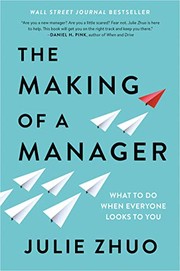
Great management is not innate authority or personal brilliance; it is the learned ability to help a group produce better results than its members could achieve individually. The manager creates clarity, builds trust, develops people, removes obstacles, and continually improves the team system.
Overview
Zhuo organizes the book as a progression from becoming a manager to leading larger, more complex teams: understanding the job, surviving the first months, building trust with a small team, giving feedback, managing oneself, improving meetings, hiring, executing against a vision, delegating and managing up, and shaping culture. The 2025 revised paperback adds guidance for remote management, downturns, layoffs, morale, and connection.
Core ideas
Management is an outcome-producing function
A manager’s value is multiplicative rather than merely additive: instead of measuring success by personal output, ask whether the team is making better decisions, doing higher-quality work, and progressing toward meaningful goals. This shifts attention from being the smartest contributor to improving the conditions in which others work.
Start with clarity, trust, and feedback
Early management should establish what success means, how the team works, and whether people can rely on one another. Trust is built through consistency, candor, competence, and genuine concern—not by trying to appear omniscient. Feedback works best as a frequent, specific conversation tied to observable behavior and its effect, rather than a delayed performance-review event.
The first three months are for learning before redesigning
New managers face different challenges depending on whether they are first-time managers, former peers, inheritors of an existing team, or asked to build a new one. The common discipline is to listen, observe patterns, understand expectations, and communicate openly before making sweeping changes.
Your job is to make the team better, not to have all the answers
A manager should surface problems early, ask for help, and use questions to develop people’s judgment. Hiding uncertainty or difficult issues to impress one’s own manager usually delays solutions and weakens trust. Zhuo treats self-awareness—including recognizing one’s weaknesses—as a managerial asset.
Feedback should be direct and developmental
Avoid vague praise, delayed criticism, and the ‘compliment sandwich.’ Explain what happened, why it matters, and what a better approach would look like; then allow discussion and follow-up. The goal is not to win a difficult conversation but to help the person improve.
Hiring is a bet on the future team
Evaluate candidates against the work the team needs to do, not simply against résumé polish or similarity to existing employees. Hiring expands the team’s capabilities and culture, so managers should define the role carefully, look for learning ability and collaboration, and avoid treating every awkward interview moment as disqualifying.
Execution requires a concrete vision and operating rhythm
A useful vision describes what would be different if the team succeeded and helps people make trade-offs without constant managerial intervention. Translate it into priorities, ownership, milestones, and regular reviews. Meetings should have a clear purpose, the right participants, and decisions or next steps that are made visible.
Scale by delegating context and authority
As a team grows, the manager cannot remain the central decision-maker. Delegation means transferring meaningful ownership—not merely assigning tasks—while providing context, standards, and support. Managing up is part of the same system: communicate progress, risks, needs, and trade-offs so senior leaders can help rather than be surprised.
Practical takeaways
- Define your team’s purpose in one or two sentences: what would be different if the team were wildly successful?
- For each report, clarify responsibilities, strengths, development goals, and the support they expect from you.
- Give feedback close to the event: describe the behavior, its impact, and the change you want to see.
- In one-on-ones, let the report set much of the agenda; use the time for context, coaching, obstacles, and career development rather than status reporting.
- Before changing a team process, diagnose whether the problem is unclear goals, missing skills, insufficient trust, poor incentives, or weak execution.
- For every recurring meeting, specify its purpose: decision, coordination, problem-solving, information-sharing, or relationship-building.
- Delegate outcomes with decision rights and context; do not reclaim ownership merely because someone handles the work differently from you.
- Tell your manager about thorny problems early, together with your current diagnosis and proposed options.
Caveats and counterpoints
- The book is strongest as an accessible guide for new managers and relatively healthy knowledge-work teams; it is less comprehensive as a treatment of labor relations, organizational politics, compensation, legal risk, or crisis leadership.
- Its examples are shaped by Zhuo’s experience in Silicon Valley product design and at Facebook. The principles travel well, but assumptions about autonomy, rapid growth, and informal communication may fit poorly in highly regulated, unionized, frontline, or hierarchical workplaces.
- The advice generally assumes that managers have meaningful influence over hiring, team norms, feedback, and priorities. In constrained organizations, the manager may need to distinguish between what can be changed locally and what requires structural escalation.
- A reader should not treat ‘trust,’ ‘candor,’ or ‘culture’ as substitutes for fair systems. Psychological safety and good relationships cannot compensate for chronic understaffing, inequitable pay, discriminatory practices, or unrealistic executive demands.
- The revised edition’s remote-work and downturn material makes the book more current, but the core framework remains a practical managerial perspective rather than a research review or universal theory.
Questions worth revisiting
- What outcomes should improve because I manage this team rather than merely contribute to it?
- Where is the team currently losing leverage: clarity, capability, coordination, motivation, or trust?
- What feedback am I postponing, and what evidence would make the conversation fair and specific?
- Which decisions am I unnecessarily centralizing?
- What does each report need from me that they cannot reliably get elsewhere?
- What team norm am I reinforcing through my own behavior?
- If morale is low, is the cause communication, workload, uncertainty, lack of agency, or a legitimate problem with the organization?
Return to this when…
Return to the chapters on feedback, delegation, meetings, and managing up when a team feels stuck or when you are becoming the bottleneck. Revisit the opening chapters when taking on a new team or role; revisit the culture and growing-team material when headcount, remote work, organizational change, or layoffs alter how trust and coordination must work.