
In one sentence
Lolita is less a forbidden-love story than a study of how language, aesthetic charm, and narrative control can distort moral perception. Nabokov makes Humbert’s prose captivating without making Humbert’s conduct defensible; the reader’s struggle to separate beauty of expression from truth is the novel’s central ethical experience.
Overview
The novel is framed as Humbert’s retrospective memoir, preceded by a fictional editor’s foreword. This framing makes the entire account mediated, selective, and potentially manipulative. Humbert tells a story of obsession, coercion, travel, jealousy, and pursuit while repeatedly presenting exploitation as romance. The plot matters, but the deeper action is interpretive: readers are encouraged to notice the gaps between Humbert’s descriptions and the suffering those descriptions conceal. The notes below avoid the ending.
Core ideas
The unreliable narrator is the novel’s governing device
Humbert is intelligent, funny, observant, and rhetorically brilliant—but also deceptive, self-exculpating, and morally corrupt. His sophistication is not evidence of honesty. Watch for moments when his language calls coercion “love,” converts planning into spontaneity, or treats Dolores as an artistic idea rather than a person.
Language functions as seduction and concealment
Puns, literary allusions, ornate descriptions, multilingual play, and comic timing make Humbert’s voice pleasurable to read. That pleasure is deliberately dangerous: the novel tests whether aesthetic admiration can coexist with moral judgment, and whether readers will mistake verbal mastery for emotional depth.
Dolores Haze versus “Lolita”
“Lolita” is Humbert’s constructed name for Dolores, a label that turns a child into a fantasy type. The distinction matters because the adult narrator’s vocabulary repeatedly overwrites her actual perspective. Dolores has moods, preferences, anger, bargaining strategies, and attempts at escape, but the narrative gives her far less interpretive authority than it gives Humbert. This imbalance is both a feature of the novel’s design and a major source of critical discomfort.
Consent, power, and the false appearance of reciprocity
The novel repeatedly presents situations in which Humbert interprets dependence, fear, bargaining, or limited choice as mutual desire. The important question is not whether Dolores sometimes appears assertive; it is whether a child controlled by an adult, isolated from alternatives, and materially dependent can meaningfully consent. The novel’s moral structure makes the answer clear even when Humbert’s rhetoric tries to blur it.
The double: Humbert and Quilty
Clare Quilty operates as a disturbing counterpart to Humbert. Their resemblance complicates Humbert’s attempt to imagine himself as uniquely passionate, refined, or victimized. Quilty can be read as a crude externalization of qualities Humbert refuses to recognize in himself: predation, theatricality, rivalry, and the reduction of Dolores to an object of possession.
America as landscape, fantasy, and complicity
The road-trip setting lets Nabokov contrast Humbert’s European self-image with postwar American consumer culture, motels, schools, advertisements, and popular entertainment. Humbert mocks American vulgarity while exploiting its mobility and anonymity. His cultural criticism is therefore compromised: he condemns the society around him while using it to facilitate his own crimes.
Art versus moral responsibility
Humbert repeatedly treats experience as material for art, as though elegant form could redeem ugly conduct. Nabokov does not eliminate that tension; he makes it the book’s problem. A reader can admire the novel’s construction while rejecting Humbert’s values. The danger is not that art makes abuse acceptable, but that art can make an abuser’s account emotionally persuasive.
Practical takeaways
- When a narrator is charming, separate three questions: Is the prose beautiful? Is the account accurate? Is the speaker’s conduct defensible? Lolita depends on keeping those questions apart.
- Treat euphemisms as evidence. In this novel, the words chosen to describe an event often reveal what Humbert wants the reader not to name directly.
- Notice who gets to describe whom. Humbert has abundant language; Dolores is frequently reduced to an image, nickname, or role. That imbalance is part of the violence represented by the book.
- Revisit scenes in which Humbert claims tenderness or remorse. Ask whether he is attending to Dolores’s experience or refining his own self-image.
- Resist the common shortcut that “unreliable narrator” means every detail is false. The more useful question is how Humbert’s distortions alter emphasis, causation, agency, and moral vocabulary.
- The book can be read as a warning about aesthetic seduction: eloquence may expose evil, but it may also temporarily make evil feel intimate, witty, or forgivable.
Caveats and counterpoints
- The novel’s brilliance creates a genuine interpretive risk: some readers experience its verbal energy as overshadowing Dolores’s suffering, while others see that very imbalance as Nabokov’s deliberate indictment of Humbert’s power.
- Dolores is not given an independent first-person narrative. Her partial visibility is central to the novel’s design, but it also means that recovering her experience requires reading against Humbert’s account rather than simply receiving it from her.
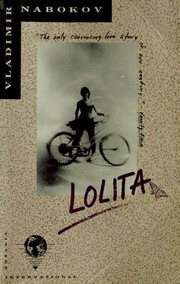
- The publisher’s description calls the book a meditation on love, but that formulation should not be confused with the novel endorsing Humbert’s relationship as love. The text’s central power imbalance and coercion make “love” one of Humbert’s contested self-descriptions.
- Critical disagreement remains over how much Humbert’s late remorse should count as ethical recognition. It may signal genuine insight, another act of self-dramatization, or an unstable mixture of both; the novel does not make the reader’s judgment easy.
Questions worth revisiting
- Where does Humbert’s account most clearly contradict itself without explicitly admitting that he is lying?
- Which details allow Dolores’s experience to emerge beneath Humbert’s preferred version of events?
- Does the novel make you more alert to Humbert’s manipulation, or more vulnerable to it, as it progresses?
- What does Humbert gain by naming Dolores “Lolita,” and what disappears when he does so?
- How does Quilty challenge Humbert’s belief that he is an exceptional, cultured, tragic figure?
- Can the novel’s aesthetic achievement be praised without treating its subject matter as beautiful?
- Is Humbert’s remorse directed toward Dolores, toward the damage he has done to himself, or toward the failure of his fantasy?
Return to this when…
Return to these notes when you want to reread Lolita as a problem of narration rather than as a romance: focus on the gap between Humbert’s language and Dolores’s constrained reality, especially the places where wit, literary reference, and apparent tenderness attempt to govern your judgment.