
In one sentence
Malcolm X presents identity as something repeatedly remade through discipline, literacy, religious commitment, and political awakening—but the book’s final form also reflects Alex Haley’s editing and the unfinished, contested nature of the project.
Overview
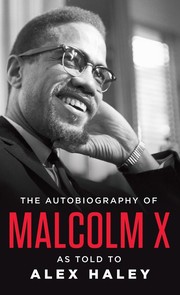
Published by Grove Press on October 29, 1965, about eight months after Malcolm X’s assassination, the book follows a dramatic sequence of transformations: Malcolm Little’s turbulent family background; his life as a hustler and prisoner; conversion to the Nation of Islam; emergence as its most famous spokesman; rupture with Elijah Muhammad; and a late shift toward Sunni Islam, internationalism, and human-rights politics.
Core ideas
Self-creation through education
The prison chapters make reading and study central to Malcolm’s transformation. Literacy is not presented as self-improvement alone: it gives him access to history, religious argument, political language, and the ability to challenge inherited accounts of Black life.
Abolishing imposed identity
The change from “Little” to “X” symbolizes rejection of a surname imposed by slavery and an admission that African American ancestry has been violently obscured. The symbol is powerful precisely because it names loss rather than pretending to recover a complete original identity.
Religion as political formation
The Nation of Islam supplies Malcolm with discipline, community, dietary and behavioral rules, a critique of white supremacy, and a public mission. The book also shows the danger of subordinating personal judgment to a leader or institution.
Rhetoric as action
Malcolm’s speeches, interviews, and organizing are treated as forms of political work. His directness reframes racial violence as a structural and international question, not merely a problem of individual prejudice or gradual domestic reform.
Ideological revision is part of the story
The pilgrimage to Mecca unsettles Malcolm’s earlier racial generalizations. Encounters with Muslims of different races contribute to a broader emphasis on Islamic solidarity, anti-colonial struggle, and human rights—without erasing his continued insistence on Black self-determination.
The autobiography is constructed, not transparent
Haley assembled the narrative from extensive interviews and wrote the epilogue after Malcolm’s death. Scholars therefore treat the book as a collaboration involving memory, selection, editorial shaping, and genre conventions—not as a verbatim transcript or complete historical record.
Practical takeaways
- Track the sequence of Malcolm’s revisions rather than reducing him to either an early separatist or a late universalist.
- Treat disciplined reading as a source of political agency, especially when dominant institutions control public narratives.
- Distinguish criticism of white supremacy from Malcolm’s changing views about race, religion, nationalism, and international politics.
- When using the book historically, compare it with independent biographies and archival scholarship; it omits, compresses, or reshapes parts of Malcolm’s life, and he did not approve the final posthumous version.
- Notice the tension between authenticity and authorship: the compelling voice is Malcolm’s, but the narrative architecture is substantially mediated by Haley and later editors.
Caveats and counterpoints
- The book’s authority comes from Malcolm’s testimony, but autobiography is selective self-presentation. It should not be treated as a neutral chronology or exhaustive account.
- Malcolm died before the final book was completed, so the ending cannot function as a fully settled conclusion to his political development.
- Haley’s role remains a substantive interpretive issue, not merely technical assistance; scholarship has examined competing ideas about voice, authorship, and editorial control.
- The book’s late emphasis on interracial Muslim fellowship should not be read as a simple repudiation of earlier Black nationalism; Malcolm continued to foreground Black dignity, power, and international liberation.
Questions worth revisiting
- Which transformation seems most decisive: prison education, religious conversion, organizational discipline, or international travel?
- Where does Malcolm distinguish personal moral reform from collective political liberation?
- How does the book make anger intellectually productive rather than merely expressive?
- What changes when the narrative moves from Malcolm’s voice to Haley’s epilogue?
- Which claims should be checked against Manning Marable’s later biography or primary documents?
- Does the book’s dramatic structure encourage readers to see Malcolm’s life as a sequence of clean conversions, even where the historical development was more gradual?
Return to this when…
Return to this book when thinking about political self-education, the construction of public identity, religious conversion, Black nationalism, anti-colonial internationalism, or the ethics of collaborative autobiography. Revisit it alongside a scholarly biography when you need historical verification rather than Malcolm’s self-interpreted account.
Highlights
Truth does not change, only our awareness of it.
“By any means necessary” meant examine the obstacles, determine the vision, find the resolve, and explore the alternatives toward dissolving the obstacles.
Some have said that my father was ahead of his time, but the truth is he was on time and perhaps we were late. I trust that through his words we may come to honor and respect all members of the human family as he did. In closing, I offer you my father's own words: “One day, may we all meet together in the light of understanding.”
So early in life, I had learned that if you want something, you had better make some noise.
“Malcolm,there's one thing I like about you. You're no good, but you don't try to hide it. You are not a hypocrite.”
All I had done was to improve on their strategy, and it was the beginning of a very important lesson in life-that anytime you find someone more successful than you are, especially when you're both engaged in the same business-you know they're doing something that you aren't.
Never ask a woman about other men. Either she'll tell you a lie, and you still won't know, or if she tells you the truth, you might not have wanted to hear it in the first place.
Domineering, complaining, demanding wives who had just about psychologically castrated their husbands were responsible for the early rush. These wives were so disagreeable and had made their men so tense that they were robbed of the satisfaction of being men. To escape this tension and the chance of being ridiculed by his own wife, each of these men had gotten up early and come to a prostitute.
More wives could keep their husbands if they realized their greatest urge is to be men.
The prostitutes said that most men needed to know what the pimps knew. A woman should occasionally be babied enough to show her the man had affection, but beyond that she should be treated firmly. These tough women said that it worked with them. All women, by their nature, are fragile and weak: they are attracted to the male in whom they see strength.
I told Reginald what I had learned: that in order to get something you had to look as though you already had something.
Since that day, I have never sat with my back to a door- and I never will again.
He had never been able to keep a white woman any length oftime, though, because he was too good to them, and, as I have said, any woman, white or black, seems to get bored with that.
Schopenhauer, Kant, Nietzsche, naturally, I read all of those. I don't respect them; I am just trying to remember some of those whose theories I soaked up in those years. These three, it's said, laid the groundwork on which the Fascist and Nazi philosophy was built. I don't respect them because it seems to me that most of their time was spent arguing about things that are not really important.They remind me of so many of the Negro “intellectuals,” so-called, with whom I have come in contact-they are always arguing about something useless.
One day, I remember, a dirty glass of water was on a counter and Mr. Muhammad put a clean glass of water beside it. “You want to know how to spread my teachings?” he said, and he pointed to the glasses of water. “Don't condemn if you see a person has a dirty glass of water,” he said, “just show them the clean glass of water that you have. When they inspect it, you won't have to say that yours is better.” Of all the things that Mr. Muhammad ever was to teach me, I don't know why, that still stands out in my mind. Although I haven't always practiced it. I love too much to battle. I'm inclined to tell somebody if his glass of water is dirty.
You see, Islam is the only religion that gives both husband and wife a true understanding of what love is. The Western “love” concept, you take it apart, it really is lust. But love transcends just the physical. Love is disposition, behavior, attitude, thoughts, likes, dislikes-these things make a beautiful woman, a beautiful wife. This is the beauty that never fades. You find in your Western civilization that when a man's wife's physical beauty fails, she loses her attraction. But Islam teaches us to look into the woman, and teaches her to look into us.
Few white people realize that many black people today dislike and avoid spending any more time than they must around white people.
I knew that no one would kill you quicker than a Muslim if he felt that's what Allah wanted him to do.
“I have less patience with someone who doesn't wear a watch than with anyone else, for this type is not time-conscious,”
“People don't realize how a man's whole life can be changed by one book.”
“Children have a lesson adults should learn, to not be ashamed of failing, but to get up and try again. Most of us adults are so afraid, so cautious, so 'safe,' and therefore so shrinking and rigid and afraid that it is why so many humans fail. Most middle-aged adults have resigned themselves to failure.”
References
- The autobiography of Malcolm X | WorldCat.org
- en.wikipedia.org
- “A Writer Is What I Want, Not an Interpreter”: Alex Haley and Malcolm X—Conceiving the Autobiographical Self and the Struggle for Authorship: Souls: Vol 12 , No 1 - Get Access
- upressonline.com
- "The Autobiography of Malcolm X" is published | October 29, 1965 | HISTORY
- humanitiesinstitute.asu.edu
- search.worldcat.org
- alkalimat.org
- files.eric.ed.gov
- en.wikipedia.org
- arxiv.org
- theyoungtreps.com