
In one sentence
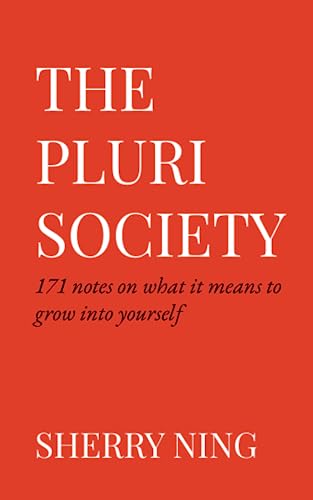
Ning’s central proposition is that a meaningful life is made through active self-formation: paying attention to what you love, cultivating your abilities, resisting default social scripts, and repeatedly choosing purposeful action despite uncertainty. The book treats identity as something developed through practice rather than passively discovered.
Overview
The book consists of 171 short notes rather than a continuous argument. Its recurring concerns include growing into oneself, self-stewardship, creativity, purposeful living, beauty, privilege, emotional life, and the tension between inner conviction and external recognition. Ning writes in compressed, personal, sometimes provocative observations intended to prompt further thought rather than settle questions. The author describes her broader work as focused on human nature, purposeful living, and creativity; outside commentary similarly characterizes the book as short life musings suitable for journaling or annotation.
Core ideas
Selfhood is cultivated, not merely found
The book frames personal growth as an ongoing practice of becoming: noticing your capacities and desires, then giving them structure through choices, habits, and work. “Authenticity” therefore means sustained self-expression, not simply acting on every impulse.
Self-stewardship combines agency with care
Taking responsibility for your life does not mean treating yourself as a productivity machine. It involves protecting attention, developing neglected capacities, and making conditions in which your better aims can survive. The idea appears to sit between self-discipline and humane self-acceptance.
Purpose requires resistance to the default path
Social norms, career expectations, status systems, and habitual distraction can quietly determine a life. Ning encourages readers to examine inherited scripts and choose deliberately rather than confusing convention with necessity. This is an invitation to agency, not a promise that individual willpower defeats structural limits.
Attention is a moral and creative resource
What you repeatedly notice, admire, consume, and practice helps shape the person you become. The practical implication is to treat attention as formative: curate influences, spend time with demanding or beautiful things, and notice which desires your routines are reinforcing.
Ambition and meaning need not be opposites
The book gives permission to want an unusual, excellent, or beautiful life while warning against making recognition the sole measure of worth. Achievement is most defensible when it expresses a genuine vocation or value rather than merely answering an audience’s demand for status.
Reflection should generate action
These notes are not presented as a complete method or program. Their intended use is generative: a sentence should provoke a question, a journal entry, a conversation, or a small experiment. The form itself encourages readers to add their own interpretations and marginalia.
Practical takeaways
- Write a one-page description of the person you are trying to become, emphasizing practices and character rather than labels or achievements.
- Audit your attention for one week: record what consistently receives your time, admiration, envy, and emotional energy.
- Identify one “default path” you are following and separate genuine preference from fear, inertia, or social expectation.
- Choose a neglected capacity and give it a recurring, protected block of time; treat development as stewardship rather than self-reinvention.
- Use the book as a prompt collection: read one note, write your objection or extension, and convert it into one observable action.
- Keep ambition accountable to values: ask what a desired achievement would make possible, and whether the underlying aim could be pursued in a less status-dependent way.
Caveats and counterpoints
- This is not a political analysis despite the catalogue category. Available descriptions and discussions present it primarily as philosophy, personal reflection, and purposeful-living writing.
- The aphoristic form favors resonance over evidence. Claims about identity, purpose, beauty, or human nature are generally reflective propositions, not empirically demonstrated theories.
- The emphasis on agency can be energizing but may understate how class, health, discrimination, family obligations, and luck constrain self-development. The author’s related discussion of privilege reportedly treats it as the presence or absence of obstacles, but the book should not be read as a comprehensive account of structural inequality.
- Readers seeking a tightly organized argument, policy proposals, or a conventional step-by-step self-help system may find the collection diffuse. Its value depends heavily on which observations provoke useful disagreement or reflection.
- The publisher-style catalogue description is motivational and broad; it should not be mistaken for a precise summary of the book’s contents. The more specific public descriptions identify 171 short notes and recurring themes of self-development, creativity, and purposeful living.
Questions worth revisiting
- Which parts of my identity are expressed through repeated practice, and which exist mainly as self-description?
- What do my habits reveal that I actually value—not what I claim to value?
- Where am I calling conformity “realism,” and where am I calling impulse “authenticity”?
- What would ambition look like if success had to remain compatible with compassion and self-respect?
- Which constraints on my life are structural, which are circumstantial, and which are maintained by fear or inertia?
- What idea in the book do I resist—and what might that resistance reveal about me?
Return to this when…
Return to these notes when you feel stalled between self-knowledge and action, are questioning a conventional life script, or want a compact prompt for journaling. The book is best revisited nonlinearly: choose one idea, test it against your circumstances, and keep only what survives contact with experience.
Highlights
Watch what you put inside your mind. We call it “paying” attention because there’s a cost to consumption. Be careful of what you’re spending your attention on—it makes up what you think, what you believe in, and who you are. Take control of what you consume, or the world will take control of who you become.
Be decisive. It is ridiculously underrated how important it is to be confident and decisive about what you like and don’t like. As Cicero said, “More is lost by indecision than wrong decision.” Being decisive forces you to face the reality that there will always be a mismatch between the amount of information available and the information you need. Get comfortable acting with incomplete information. Get used to not being in control of results. The moment of decision is what determines if you can hold your ground or be swept away by the overwhelming possibilities. Being decisive forces you to become something.
Embrace your talent. My favorite quote from Naval is, “escape competition through authenticity.” True value is impossible to mimic, either by artificial intelligence or other people. A truly talented person's day will come, in the same way that gold nuggets don't stay hidden in the earth for long. Don’t just do something well, do something you love. Do things that align with your sense of self, do things you don’t have to try at. Anyone who tries to copy you will always be one step behind because they’ll always need you to make the first move. If you are meant to do something, it should come easily to you. It doesn’t mean that there won’t be challenges. It doesn’t mean that you should just fall complacent to the path of least resistance. Instead, it means that you should find the path that feels natural and let it accelerate you.
Make decisions before it’s too late. Decisions are the unit economics of life. Choosing one thing is simultaneously the rejection of all other things. Diversification is good, but discrimination is necessary. You must know what you want and act on it. Otherwise, you’ll end up with nothing but expired imaginations. Dan Sullivan’s definition of hell is, “your last day on Earth, the person you became meets the person you could have become.”
Do what is meaningful. We live in an age of material wealth but spiritual poverty. The pleasure-oriented consumerist culture we are immersed in is like junk food for the soul; we’re sick because we’re overfed with shallow entertainment and starved of the nutrition our meaning-seeking nature needs.
Assess if a decision is necessary before making one. A lot of times when I start overthinking decisions I zero in on three questions: 1) What do I want? 2) What do I not want? 3) Do I need to make a decision right now? Getting to the bottom of desires and motivations immediately simplifies the situation.
Know what you want. Industrialization led to abundance, which led to choice anxiety. The need to soul-search comes from the floating anxiety of not knowing what we want or where our desires come from. That’s why the next cultural shift will be about being anti-mimetic—that is, living freely by pursuing what we know is meaningful to ourselves. When we don’t know what we want, we end up wanting what everyone else wants. Desires that are decided for us by the world do not fulfill us. The true objective behind it is usually about wanting to impress people who don’t even care.
Do things for yourself. We spend most of our time doing things we hate with people who won’t even be at our funeral. Never settle for something you don’t like, and stop pretending you like it. Be honest and start choosing. Your happiness is your own responsibility. Your sense of meaning is your own responsibility. No one can make you more fulfilled than yourself. No one can embark on your journey for you. You have to do it for yourself.
Watch your thoughts, they become your character. I don’t think people take the space inside their heads seriously enough. The mind is a very sacred place—it’s where beliefs grow. And beliefs are powerful. Every cell in your body eavesdrops on your thoughts, your beliefs are the starting point of what you do and who you become. Vet carefully. This is what Voltaire meant by “one must cultivate one’s own garden.” Keep a good distance between what’s in your head and what’s in the world—you don’t need to take interest in every political issue or every petty argument. Pay attention to what brings you peace and do more of that.
Know where your boundaries are and learn to say no. Consider twice before you accept someone else’s responsibility. Don’t let your insecurity become someone else’s easy satisfaction. Knowing your boundaries is good for them as much as it is good for you. Don’t become someone else’s easy way out. Would you rather be liked now or respected in the future?
Do not tolerate disrespect. People will treat you the way you allow them too. What you’re willing to tolerate is a confession of your character. Not setting boundaries is just another expression of people-pleasing. No one is capable of reading minds. Communicate your needs, don’t just keep them in your head.
Stop blaming your parents. J. K. Rowling once said, “There is an expiry date on blaming your parents for steering you in the wrong direction; the moment you are old enough to take the wheel, responsibility lies with you.” We don’t get to choose the hand we’re dealt but we get to play it to our advantage. Circumstances can make or break us depending on what we do about it, and there comes a day we have to cut the psychological umbilical cord, or, mental ties like blaming your parents for who you are. Otherwise, we are never truly independent. To be independent means being able to succeed, but also being able to fail. Realizing that we are fragile is only the first step. Next, we must grasp that what we achieve inwardly will change outer reality. Thoughts influence destiny.
Have some courage. You have all the information and advice you need. Most times, you already know the answer. Everything on top of what you already believe in is just consolation. But you don’t need other heads to nod at what you already know is right—all that’s left is courage. You are the only person you can’t hide the truth from when you mess up. When you know what you want, no amount of external affirmation is going to substitute the kinetic energy that only courage can provide to turn a vision into reality. All that’s left is guts and action.
Overcome discouragement. How you face discouragement determines everything. You’ve made it this far—did you bring yourself all the way here just to abandon it all? You’re not called to conquer the world, just your own doubts. There’s nothing between you and what you want except action and hesitation; some people hit one disappointment and think it’s the arrival, some only see it as a plateau before the next resurrection. A destination is only final if you say it is, otherwise, it’s just another pit stop for you to rest, reflect, and decide: to keep climbing or quit.
Decide slowly, act quickly. Decision anxiety wears us out more than the actual workload. Most of the time, when we fear the future, what we actually fear is not being able to control it. We’re scared that if we make the wrong decision, any bad result will be entirely our fault. That’s why slowness is key—If the future is the result of a collection of decisions, then taking the time to make each decision carefully will alleviate a lot of the fear associated with tomorrow’s unknowns. Direction is more important than speed. Take your time when needed: decide slowly, act quickly.