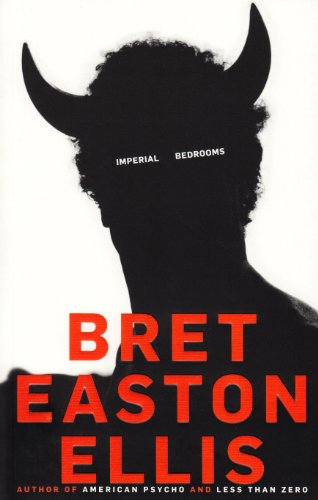

In one sentence
The novel revisits the emptiness of Less Than Zero in middle age: Clay and his circle have acquired careers, money, and technological sophistication, but not greater moral depth. Its central uncertainty—whether events are conspiratorial, imagined, or self-created—makes perception itself part of Ellis’s critique of privilege and desire.
Overview
Clay, now a screenwriter moving between New York and Los Angeles, returns to a familiar Hollywood milieu while helping cast a film. His involvement with the young actress Rain Turner reconnects him with old associates, including Julian, and draws him into a tightening web of texts, sexual bargaining, paranoia, and possible violence. The plot behaves like a deliberately damaged noir or screenplay: clues accumulate, but conventional explanation remains unstable. Reviewers have emphasized both the book’s dark power and its thin, jumpy, sometimes frustrating construction.
Core ideas
Adolescence without development
Clay’s former world has aged, but its emotional logic has not. The sequel’s force comes from comparing youthful detachment with adult versions of the same passivity, entitlement, and inability to form genuine attachments.
Hollywood as a system of exchange
Casting, sex, friendship, and artistic judgment overlap. People are valued as bodies, connections, opportunities, or images; the casting process exposes how easily intimacy becomes negotiation.
Unreliable perception and ontological doubt
Clay’s account encourages suspicion without resolving it. Messages, watchers, coincidences, memories, and fantasies may belong to one continuous paranoid pattern—or may reveal his own evasions. The novel makes uncertainty a structural condition rather than a puzzle awaiting a clean solution.
Surface, style, and moral vacancy
Ellis’s cool, declarative prose records luxury, drugs, technology, parties, and violence with similar composure. That flattening can feel like satire of a culture that turns everything into content, but it also risks emotional and dramatic thinness.
The sequel’s self-consciousness
By returning to Clay and the world of Less Than Zero, Ellis examines his own earlier mythology: the beautiful, wealthy, disconnected Los Angeles of the 1980s. The later novel suggests that the old atmosphere has not disappeared; it has become more mediated and psychologically claustrophobic.
Complicity rather than innocence
Clay is not simply a victim observing corrupt people. His desires, betrayals, passivity, and professional power implicate him in the environment he claims to fear. The novel repeatedly questions whether investigation is really another form of appetite.
Practical takeaways
- Remember the book less as a conventional thriller than as a mood-driven noir about a compromised narrator.
- Rain is important not only as a character but as a pressure point where sex, ambition, youth, and professional power converge.
- The title evokes Elvis Costello’s Imperial Bedroom and extends Ellis’s interest in pop-cultural surfaces, private decadence, and emotional performance.
- Its ambiguity is intentional in effect, but not universally successful: some critics valued the atmosphere and sharp lines, while others found the plot meandering and the ending unsatisfying.
- When recalling Clay, focus on the gap between his apparent passivity and the consequences of his choices.
Caveats and counterpoints
- This is a sequel to Less Than Zero, and familiarity with Clay, Julian, and the earlier Los Angeles milieu adds substantial context; it is not merely a standalone Hollywood thriller.
- The novel contains explicit sexual material, drug use, coercion, graphic violence, and disturbing imagery.
- Interpretations differ sharply: the same elliptical design can read as purposeful paranoia or as underdeveloped plotting.
- The catalogue description is broadly accurate about Clay’s return and betrayal, but it understates the novel’s metafictional relationship to Less Than Zero and its sustained uncertainty about what is real.
Questions worth revisiting
- Is Clay discovering a conspiracy, constructing one, or using paranoia to avoid responsibility?
- Does the return to Los Angeles represent nostalgia, punishment, or the impossibility of escaping an earlier self?
- How does the casting process mirror the novel’s treatment of narration—everyone auditioning, performing, and withholding?
- Does Ellis’s flat style condemn emotional numbness, reproduce it, or do both at once?
- What changes when the detached youth of Less Than Zero becomes an adult with professional authority?
Return to this when…
Return to these notes when comparing Ellis’s early and later fiction, discussing unreliable narration, or thinking about how Hollywood converts desire and identity into marketable performances.