
In one sentence
The book turns a routine sports assignment into a struggle among competing versions of Hawaii: living culture, colonial history, tourist fantasy, and Thompson’s own reckless mythology. Its central joke—and limitation—is that Thompson attacks imperial and commercial excess while repeatedly reproducing the privileged outsider’s appetite for spectacle.
Overview
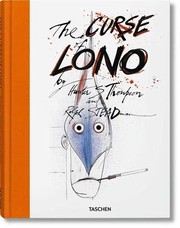
Commissioned to report on the 1980 Honolulu Marathon, Thompson largely abandons conventional race coverage. The narrative follows his increasingly chaotic stay in Hawaii, with Ralph Steadman’s illustrations functioning as a second, more visibly grotesque narrator. Historical material about Captain James Cook and the Hawaiian god Lono gives the disorder a symbolic frame: arrival, mistaken identity, possession, abundance, and violent return. The book is nonfictional gonzo reportage rather than a novel, though its staged episodes, recurring motifs, and mythic self-presentation give it a strongly literary shape.
Core ideas
The assignment as an excuse for derangement
The Honolulu Marathon is less a subject than a pretext. Thompson’s refusal to behave like a sports journalist exposes gonzo journalism’s method: the reporter’s unruly presence becomes the event, while conventional objectivity is treated as another absurd performance.
Lono, Cook, and the outsider’s return
The Lono myth and the history of Captain Cook allow Thompson to associate himself—ironically and uneasily—with an arriving figure mistaken for a god. The comparison makes colonial arrogance visible, but also implicates Thompson in the same theatrical outsider posture.
Hawaii between culture and commodity
The book repeatedly contrasts sacred or historical Hawaii with the islands’ modern packaging as a playground for tourists, wealthy visitors, sport fishers, and real-estate interests. Its critique is sharpest when excess becomes a form of economic and cultural possession.
Self-mockery versus self-mythologizing
Thompson presents himself as both heroic adventurer and incompetent, intoxicated nuisance. The self-deprecation punctures the legend, yet the elaborate persona still dominates the people and places around him—a tension critics see as central to the book’s unevenness.
Steadman’s visual counterargument
Ralph Steadman’s drawings do not merely decorate the prose. Their grotesque distortions externalize the book’s violence, panic, bodily excess, and imperial imagery, making the collaboration a hybrid of reportage, caricature, travel book, and visual hallucination.
A deliberately unstable achievement
Some reviewers regard the book as a failed or repetitive imitation of Thompson’s stronger work, arguing that its excess lacks the symbolic coherence of Fear and Loathing in Las Vegas. Other criticism treats it as an important study of neocolonialism and Thompson’s self-fashioning. Both readings help explain its cult status and divisiveness.
Practical takeaways
- A supposedly factual assignment can reveal more through its distortions than through its official subject.
- Travel writing should be read for the traveler’s power, appetites, and blind spots—not only for its description of a place.
- Historical allusions can give comic chaos a larger structure, but they can also risk turning other cultures into scenery for the writer’s persona.
- Self-awareness does not automatically cancel out exploitation; mocking one’s privilege is not the same as relinquishing it.
- The book is best approached as a collaboration between prose and image, not as text that happens to contain illustrations.
Caveats and counterpoints
- The supplied catalogue description is broadly accurate but understates the book’s form: it is generally catalogued as biography, memoir, or travel description rather than fiction.
- Thompson’s treatment of Hawaiian history and mythology is filtered through an intentionally unreliable, often offensive outsider persona. It should not be mistaken for a culturally authoritative account of Hawaii.
- The book’s episodic structure and sustained intoxicated aggression can feel repetitive; its critical force depends heavily on whether the reader finds the performance illuminating or merely indulgent.
- The discussion above avoids the concluding events and does not assume access to any particular edition. The 1983 Bantam edition and later illustrated Taschen editions differ in physical presentation and pagination.
Questions worth revisiting
- When does Thompson’s self-portrait become a critique of the colonial adventurer, and when does it simply reenact one?
- Does the Lono framework deepen the Hawaii material, or mainly provide Thompson with a grandiose costume?
- What does Steadman’s visual violence communicate that Thompson’s prose cannot—or cannot admit?
- Is the book’s failure to cover the marathon a principled rejection of assignment journalism, or a failure of discipline?
- How should readers distinguish satire aimed at tourists and elites from caricature aimed at local people and cultural traditions?
Return to this when…
Return to this book when thinking about gonzo journalism, unreliable travel writing, literary self-invention, or the ethics of turning cultural encounter into personal spectacle. It is especially useful alongside Fear and Loathing in Las Vegas for comparing a more symbolically coherent work with a deliberately messier, more historically self-conscious one.
Highlights
That is what you miss: not the money, but the action -- and that is why I finally drilled Ralph out of his castle in Kent for a trip to Hawaii and a look at this strange new phenomenon called "running." There was no good reason for it; I just felt it was time to get out in the world. . . get angry and tune the instruments. . . go to Hawaii for Christmas.
References
- The curse of Lono by Hunter S. Thompson | Open Library
- en.wikipedia.org
- The Curse of Lono | Book by Hunter S. Thompson, Ralph Steadman | Official Publisher Page | Simon & Schuster
- THE CURSE OF LONO | Kirkus Reviews
- ci.nii.ac.jp
- search.worldcat.org
- obnb.uk
- goodreads.com
- goodreads.com
- goodreads.com
- tandfonline.com
- taschen.com