
In one sentence
In a networked marketplace, the scarce resource is not access to people but leadership: anyone willing to challenge the status quo, articulate a meaningful idea, and connect people around it can turn an existing community into a movement. Godin frames this as both a marketing opportunity and a personal choice.
Overview
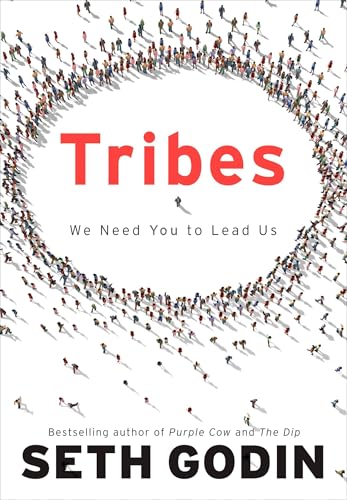
Godin defines a tribe as people connected to one another, to a leader, and to an idea. The internet reduces geographic, financial, and time barriers, making small, focused communities easier to find and organize. His central invitation is to stop acting as a “sheepwalker”—a protector of the status quo—and instead lead change from wherever one has influence, including inside an organization. The book is structured as a series of short, emphatic sections and examples rather than a linear leadership framework.
Core ideas
A tribe is more than an audience
A customer list or social-media following becomes a tribe only when members share an idea, recognize one another as part of a community, and have some relationship to leadership. The marketing implication is to cultivate belonging and participation, not merely maximize reach.
Leadership is a decision, not a title
Godin treats leadership as the willingness to take responsibility for change. Formal authority, seniority, and conventional credentials are not prerequisites; an employee, specialist, customer, or outsider can lead a tribe from the margins.
Change begins with a tension worth resolving
A movement needs a status quo that people want to change and a clear alternative they can rally around. “Be different” is insufficient: the leader must make the difference meaningful to a specific group.
Connection enables coordination
The web is valuable not because it automatically creates community, but because it makes it easier for like-minded people to find one another, communicate, and act. Tools amplify leadership; they do not substitute for purpose or trust.
Dissent can be productive
Godin presents the “heretic” as someone who questions inherited rules and makes a visible stand. Constructive disagreement helps a tribe define what it believes and gives members a reason to participate, though dissent without a useful direction is merely disruption.
Leaders serve and empower the tribe
The leader’s role is not simply to broadcast messages or accumulate status. Effective leadership gives members language, identity, and opportunities to contribute, allowing the group’s energy and initiative to spread beyond the founder.
Marketing and leadership overlap
The book’s marketing model is permission-based and community-centered: find people who care, offer an idea they recognize as their own, and help them connect. This differs from mass marketing aimed at persuading an undifferentiated audience.
Practical takeaways
- Identify a specific group already experiencing a shared frustration, aspiration, or interest; do not begin with “everyone.”
- State the change you want in one memorable sentence, including what is wrong now and what members can help create.
- Find or create recurring ways for members to interact with one another, not only with you.
- Give the tribe visible rituals, language, standards, and small actions that reinforce membership.
- Lead from your actual point of leverage—team, profession, customer community, neighborhood, or niche—instead of waiting for permission or a promotion.
- Ask for meaningful participation rather than passive approval; low-friction likes and signatures rarely equal commitment. Godin makes a similar distinction in a related Q&A.
- Measure whether members are connecting, contributing, and recruiting others—not just whether your message is receiving attention.
Caveats and counterpoints
- This is primarily a persuasive manifesto, not a tested theory or step-by-step operating manual. The publisher describes three broad ingredients—desire to change, ability to connect, and willingness to lead—but the book supplies limited systematic evidence or sequencing.
- The presentation is intentionally repetitive and anecdotal. Publishers Weekly judged that useful ideas were obscured by repeated claims and esoteric case studies, so readers seeking research, frameworks, or implementation detail may find it thin.
- “Ask forgiveness, not permission” can encourage initiative, but it can also create legal, ethical, operational, or employment risks. Use bounded experiments and clarify which rules are legitimate safeguards rather than needless bureaucracy.
- A strong identity can create cohesion, but tribal marketing can also produce exclusion, conformity, and hostility toward outsiders. Godin’s optimistic account underplays governance, power imbalances, accountability, and the possibility that a passionate tribe may rally around a harmful idea.
- The book’s examples and internet assumptions come from the late-2000s social-web moment. The underlying principle of community-building remains useful, but specific platforms, tactics, and notions of online reach should not be treated as current best practice.
Questions worth revisiting
- What existing group do I understand well enough to serve, and what shared change would genuinely matter to it?
- Am I building relationships among members, or merely collecting an audience for my own broadcasts?
- What do I want members to do repeatedly—not just agree with?
- Which rules am I challenging, and which constraints protect people or preserve quality?
- What evidence would show that this is becoming a community rather than a personal brand?
- How will dissent, criticism, leadership succession, and harm be handled?
- Would the tribe remain valuable if I were no longer its central personality?
Return to this when…
Return to this book when you have an idea, niche, or community that needs momentum and you are waiting for institutional permission. Revisit the caveats alongside it when designing a real movement: define the change precisely, test genuine participation, and add safeguards that the book’s motivational style largely leaves implicit.