
In one sentence
The book argues that superhuman power does not make people virtuous—and that institutions built to control unchecked power can become morally contaminated themselves. Its satire targets superhero mythology, celebrity culture, corporate management, militarism, and the public’s willingness to excuse abuse when it is packaged as entertainment.
Overview
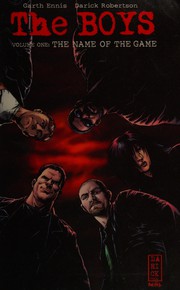
This is the first collected story, The Name of the Game, written by Garth Ennis and illustrated by Darick Robertson. It introduces Billy Butcher, Wee Hughie, Mother’s Milk, the Frenchman, and the Female: a CIA-backed group tasked with monitoring or neutralizing “supes.” Hughie functions as the reader’s vulnerable entry point, while Butcher embodies the team’s frightening competence and appetite for revenge. The collection establishes the conflict between The Boys and Vought-American’s superhero empire, especially its flagship team, the Seven. The premise is deliberately extreme, but the underlying concern is serious: what happens when fame, money, political influence, and near-total physical power reinforce one another? The collection gathers issues #1–6 and was published in trade paperback by Dynamite in 2008.
Core ideas
Power without accountability
The “supes” are not simply villains because they possess powers; they are dangerous because celebrity status, corporate protection, and institutional influence insulate them from consequences. The book repeatedly contrasts public image with private conduct.
The counter-force is compromised
The Boys may oppose abusive superheroes, but they are not presented as clean heroes. Their methods include intimidation, coercion, surveillance, and violence. This creates the central moral tension: can corrupt power be restrained by people willing to become terrifying themselves?
Superheroes as corporate products
Vought-American treats heroism as branding and asset management. Costumes, teams, public relations, and patriotic narratives turn extraordinary individuals into marketable properties, making exploitation look respectable.
Hughie and Butcher
Their relationship supplies the book’s human and ideological tension. Hughie is inexperienced, emotionally open, and morally unsettled; Butcher is charismatic, strategic, and shaped by anger. Butcher offers Hughie purpose while also attempting to harden him.
Satire through excess
Ennis uses obscenity, cruelty, and deliberately offensive spectacle to puncture the genre’s idealized imagery. The method can be effective when it exposes hypocrisy, but it can also become repetitive or feel more interested in provocation than analysis.
The image of innocence
The collection is suspicious of symbols that claim purity—heroic uniforms, patriotic language, public charity, and reassuring television narratives. Its recurring question is whether innocence survives once institutions learn how profitable it is to perform innocence.
Practical takeaways
- When evaluating a powerful public figure, separate the persona being sold from the conduct being protected.
- A movement’s moral legitimacy cannot be assumed merely because it opposes a worse enemy; examine its methods and incentives too.
- Watch for organizations that convert accountability into public relations, loyalty tests, or controlled spectacle.
- The book is useful as a deliberately abrasive case study in how satire can reveal hypocrisy—and how excess can also blunt its own point.
- Hughie’s perspective suggests that entering a system to fight injustice may require compromises that gradually redefine what you are willing to tolerate.
Caveats and counterpoints
- This is an adult, highly graphic comic that uses sexual violence, gore, profanity, cruelty, and shock humor extensively; those devices are central to its style, not incidental content.
- The book’s critique is broad rather than balanced: it is much more interested in exposing superhero power fantasies than in presenting idealized alternatives.
- The satire sometimes collapses distinctions among superheroes, corporations, government agencies, and ordinary audiences, which can make its political argument feel blunt.
- The notes concern the opening collection, The Name of the Game, rather than every later volume of the long-running series. The supplied catalogue description closely matches that first collection, which collects issues #1–6.
Questions worth revisiting
- Is The Boys actually proposing accountable institutions, or mainly expressing distrust of every institution involved?
- Does Hughie’s moral discomfort meaningfully challenge Butcher’s worldview, or is it gradually absorbed by it?
- When does the book’s grotesque humor sharpen its critique, and when does it merely reproduce the dehumanization it condemns?
- Are the superheroes’ abuses presented as individual moral failures, systemic consequences, or both?
- What does the book imply about audiences who knowingly consume comforting heroic myths?
Return to this when…
Return when you want to compare the comic’s original anti-superhero satire with later adaptations, or when thinking about the relationship between celebrity, corporate power, public trust, and accountability.