
In one sentence
J Dilla’s importance lies not simply in mysterious genius but in a historically formed, technically specific rethinking of rhythm. By manipulating timing, texture, sampling, and silence, he made the producer’s beat function like a highly expressive performance—and helped change the possibilities of hip-hop, R&B, jazz, and popular music.
Overview
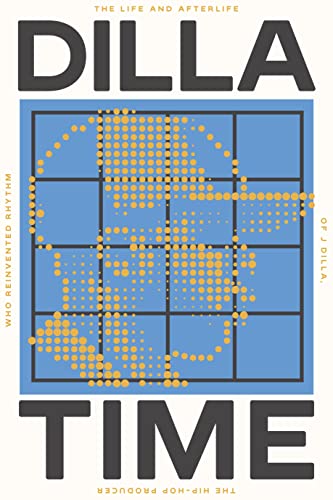
The book follows James Dewitt Yancey from his musical upbringing and Detroit’s production scene through his work as Jay Dee and J Dilla, including connections with Slum Village, A Tribe Called Quest, Common, D’Angelo, and other major artists. It then examines illness, death at thirty-two in 2006, the mythology surrounding Donuts, and the conflicts and institutions that shaped his afterlife. Charnas alternates biography with accessible musicology, cultural history, and rhythm diagrams.
Core ideas
“Dilla time” is a third rhythmic possibility
Charnas contrasts straight time, in which subdivisions are evenly placed, with swing time, in which recurring subdivisions are systematically uneven. Dilla’s characteristic approach often treats separate rhythmic layers independently: a kick may rush, a snare may lag, and samples may pull against both. The result is tension, looseness, and forward motion rather than simple “off-beat” playing.
Technology can become an instrument of expression
Dilla’s machines were not merely tools for making perfect loops. He used sampling, drum programming, imperfect timing, and the ability to edit microscopic events as compositional resources. The machine’s grid became something to resist, bend, and perform against.
The producer is a composer and performer
The book argues against treating beat-making as secondary to songwriting or rapping. Dilla’s choices of drum placement, sample fragments, repetition, interruption, and sonic texture carry structure and emotion comparable to instrumental composition. His beats can therefore be heard as performances, even when assembled through machines.
Innovation grows from accumulated musical memory
Dilla’s originality emerged through deep listening: Detroit’s musical culture, jazz, soul, funk, electronic production, rap, and the crate-digger’s archive. Sampling is presented less as simple borrowing than as a way of finding latent rhythmic and emotional possibilities inside existing recordings.
Posthumous myth can clarify and distort
Dilla became increasingly revered after his death, especially through Donuts and the work of musicians who absorbed his methods. Charnas tries to preserve the magnitude of the achievement without turning Dilla into a saint: the biography includes his generosity and brilliance alongside prickliness, instability, financial problems, illness, and difficult relationships.
Legacy is made by communities, not only by masterpieces
The afterlife chapters track how labels, family members, musicians, fans, fundraisers, journalists, and institutions competed to define and preserve Dilla’s legacy. Recognition can arrive after an artist’s death, but it also creates disputes over ownership, authenticity, money, and whose story becomes official.
Practical takeaways
- When studying creative work, inspect the smallest formal decisions—not only the finished product or the artist’s reputation.
- Treat constraints and technical imperfections as possible expressive materials rather than automatic problems to eliminate.
- Separate a compelling origin story from the documented production history; this is particularly useful when thinking about the mythology surrounding Donuts.
- Use comparison to hear innovation: listen for the relationship among kick, snare, hi-hat, sample, bass, and the underlying grid rather than asking only whether a beat is fast, slow, or swung.
- Do not confuse influence with replication. Copying a surface feature of Dilla’s sound—such as loose timing—does not reproduce the deeper interaction among timing, sampling, arrangement, and musical knowledge.
- Remember that the book’s framework is interpretive: “Dilla time” is a powerful explanatory label, not a universally settled scientific category or a claim that Dilla invented rhythmic looseness from nothing.
Caveats and counterpoints
- Some reviewers find the book overly long or technically demanding, even while praising its musicological ambition.
- The argument can place Dilla at the center of a very large musical revolution; that emphasis is persuasive as a study of influence but may understate the parallel contributions of earlier traditions and collaborators.
- The book presents a heavily researched reconstruction, not direct access to Dilla’s private intentions. Interpretations of why he made particular rhythmic choices remain partly inferential.
- The biography’s treatment of family conflict and estate disputes complicates the idea of a single, unified legacy; posthumous celebration did not eliminate disagreement or exploitation.
Questions worth revisiting
- When does deliberate imperfection become a new form of precision?
- Is Dilla’s innovation best understood as technological, cultural, compositional, or some combination of all three?
- How much of an artist’s legacy is created by the artist, and how much by later listeners, institutions, and markets?
- What changes when a beat is heard as a performance rather than as a fixed object?
- Which parts of Dilla’s method remain meaningful when detached from the Detroit, Black musical, and hip-hop histories that shaped it?
Return to this when…
Return to the “Dilla time” chapters when listening to Dilla, Madlib, Flying Lotus, Questlove, Robert Glasper, or contemporary beat music; return to the final chapters when thinking about artistic legacy, posthumous mythmaking, estate politics, or how technical craft becomes cultural history.
References
- ethnomusicologyreview.ucla.edu
- Dilla Time: The Life and Afterlife of J Dilla, the Hip-Hop Producer Who Reinvented Rhythm by Dan Charnas
- DILLA TIME | Kirkus Reviews
- D is for Dilla: the life and legacy of a hip-hop phenomenon | DJ Mag
- All Book Marks reviews for Dilla Time: The Life and Afterlife of J Dilla, the Hip-Hop Producer Who Reinvented Rhythm by Dan Charnas Book Marks
- bookmarks.reviews
- dancharnas.com
- researchgate.net
- Dilla Time
- uproxx.com
- en.wikipedia.org
- yahoo.com
- bookmarks.reviews
- bookmarks.reviews