
In one sentence
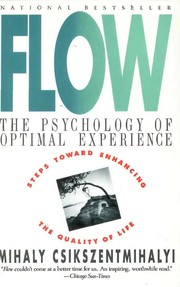
A satisfying life depends less on passive pleasure or favorable circumstances than on how attention is organized. People tend to experience “flow”—deep, intrinsically rewarding absorption—when they pursue clear goals, receive immediate feedback, and face challenges that stretch but do not overwhelm their skills. By deliberately shaping activities and habits around these conditions, one can improve the quality of everyday experience and gradually develop a more coherent, self-directed life.
Overview
Core ideas
Flow is structured absorption, not mere enjoyment
Flow involves concentrated attention, a merging of action and awareness, reduced self-consciousness, a sense of control, altered time perception, and intrinsic reward. Enjoyment often appears afterward; during the activity, attention is occupied by the task itself.
The central design principle is challenge–skill balance
When demands exceed perceived abilities, anxiety tends to result; when abilities greatly exceed demands, boredom is likely. Flow is most likely in the demanding middle zone, where the task requires active adaptation and learning. The challenge must generally be high enough to matter, not merely equal to current competence.
Goals and feedback make attention self-correcting
Clear proximal goals tell you what to attend to next; immediate, unambiguous feedback tells you whether your action is working. This is why activities such as games, music, sport, craft, programming, and well-designed professional tasks can absorb attention more reliably than vague ambitions.
Attention is the scarce resource behind experience
For Csikszentmihalyi, consciousness is shaped by what receives psychic energy. Disorder enters when attention is fragmented by worries, conflicting demands, or intrusive thoughts. Flow temporarily produces order by narrowing attention around a coherent activity; a life becomes more satisfying when attention is repeatedly directed toward chosen purposes rather than captured passively.
Intrinsic motivation supports persistence and growth
Autotelic activities are rewarding in themselves, so the person does not depend entirely on external approval, money, or status. Because flow is usually slightly beyond current mastery, intrinsic reward helps sustain the effort required for skill development. External rewards can coexist with flow but may distort motivation if they replace interest in the activity.
A good life requires more than isolated peak states
The book extends flow from individual episodes to life design. Work, leisure, learning, family life, and solitude can all become more coherent when they contain meaningful challenges and opportunities for attention. The deeper goal is to create an integrated pattern of experience, not to maximize productivity or chase a permanent “high.”
The autotelic personality is a developed orientation
People who readily find engagement tend to be curious, persistent, internally directed, and able to become absorbed without needing constant external stimulation. Csikszentmihalyi treats this less as a fixed personality type than as a capacity cultivated through habits of attention, goal-setting, skill-building, and openness to experience.
Practical takeaways
- Choose one activity that matters and define a concrete next objective rather than a vague outcome.
- Adjust difficulty deliberately: increase the challenge when bored; simplify, practice, or seek help when anxious.
- Build rapid feedback into work through tests, drafts, checkpoints, visible progress, or knowledgeable critique.
- Protect uninterrupted attention; flow is difficult when the task competes with notifications, switching, or unresolved distractions.
- Treat leisure as an opportunity for active engagement, not only consumption. Skill-based hobbies often provide more durable satisfaction than passive entertainment.
- After a flow episode, note what combination of task, difficulty, environment, and feedback made absorption possible; recreate the conditions rather than waiting for motivation.
- Use flow as one criterion for life design, not the sole criterion. Meaning, ethics, rest, relationships, and obligations may matter even when an activity is not immediately absorbing.
Caveats and counterpoints
- The book’s broad conclusions should not be confused with a complete causal theory. Later reviews note that flow is difficult to define and measure consistently, and many studies rely on retrospective self-report because asking questions during flow can disrupt it.
- Challenge–skill balance is influential but not sufficient by itself. Clear goals, feedback, sense of control, task context, and individual interpretation also matter; treating “flow” as simply the midpoint between boredom and anxiety oversimplifies the model.
- Flow is not identical to happiness, wisdom, moral goodness, or long-term well-being. People can become deeply absorbed in activities that are unhealthy, exploitative, compulsive, or socially harmful; the value of the goal still requires independent judgment.
- The book’s sweeping account of consciousness and the “psychic entropy” metaphor is more interpretive than experimentally settled. Its strongest practical contribution is the activity-design framework, not a complete explanation of human motivation.
- Because flow favors clear feedback and controllable tasks, the framework fits games, crafts, sports, and some professional work better than caregiving, grief, civic responsibility, or other domains where outcomes are uncertain and feedback is delayed.
Questions worth revisiting
- Which activities reliably produce deep absorption for me, and what specific conditions do they share?
- Where am I bored because the challenge is too low, and where am I anxious because the next step is too difficult?
- What is the smallest meaningful goal I can define for my current project?
- How can I obtain faster feedback without turning the activity into a purely measured performance?
- Am I using flow to pursue something worthwhile, or merely becoming more efficient at distraction, avoidance, or overwork?
- Which parts of my life need more active engagement—and which need rest, openness, or unstructured time instead?
Return to this when…
Return to the challenge–skill model when work feels either dull or overwhelming; revisit the attention and life-design chapters when deciding how to restructure time, hobbies, learning, or career. Consult the caveats when someone presents flow as a guaranteed productivity hack or as proof that every enjoyable, absorbing activity is good for them.