
In one sentence
Hoff argues that a life aligned with the Tao—the natural way things unfold—comes from working with one’s inherent nature rather than constantly imposing plans, ambitions, anxieties, and abstractions on experience. Pooh represents this orientation through simplicity, sincerity, and “effortless action.”
Overview
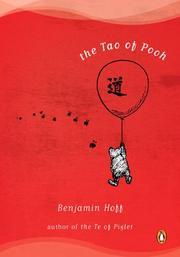
First published in 1982, the book alternates between explanations of Taoist ideas, passages from A. A. Milne’s Pooh stories, and invented conversations between Hoff and the characters. Pooh is presented as an intuitive Taoist figure, while Rabbit, Owl, Eeyore, and Tigger dramatize over-planning, intellectualization, pessimism, and restless striving. The approach is deliberately conversational rather than scholarly.
Core ideas
Tao: the way of things
The Tao is not presented primarily as a doctrine or set of rules, but as the underlying natural process of life. Wisdom means noticing that process and cooperating with it instead of demanding that reality conform to preconceived ideas.
Wu wei: non-forcing
“Effortless action” does not mean passivity or doing nothing. It means acting appropriately, without the extra friction created by vanity, anxiety, needless control, or resistance. Pooh’s effectiveness comes from responding naturally rather than trying to appear clever or important.
The uncarved block
Hoff uses the Taoist image of the uncarved block to represent an undistorted, natural condition: simple, open, and not over-shaped by social expectations. The practical question is what remains when performance, status-seeking, and excessive self-consciousness are removed.
Character as a philosophical map
The animals function less as psychologically complete characters than as recognizable human tendencies. Rabbit illustrates compulsive organization, Owl excessive intellectual confidence, Eeyore habitual gloom, and Tigger uncontrolled energy; Pooh embodies a counterweight of contentment and directness.
Simplicity versus cleverness
The book repeatedly contrasts practical, embodied understanding with cleverness detached from life. Hoff’s target is not intelligence itself, but the tendency to substitute analysis, labels, and theories for attention to what is actually happening.
Balance and acceptance
Taoist harmony is portrayed as accepting conditions rather than wasting energy wishing they were different. This does not eliminate difficulty; it changes the relationship to difficulty by reducing unnecessary resistance and allowing a more proportionate response.
Practical takeaways
- Before adding effort, ask whether the situation needs intervention or simply clearer observation.
- Separate useful action from actions mainly motivated by proving competence, gaining approval, or controlling appearances.
- Notice your dominant “Hundred Acre Wood” tendency: over-planning, intellectualizing, pessimism, frantic activity, or passive drifting.
- Use simplicity as a diagnostic: what is the next natural, sufficient step—not the most impressive one?
- Treat contentment as attentiveness to what is present, not as the denial of problems or the abandonment of responsibility.
- When applying “non-forcing” at work or in relationships, preserve judgment and boundaries; Taoist ease is not an excuse for avoidance or incompetence.
Caveats and counterpoints
- This is a popular interpretation of Taoism, not a neutral or comprehensive account of Daoist philosophy. The publisher presents it as an inviting introduction, while Kirkus criticized its simplifications, therapeutic framing, selective treatment of Taoism, and strained use of Pooh analogies.
- Hoff’s invented dialogues and symbolic assignments to the characters are interpretive devices, not statements made by Milne’s characters in the original stories.
- The book’s contrast between Pooh and the more energetic or intellectual characters can become reductive: real Taoist practice need not reject learning, planning, social obligation, or purposeful effort.
- For historical, religious, or textual study, pair it with a reliable translation and scholarly introduction to the Daodejing and broader Daoist traditions.
Questions worth revisiting
- Where am I forcing an outcome mainly because I distrust uncertainty?
- What would competent action look like if I removed the need to appear clever or in control?
- Am I confusing acceptance with resignation, or effortlessness with passivity?
- Which of my habits resembles Rabbit, Owl, Eeyore, or Tigger—and what useful quality might that tendency contain?
- What is genuinely necessary in this situation, and what am I adding from fear, vanity, or habit?
Return to this when…
Return when you are overcomplicating a decision, pushing against circumstances that cannot be pushed, or treating busyness and cleverness as evidence of wisdom. Revisit the caveat section when using the book to make claims about Taoism as a historical tradition.
Highlights
The essence of the principle of the Uncarved Block is that things in their original simplicity contain their own natural power, power that is easily spoiled and lost when that simplicity is changed.
When you discard arrogance, complexity, and a few other things that get in the way, sooner or later you will discover that simple, childlike, and mysterious secret known to those of the Uncarved Block: Life is Fun.
Let's start with the first part: "A fly can't bird, but a bird can fly." Very simple. It's obvious, isn't it? And yet, you'd be surprised how many people violate this simple principle every day of their lives and try to fit square pegs into round holes, ignoring the clear reality that Things Are As They Are.
Brain can be fooled. Inner Nature, when relied on, f cannot be fooled. But many people do not look at it or listen to it, and consequently do not understand themselves very much. Having little understanding of themselves, they have little respect for themselves, and are therefore easily influenced by others.
The play-it-safe pessimists of the world never accomplish much of anything, because they don't look clearly and objectively at situations, they don't recognize or believe in their own abilities, and they won't stretch those abilities to overcome even the smallest amount of risk.
References
- The Official Website of Benjamin Hoff, Author
- Book Reviews, Sites, Romance, Fantasy, Fiction | Kirkus Reviews
- The Tao of Pooh by Benjamin Hoff | Open Library
- The Tao of Pooh | Book by Benjamin Hoff | Official Publisher Page | Simon & Schuster
- kirkusreviews.com
- thekeypoint.org
- renminds.org
- litcharts.com
- openlibrary.org
- en.wikipedia.org
- forreadingaddicts.co.uk
- litcharts.com