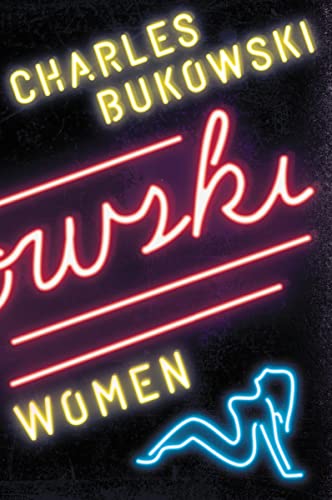

In one sentence
Women is less a celebration of sexual freedom than an extended exposure of the instability beneath Chinaski’s persona. His compulsive pursuit of women, alcohol, and experience gives him material and momentum, but not lasting emotional security. The novel’s central tension is between his boastful objectification of women and the recurring evidence that he is frightened, dependent, lonely, and capable of recognizing his own damage.
Overview
Published by Black Sparrow Press in 1978, Women is Bukowski’s third novel and one of the later-life Henry Chinaski books: the protagonist is now a recognized writer rather than a postal worker or itinerant laborer. The episodic structure follows a succession of sexual and romantic encounters, with Chinaski’s writing career and public status altering the power dynamics around him.
Core ideas
Desire as appetite, avoidance, and repetition
Sex is presented as bodily pleasure, validation, distraction, and a substitute for vulnerability. The repeated encounters create a deliberately cyclical feeling: pursuit briefly relieves loneliness, then produces new complications, resentment, or emptiness.
The unreliable masculine performance
Chinaski presents himself as an aging, shameless, hypersexual outsider. Yet the persona repeatedly exposes fear and dependence. One influential reading argues that the novel’s macho posture often undermines itself through irony rather than simply endorsing male dominance.
Women seen through Chinaski’s limitations
The novel’s women are encountered primarily through the narrator’s desire, jealousy, fantasies, and judgments. That narrow viewpoint is part of the book’s subject—but it is also a serious artistic and ethical limitation. Critics have argued that women are too often denied independent interiority, making identification with them difficult.
Fame changes access, not alienation
Literary success gives Chinaski money, attention, and social leverage, but it does not make him emotionally mature. The contrast with his earlier working-class desperation complicates the idea that escaping poverty or obscurity automatically produces freedom.
Comedy beside degradation
Bukowski’s clipped, conversational prose turns hangovers, awkwardness, jealousy, and sexual failure into comic material. The humor can be energetic and self-lacerating, but it can also normalize or aestheticize destructive behavior, especially alcoholism and misogynistic language.
Autobiography as literary construction
Chinaski is a semi-autobiographical character, not a transparent transcription of Bukowski. The book’s outrageousness depends on deliberate persona-building: the narrator converts private experience into a repeatable public myth of the outlaw writer.
Practical takeaways
- Read Chinaski’s claims skeptically: his confidence is often a defense against shame, aging, rejection, or emotional dependence.
- Notice the difference between a narrator exposing his own ugliness and a novel successfully challenging the worldview that produces it; Women does the former more consistently than it settles the latter.
- The book is useful for thinking about how charisma can disguise exploitation, and how self-awareness does not necessarily lead to changed behavior.
- Pay attention to repetition rather than isolated episodes: the accumulating pattern is the novel’s argument about compulsion and temporary relief.
- Treat the women characters as a test of the book’s perspective. Ask what they reveal about Chinaski, and separately ask what the narrative refuses to let them become.
Caveats and counterpoints
- The novel’s ironic self-criticism does not erase its sexism. A reader may reasonably conclude that the text both mocks and reproduces the misogynistic attitudes it puts in Chinaski’s mouth.
- Its women are not consistently developed as independent subjects; interpretations that emphasize sympathy or critique should not imply that the representational problem disappears.
- Bukowski’s alcoholism, sexual excess, and outsider identity are stylized literary materials, not reliable models of liberation or authenticity.
- The episodic form can feel repetitive by design. Readers seeking a tightly plotted narrative may find the book’s succession of encounters more important as pattern than as conventional story.
Questions worth revisiting
- When does Chinaski’s self-awareness become another form of vanity rather than moral insight?
- Does the novel’s irony direct the reader to criticize his worldview, or merely make that worldview more entertaining?
- What changes when sexual access is connected to literary fame and money?
- Are the relationships failures of intimacy, failures of language, or failures of willingness to accept vulnerability?
- Can a narrator be brutally honest about himself while still fundamentally misrepresenting other people?
Return to this when…
Return to this novel when thinking about unreliable first-person narration, the literary performance of masculinity, the relationship between sexual compulsion and loneliness, or the limits of autobiographical fiction. It is especially worth revisiting alongside Post Office and Factotum to compare how success changes Chinaski’s circumstances without resolving his inner patterns.
Highlights
“There’s no way I can stop writing, it’s a form of insanity.”
Then I gave up trying to please her and simply fucked her, ripping viciously. It was like murder. I didn’t care; my cock had gone crazy. All that hair, her young and beautiful face. It was like raping the Virgin Mary. I came. I came inside of her, agonizing, feeling my sperm enter her body, she was helpless, and I shot my come deep into her ultimate core—body and soul—again and again. . . .
It was easy to write about whores, but to write about a good woman was much more difficult.
“No, I’m not her father or her grandfather. I’m not related to her in any way. She’s my girlfriend and we’re going to New York.” I could see the headline in her eyes: MONSTER FROM EAST HOLLYWOOD DRUGS 17 YEAR OLD GIRL, TAKES HER TO NEW YORK CITY WHERE HE SEXUALLY ABUSES HER, THEN SELLS HER BODY TO NUMEROUS BUMS
My cock slid in. This time I knew I was going to make it. I could feel the miracle of it. I was going to come in her cunt, the bitch. I was going to pour my juices into her and there was nothing she could do to stop me.
She was mine. I was a conquering army, I was a rapist, I was her master, I was death.
“I mean, your voice is so soft, and you seem gentle. Bill expected you to get off the plane drunk and cursing, making passes at the women. ...” “I never pump up my vulgarity. I wait for it to arrive on its own terms.”
“Love is all right for those who can handle the psychic overload. It’s like trying to carry a full garbage can on your back over a rushing river of piss.”
“What do you think of women?” she asked. “I’m not a thinker. Every woman is different. Basically they seem to be a combination of the best and the worst—both magic and terrible. I’m glad that they exist, however.”
I always enjoyed being at women’s places more than when they were at mine. When I was at their places I could always leave.
She told me she hadn’t had a boyfriend in some time. What the men she had known talked about, what was important to them, she found unbelievable. “Women are much the same,” I told her. “When they asked Richard Burton what was the first thing he looked for in a woman, he said, 'She must be at least 30 years old.’”
“You talk about drinking a lot in your books. Do you think drinking has helped your writing?” “No. I’m just an alcoholic who became a writer so that I would be able to stay in bed until noon.”
I put down the phone. I thought of Sara. But Sara and I weren’t married. A man had a right. I was a writer. I was a dirty old man. Human relationships didn’t work anyhow. Only the first two weeks had any zing, then the participants lost their interest. Masks dropped away and real people began to appear: cranks, imbeciles, the demented, the vengeful, sadists, killers. Modern society had created its own kind and they feasted on each other. It was a duel to the death—in a cesspool. The most one could hope for in a human relationship, I decided, was two and one-half years. King Mongut of Siam had 9,000 wives and concubines; King Solomon of the Old Testament had 700 wives; August the Strong of Saxony had 365 wives, one for each day of the year. Safety in numbers.
Sara was a good woman. I had to get myself straightened out. The only time a man needed a lot of women was when none of them were any good. A man could lose his identity fucking around too much. Sara deserved much better than I was giving her. It was up to me now. I stretched out on the bed and was soon asleep.
References
- Women - Charles Bukowski - Google Books
- books.google.com
- search.worldcat.org
- Women (Bukowski novel)
- Charles Bukowski Criticism: Sex, Women, and Irony - Russell Harrison - eNotes.com
- obnb.uk
- charlesbukowskiswomen.wordpress.com
- johnsloanreviews.com
- search.worldcat.org
- purplerevolver.com
- goodnovel.com
- senscritique.com