
In one sentence
Love does not become less real when romance gives way to habit, irritation, childcare, money, and compromise; mature love requires revising romantic expectations and learning how to interpret, forgive, and respond to one another more generously.
Overview
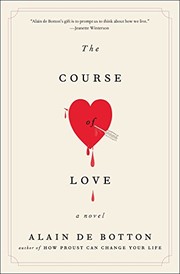
Rabih Khan, of Lebanese-German background, and Kirsten McLelland, a Scottish surveyor, meet in Edinburgh and build a recognizably ordinary life together. The novel follows their relationship beyond courtship into marriage and family life, treating everyday arguments and disappointments as psychologically revealing rather than merely dramatic. De Botton alternates narrative scenes with italicized commentary that generalizes from the couple’s experience into a theory of romantic life. This hybrid form is central to the book’s appeal—and to its divisiveness: serious reviewers found the couple vivid and believable, but some felt the philosophical interjections over-explain the emotional complexity the fiction has already shown.
Core ideas
The end of falling in love is not the end of love
The book shifts attention from the excitement of choosing a partner to the less glamorous problem of continuing to choose, understand, and accommodate that person after novelty fades.
Romantic expectations create avoidable disappointment
Rabih and Kirsten inherit ideals of soulmates, intuitive understanding, and effortless compatibility. The novel challenges these ideals by presenting misunderstanding and friction as normal features of intimacy, not automatic evidence that a relationship is wrong.
Partners react to old wounds in present situations
Adult arguments are often intensified by earlier experiences—especially fears of abandonment, inadequacy, or emotional neglect. The partner becomes both a loved individual and an unwitting trigger for unresolved expectations.
Ordinary life is the real test of intimacy
Domestic details—work, money, sex, household decisions, children, tiredness, and social obligations—carry as much emotional weight as grand declarations. The deliberately ordinary plot makes the relationship feel representative rather than exceptional.
Kindness requires interpretation, not just feeling
A recurring ethical challenge is to imagine the fear or need beneath a partner’s irritating behavior. De Botton’s preferred alternative to blame is a more charitable reading of motives, though the novel’s didactic tone can make this feel like instruction rather than discovery.
The novel form is itself an argument
The narrative repeatedly pauses to explain what the characters may not understand about themselves. This makes the book resemble a case study or relationship primer as much as conventional literary fiction—a feature praised by some readers and criticized by others as intrusive.
Practical takeaways
- When a partner’s behavior feels disproportionately upsetting, ask what older fear or expectation it may be activating before treating the reaction as a complete account of the present.
- Distinguish the loss of infatuation from the loss of care. A quieter relationship may be developing a different form of intimacy rather than simply deteriorating.
- Notice how small logistical disputes can stand in for larger needs: reassurance, respect, autonomy, recognition, or relief from exhaustion.
- Treat “you should understand me without my explaining” as a romantic fantasy. Clear requests are often more loving and more effective than tests of intuition.
- Remember that forgiveness in the novel is not presented as pretending harm did not occur; it involves placing a failure within a fuller understanding of a person and a shared history.
Caveats and counterpoints
- The book’s central couple is intentionally representative, but their experience is not universal; its account of marriage is shaped by heterosexual, monogamous, middle-class assumptions.
- De Botton’s psychological explanations can be illuminating but sometimes reduce complex behavior to childhood causes or broad claims about human nature. Kirkus and The Guardian both noted the risk of overgeneralization and philosophical overreach.
- The treatment of infidelity and romantic ideals is provocative rather than a neutral survey of relationship ethics; readers may find its sympathy for human weakness insufficiently attentive to unequal harm or accountability.
- Readers seeking plot-driven fiction may find the essayistic interruptions repetitive. The novel’s main interest lies in interpretation, emotional pattern, and domestic realism rather than suspense.
Questions worth revisiting
- Which expectations about love does the novel portray as inherited myths rather than personal truths?
- When do Rabih and Kirsten mistake a partner’s behavior for a judgment about themselves?
- Does the philosophical narrator deepen the couple’s story, or prevent the characters from remaining psychologically ambiguous?
- What is the difference between accepting ordinary relationship difficulty and rationalizing genuine neglect or betrayal?
- Does the book offer a persuasive account of why people remain together, or mainly an account of why separation is not always the obvious solution?
Return to this when…
Return to this book when a relationship feels disappointing because it has become ordinary, or when you want to examine the gap between romantic ideals and the practical, interpretive work of sustaining intimacy.
Highlights
Rabih asks if he might give her a hand with the bag of files she is carrying, in response to which she laughs and tells him not to be so sexist. It doesn’t seem the right moment to reveal that he would no less gladly help her to move house—or nurse her through malaria.
Our understanding of love has been hijacked and beguiled by its first distractingly moving moments. We have allowed our love stories to end way too early. We seem to know far too much about how love starts, and recklessly little about how it might continue.
At the gates to the botanical gardens, Kirsten tells Rabih to call her and admits—with a smile in which he suddenly sees what she must have looked like when she was ten years old—that she’ll be free any evening the following week. On his walk home to Quartermile, wending through the Saturday crowds, Rabih is thrilled enough to want to stop random strangers in order to share his good fortune with them. He has, without knowing how, richly succeeded at the three central challenges underpinning the Romantic idea of love: he has found the right person; he has opened his heart to her; and he has been accepted. But he is, of course, nowhere yet. He and Kirsten will marry, they will suffer, they will frequently worry about money, they will have a girl first, then a boy, one of them will have an affair, there will be passages of boredom, they’ll sometimes want to murder one another and on a few occasions to kill themselves. This will be the real love story.
Marriage: a hopeful, generous, infinitely kind gamble taken by two people who don’t know yet who they are or who the other might be, binding themselves to a future they cannot conceive of and have carefully omitted to investigate.
Good listeners are unfussy about the chaos which others may for a time create in their minds; they’ve been there before and know that everything can eventually be set back in its place.
We don’t need to be constantly reasonable in order to have good relationships; all we need to have mastered is the occasional capacity to acknowledge with good grace that we may, in one or two areas, be somewhat insane.
The most superficially irrational, immature, lamentable, but nonetheless common of all the presumptions of love is that the person to whom we have pledged ourselves is not just the center of our emotional existence but is also, as a result—and yet in a very strange, objectively insane and profoundly unjust way—responsible for everything that happens to us, for good or ill. Therein lies the peculiar and sick privilege of
We know that, when teaching students, only the utmost care and patience will ever work: we must never raise our voices, we have to use extraordinary tact, we must leave plenty of time for every lesson to sink in, and we need to ensure at least ten compliments for every one delicately inserted negative remark. Above all, we must remain calm.
Sentimentally, we contrast the spousal negativity with the encouraging tone of our friends and family, on whom no remotely comparable set of demands has ever been made.
How kind we would be if we managed to import even a little of this instinct into adult relationships—if here, too, we could look past the grumpiness and viciousness and recognize the fear, confusion, and exhaustion which almost invariably underlie them. This is what it would mean to gaze upon the human race with love.
The effort of love has exhausted them. They have nothing left to give to one another. The tired child inside each of them is furious at how long it has been neglected and is in pieces.
If love is to be defined as a genuine concern for the well-being of another person, then it must surely be deemed compatible with granting permission for an often harassed and rather browbeaten husband to step off the elevator on the eighteenth floor in order to enjoy ten minutes of rejuvenating cunnilingus with a near stranger. Otherwise it may seem that what we are dealing with is not really love at all but rather a kind of small-minded and hypocritical possessiveness, a desire to make one’s partner happy if, but only if, that happiness involves oneself.
The error of the infatuation is more subtle: a failure to keep in mind the central truth of human nature: that everyone—not merely our current partners, in whose multiple failings we are such experts—but everyone will have something substantially and maddeningly wrong with them when we spend more time around them, something so wrong as to make a mockery of those initially rapturous feelings.
We have not been singled out. Marrying anyone, even the most suitable of beings, comes down to a case of identifying which variety of suffering we would most like to sacrifice ourselves for.
1. “I want emotionally close relationships, but I find that other people are often disappointing or mean without good reason. I worry that I will be hurt if I allow myself to become too close to others. I don’t mind spending time on my own.” (avoidant attachment)
They still joke about therapy, just no longer at its expense. It is a pity, therefore, that the insights on offer in the consulting room are so negligible in the wider culture. Their conversations feel like a small laboratory of maturity in a world besotted by the idea of love as an instinct and a feeling beyond examination. That Mrs. Fairbairn’s room is tucked up some tenement stairs seems symbolic of the marginalized nature of her occupation. She is the champion of a truth that Rabih and Kirsten are now intimate with, but which they know is woefully prone to get lost in the surrounding noise: that love is a skill, not just an enthusiasm.
The Romantic ideas are, he knows now, a recipe for disaster. His readiness for marriage is based on a quite different set of criteria. He is ready for marriage because—to begin the list—he has given up on perfection.
Choosing a person to marry is hence just a matter of deciding exactly what kind of suffering we want to endure rather than of assuming we have found a way to skirt the rules of emotional existence. We will all by definition end up with that stock character of our nightmares, “the wrong person.” This needn’t be a disaster, however. Enlightened romantic pessimism simply assumes that one person can’t be everything to another. We should look for ways to accommodate ourselves as gently and as kindly as we can to the awkward realities of living alongside another fallen creature. There can only ever be a “good enough” marriage. For this realization to sink in, it helps to have had a few lovers before settling down, not in order to have had a chance to locate “the right person,” but in order to have had an ample opportunity to discover at first hand, and in many different contexts, the truth that there isn’t any such a person; that everyone really is a bit wrong when considered from close up.
Rather than some notional idea of perfect complementarity, it is the capacity to tolerate dissimilarity that is the true marker of the “right” person. Compatibility is an achievement
For the Romantic, it is only the briefest of steps from a glimpse of a stranger to the formulation of a majestic and substantial conclusion: that he or she may constitute a comprehensive answer to the unspoken questions of existence. The intensity may seem trivial—humorous, even—yet this reverence for instinct is not a minor planet within the cosmology of relationships. It is the underlying central sun around which contemporary ideals of love revolve. The Romantic faith must always have existed, but only in the past few centuries has it been judged anything more than an illness; only recently has the search for a soul mate been allowed to take on the status of something close to the purpose of life. An idealism previously directed at gods and spirits has been rerouted towards human subjects—an ostensibly generous gesture nevertheless freighted with forbidding and brittle consequences, for it is no simple thing for any human being to honor over a lifetime the perfections he or she might have hinted at to an imaginative observer in the street, the office, or the adjoining airplane seat.
For all the talk of sexual liberation, the truth is that secrecy and a degree of embarrassment around sex continue as much as they have always done. We still can’t generally say what we want to do and with whom. Shame and repression of impulse aren’t just things that our ancestors and certain buttoned-up religions latched onto for obscure and unnecessary reasons: they are fated to be constants in all eras—which is what lends such power to those rare moments (there might be only a few in a lifetime) when a stranger invites us to drop our guard and admits to wanting pretty much exactly what we had once privately and guiltily craved.
It tells us something about the relative status of rigorous analysis in the nuptial process that it would be considered un-Romantic, and even mean, to ask an engaged couple to explain in any depth, with patience and self-awareness, what exactly had led them to make and accept a proposal. But we’re keen, of course, always to ask where and how the proposal took place.
He asks her to marry him because it feels like an extremely dangerous thing to do: if the marriage were to fail, it would ruin both their lives. Those voices which hint that marriage is no longer necessary, that it is far safer simply to cohabit, are right from a practical point of view, concedes Rabih; but they miss the emotional appeal of danger, of putting oneself and one’s beloved through an experience which could, with only a few twists of the plotline, result in mutual destruction. Rabih takes his very willingness to be ruined in love’s name as proof of his commitment. That it is “unnecessary” in the practical sense to marry serves only to render the idea more compelling emotionally. Being married may be associated with caution, conservatism, and timidity, but getting married is an altogether different, more reckless, and therefore more appealingly Romantic proposition. Marriage, to Rabih, feels like the high point of a daring path to total intimacy; proposing has all the passionate allure of shutting one’s eyes and jumping off a steep cliff, wishing and trusting that the other will be there to catch one. He proposes because he wants to preserve, to “freeze,” what he and Kirsten feel for each other. He hopes through the act of marrying to make an ecstatic sensation perpetual.
To a shameful extent, the charm of marriage boils down to how unpleasant it is to be alone. This isn’t necessarily our fault as individuals. Society as a whole appears determined to render the single state as nettlesome and depressing as possible: once the freewheeling days of school and university are over, company and warmth become dispiritingly hard to find; social life starts to revolve oppressively around couples; there’s no one left to call or hang out with. It’s hardly surprising, then, if when we find someone halfway decent, we might cling.
Romanticism is a philosophy of intuitive agreement. In real love, there is no need tiresomely to articulate or spell things out. When two people belong together, there is simply—at long last—a wondrous reciprocal feeling that both parties see the world in precisely the same way.
We allow for complexity, and therefore make accommodations for disagreement and its patient resolution, in most of the big areas of life: international trade, immigration, oncology . . . But when it comes to domestic existence, we tend to make a fateful presumption of ease, which in turn inspires in us a tense aversion to protracted negotiation. We would think it peculiar indeed to devote a two-day summit to the management of a bathroom, and positively absurd to hire a professional mediator to help us identify the right time to leave the house to go out for dinner.
Not all domestic concerns carry equivalent prestige. One can quickly be made to look a fool for caring a lot about how much noise the other person makes while eating cereal or how long they want to keep magazines beyond their publication dates. It’s not difficult to humiliate someone who cleaves to a strict policy on how to stack a dishwasher or how quickly the butter ought to be returned to the fridge after use. When the tensions which bedevil us lack glamour, we are at the mercy of those who might wish to label our concerns petty and odd. We can end up frustrated and at the same time too doubtful of the dignity of our frustrations to have the confidence to outline them calmly for our dubious or impatient audiences.
Without patience for negotiation, there is bitterness: anger that forgot where it came from. There is a nagger who wants it done now and can’t be bothered to explain why. And there is a naggee who no longer has the heart to explain that his or her resistance is grounded in some sensible counterarguments or, alternatively, in some touching and perhaps even forgivable flaws of character. The two parties just hope the problems—so boring to them both—will simply go away.
The ordinary challenging relationship remains a strangely and unhelpfully neglected topic. It’s the extremes that repeatedly grab the spotlight—the entirely blissful partnerships or the murderous catastrophes—and so it is hard to know what we should make of, and how lonely we should feel about, such things as immature rages, late-night threats of divorce, sullen silences, slammed doors, and everyday acts of thoughtlessness and cruelty. Ideally, art would give us the answers that other people don’t. This might even be one of the main points of literature: to tell us what society at large is too prudish to explore. The important books should be those that leave us wondering, with relief and gratitude, how the author could possibly have known so much about our lives. But too often a realistic sense of what an endurable relationship is ends up weakened by silence, societal or artistic. We hence imagine that things are far worse for us than they are for other couples. Not only are we are unhappy, we misunderstand how freakish and rare our particular form of unhappiness might be. We end up believing that our struggles are indications of having made some unusual and fundamental error, rather than evidence that our marriages are essentially going entirely according to plan.
At the heart of a sulk lies a confusing mixture of intense anger and an equally intense desire not to communicate what one is angry about. The sulker both desperately needs the other person to understand and yet remains utterly committed to doing nothing to help them do so. The very need to explain forms the kernel of the insult: if the partner requires an explanation, he or she is clearly not worthy of one. We should add: it is a privilege to be the recipient of a sulk; it means the other person respects and trusts us enough to think we should understand their unspoken hurt. It is one of the odder gifts of love.
That may be why, in relationships, even the most eloquent among us may instinctively prefer not to spell things out when our partners are at risk of failing to read us properly. Only wordless and accurate mind reading can feel like a true sign that our partner is someone to be trusted; only when we don’t have to explain can we feel certain that we are genuinely understood.
We would ideally remain able to laugh, in the gentlest way, when we are made the special target of a sulker’s fury. We would recognize the touching paradox. The sulker may be six foot one and holding down adult employment, but the real message is poignantly retrogressive: “Deep inside, I remain an infant, and right now I need you to be my parent. I need you correctly to guess what is truly ailing me, as people did when I was a baby, when my ideas of love were first formed.” We do our sulking lovers the greatest possible favor when we are able to regard their tantrums as we would those of an infant. We are so alive to the idea that it’s patronizing to be thought of as younger than we are; we forget that it is also, at times, the greatest privilege for someone to look beyond our adult self in order to engage with—and forgive—the disappointed, furious, inarticulate child within.
An avoidant attachment style is marked by a strong desire to avoid conflict and to reduce exposure to the other when emotional needs have not been met. The avoidant person quickly presumes that others are keen to attack them and that they cannot be reasoned with. One just has to escape, pull up the drawbridge, and go cold. Regrettably, the avoidant party cannot normally explain their fearful and defensive pattern to their partner, so that the reasons behind their distant and absent behavior remain clouded and are easy to mistake for being uncaring and unengaged—when in fact the opposite is true: the avoidant party cares very deeply indeed, it is just that loving has come to feel far too risky.
Pronouncing a lover “perfect” can only be a sign that we have failed to understand them. We can claim to have begun to know someone only when they have substantially disappointed us. However, the problems aren’t theirs alone. Whomever we could meet would be radically imperfect: the stranger on the train, the old school acquaintance, the new friend online . . . Each of these, too, would be guaranteed to let us down. The facts of life have deformed all of our natures. No one among us has come through unscathed. We were all (necessarily) less than ideally parented: we fight rather than explain, we nag rather than teach, we fret instead of analyzing our worries, we lie and scatter blame where it doesn’t belong. The chances of a perfect human emerging from the perilous gauntlet are nonexistent. We don’t have to know a stranger very well before knowing this about them. Their particular way of being maddening won’t be immediately apparent—it could take as long as a couple of years—but its existence can be theoretically assumed from the start.
Love begins with the experience of being understood in highly supportive and uncommon ways. They grasp the lonely parts of us; we don’t have to explain why we find a particular joke so funny; we hate the same people; we both want to try that rather specialized sexual scenario. It cannot continue. When we run up against the reasonable limits of our lovers’ capacities for understanding, we mustn’t blame them for dereliction. They were not tragically inept. They couldn’t fully fathom who we were—and we did likewise. Which is normal. No one properly gets, or can fully sympathize with, anyone else. Rabih feels ready for marriage because he realizes he is crazy.
References
- THE COURSE OF LOVE | Kirkus Reviews
- The Course of Love review – philosophy overload | Alain de Botton | The Guardian
- The Course of Love by Alain de Botton review – affairs, childcare and Ikea glassware | Fiction | The Guardian
- publishersweekly.com
- alaindebotton.com
- readwriterespond.com
- simonandschuster.com
- theguardian.com
- bookbrowse.com
- books.google.com
- johnsloanreviews.com
- simonandschuster.com