
In one sentence
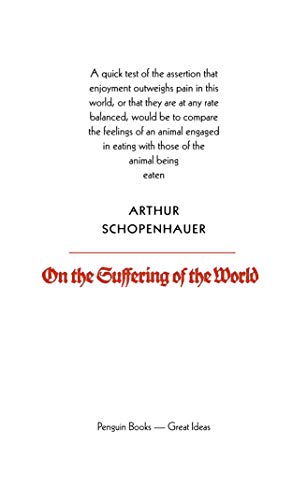
Schopenhauer argues that suffering is not an accidental defect in life but a structural consequence of existence: the world-in-itself is blind, ceaseless Will, and individual beings are its competing expressions. Because desire continually outruns satisfaction, happiness is temporary relief rather than a stable positive condition. The most credible ethical response is therefore to reduce willing, recognize others’ suffering as continuous with one’s own, and cultivate compassion and detachment.
Overview
Core ideas
The Will explains why life hurts
Schopenhauer’s central metaphysical claim is that reality is Will: an unconscious, purposeless pressure to strive, reproduce, compete, and continue. Conscious goals are local expressions of this deeper drive. Since willing means lacking something and trying to overcome that lack, existence is inherently exposed to frustration and conflict.
Pleasure is relief, not a lasting state
Pain has a direct, positive presence; satisfaction usually marks the temporary removal of an unmet desire. Once a desire is fulfilled, another emerges—or boredom replaces it. This produces a recurring pattern of want, struggle, brief relief, and renewed want. The argument is psychologically vivid but depends on a strongly asymmetrical account of pleasure and pain.
Pessimism is meant as diagnosis, not mere mood
Schopenhauer’s pessimism follows from his metaphysics rather than simply from personal melancholy: a world of competing wills cannot provide universal or permanent fulfillment. He rejects optimistic claims that history or nature is progressing toward harmony. Critics object that he generalizes from suffering and underweights cooperation, achievement, attachment, and forms of flourishing.
Compassion is the moral alternative to egoism
Ordinary morality is usually governed by the apparent separation between individuals. Compassion interrupts that separation: another person’s suffering becomes morally significant in itself, not merely as a threat or inconvenience to me. Schopenhauer treats compassion—not abstract duty or self-interest—as the basis of ethical conduct.
Art suspends striving, but does not redeem life
Aesthetic contemplation can temporarily free attention from personal desires. Art, especially music, gives a less grasping perspective on experience. Yet this relief is episodic and does not solve the underlying problem of Will. Compassion and ascetic detachment aim at a deeper transformation, though Schopenhauer’s account of such liberation is difficult to reconcile with ordinary practical life.
Resignation is not the same as suicide
The book’s argument should not be reduced to “life is painful, therefore kill yourself.” Schopenhauer distinguishes rejecting the individual life from negating the Will that generates desire; suicide, in his framework, remains an act of willing and does not achieve metaphysical release. This is one of the book’s most important—and most controversial—distinctions.
Practical takeaways
- Treat desire as a recurring process, not a reliable route to permanent satisfaction.
- When evaluating a choice, ask what new dependence, competition, or anxiety the desired outcome may create.
- Use pessimism as a bias-correction tool: deliberately inspect hidden costs and other people’s suffering before accepting optimistic narratives.
- Practice temporary forms of detachment—attention to art, contemplation, or reduced consumption—without assuming they permanently solve existential dissatisfaction.
- Use compassion as a practical test of conduct: does this action reduce avoidable suffering beyond my immediate circle?
- Read Schopenhauer diagnostically rather than as a complete life manual; his analysis can sharpen awareness of frustration while his metaphysical conclusions remain contestable.
Caveats and counterpoints
- This is an edited selection of later writings, not a systematic presentation of The World as Will and Representation; technical terms such as Will, representation, and denial of the will are compressed and can seem under-argued.
- Schopenhauer’s claims about women, sexuality, religion, and human nature reflect nineteenth-century assumptions and should not be treated as neutral description.
- His pessimism may illuminate chronic striving, grief, boredom, and dissatisfaction, but it can become distorting when applied as a total explanation of love, creativity, solidarity, or social progress.
- The ethical appeal to compassion sits uneasily beside the metaphysical recommendation of withdrawal: reducing suffering may require active social engagement, whereas Schopenhauer often favors renunciation.
- The book’s title and contents vary by edition; confirm the publisher, year, and table of contents when cataloguing or citing it.
Questions worth revisiting
- Is Schopenhauer demonstrating that life is objectively bad, or describing what life looks like from the standpoint of frustrated desire?
- Does recognizing the universality of suffering make compassion more compelling—or make individual effort seem pointless?
- Can art and temporary detachment be valuable without requiring Schopenhauer’s metaphysics?
- Where does his asymmetry between pain and pleasure fit ordinary experiences of joy, accomplishment, friendship, and meaning?
- Is renunciation a realistic ethical practice, or does it evade the political and material causes of suffering?
Return to this when…
Return to this book when you are confused by recurring dissatisfaction, tempted by simplistic optimism, or thinking about the relationship between desire and suffering. Pair it with a more systematic account of Schopenhauer’s philosophy and with critics who challenge his pessimism, especially on social progress, human cooperation, and the value of ordinary attachments.