In one sentence
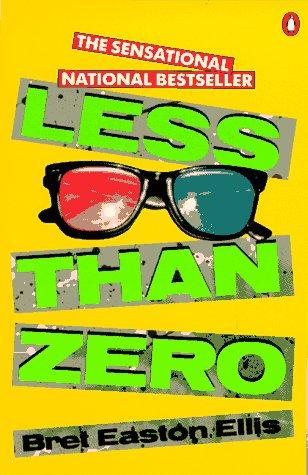
The novel’s central insight is that extreme privilege does not guarantee freedom or fulfillment: in Clay’s Los Angeles, abundance has become indistinguishable from emptiness, and moral horror is absorbed into the ordinary surface of daily life. Ellis makes that condition disturbing partly by refusing to provide a reassuring moral perspective.
Overview
Clay returns from college to a wealthy Southern California milieu he knows intimately but no longer fully inhabits. He reconnects with Blair and Julian while drifting through a social world organized around entertainment, consumption, status, sex, and drugs. The narrative is episodic and observational rather than conventionally dramatic; events accumulate as evidence of desensitization. This is the novel, not the substantially altered 1987 film adaptation.
Core ideas
Aesthetic coolness as moral method
The spare, emotionally restrained narration does not simply describe apathy; it formally reproduces it. Kirkus praised the book’s cool registration of horror, while critics have disagreed over whether this is powerful artistic control or emotional thinness.
Privilege without attachment
Money supplies mobility, entertainment, and insulation, but not meaningful connection. Families, romances, and friendships appear less as sources of care than as unstable arrangements shaped by neglect, vanity, and dependency. The novel’s social criticism is therefore directed at emotional structures as much as financial ones.
Clay’s passivity
Clay is a witness who repeatedly approaches the possibility of action but remains compromised by the same detachment he observes. His distance creates ambiguity: is he resisting the culture around him, or merely more articulate about belonging to it?
Los Angeles as a psychological landscape
The city is more than a setting. Its freeways, houses, clubs, restaurants, media imagery, and consumer surfaces create a world where movement replaces direction and spectacle replaces intimacy. Ellis’s Los Angeles novel was frequently discussed in relation to Joan Didion and the city’s literary tradition.
The tension between documentation and artifice
The book can look like a sociological record of wealthy 1980s youth, but its repetitions, omissions, and deadened voice are carefully shaped literary devices. Early criticism sometimes dismissed the style as merely documentary; later readings emphasize how form produces the novel’s existential effect.
The limits of shock
Ellis places grotesque and violent material beside mundane consumer details, testing whether readers will remain morally alert when horror is presented without expressive emphasis. The strategy can expose desensitization, but it can also risk making suffering feel aestheticized or inert—a genuine critical disagreement.
Practical takeaways
- Notice how a narrator’s tone can make readers experience a worldview rather than merely understand it.
- Distinguish emotional restraint from emotional maturity; Clay’s calmness is not the same as wisdom.
- Watch for the way brands, venues, music, and fashionable references substitute for identity and memory.
- Ask whether witnessing wrongdoing without intervening is neutrality, complicity, self-protection, or some mixture of all three.
- When revisiting the novel, compare your response to its flatness: does the lack of authorial guidance sharpen judgment or weaken it?
- Keep the novel separate from its film reputation: the movie is a loose adaptation and was criticized for softening or simplifying the book’s darkness.
Caveats and counterpoints
- The novel contains disturbing material involving addiction, sexual exploitation, violence, and abuse; its presentation is deliberately unsentimental.
- Its characters are intentionally under-interiorized, so readers seeking psychologically expansive development may experience them as blank, repetitive, or symbolic.
- The book’s social world is narrow: it represents a particular affluent, white, Los Angeles-centered subculture rather than an entire generation.
- Interpretations differ on whether Ellis is condemning this world, reproducing its glamour, or making the reader confront their own appetite for spectacle.
- The untrusted catalogue description appears broadly consistent with the premise, but details such as brand names and restaurants should not be treated as the novel’s main argument.
Questions worth revisiting
- Is Clay alienated from this world, or simply less visibly committed to it?
- Does the novel offer any meaningful alternative to nihilism, or only reveal the cost of having none?
- When does observational neutrality become ethical evasion?
- How does the prose change the moral meaning of the events it describes?
- Are the characters empty, or does the narration deny us the access needed to recognize their feelings?
- What does the title suggest about value, status, and the possibility of falling below ordinary moral measurement?
Return to this when…
Return to this book when thinking about literary depictions of wealth, mediated identity, adolescent disaffection, or the ethics of emotionally flat narration. It also makes a useful comparison with Ellis’s later fiction, especially American Psycho, while remaining a more atmospheric and less fully developed early work.
References
- Less Than Zero | Rotten Tomatoes
- Less Than Zero Themes | SuperSummary
- en.wikipedia.org
- en.wikipedia.org
- Works — Bret Easton Ellis
- Bret Easton Ellis Criticism: 'But This Road Doesn't Go Anywhere': The Existential Dilemma in Less Than Zero - Nicki Sahlin - eNotes.com
- enotes.com
- vogue.com
- penguinrandomhouse.com
- welcomehomevetsofnj.org
- breteastonellis.com
- revsystems.com
- kirkusreviews.com