
In one sentence
Creative originality is less a matter of inventing from nothing than of repeatedly encountering, noticing, remembering, and recombining influential works. Kojima’s “creative gene” develops through lifelong contact with culture—and through the personal meanings attached to those encounters.
Overview
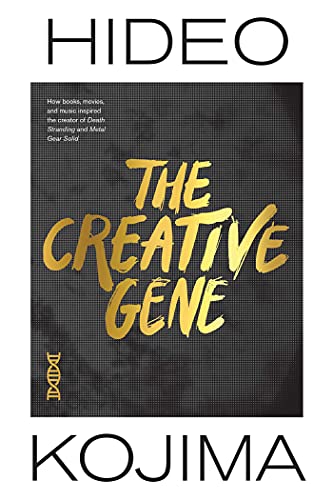
The English edition is a 256-page collection of essays published by VIZ Media in October 2021. Its marketing suggests a guide to the inspirations behind Metal Gear Solid and Death Stranding, but the book is more accurately read as a reflective anthology of cultural commentary and autobiography. Kojima discusses how books, movies, music, and other media helped him process isolation, find models for living, and form ideas about storytelling.
Core ideas
Creativity grows from encounters, not isolation
Kojima treats stories as cultural “memes”: forms of information passed between people and generations. Books and films let individuals share experiences across differences of time, place, gender, age, and background. Creative work begins with participating in that cultural exchange rather than trying to create in a vacuum.
A creator trains taste by choosing
Because no one can consume everything, selection matters. Kojima’s routine of visiting bookstores, browsing unfamiliar shelves, and judging books from limited clues is presented as practice in aesthetic discernment. The same judgment applies to collaborators, proposals, projects, and creative directions.
“Misses” are part of the process
Most encounters will not become favorites or direct influences. Kojima’s point is that an unsuccessful book, film, or song is not wasted if it sharpens one’s ability to recognize the rare work that truly connects. Creative development therefore requires volume, patience, and tolerance for disappointing inputs.
Personal circumstances change what art can do
Kojima connects his lifelong attachment to books with childhood solitude, being a latchkey child, and the early death of his father. Stories supplied companionship, guidance, and access to lives beyond his own. The implication is not that loneliness automatically creates art, but that art can become a powerful response to limited experience.
Memory turns consumption into authorship
Kojima’s recollection of where and when he bought or read a book shows how cultural works become embedded in personal narratives. The same work means something different when encountered at a different age, in a different place, or during a different phase of life.
Context reveals new meanings
He values changing bookstores and disrupting habitual routes because familiar environments can narrow perception. The same book may appear differently depending on its surroundings; similarly, ideas can acquire new meanings when moved into another medium, genre, culture, or social context.
Influence is transformation, not imitation
The book’s underlying model of creativity is accumulative and recombinatory: absorb many works, identify what resonates, preserve the memory of those encounters, and let them inform a new form. Kojima’s games are not presented as simple adaptations of particular books or films, but as results of a broad, personal media ecosystem.
Practical takeaways
- Build a deliberate intake habit: read, watch, listen, visit exhibitions, and browse outside your normal routes.
- Keep a record of encounters—not only titles and opinions, but where, when, and why they affected you.
- Judge inputs actively. Ask what a work is attempting, what succeeds, what fails, and what you might borrow structurally without copying.
- Expect a high ratio of mediocre experiences. Consistent exposure is partly training for recognition.
- Use unfamiliar contexts to interrupt habitual thinking: new bookstores, genres, disciplines, collaborators, or formats.
- When developing an idea, look backward through your influences and identify the emotional or structural elements you are recombining.
- Treat cultural consumption as part of the work, but set boundaries so collecting influences does not replace making things.
Caveats and counterpoints
- This is not a conventional creativity manual or a tightly argued theory of innovation; it is an essay collection organized around Kojima’s cultural interests and memories.
- The English subtitle foregrounds the inspirations behind Death Stranding and Metal Gear Solid, but readers expecting detailed production histories or a systematic account of those games may find the emphasis broader and more personal.
- Kojima’s recommendations and judgments are subjective. His “one-in-ten” framing functions as a personal working heuristic, not an empirically established rule.
- The book’s advice assumes substantial time and access for continuous reading, viewing, and browsing; creators with limited time may need a more selective version of the practice.
- The autobiographical explanations clarify Kojima’s self-understanding, but they should not be treated as a complete causal account of how his games were made or received.
Questions worth revisiting
- Which encounters have become part of my creative identity, and which have I merely consumed and forgotten?
- What do I repeatedly choose because it is genuinely valuable, versus because it confirms my existing taste?
- Where are my habitual routes—physical, intellectual, or algorithmic—preventing useful discoveries?
- How can I preserve the emotional context of an influence rather than only its surface features?
- What percentage of my current creative time goes to intake, selection, experimentation, and finished work?
- Which medium outside my main field could give me a structural idea I cannot easily find within it?
Return to this when…
Return to the notes when beginning a creative project, when your influences feel repetitive, or when you are confusing originality with total independence from prior work. The most useful reminder is simple: keep encountering culture deliberately, notice what changes you, and transform those encounters through your own circumstances.