
In one sentence
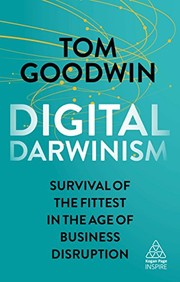
Businesses do not survive disruption merely by adopting new technologies; they survive by changing their assumptions, structures, capabilities, and value propositions before external pressure makes change unavoidable. Goodwin’s central distinction is between adding digital tools at the edges and redesigning the organization with digital thinking at its core.
Overview
The 2018 edition is organized around three movements: understanding disruption historically, applying digital thinking to current transformation, and anticipating future change. Goodwin uses the evolution of electricity and computing to show that new technologies initially get fitted into old systems; the largest gains appear when organizations redesign the underlying system itself. The later chapters address transformation, management, innovation, operations, culture, and empathy.
Core ideas
Digital is foundational, not a department
“Digital transformation” should not mean a new website, app, marketing channel, or innovation lab while the core business remains unchanged. Goodwin’s layered model moves from visible communications and marketing to products, processes, and finally mission—the deeper levels determine whether transformation is real or cosmetic.
Technology changes slowly at first, then changes the system
The history of electrification is used as a warning: factories initially added electric motors without abandoning layouts designed for steam power. Productivity improved much more when factories were reimagined around electricity. The analogous lesson is to redesign workflows and business models rather than simply computerize existing routines.
Disruption is a paradigm leap
Incremental innovation tends to optimize the current way of doing things and can trap firms near a local maximum. Major disruption often comes from a different paradigm—an alternative way to define the product, customer, process, or source of value. Expertise and past success can therefore become constraints when the rules change.
Ask what the company would look like if created today
A useful diagnostic is to remove inherited assets, departments, habits, and assumptions, then imagine designing the company for today’s customers, technologies, and economics. The question exposes organizational inertia and separates what is genuinely necessary from what is merely historical residue.
Adaptability requires imagination and empathy
Goodwin presents a shift from management focused mainly on execution, scale, and expertise toward management that also values imagination, customer understanding, and empathy. Technology matters, but the intended outcome is better human experiences and more relevant value propositions—not technology for its own sake.
Self-disruption is safer than forced disruption
Organizations should deliberately question and, where necessary, undermine their own profitable products and processes before competitors or changing customer expectations do it for them. The practical challenge is to protect today’s business while creating experiments that could replace it.
The future is less predictable than many strategy models assume
Goodwin criticizes planning approaches built for stability, linearity, and forecasting precision. In a rapidly shifting environment, leaders need shorter learning cycles, experimentation, common sense, and a willingness to revise direction rather than treating a plan as a prediction.
Practical takeaways
- Map your business in layers: mission, value proposition, product, process, marketing, and communications. Identify where change is merely cosmetic and where the core model must be reconsidered.
- Run a “start today” exercise: if the company had no legacy systems, contracts, departments, or assumptions, what would you build for current customers?
- Separate digitization from transformation. Automating an old process may improve efficiency without making the business more relevant or resilient.
- Look for paradigm alternatives, not only improvements: different customers, delivery models, revenue logic, partnerships, or definitions of the product.
- Create protected experiments that can challenge the existing business, with explicit learning goals rather than vague innovation theater.
- Treat customer empathy as an operating capability: observe behavior, uncover unmet needs, and design around real problems rather than around available technologies.
- Preserve what is genuinely durable—human needs, trust, usefulness, and purpose—while remaining willing to replace the methods used to serve them.
Caveats and counterpoints
- The book is deliberately provocative and broad rather than a detailed implementation manual. Its frameworks help leaders ask better questions, but they do not specify budgets, governance, sequencing, or metrics for every organization.
- Its optimism about adaptation can understate constraints such as regulation, cybersecurity, privacy, labor disruption, unequal access, organizational politics, and the cost of abandoning viable legacy systems. A 2024 scholarly review specifically noted that the book could engage more deeply with risks and ethical issues including privacy, security, and algorithmic bias.
- “Survival of the fittest” can imply that adaptation is primarily a matter of managerial choice. In practice, firms differ in capital, market power, regulation, timing, and exposure to disruption; being early or radically innovative is not automatically superior.
- Examples involving technologies such as blockchain, AI, and connected devices should be read as illustrations of possible change, not as predictions that every technology will become strategically important. The 2018 edition also reflects the technological and business context of its publication period.
- Do not confuse the 2018 book recorded here—240 pages, ISBN 9780749482282—with Goodwin’s substantially revised 2022 edition, titled Digital Darwinism: Surviving the New Age of Business Disruption, which has 248 pages and a different chapter structure.
Questions worth revisiting
- Which parts of our organization exist because they create value, and which exist because they were useful in a previous era?
- If a capable competitor built this business today, what would it omit, automate, combine, or redesign?
- Are we improving the current model because it is strategically sound—or because it is easier than questioning the model?
- What customer behavior has changed faster than our products, processes, or policies?
- Which experiment could make our current offering obsolete, and what would we learn by running it?
- Where do our incentives reward protecting existing revenue instead of discovering future value?
- What ethical, regulatory, privacy, or workforce consequences might accompany the transformation we want?
Return to this when…
Return to the distinction between edge innovation and core transformation when a digital initiative feels impressive but disconnected from the business model. Revisit the “build it today” exercise during strategy reviews, especially after major changes in customer behavior, technology, regulation, or competitive structure.
References
- Digital Darwinism: Survival of the Fittest in the Age of Business Disruption - Tom Goodwin - Google Books
- Digital Darwinism: Survival of the Fittest in the Age of Business Disruption - Tom Goodwin - Google Books
- books.google.com
- goodreads.com
- Digital Darwinism | Kogan Page
- goodreads.com
- Digital Darwinism, 2nd Edition Book
- Digital Darwinism Survival of The Fittest in The Age of Business | PDF | Thought | Innovation
- perlego.com
- mitpressbookstore.mit.edu
- journals.sagepub.com
- Digital Darwinism: Surviving the New Age of Business Disruption - John Christie, Charlene Geary, 2024