
In one sentence
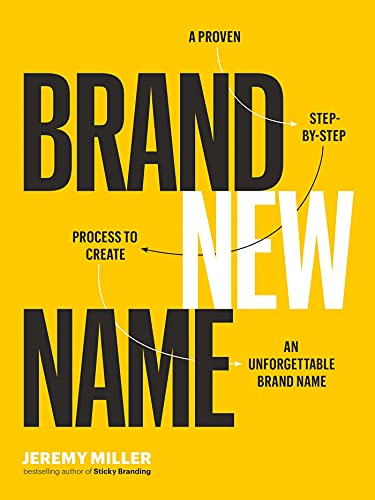
A strong brand name is not discovered by waiting for inspiration; it is produced through a structured process that connects strategy, creative exploration, and disciplined selection. The people closest to the business can create effective names when given a clear framework and enough constraints.
Overview
The book has two broad movements. First, Miller explains why names matter, how they shape expectations and brand meaning, how words persuade, and how to overcome creative blocks. Second, he presents a practical naming system: plan the assignment, run an intensive naming sprint, then select and validate the strongest candidates. The published contents identify the three stages as Plan, Sprint, and Select; external descriptions characterize the sprint as a five-day exercise and the overall process as roughly two to four weeks.
Core ideas
A name is a strategic asset
A name is more than a label: it establishes an initial promise, influences how people interpret the brand, and can outlast changes in products, customers, and business models. Naming therefore deserves strategic attention before visual identity or promotional execution.
Memorability comes from meaning and distinctiveness
Miller’s framework emphasizes names that are distinctive, easy to recognize or recall, and capable of carrying a useful story. The goal is not merely an unusual word; the name should help the intended audience understand or remember the brand.
Naming should be collaborative, not outsourced by default
The book’s distinctive premise is employee or client co-creation: an organization already contains valuable knowledge about its customers, offer, culture, and ambitions. A facilitator or consultant can provide structure, but should not assume that outsiders possess all the creative answers.
Plan before brainstorming
The planning stage establishes the naming brief: what is being named, who it must persuade, what the brand should stand for, what constraints apply, and what makes a candidate viable. This prevents brainstorming from becoming a contest for whoever suggests the most clever word.
Use a time-boxed naming sprint
The Sprint stage concentrates creative work into a defined period. Participants generate many possibilities using prompts, word associations, naming patterns, and other exercises, postponing premature judgment so that the group can move beyond obvious category language.
Separate generation from selection
Creative expansion and critical evaluation require different mindsets. First create a broad candidate pool; then narrow it against agreed criteria. This reduces attachment to the first plausible idea and makes disagreement more productive.
Test the name in context
A candidate should be spoken, written, searched, and imagined in realistic uses: introductions, conversations, headlines, packaging, URLs, and sales language. Testing should examine audience response and potential confusion, not simply whether the internal team likes the sound.
A name gains meaning through use
Even a strong name does not carry a complete brand by itself. Customer experiences, positioning, design, messaging, and repeated use accumulate meaning around it. The naming process can improve the starting point, but cannot replace brand-building.
Practical takeaways
- Write a one-page naming brief before producing names. Include audience, positioning, desired associations, unwanted associations, practical constraints, and the role the name must play.
- Define evaluation criteria in advance—such as distinctiveness, relevance, memorability, flexibility, pronunciation, and legal or digital feasibility—then score candidates consistently.
- Run ideation as a separate phase from critique. Aim for breadth first; do not let the group reject ideas while it is still trying to generate them.
- Invite people who understand the customer and business, but give them prompts and exercises rather than asking vaguely, “What should we call it?”
- Test finalists outside the meeting room. Ask target users what they think the name suggests, how they would pronounce or spell it, and what alternatives it reminds them of.
- Treat trademark searches, domain and social-handle checks, linguistic screening, and professional legal review as essential validation steps—not as proof that a name is strategically good.
- Expect the process to take weeks, not minutes. The book’s stated workflow is designed to produce a decision on a predictable schedule rather than prolonging unstructured debate.
Caveats and counterpoints
- The method is strongest for organizations willing to involve an internal team. A solo founder, highly confidential launch, or multinational naming assignment may need adaptations and specialist support.
- A structured process improves the odds of a good name; it cannot guarantee an “unforgettable” one. Distinctiveness and memorability depend partly on category conventions, audience exposure, and the resources available to build associations.
- Internal co-creation can surface valuable insight but can also produce politics, compromise names, or false confidence. External customer research and an independent legal review remain important.
- The book is a practical naming guide, not a complete treatment of trademark law, international linguistics, accessibility, or long-term portfolio architecture. Those issues require additional expertise.
- Reader response is generally favorable about the book’s practicality, but at least one review argues that the promised step-by-step process is less complete than the title suggests. Treat the framework as a strong working system, not a mechanical formula that removes judgment.
Questions worth revisiting
- What strategic job must this name do: explain, differentiate, signal a benefit, create emotion, or provide room for future expansion?
- Which associations must the name create immediately, and which can be built later through marketing and customer experience?
- Are we rejecting a candidate because it is genuinely weak, or because it feels unfamiliar?
- Would the name still work if the product, geography, audience, or business model changed?
- What would a skeptical customer, salesperson, recruiter, trademark lawyer, or international user notice first?
- Have we tested pronunciation, spelling, searchability, negative meanings, and trademark availability separately from internal preference?
Return to this when…
Return to these notes whenever you need to name or rename a company, product, service, campaign, or idea. The most useful sequence to remember is: clarify the strategy, generate broadly in a time-boxed sprint, evaluate against explicit criteria, then validate the finalists in the real world.
Highlights
name is an opportunity to tell a story.
“Attempting to be all things to all customers tends to result in underserving everyone. Even the strongest company or brand will be positioned to serve some customers better than others. If your customer segment is ‘everyone’ or your geographic choice is ‘everywhere,’ you haven’t truly come to grips with the need to choose.
think of positioning as a set of strategic choices: Where will you play? How will you win? How will you be known?
For instance, George Eastman, founder of Kodak, gave himself four guidelines to name this company: 1 It must be short and vigorous. 2 It must be incapable of being misspelled. 3 It must mean nothing. 4 It must begin and end with the letter K .
What Alter is demonstrating is how our minds work: we gravitate to things that are simpler and easier to understand. This doesn’t necessarily shape all of our decisions, but it does have an effect. The same is true for you and me. The names our parents give us can influence our trajectory through life. In another study, Alter and his fellow researchers discovered that people
What you choose to name your brand matters. Based on the research, I recommend gravitating toward simple, easy-to-pronounce names. Think about the rise of voice assistants like Siri, Alexa, and Google Assistant. You don’t type the name or click on it, you say it.
Before you get into testing and selection, the first step is to eliminate all the names you cannot use. Any name that is trademarked or used by a competitor is a non-starter. Don’t think about them. Don’t mourn them. Just mark them as taken and move on.
There is a proverb, “A good name is more desirable than great riches; to be esteemed is better than silver or gold.” Your name is your reputation, and however people identify with your brand, they know it by its name. You have already started building your brand’s reputation, just in the care and effort you took in naming it. The next steps require you to keep focused on that journey: Grow a great business. Develop exceptional products and services. Serve your customers brilliantly. Develop a winning team that is confident in their abilities and their ideas. Each of these steps will breathe life into your brand name and make it unforgettable. I can’t wait to see how you grow your brand! Dr. Seuss said it best: “Why fit in when you were born to stand out?”
References
- books.google.com
- openlibrary.org
- Brand New Name: A Proven, Step-by-Step Process to Create an Unforgettable Brand Name by Jeremy Miller | Goodreads
- Brand New Name: A Proven, Step-by-Step Process to Create an Unforgettable Brand Name by Jeremy Miller (Ebook) - Read free for 30 days
- summary.com
- Creating a Brand New Name | An interview with Jeremy Miller
- barnesandnoble.com
- namepros.com
- nsb.com
- thelogocreative.co.uk
- indigo.ca
- stickybranding.com