
In one sentence
Murakami’s central argument is that becoming a novelist is less about mastering a formula than discovering a personally sustainable way to work. Talent matters, but a long career depends on solitude, regular practice, stamina, originality, patience, and continued trust in one’s own felt experience. His method is exemplary, not prescriptive.
Overview
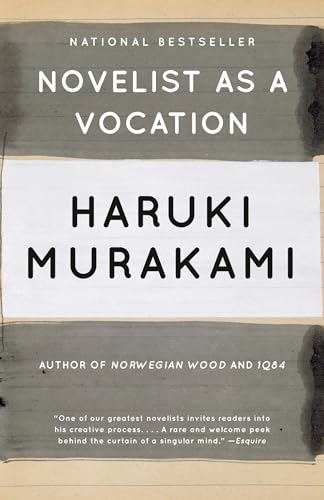
The book gathers eleven essays—six previously published and five written for this volume—about Murakami’s origins, literary prizes, originality, memory, education, characters, readers, and working abroad. He recalls deciding to write after a baseball game in 1978, developing an unconventional voice by drafting in English and recasting the prose in Japanese, and building a life organized around writing, running, and chosen solitude.
Core ideas
A vocation is sustained output, not a single achievement
Writing one novel is not the decisive test; continuing to write novels year after year is. Murakami frames professional authorship as a long endurance event requiring routines that can survive boredom, uncertainty, criticism, and repetition.
Originality comes from accepting your actual voice
Murakami’s early English drafting helped him escape the conventions of “serious” Japanese literary style and discover a plainer, more musical rhythm. The broader lesson is to work from the materials and limitations that genuinely belong to you rather than imitate an approved literary model.
Creativity is partly excavation
He does not describe ideas as effortless gifts. His image is digging through hard rock to reach a spring: imagination becomes more accessible through repeated work, accumulated experience, and the willingness to spend time below the surface of ordinary thought.
Routine protects imaginative freedom
Murakami writes in a concentrated daily session, limits his initial production, and then revises extensively. The constraint is not opposed to creativity; it gives creativity a dependable container. His “tinkering” emphasizes that revision is not cleanup but a major part of composition.
Physical stamina supports mental stamina
Running functions as both practice and metaphor. Regular exercise, repetition, and the ability to tolerate solitude train the persistence needed for the long, isolating work of composing a novel.
Reading builds an internal reservoir
Murakami treats wide reading—including imperfect or unfashionable books—as an informal education. Memory, observation, and absorbed reading populate a private mental storehouse from which fiction can later draw.
The novel changes its maker
As his fiction moved beyond the constraints of first-person narration, Murakami found that characters and perspectives could develop beyond his initial expectations. The writer creates the novel, but the unfolding novel also reshapes the writer’s understanding.
Readers matter more than literary status
Murakami is skeptical of prizes as measures of lasting value. Awards can direct attention, but readers—not institutions—ultimately keep books alive. His responsibility is therefore to continue producing the best work he can for an imagined but trusted reader.
Practical takeaways
- Design a repeatable creative schedule rather than waiting for inspiration.
- Use a modest daily quota to make progress measurable and prevent emotionally driven overwork.
- Treat revision as a separate creative phase: first generate freely, then improve through repeated passes.
- Protect periods of solitude, but distinguish chosen solitude—which supports concentration—from isolation that cuts off useful contact.
- Read broadly and consistently; include works that teach by contrast as well as works you admire.
- Build physical habits that increase your capacity for sustained attention and repetitive effort.
- Look for an individual voice by testing unusual methods, constraints, or tools—not by trying to sound original.
- Keep publishing recognition in proportion: external approval may help a career, but it is not the substance of the work.
Caveats and counterpoints
- This is not a general-purpose craft manual. Reviewers note that its strongest material comes from Murakami’s highly individual routines and career, so many recommendations may not transfer directly to other writers.
- Murakami’s path depended on unusual advantages and circumstances: an early breakthrough, a distinctive temperament, supportive professional relationships, translation, and international opportunities. Persistence alone cannot reproduce those conditions.
- The emphasis on solitude, running, and fixed routines may exclude writers whose best work depends on collaboration, irregular schedules, caregiving responsibilities, disability accommodations, or communal environments.
- His claim that innate talent is necessary is deliberately stark and potentially discouraging. It is a view of vocation, not an established test for who can learn to write well.
- The book is more revealing about Murakami’s self-conception than comprehensive about publishing economics, rejection, gender, class, cultural gatekeeping, or the labor of writers unlike him. Critics also find it occasionally repetitive or meandering.
Questions worth revisiting
- Which parts of my creative process are genuinely mine, and which are borrowed from models I think I should imitate?
- What routine would let me continue for five years, not merely produce a burst of work for five weeks?
- Do I need more solitude, or do I actually need better conversation and feedback?
- What physical or environmental habits increase my capacity for sustained attention?
- Am I treating revision as discovery or merely correcting errors?
- Which external measures—prizes, sales, praise, credentials—am I mistakenly using as evidence of artistic value?
- What experiences, memories, and reading have accumulated in my own private imaginative reservoir?
- Where does Murakami’s method fit my circumstances, and where would copying him be counterproductive?
Return to this when…
Return to these notes when beginning a long creative project, designing a sustainable writing routine, feeling pressure to imitate fashionable styles, or confusing recognition with lasting value. Revisit the caveats before treating Murakami’s highly personal method as universal.
References
- All Book Marks reviews for Novelist as a Vocation by Haruki Murakami, trans. by Philip Gabriel and Ted Goossen Book Marks
- NOVELIST AS A VOCATION | Kirkus Reviews
- Novelist as a Vocation - Murakami Haruki
- Novelist As a Vocation by Haruki Murakami review – the secrets behind the literary phenomenon | Haruki Murakami | The Guardian
- theguardian.com
- goodreads.com
- Novelist as a Vocation by Haruki Murakami: 9781101974537 | PenguinRandomHouse.com: Books
- japantimes.co.jp
- washingtonindependentreviewofbooks.com
- An Unnatural Spring: On Haruki Murakami’s “Novelist as a Vocation” | Los Angeles Review of Books
- bookchatter.net
- irishtimes.com