
In one sentence
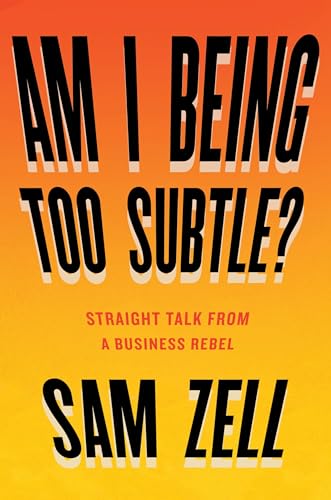
Zell’s central argument is that durable business success comes from independent judgment: understand supply and demand, identify the deal’s decisive variable, protect the downside, and act decisively when others are constrained by consensus. Contrarianism matters only when supported by information, discipline, and sound risk assessment.
Overview
This is a business memoir rather than a systematic investing manual. Zell presents his development from a curious Chicago teenager and persistent entrepreneur to a major real-estate investor and diversified owner. His stories move across property, energy, manufacturing, logistics, media, and finance. The tone is candid, humorous, impatient, and deliberately anti-conventional. The book emphasizes what he learned from both profitable decisions and costly mistakes, including the Tribune Company investment.
Core ideas
Treat business as a puzzle, not a battle
Instead of trying to overpower competitors, break a situation into parts: assets, contracts, financing, incentives, liabilities, and possible buyers. Value may emerge when the pieces are worth more separately than the market assumes. This approach rewards curiosity and analysis over status or aggression.
Look where the crowd is not looking
Zell repeatedly searches for imbalances between supply and demand, especially distressed or unfashionable assets. His “look right when everyone goes left” principle is not a command to oppose consensus automatically; it means investigate neglected opportunities and form an independent view before acting.
Start with the downside
The attractive upside of a deal is less important than understanding what can go wrong, how much can be lost, and whether the structure leaves room for error. Zell’s risk discipline includes being paid adequately for risk and avoiding assumptions that require everything to go right.
Liquidity is part of value
An asset’s apparent worth is not enough; ask whether it can actually be sold, refinanced, or converted to cash. Holding an asset is an active investment decision, not a neutral default. A market price that cannot be realized may offer less practical value than its accounting value suggests.
Competition changes the economics
A good asset can become a bad investment when too many buyers pursue it. Limited competition helps preserve price discipline and creates room for better terms. Zell’s edge often comes from entering situations others find unattractive, complicated, or too troubled to pursue.
Own actively and align incentives
Zell favors engaged ownership: understand the operation, communicate directly, give capable people room to perform, and make sure participants share in the outcome. Long-term relationships, trust, transparency, and reliable partners are treated as economic assets, not merely interpersonal virtues.
Directness is a management tool—but not a complete philosophy
He advocates clarity, urgency, blunt communication, and resistance to conformity. Listening remains important because it reveals people’s motives and concerns. His model assumes that directness works best when paired with competence, credibility, and respect rather than used as an excuse for abrasiveness.
Failure is evidence, not identity
The memoir presents mistakes as part of entrepreneurial judgment. Zell’s account of Tribune is especially important because it complicates the heroic contrarian narrative: strong past instincts do not eliminate execution risk, changing conditions, or the possibility that a major thesis is wrong.
Practical takeaways
- Before pursuing an opportunity, write down the downside, failure triggers, liquidity options, and the assumptions that must hold.
- Separate a deal into its economic components; ask whether one piece, contract, tax attribute, or operational change drives most of the value.
- Do not confuse being unconventional with being correct. Contrarian ideas need evidence, attractive pricing, and a survivable downside.
- When reviewing an existing holding, treat continued ownership as a fresh buy decision at today’s opportunity cost.
- Prefer simple structures and clear accountability; every unnecessary layer creates another place for incentives or execution to fail.
- In negotiations, listen for the other side’s real constraints and motivations before trying to persuade them.
- Build a culture where employees can speak candidly, but reserve final decisions for people willing to accept responsibility.
- Use urgency to prevent drift, not to replace analysis.
Caveats and counterpoints
- The book is strongly self-presentational: it offers Zell’s interpretation of his career, not an independent history of every transaction or failure.
- Its lessons are most concrete for entrepreneurs, owners, real-estate investors, and dealmakers; readers outside those settings may find the repeated transaction stories specialized.
- Zell’s confidence and bluntness can make contrarian action sound more reproducible than it is. Access to capital, relationships, timing, and unusually favorable opportunities materially shaped his results.
- The advice to reject conformity can be misapplied. Consensus is sometimes correct, and illiquidity, leverage, regulation, or operational complexity can make a seemingly cheap asset uninvestable.
- Some readers find the memoir engaging and principle-rich; others find it insufficiently introspective about personal shortcomings and the human costs of Zell’s management style.
Questions worth revisiting
- Which of Zell’s principles are genuinely portable to my work, and which depend on real-estate cycles, leverage, or privileged access to deals?
- What is the single variable that determines the value of the opportunity I am considering?
- What would make this investment or project fail even if the optimistic case is correct in broad outline?
- Am I being contrarian because I have better information, or simply because I want to feel independent?
- Where am I treating an illiquid holding or ongoing project as if keeping it costs nothing?
- Do my incentives and my partners’ incentives remain aligned after the deal becomes difficult?
- Does my directness create clarity and accountability, or merely suppress disagreement?
Return to this when…
Return to the core ideas before evaluating a major investment, acquisition, turnaround, or career opportunity—especially when the situation is unpopular, complicated, or surrounded by confident consensus. Revisit the caveats when feeling tempted by a dramatic contrarian move or when using Zell’s memoir as a universal business formula.
Highlights
Not surprisingly, a fundamental part of being an entrepreneur aligns with my tendency to walk out of step with the norm. I have a saying: “If everyone is going left, look right.” Conventional wisdom is nothing to me but a reference point. In fact, I believe it can be a horribly debilitating concept. It often boils down to a bunch of people yelling “Go this way!”
People often ask me, “When are you going to retire?” And I answer, “Retire from what?” I’ve never worked a day in my life. Everything I’ve done has been because I’ve loved doing it, because it was enthralling. I thrive on inspiring and challenging people, giving them new opportunities and watching them grow, and I take enormous pride in their accomplishments. And I never stop pushing—myself or others. I’m seventy-five; I work out every morning at 4:45, I’m at the office by 6:30 a.m., and I don’t get home from work until 7:00 at night.
We didn’t know how to manage or rent apartments. We had no clue what it entailed. It just never occurred to me that I couldn’t do it. If you’re not aware that you’re not supposed to be able do something, the barriers to doing it are dramatically lessened. It didn’t matter that students hadn’t done it before, or that the role was always performed by professional management companies. That desire to take a risk, to test my limits, to ask “Why not?” was part of my DNA, and I don’t think I’ve changed that much since.
I remember this event so clearly because it was at this point in my career that I fully realized the value of tenacity. I just had to assume there was a way through any obstacle, and then I’d find it.
References
- Am I Being Too Subtle? by Sam Zell: 9781591848233 | PenguinRandomHouse.com: Books
- glasp.co
- blas.com
- Am I Being Too Subtle?: Straight Talk From a Business Rebel by Sam Zell | Goodreads
- goodreads.com
- music.amazon.in
- bytebot.net
- finnotes.org
- penguinrandomhouse.ca
- everand.com
- allbookstores.com
- simonandschuster.com