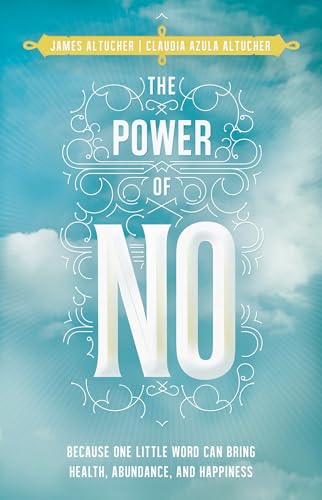

In one sentence
A well-chosen “no” is not merely rejection; it is a way to protect your energy and values so you can give a more meaningful “yes” to health, relationships, creativity, and opportunity. The authors extend this beyond requests from other people to include harmful habits, outdated standards, destructive emotions, limiting beliefs, and compulsive noise.
Overview
Published by Hay House in 2014, the book combines the authors’ personal stories, reader questions, and advice-oriented exercises. Its chapter structure moves from choosing life and leaving harmful relationships toward rejecting past anger, external expectations, scarcity, noise, and self-defeating patterns. The central method is intuitive rather than research-driven: notice what drains or harms you, refuse it, and redirect the resulting energy.
Core ideas
“No” is a form of selection
Every commitment consumes finite attention and energy. Saying no to low-value obligations is presented as a way of choosing what deserves your time, rather than as selfishness or passivity.
Reject what harms the whole person
The authors frame well-being across physical, emotional, mental, and spiritual dimensions. The relevant refusals include unhealthy habits, damaging relationships, corrosive thoughts, and environments that repeatedly produce fear, guilt, resentment, or depletion.
Boundaries create better relationships
Agreeing from fear of disapproval can produce resentment, weak commitments, and less honest relationships. A clear refusal can expose unhealthy dynamics and make genuine affection or cooperation more possible.
Say no to inherited standards
The book encourages questioning rules and expectations that once seemed necessary but no longer fit— including other people’s definitions of success, acceptable behavior, or identity.
Refuse scarcity and noise
The authors connect abundance with attention: stop fixating on what is missing, and reduce unnecessary inputs such as gossip, compulsive communication, and mental clutter. Silence, reading, gratitude, and reflection are suggested as counter-practices.
The goal is a stronger yes
The book’s “no” is ultimately instrumental. Its purpose is to preserve capacity for choices that feel aligned, creative, loving, and life-giving—not to turn withdrawal into a virtue by itself.
Practical takeaways
- Before agreeing, ask: What will this cost my health, attention, time, relationships, or creative energy?
- Distinguish a values-based yes from a fear-based yes—especially guilt, fear of rejection, or the wish to appear helpful.
- Start with reversible refusals: delay an answer, decline an optional meeting, unsubscribe, mute, or set a specific limit.
- Use no to behaviors and inputs, not only to people: poor sleep, unnecessary arguments, compulsive checking, gossip, and obligations with no meaningful payoff.
- Replace each major no with a deliberate yes: rest, exercise, focused work, a supportive relationship, reading, creative practice, or quiet.
- Treat resentment as diagnostic information. It may indicate an unspoken boundary or a commitment you accepted without sufficient willingness.
Caveats and counterpoints
- The book relies heavily on personal stories, intuitive frameworks, and self-help exercises rather than systematic evidence; its claims should be treated as reflective guidance, not medical or psychological treatment. The available publisher preview identifies the structure and core promises, but does not establish that every recommendation works generally.
- “Just say no” can be inadequate where obligations involve employment, caregiving, financial dependence, disability, immigration status, or unsafe relationships. In those settings, boundaries may require planning, negotiation, documentation, or outside support.
- The abundance framing can understate structural constraints. More refusal may protect attention, but it cannot by itself solve poverty, illness, exploitation, or limited opportunity.
- Advice to reject negative people or past anger can be useful, but applied indiscriminately it could encourage avoidance rather than repair, accountability, grief work, or tolerating ordinary interpersonal friction.
Questions worth revisiting
- Which recent yes produced disproportionate resentment or depletion?
- What am I afraid would happen if I declined?
- Is this a genuine obligation, a chosen value, or merely an old expectation?
- What specific yes would become possible if I stopped doing this?
- Am I setting a boundary—or avoiding a necessary conversation, responsibility, or discomfort?
Return to this when…
Return to this book when your calendar is full but your priorities are unclear, when resentment is accumulating, or when you need to separate genuine generosity from reflexive people-pleasing. The most useful refresher is the distinction between refusing what depletes you and refusing what simply requires courage.
Highlights
You are entitled to say NO to the things that will directly hurt you: fire, jumping off a building, drinking poison, overdosing. People readily say no to something as extreme and dramatic as fire.
But you have the right to think things over. The right to delay. The right to say, “Okay, give me some time to see how I feel about it.”
You succeed by saying yes only when you are ready and the conditions are right.
That’s it. Now if you have a history of heart disease in your family and you just say no to all those things, you will live longer than you would’ve otherwise lived.
Does that mean you should drink wine? Or take some sort of blood thinning (or thickening) pill? Or get an operation? No. It means you can choose to say no to the things that cause heart disease.
The second key is to treat yourself like someone you love. And “fake it till you make it” if you can’t. Imagine someone you love. Imagine what you would say to him or her. Now say it to yourself. Cradle yourself
There’s a story about Joseph Heller, the author of Catch-22, finding himself at a party made up of a bunch of Wall Street hedge-fund managers. A man comes up to him and points to a young guy in his 20s. The man says, “See that guy over there? He made more money last year than you will make in a lifetime of writing your books.” Heller turns to the man and says, “I have one thing that he will never have.” The man laughs and says, “What?” Heller says, “Enough.”
I say to myself, “Nothing I ever predict at three in the morning comes true. I’m tired now and need to sleep. “So I’m going to make an appointment with myself at three in the afternoon to focus on this burning issue.”
now know the key is to do what we call ABC: Acknowledge, Boundary, Close. Whenever you sense someone is about to start manipulating you, you need to go into ABC mode.
First the Acknowledge. I could’ve repeated what she said. Yes, a lot of work has gone into the situation (in this case, the dinner party), and it is wonderful. Then the Boundary: “I have to leave in five minutes.” The other person may or may not approve but that is no longer your problem. The benefits from doing this in your life will far outweigh the discomfort of that moment. Just keep repeating ABC. Finally, the Close: After a few minutes, leave. ABC is a very effective way of dealing with manipulative behavior. You first need to understand what is happening (recognize the onset of manipulation) because if you act immediately, without recognizing what you are feeling, without taking a breath, you are in danger of creating even more chaos.
God, grant me the serenity to accept the things I cannot change, the courage to change the things I can, and the wisdom to know the difference.
The key is to be careful that your definition of minimalism doesn’t border on a sort of material anorexia, where you deny yourself the small celebrations that life wants you to have.
Choose freedom over family. Freedom over preconceptions. Freedom over government. Freedom over people pleasing. Then you will be pleased.
Recently a book about the last words of wisdom from some 100 dying people, and what their words had in common, has become popular. Another book that is very popular is The Last Lecture by Randy Pausch, a professor at Carnegie Mellon University who had terminal cancer and was giving the last lecture of his career—of his life. Another book is Tuesdays with Morrie, about a man who spends time with another man who is close to death.
References
- books.google.com
- The Power of No Summary of Key Ideas and Review | James Altucher & Claudia Azula Altucher - Blinkist
- The Power of No Summary, Review PDF
- The Power of No: Because One Little Word Can Bring Health, Abundance, and ... - James Altucher, Claudia Altucher - Google Books
- goodreads.com
- befreed.ai
- goodreads.com
- penguinrandomhouse.com
- goodreads.com
- books.google.com
- goodreads.com
- sobrief.com