
In one sentence
The novel argues that survival depends less on solitary genius than on curiosity, trust, and the willingness to cooperate across profound differences—even when cooperation requires revising one’s assumptions about intelligence, identity, and self-interest.
Overview
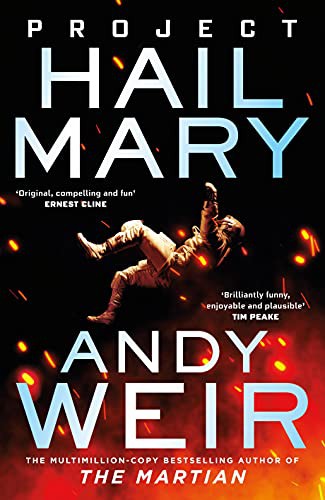
Ryland Grace awakens alone aboard a spacecraft with no memory of his identity or mission. The narrative alternates between his urgent attempts to understand the present crisis and the recovered memories that explain how he arrived there. Weir combines accessible scientific puzzles, humor, and escalating danger with a first-contact relationship at the story’s emotional center. The book is deliberately plot-driven and optimistic, though its confidence in technical problem-solving can simplify political and ethical complications.
Core ideas
Science as a way of thinking
Scientific knowledge matters, but the deeper skill is disciplined curiosity: observe, form hypotheses, test them, accept failure, and revise. Grace’s competence is most compelling when the solution emerges through iteration rather than instant brilliance.
First contact begins with translation
The alien encounter is not mainly a question of exchanging information. It requires building shared reference points, discovering each other’s sensory and conceptual limits, and treating misunderstanding as a problem to investigate rather than a reason for hostility. Weir has described the novel as involving contact with a single intelligent alien species, not a conventional humanoid civilization.
Partnership changes the meaning of survival
The story starts with an apparently solitary mission but gradually reframes survival as relational. Trust becomes a practical technology: it allows two radically different beings to pool observations, compensate for weaknesses, and attempt solutions neither could reach alone.
Individual agency versus imposed duty
Grace’s mission raises an uncomfortable question: can an institution ethically compel a person to risk everything for the species? The novel tends to validate necessity-driven choices, but its premise also invites scrutiny of consent, secrecy, and who gets to define the greater good.
Optimism without naïveté
The book’s worldview is hopeful but not carefree. Catastrophe, fear, and irreversible loss remain real; optimism appears as a decision to keep experimenting, communicate, and help others despite uncertainty.
Humanity viewed from outside
The alien relationship gives Grace—and the reader—a way to see human habits as contingent rather than universal. Familiar ideas about friendship, fear, embodiment, and morality become questions rather than assumptions.
Practical takeaways
- When facing an unfamiliar problem, separate observation from interpretation; many apparent dead ends are rejected explanations, not wasted effort.
- Treat communication failures as data. Ask what the other party can perceive, measure, or understand before assuming bad faith or incompetence.
- Cooperation is strongest when differences are useful rather than erased. Preserve distinct perspectives while creating enough shared language to act together.
- Notice the tension between admirable sacrifice and coerced sacrifice; urgency does not automatically settle ethical questions.
- The novel’s most durable lesson is methodological: curiosity, humor, and persistence can make overwhelming problems tractable without making them easy.
Caveats and counterpoints
- The book prioritizes momentum, accessibility, and satisfying solutions over rigorous examination of geopolitics, institutional power, and the social aftermath of crisis. This is a deliberate adventure-novel emphasis, but it can make large-scale cooperation seem easier than it would be in reality.
- Its hard-science framework is a major attraction, yet some readers may find the speculative premises or later explanations stretch plausibility. The scientific detail should be read as disciplined imaginative scaffolding, not as a guarantee that every mechanism is established science.
- The humor and upbeat narration create strong accessibility but can undercut the gravity of certain events for readers seeking a darker or more psychologically intricate treatment of extinction.
Questions worth revisiting
- What makes a sacrifice genuinely voluntary when the alternative is collective catastrophe?
- Does Grace become a better person, or does the mission reveal qualities that were already present but suppressed?
- Which parts of communication depend on shared language, and which depend on shared vulnerability or mutual dependence?
- Is the novel more confident in science, in human institutions, or in individual relationships?
- Where does optimism become intellectually productive, and where might it conceal unresolved ethical costs?
Return to this when…
Return to this book when you want a fast, idea-rich reminder that problem-solving is iterative, first contact is fundamentally a communication challenge, and cooperation across difference can be both emotionally meaningful and materially decisive.
References
- Project Hail Mary by Andy Weir book review - The Washington Post
- Andy Weir's new book 'Project Hail Mary' | Interviews | Naked Scientists
- An Interview with Andy Weir | Penguin Random House
- publishersweekly.com
- aarp.org
- astronomy.com
- space.com
- space.com
- The real science (and the fun fiction) behind Project Hail Mary | Scientific American
- rogerebert.com
- singjupost.com
- singjupost.com