
In one sentence
Animal Farm argues that a revolution can reproduce the oppression it claims to abolish when power becomes concentrated, public memory is manipulated, and ordinary people surrender judgment to authority. Although specifically shaped by Orwell’s opposition to Stalinism, its wider subject is the corruption of emancipatory ideals by political power.
Overview
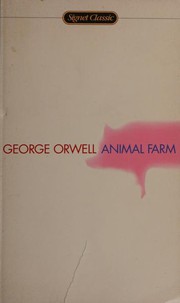
Written in 1943–44 and published in England on August 17, 1945, Animal Farm is subtitled “A Fairy Story” and combines a beast fable with political satire. Its revolution against Mr. Jones echoes the Russian Revolution, while the farm’s subsequent political changes satirize the development of Stalinist rule. Orwell’s target is not simply revolution as such, but the betrayal of democratic and egalitarian purposes by authoritarian leadership.
Core ideas
Revolution and betrayal
The animals’ original cause is morally compelling: they seek freedom from exploitation and control over the fruits of their labor. The central tension is that liberation does not guarantee liberty; without durable institutions, shared knowledge, and accountability, the revolution’s new rulers can become indistinguishable from the old.
Power reshapes truth
The pigs’ authority depends not only on force but on controlling explanations of the past. Repeated revisions, selective memory, and confident misinformation make exploitation appear lawful or necessary. Orwell shows that political domination is strengthened when people can no longer trust their own recollections.
Language as political technology
Slogans and simplified formulas turn complex moral questions into tests of loyalty. Language begins as a way to unite the animals but becomes a tool for narrowing thought: if words can be altered, contradictions can be made to sound reasonable.
The unequal distribution of intelligence and labor
Different animals possess different capacities for reading, organizing, questioning, or resisting. Orwell links this unevenness to political vulnerability: those who work hardest are not necessarily those who understand the system governing them, while specialized knowledge can become a source of privilege.
The cycle of ruling classes
The novella’s political imagination is structural rather than merely personal. Replacing one elite with another changes the rhetoric of power more easily than its underlying logic. The farm becomes a warning against judging a regime by its promises, symbols, or declared enemies alone.
Fable, comedy, and cruelty
The simple animal characters and brisk style make political mechanisms easy to recognize, but the humor gradually darkens. This contrast is important: the story’s apparent simplicity does not make its politics simplistic; it exposes how ordinary habits of obedience can coexist with severe violence.
Orwell’s specific historical position
The work is an allegory of the Soviet regime and was banned in the Eastern bloc, but reducing it to a one-to-one code weakens it. Its lasting force comes from the broader questions it raises about propaganda, charismatic authority, political education, and the social conditions that permit tyranny.
Practical takeaways
- When a movement promises equality, examine who interprets its principles, who controls information, and who can challenge decisions.
- Watch for political language that replaces evidence with repetition, loyalty tests, euphemisms, or manufactured enemies.
- A just founding purpose is not proof that later leaders remain just; institutions and habits of scrutiny matter more than origins.
- Notice how exhaustion, poor education, fear, and dependence can make domination seem preferable to uncertainty.
- Read the book alongside its historical context, but also test its patterns against organizations and governments beyond the Soviet example.
Caveats and counterpoints
- The novella is a sharply targeted anti-Stalinist satire, not a neutral comparative study of every revolution or ideology. Its historical analogies are illuminating but selective.
- Its compressed allegorical form gives more attention to propaganda and political betrayal than to the complexity of economics, mass participation, or competing revolutionary traditions.
- Some readers find the animal symbolism overly schematic or the political lesson too readily summarized; the book is most rewarding when its mechanisms are examined rather than reduced to a character-by-character key.
- The original book’s ending and political trajectory should not be confused with later adaptations, some of which altered the conclusion.
Questions worth revisiting
- At what point does legitimate leadership become domination in the animals’ society?
- Why are some forms of coercion more visible than others, and which kinds are normalized?
- How does the loss of historical memory alter what the animals believe they are permitted to demand?
- Is the greatest weakness of the revolution the ambition of its leaders, the passivity of its followers, or the absence of institutions?
- Can the animals’ original ideals survive without becoming slogans?
- What does Orwell suggest people owe one another when they suspect that official language is false?
Return to this when…
Return to this book when assessing political promises, institutional accountability, propaganda, or the difference between changing leaders and changing systems. Its most useful reminder is that freedom depends not only on removing a tyrant, but on preserving the public’s ability to remember, question, and organize.