
In one sentence
Deepfakes matter not only because fabricated audio, images, and video may become convincing, but because they exploit an information environment already shaped by polarization, conspiracy theories, trolling, and disinformation. The central danger is both deception and the resulting loss of confidence in authentic evidence: people may dismiss real material as fake or assume that nothing can be verified.
Overview
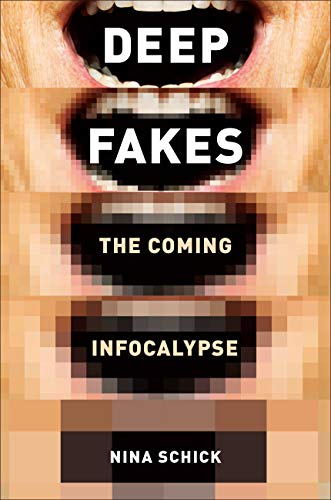
Schick defines synthetic media broadly as content generated or manipulated with AI, reserving “deepfake” for synthetic media used deceptively. She surveys the technology’s development, earlier forms of political manipulation, and prominent examples involving pornography, impersonation, propaganda, elections, and geopolitical influence. The book then turns to consequences for ordinary people, governments, technology companies, journalism, and democratic institutions.
Core ideas
The technology is an amplifier, not the whole problem
Deepfakes do not emerge in isolation. They become politically potent when distributed through platforms optimized for speed, outrage, targeting, and engagement. Existing misinformation systems provide the audience, incentives, and distrust that let synthetic media travel.
“Seeing” is no longer sufficient evidence
The traditional assumption that photographic or audiovisual records are inherently persuasive weakens as people gain access to tools that can fabricate a person’s face, voice, actions, or location. Verification must shift from appearance alone toward provenance, context, corroboration, and trusted sources.
The harms are unequal
Schick emphasizes intimate and personal harms alongside geopolitical ones: nonconsensual sexual imagery, blackmail, fraud, intimidation, and reputational attack. The burden falls especially heavily on people whose likenesses can be exploited without meaningful recourse.
The “liar’s dividend” is politically useful
Once convincing fakes are common, an accused person can dismiss genuine evidence as fabricated. Thus deepfakes can damage public knowledge even when no fake succeeds: the mere possibility of manipulation creates strategic doubt and cynicism. This is an interpretation consistent with the book’s concern about collapsing trust and later philosophical criticism of catastrophic deepfake predictions.
Responses must be layered
The book points toward a combination of public awareness, credible journalism and fact-checking, technical detection, reliable authentication or provenance, platform responsibility, and institutions capable of countering political misinformation. No single detector or media-literacy habit can solve the problem.
Synthetic media also has legitimate uses
Schick’s broader framing is not that AI-assisted media is inherently malign. Synthetic media may transform communication, entertainment, education, and creative work; the challenge is governing consent, disclosure, accountability, and distribution in an already corrupted information ecosystem.
Practical takeaways
- Treat striking audio, video, and images as claims requiring corroboration, not as self-authenticating evidence.
- Check the source, original upload, surrounding context, independent reporting, date, and whether trusted organizations have authenticated the material.
- Distinguish misinformation from disinformation: the former may be shared mistakenly; the latter involves intentional deception.
- Remember that crude manipulation and ordinary misleading edits can be as influential as technically sophisticated deepfakes; sophistication is not the only risk.
- For organizations, prioritize provenance and chain-of-custody systems rather than relying exclusively on after-the-fact detection.
- When sharing suspected intimate or impersonation-based material, avoid amplifying the harm; report it through the relevant platform or legal channel.
- Use the book as a conceptual primer on synthetic media and information integrity, not as a current technical guide.
Caveats and counterpoints
- Published in 2020, the book is a snapshot of an early generative-media moment. Its examples, terminology, and forecasts should not be treated as a current account of model capabilities, platform policies, or detection methods.
- The book’s alarmist “Infocalypse” framing is useful for emphasizing systemic stakes, but serious later scholarship questions whether deepfakes are uniquely or automatically capable of producing an unprecedented epistemic collapse. Existing cheapfakes, selective editing, propaganda, and institutional failures may often matter more.
- Available reviews describe the book as an accessible, urgent introduction, while some reader criticism finds it rushed and less technically or historically comprehensive than the subject warrants.
- Detection is not a permanent solution: generators improve, files are recompressed, metadata can be stripped, and authentic material can be misclassified. Provenance and trustworthy institutions are complementary safeguards, not substitutes for judgment.
Questions worth revisiting
- Is the greatest danger successful fabrication, or the generalized suspicion that makes authentic evidence easier to reject?
- Which harms require platform design changes, and which require law, journalism, education, or international coordination?
- How should consent and disclosure work when synthetic likenesses are used for entertainment, accessibility, education, or political communication?
- When does the book’s rhetoric clarify the stakes, and when does it overstate the distinctiveness of deepfakes compared with older propaganda techniques?
- What forms of provenance could remain trustworthy when content is copied, edited, translated, or removed from its original platform?
Return to this when…
Return to these notes when evaluating AI-generated media, designing a media-literacy checklist, thinking about online trust, or comparing technological threat narratives. Pair the book with newer work on generative AI, provenance, platform governance, and the limits of deepfake-centered explanations.
Highlights
In 1984, Yuri Bezmenov, a high-ranking KGB defector, described Soviet disinformation techniques in a TV interview. Rather than “spying” in the traditional sense, he said that the KGB, the Soviet military intelligence agency, was almost entirely focused on using disinformation as a weapon of “psychological warfare,” to distract and divide its Western enemy. [It] is a slow process which we call either ideological subversion or “active measures.” […] What it basically means is to change the perception of reality of every American to such an extent that despite the abundance of information, no-one is able to come to sensible conclusions in the interest of defending themselves, their families, their community and their country.1
References
- Deepfakes: The Coming Infocalypse - Nina Schick - Google Books
- Deepfakes by Nina Schick | Hachette Book Group
- books.google.com
- hachettebookgroup.com
- books.google.com.pk
- hachette.co.uk
- hachette.co.uk
- catalog.slcpl.org
- DEEPFAKES | Kirkus Reviews
- books.google.com.pk
- vitalsource.com
- aspen.greenvillelibrary.org
- wired.com
- link.springer.com
- ninaschick.org