
In one sentence
A good morning routine is not a universal sequence—or a test of waking up exceptionally early. It is a deliberately designed set of actions that fits your body, responsibilities, values, and work, helping you begin the day with intention rather than reacting to whatever demands attention first.
Overview
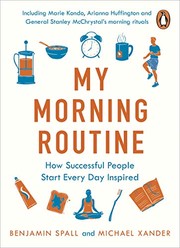
The book combines short author commentary with routine-based interviews. The featured people describe sleep, waking, exercise, food, reflection, family time, technology, and early work. The authors’ central move is comparative: instead of presenting one ideal routine, they invite readers to notice patterns, borrow useful elements, and construct a sustainable version of their own. The project grew from the authors’ My Morning Routine website and included interviews with 64 people.
Core ideas
Design, don’t imitate
The routines differ substantially. A celebrity’s 5 a.m. workout, meditation practice, or elaborate breakfast is not automatically useful to someone with different chronotype, job, health, family obligations, or commute. Treat examples as a menu of experiments, not a formula.
Protect the first meaningful hours
Many contributors use the early part of their waking day for an activity they value: focused work, reading, exercise, reflection, or time with family. The transferable principle is to reserve attention for priorities before the day becomes externally driven.
A routine can include restoration
The book does not reduce a productive morning to output. Sleep, calm, self-care, nourishment, spiritual practice, and relationships appear alongside work and exercise. A morning can be successful because it stabilizes you, not only because it produces measurable accomplishments.
Technology boundaries are a recurring lever
Several examples emphasize delaying phone or email use so that other priorities get protected attention. This is best understood as controlling the first source of demands, rather than treating devices as inherently bad; some people may need technology immediately for work, caregiving, or safety.
Consistency matters more than theatrical difficulty
The useful routine is one you can repeat under real conditions. The authors’ broader message favors alignment with personal circumstances and changing life stages over adopting an impressive but fragile schedule.
The evidence is inspirational, not causal
The book presents habits of successful people, but these interviews cannot establish that the habits caused their success. The selection also risks survivorship bias: readers see notable people who succeeded, not the many people with similar routines who did not. Critics have found the repeated interview format repetitive and less analytically deep than its premise suggests.
Practical takeaways
- Start by identifying what would make your morning feel meaningfully better—not what looks impressive in someone else’s routine.
- Choose one or two anchors, such as a consistent wake time, exercise, reading, planning, meditation, focused work, or an unrushed breakfast.
- Put a valued activity before low-value defaults such as compulsive news, email, or social-media checking.
- Design around sleep and obligations; waking earlier is not inherently better if it reduces sleep or creates unsustainable strain.
- Make the routine modular: define a minimum version for busy days and an expanded version for ordinary days.
- Run small experiments for a week at a time, changing one element so you can tell what actually helps.
- Revisit the routine when your work, health, household, or life stage changes.
Caveats and counterpoints
- The book’s sample is composed of accomplished or notable people, so it is not representative evidence about what works for the general population.
- Interview anecdotes show association and personal preference, not proof that a particular morning practice produces success.
- The framing can encourage an overly individualistic view of productivity: sleep quality, economic constraints, caregiving, disability, shift work, and workplace demands may limit how much control someone has over mornings.
- A large collection of similar interviews can generate ideas but also repetition; readers seeking rigorous behavioral science or quantified comparisons may find the book limited.
Questions worth revisiting
- Which part of my current morning is genuinely restorative or important, and which part is merely habitual?
- What is the smallest routine that would improve my day even when circumstances are difficult?
- What do I want to protect from interruption before checking messages or entering reactive work?
- Am I borrowing a practice because it fits my goals, or because it is associated with someone impressive?
- Which routine elements improve my energy or focus after repeated testing, rather than just sounding appealing?
- How should the routine change on weekends, travel days, caregiving days, or periods of poor sleep?
Return to this when…
Return to these notes when redesigning your mornings, especially after a change in work, health, household responsibilities, or sleep. The most useful reminder is: borrow principles and experiments—not someone else’s identity or schedule.
References
- My Morning Routine, the Book
- blinkist.com
- My Morning Routine
- My Morning Routine: How Successful People Start Every Day... | Microcosm Publishing
- goodreads.com
- MY MORNING ROUTINE by Benjamin Spall Michael Xander | Audiobook Review | AudioFile Magazine
- libcat.arlingtonva.us
- Reviews - My Morning Routine: How Successful People Start Every Day Inspired | The StoryGraph
- My Morning Routine Free Summary by Benjamin Spall and Michael Xander
- filtergrade.com
- indigo.ca
- app.thestorygraph.com