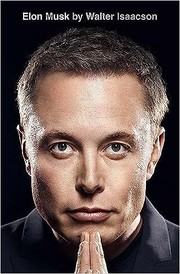

In one sentence
Musk’s accomplishments arise from an unusual combination of engineering intuition, extreme urgency, willingness to endure risk, and the ability to recruit talented people around ambitious missions—but the same traits become liabilities when combined with impulsiveness, vindictiveness, weak empathy, and concentrated power.
Overview
Isaacson presents a chronological, close-access biography based on shadowing Musk for roughly two years and interviewing associates, employees, family members, and rivals. The narrative moves from Musk’s difficult childhood and early software ventures through PayPal, Tesla, SpaceX, Starlink, Neuralink, the Boring Company, and the acquisition of Twitter. The book is admiring of Musk’s technical and entrepreneurial effectiveness while documenting chaotic leadership, cruelty, impulsive decisions, and personal instability.
Core ideas
Urgency as an operating system
Musk repeatedly imposes compressed deadlines, aggressive cost targets, and a sense that failure is preferable to delay. Isaacson treats this “maniacal sense of urgency” as a source of breakthroughs: it forces teams to simplify, iterate, and attempt projects established companies consider impossible. The tradeoff is exhaustion, preventable mistakes, and organizational chaos.
First-principles engineering—and selective listening
Musk often reasons from physical constraints, costs, and desired outcomes rather than accepting industry assumptions. This helps produce unconventional solutions at SpaceX and Tesla. Yet he also tends to reject expert advice when it conflicts with his intuition, making his method dependent on unusually strong judgment and unusually capable engineers.
Mission attracts exceptional talent
The companies are organized around grand purposes—reusable rockets, electric vehicles, human expansion beyond Earth, or advanced AI. These missions can motivate people to accept extraordinary workloads and uncertainty. The biography also shows the darker side: employees may be treated as expendable instruments of the mission rather than as people with durable limits.
The founder’s strengths become governance risks
Musk’s willingness to make fast, unilateral decisions can be effective during crises or early-stage invention. At scale, the same refusal to share power creates bottlenecks, destabilizes systems, and magnifies the consequences of his moods. Isaacson’s account of Twitter/X is especially useful as a case of creative destruction turning into operational disorder.
Achievement does not settle moral judgment
Isaacson does not reduce Musk either to fraud or to heroic genius. The book argues, implicitly, that genuine technical and business achievements can coexist with destructive conduct. Reviewers agree that the portrait is revealing, but some criticize Isaacson for remaining too close to Musk’s perspective and for framing events through a traditional “great man” lens.
Psychology is explanatory, not exculpatory
The biography connects Musk’s volatility, siege mentality, appetite for conflict, and need for control to formative experiences and relationships, especially his childhood. That context may explain recurring patterns, but it does not excuse the effects on partners, employees, institutions, or the public. This distinction is central to reading the book critically.
Practical takeaways
- Ambitious missions can attract talent more powerfully than incremental incentives, but mission-driven cultures need safeguards against burnout and abuse.
- Aggressive deadlines are useful when they expose unnecessary complexity; they are harmful when treated as proof that physical, technical, or human constraints do not exist.
- A founder’s direct technical involvement can accelerate invention, but mature organizations require delegation, dissent, and independent governance.
- Use “first principles” to question assumptions—not to dismiss domain expertise automatically.
- Evaluate leaders by both outputs and externalities: product success does not erase operational, ethical, or social costs.
- When a single person controls many high-impact systems, personal impulsiveness becomes a public-risk issue rather than merely a private character flaw.
Caveats and counterpoints
- This is a biography, not a neutral institutional history or a systematic evaluation of Tesla, SpaceX, or Twitter/X. Its narrative emphasis remains centered on Musk.
- Reviewers found Isaacson’s reporting extensive but disputed his interpretive distance; large portions rely on Musk and his inner circle, which can preserve a protagonist-centered account.
- The book’s psychological explanations are interpretive. They should not be treated as clinical diagnoses or as definitive accounts of causation.
- The biography is strongest as a portrait of decision-making style, ambition, and power; it is less sufficient by itself for judging labor practices, discrimination claims, platform governance, or the broader social effects of Musk’s companies.
Questions worth revisiting
- Where does Musk’s direct intervention create genuine engineering advantage, and where does it merely express a need for control?
- Which achievements depended on Musk’s personal judgment, and which depended primarily on teams, capital, timing, or favorable institutions?
- Can a culture built around extreme urgency remain innovative after the founding crisis has passed?
- What independent evidence would confirm or challenge Isaacson’s explanations of Musk’s childhood and personality?
- How should society govern leaders whose private decisions can affect transportation, communications, space infrastructure, AI, and wartime connectivity?
Return to this when…
Return to these notes when thinking about founder-led innovation, high-pressure organizational cultures, the “great person” theory of technological progress, or the difference between explaining a powerful leader’s behavior and excusing it.