
In one sentence
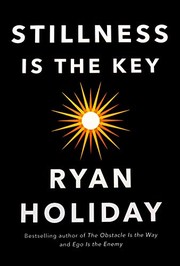
Stillness is the inner steadiness that lets a person perceive clearly, govern impulses, act deliberately, and remain present. Holiday’s central claim is that achievement without this steadiness becomes frantic, distracted, or spiritually empty; stillness gives effort direction.
Overview
The book is divided into three overlapping domains: Mind, which concerns attention, clarity, silence, and freedom from distraction; Spirit, which concerns meaning, humility, relationships, acceptance, and emotional regulation; and Body, which concerns sleep, exercise, diet, routine, and physical surroundings. Holiday combines Stoicism with Buddhism and other traditions, using figures such as Seneca, Marcus Aurelius, John F. Kennedy, Winston Churchill, Fred Rogers, Anne Frank, and Tiger Woods to illustrate the argument.
Core ideas
Stillness is active, not passive
Stillness is not withdrawal from responsibility. It is the condition for effective responsibility: pausing long enough to distinguish what matters, see reality accurately, and choose a response rather than obeying impulse.
Protect attention from noise
Constant news, notifications, opinions, and multitasking scatter judgment. Holiday repeatedly recommends reducing inputs, creating solitude, and making room for sustained thought. The practical test is whether an information stream improves action or merely stimulates agitation.
Presence precedes insight
A mind trapped in regret, fantasy, resentment, or anticipation cannot fully encounter the present. Attention is therefore a form of discipline: return to the immediate task, person, or fact instead of rehearsing mental noise.
Inner peace requires moral and emotional work
Stillness is not achieved by quiet surroundings alone. Anger, ego, unresolved pain, envy, and the need for external validation disturb it. Holiday links calm to forgiveness, humility, acceptance of limits, and choosing what is genuinely worth caring about.
The body supports the mind
Sleep, exercise, food, breathing, routine, and a less chaotic environment are treated as foundations rather than optional self-care. Mental clarity is fragile when the body is chronically overstimulated or exhausted.
Solitude can improve performance and judgment
Time away from crowds and devices allows reflection, creativity, and perspective. Holiday’s examples frame solitude as productive when it serves attention and preparation—not as an excuse to avoid people, obligations, or corrective feedback.
Achievement cannot substitute for peace
The book challenges the assumption that more success will automatically settle dissatisfaction. External accomplishments can coexist with anxiety, anger, or emptiness; stillness is presented as a way to enjoy achievement without becoming dependent on it.
Practical takeaways
- Create recurring periods without notifications, news, or casual media; treat them as appointments rather than hoping free time appears.
- Before reacting, insert a pause and ask: What is actually happening? What is within my control? What response serves my values?
- Limit information intake to what can inform a decision or meaningful understanding; do not confuse access to information with wisdom.
- Build a basic physical floor: consistent sleep, regular movement, tolerable nutrition, and a workspace that reduces unnecessary friction.
- Schedule solitude for thinking, writing, walking, or reviewing decisions—but return from it with a concrete next action.
- Notice anger and ego as attention traps. Delay the response, identify the threatened desire or status concern, and decide whether it deserves continued energy.
- Use routine to reduce needless choices, while periodically checking whether the routine still serves the purpose for which it was created.
Caveats and counterpoints
- The book is a broad philosophical synthesis rather than a tightly evidenced behavioral-science program. Its historical anecdotes illustrate possibilities but do not establish that stillness caused the featured individuals’ success.
- Holiday’s definition of stillness is expansive—covering attention, virtue, spiritual orientation, health, and emotional regulation—which makes it memorable but sometimes less precise as a measurable concept.
- Advice to slow down can fail when a situation requires urgent action, collaboration, advocacy, or professional treatment. Calm should improve engagement with reality, not become passivity or avoidance.
- The examples tend to emphasize unusually disciplined or successful people. Ordinary constraints—care work, poverty, disability, unsafe environments, or demanding jobs—can make solitude and control over inputs much less available.
- The book’s Stoic framing can understate how relationships, institutions, technology design, and mental-health conditions—not just individual discipline—shape distraction and distress.
Questions worth revisiting
- Which inputs genuinely improve my decisions, and which merely keep me activated?
- What do I do when I am uncomfortable with silence or unstructured time?
- Where am I calling something ‘urgent’ because I want to avoid reflection?
- Which routine would protect attention without making life rigid?
- Am I using calm to face difficult facts—or to postpone necessary action?
- What achievement or grievance currently has more control over my peace than it deserves?
Return to this when…
Return to this book when life feels noisy, reactive, or achievement-driven; when attention is fragmented; or when a major decision requires perspective. The most useful rereading targets are the three-part structure—mind, spirit, body—and the distinction between restorative solitude and avoidance.