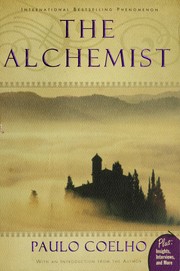

In one sentence
The Alchemist presents self-fulfillment as a spiritual vocation: people should pursue their deepest calling, learn to interpret experience, and remain receptive to guidance from the world. Its power comes from fable-like clarity; its limitation is that its universal wisdom can seem overly simple or insufficiently attentive to structural constraints.
Overview
First published in Portuguese as O Alquimista in 1988, the novel is structured as a quest and spiritual fable rather than a psychologically detailed realist narrative. Santiago’s journey from shepherding toward an imagined treasure becomes an education in desire, fear, work, love, signs, and transformation. Coelho’s recurring idea of a “Personal Legend” names the individual purpose one is called to pursue. The book’s symbolic world treats nature, coincidence, intuition, and human encounters as potentially meaningful without sharply separating the mystical from the practical.
Core ideas
Destiny versus safety
Santiago must choose between a familiar life and an uncertain calling. The novel treats comfort, routine, and fear of failure as forces that can quietly become forms of abandonment—though it does not fully explore when caution is wise or necessary.
The world as readable pattern
Omens, recurring symbols, dreams, and chance encounters create a “language” through which reality appears to communicate. This gives the story its mystical atmosphere, but also places heavy faith in interpretation: meaningful signs are recognized by those willing to pay attention.
Learning through action
Knowledge is not primarily delivered as abstract theory. Santiago learns by traveling, working, losing, observing, and adapting. Even apparent detours become part of his education, suggesting that progress is less a straight line than a process of becoming capable of seeing.
Love that does not possess
The novel contrasts love with attachment that demands someone abandon their purpose. Its preferred model is supportive rather than imprisoning: love should deepen a person’s life without turning into an excuse to stop growing.
Transformation and alchemy
Alchemy functions as both literal mystery and governing metaphor. The valuable change is not merely the production of gold; it is the refinement of perception, courage, and identity. The sought object matters because the pursuit transforms the seeker.
Fable-like simplicity
Coelho uses plain prose, archetypal figures, repeated lessons, and compressed episodes. Admirers experience this as accessible and memorable; critics see it as motivational or “more self-help than literature,” with limited characterization and philosophical complexity.
Practical takeaways
- Ask what desire remains persistent when status, habit, and other people’s expectations are set aside.
- Distinguish a genuine obstacle from the fear that appears when a meaningful goal becomes real.
- Treat setbacks as information: what skill, relationship, or perspective did the experience force you to develop?
- Notice opportunities without assuming every coincidence is a command. The novel’s openness to signs is most useful when balanced with judgment.
- Consider whether love, work, or responsibility is supporting growth—or being used to avoid a difficult but important choice.
- Return to the book when you need a short, symbolic reminder that a journey can change the meaning of its original goal.
Caveats and counterpoints
- The novel’s central optimism can imply that persistence and faith are enough to overcome obstacles, underplaying poverty, violence, discrimination, luck, and unequal access to opportunity.
- Its spiritual pluralism is broad and emotionally inclusive, but not philosophically rigorous; ideas from religion, mysticism, psychology, and alchemy are blended into a single symbolic system.
- Santiago is intentionally archetypal rather than deeply individualized. Readers seeking complex interiority, ambiguity, or social realism may find the characterization thin.
- The book’s message is easy to convert into slogans. Its more interesting tension lies in the difference between pursuing a dream and learning to perceive what the pursuit is actually teaching.
Questions worth revisiting
- What does the novel gain—and lose—by making Santiago an archetypal seeker rather than a psychologically complex individual?
- When does “following one’s dream” express courage, and when might it become a refusal to accept legitimate duties or limits?
- Does the language of omens encourage attentiveness, or does it risk turning coincidence into false certainty?
- How does the novel define a successful journey if the external prize is not the whole meaning of the quest?
- Which parts of the book’s spiritual optimism remain persuasive when viewed from circumstances Santiago does not face?
Return to this when…
Return to it as a compact fable about beginning again, especially during a transition when fear is presenting itself as practicality. Read it less as a complete philosophy of life than as a deliberately simple parable whose value depends on testing its optimism against real circumstances.
Highlights
Everyone seems to have a clear idea of how other people should lead their lives, but none about his or her own.
"When he was a child, that man wanted to travel, too. But he decided first to buy his bakery and put some money aside. When he's an old man, he's going to spend a month in Africa. He never realized that people are capable, at any time in their lives, of doing what they dream of."
'The secret of happiness is to see all the marvels of the world, and never to forget the drops of oill on the spoon.' "
"Because I don't live in either my past or my future. I'm interested only in the present. If you can concentrate always on the present, you'll be a happy man. You'll see that there is life in the desert, that there are stars in the heavens, and that tribesmen fight because they are part of the human race. Life will be a party for you, a grand festival, because life is the moment we're living right now."
"I'm alive," he said to the boy, as they ate a bunch of dates one night, with no fires and no moon. "When I'm eating, that's all I think about. If I'm on the march, I just concentrate on marching. If I have to fight, it will be just as good a day to die as any other.
"If good things are coming, they will be a pleasant surprise," said the seer. "If bad things are, and you know in advance, you will suffer greatly before they even occur."
He was alarmed by what had happened. He had succeeded in reaching through to the Soul of the World, and now the price for having done so might be his life. It was a frightening bet. But he had been making risky bets ever since the day he had sold his sheep to pursue his destiny. And, as the camel driver had said, to die tomorrow was no worse than dying on any other day. Every day was there to be lived or to mark one's departure from this world. Everything depended on one word: " Maktub."
"You must understand that love never keeps a man from pursuing his destiny. If he abandons that pursuit, it's because it wasn't true love… the love that speaks the Language of the World."
"There is only one way to learn," the alchemist answered. "It's through action. Everything you need to know you have learned through your journey. You need to learn only one thing more."
"Everyone on earth has a treasure that awaits him," his heart said. "We, people's hearts, seldom say much about those treasures, because people no longer want to go in search of them. We speak of them only to children. Later, we simply let life proceed, in its own direction, toward its own fate. But, unfortunately, very few follow the path laid out for them—the path to their destinies, and to happiness. Most people see the world as a threatening place, and, because they do, the world turns out, indeed, to be a threatening place.
"Every search begins with beginner's luck. And every search ends with the victor's being severely tested." The boy remembered an old proverb from his country. It said that the darkest hour of the night came just before the dawn.
"To show you one of life's simple lessons," the alchemist answered. "When you possess great treasures within you, and try to tell others of them, seldom are you believed."
The boy watched the exchange with fascination. "You dominated those horsemen with the way you looked at them," he said. "Your eyes show the strength of your soul," answered the alchemist.
"If a person is living out his destiny, he knows everything he needs to know. There is only one thing that makes a dream impossible to achieve: the fear of failure."
"That's what alchemists do. They show that, when we strive to become better than we are, everything around us becomes better, too."
The boy reached through to the Soul of the World, and saw that it was a part of the Soul of God. And he saw that the Soul of God was his own soul. And that he, a boy, could perform miracles.
'Everything that happens once can never happen again. But everything that happens twice will surely happen a third time.'
"What good is money to you if you're going to die? It's not often that money can save someone's life,"