
In one sentence
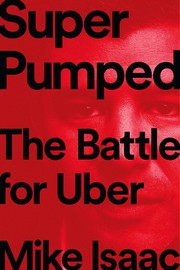
Uber’s aggressive expansion was not separate from its misconduct; the same founder-centered, rule-bending culture that helped the company seize market share also weakened judgment, normalized ethical shortcuts, alienated stakeholders, and ultimately made Kalanick’s leadership untenable. Isaac presents Uber as a case study in how Silicon Valley’s worship of growth can turn structural problems into celebrated “disruption.”
Overview
Isaac traces Uber from its founding as UberCab through its international expansion, battles with taxi industries and regulators, fundraising contests, internal scandals, and the 2017 boardroom revolt that removed Kalanick. The narrative is reported as investigative business history rather than a conventional startup manual: its main subject is how power, incentives, culture, and capital interacted inside a company pursuing global dominance.
Core ideas
Growth was the operating ideology
Uber treated speed, scale, and market capture as overriding priorities. Subsidized rides, driver incentives, heavy fundraising, and rapid geographic expansion helped create demand before the business had demonstrated durable economics. The model depended on continuing access to capital and on becoming too important—or too entrenched—for cities to easily reject.
Regulatory conflict was strategic, not incidental
Uber often entered markets first and negotiated later, using legal ambiguity and political pressure as competitive tools. Isaac’s account emphasizes that “disruption” frequently meant shifting the cost of uncertainty onto regulators, competitors, drivers, and cities rather than solving the underlying governance problem.
Founder worship weakened institutional control
Kalanick’s confrontational style was initially useful against entrenched taxi systems and skeptical regulators. But investors and directors tolerated behavior because they associated personal intensity with company value. The eventual board revolt illustrates the danger of allowing a founder’s charisma and results to substitute for credible oversight.
Culture becomes strategy in practice
The company’s internal norms—competitive aggression, loyalty tests, relentless execution, and comfort with gray areas—shaped how employees handled safety, harassment, regulation, and public controversy. A culture that rewards “getting it done” without defining acceptable methods can convert isolated misconduct into a repeatable system.
The platform model obscures responsibility
Uber presented itself as a technology intermediary while exercising substantial influence over fares, access to work, incentives, and customer experience. This ambiguity allowed the company to claim technological neutrality while benefiting from control normally associated with a transportation operator. The book connects this tension to the broader gig economy.
The story is bigger than Kalanick
Isaac does not reduce Uber’s problems to one unusually abrasive CEO. His broader interpretation implicates venture capital, board governance, competitive imitation, Silicon Valley’s pro-growth ideology, and the market’s willingness to reward expansion before profitability or institutional maturity.
Practical takeaways
- Separate growth metrics from organizational health: rapid adoption can conceal regulatory, cultural, safety, and economic liabilities.
- Treat “move fast” as incomplete advice; pair speed with explicit boundaries, escalation channels, and accountability for how results are achieved.
- Do not confuse founder conviction with reliable governance. Boards should test assumptions, investigate warning signs, and retain the ability to challenge or replace executives.
- When a business relies on subsidies or outside capital, distinguish genuine product-market fit from growth purchased by spending.
- Examine who absorbs the costs of a platform’s convenience—workers, contractors, cities, competitors, customers, or the public.
- Watch for language that dehumanizes stakeholders or frames every criticism as an attack by an enemy; it often signals strategic and ethical blind spots.
Caveats and counterpoints
- This is a reported narrative centered heavily on Uber and Kalanick, so it is strongest as a case study of Silicon Valley power and startup culture, not as a comprehensive history of urban transportation or labor economics.
- Kalanick was not interviewed for the book, according to contemporary discussion of Isaac’s reporting; some characterization therefore rests on interviews with employees, former employees, investors, competitors, and other sources rather than the subject’s direct account.
- The book was published in September 2019 and primarily culminates in Kalanick’s 2017 ouster and Uber’s path toward its 2019 IPO; it does not assess the company’s full subsequent history.
- Reviews generally praise Isaac’s event-by-event reporting but differ on how fully the book develops its broader analysis of Silicon Valley ideology; some see the interpretive sections as more compelling than others.
Questions worth revisiting
- Which Uber practices were genuine innovations, and which were primarily tactics for avoiding regulation or transferring costs?
- At what point did Kalanick’s aggressive style shift from competitive advantage to governance risk?
- How much responsibility belonged to the board and investors who benefited from Uber’s growth while tolerating warning signs?
- Can a platform call itself merely a technology company when it controls pricing, access to work, incentives, and user experience?
- What safeguards would preserve entrepreneurial speed without allowing “results at any cost” to become the operating system?
- Which parts of Uber’s model could remain viable without subsidies, regulatory arbitrage, or continuous access to venture capital?
Return to this when…
Return to these notes when evaluating founder-led companies, blitzscaling, venture-backed business models, gig-economy platforms, regulatory disruption, or claims that toxic behavior is justified by exceptional growth.
References
- SUPER PUMPED | Kirkus Reviews
- Book Marks reviews of Super Pumped: The Battle for Uber by Mike Isaac Book Marks
- en.wikipedia.org
- unseenfounder.com
- 'Super Pumped' Benefits From Hindsight in Its Complex Portrait of Uber | WIRED
- chicagobooth.edu
- Super Pumped - Description | W. W. Norton & Company Ltd.
- goodreads.com
- getabstract.com
- pbs.org
- time.com
- thewrap.com