
In one sentence
Romero presents game-making as a lifelong practice of learning, experimentation, speed, and relentless creation—but also shows how creative ambition, ego, money, and mismatched working styles can fracture successful partnerships.
Overview
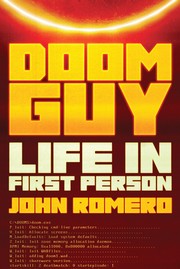
This is both a coming-of-age memoir and an insider account of the early PC-game industry. Romero begins with his Mexican-American family background, childhood violence and instability, and early fascination with computers. He then follows his progression from writing and selling Apple II games to professional development, the formation of id Software, the breakthroughs behind Wolfenstein 3D, DOOM, and Quake, the collapse of his relationship with John Carmack, and later work including Ion Storm. The book’s distinctive value is its first-person account of the technical and emotional experience of making landmark games, though reviewers note that its abundance of detail sometimes makes it overstuffed.
Core ideas
Making is a form of escape—and then of mastery
Romero describes games and programming as refuge from a troubled home life, but the refuge becomes a disciplined craft. Early experimentation, learning low-level programming, and repeatedly shipping small projects create the foundation for later breakthroughs.
Speed creates practice, but time expands ambition
Fast development cycles taught Romero how to finish, iterate, and solve problems. He also recognizes their limits: more development time allows larger and more ambitious designs. Wolfenstein 3D was an important shift because the team had enough time to focus on making the best game they could rather than merely meeting an immediate deadline.
Technology matters because it changes the design space
The memoir connects technical breakthroughs—such as advances in rendering, networking, and recording gameplay inputs—with new forms of play. Romero’s account treats engineering not as a separate support function but as a source of creative possibilities.
A successful team needs aligned creative and business expectations
The id Software story illustrates how shared excitement can produce extraordinary work, while differences over direction, control, recognition, and management can destabilize even a highly successful company. The book is especially useful as a case study in the human costs of creative partnership breakdown.
Adapt the project without abandoning standards
Romero describes Quake as changing substantially during development. His practical response was to accept the changed project and make the strongest version possible, rather than remain attached to an earlier ideal.
Reputation is part of the product
Romero’s retrospective advice includes avoiding claims that the work cannot support and treating fans respectfully. Hype, public behavior, and community trust can affect a creative project’s durability as much as its technical achievement.
Success does not end the creative trajectory
The memoir resists treating DOOM and Quake as a final achievement. Romero frames his career as a continuing process of making, learning, and pursuing new ideas rather than preserving a fixed legacy.
Practical takeaways
- Learn the underlying tools deeply enough that technical constraints become design opportunities.
- Ship small projects early: speed is valuable primarily because it generates feedback and experience.
- When a project changes, distinguish between defending its core quality and defending an outdated initial concept.
- Before entering a partnership, clarify creative authority, business roles, credit, conflict resolution, and expectations about growth.
- Do not confuse public attention or commercial success with evidence that every decision was sound.
- Treat fans and collaborators as part of the long-term ecosystem around the work.
- Preserve source materials, tools, and documentation; creative history is difficult to reconstruct after the fact. Romero specifically discusses the importance of preserving games and development materials.
Caveats and counterpoints
- This is Romero’s autobiography, not an independent history of id Software. Its account should be read alongside works such as David Kushner’s Masters of Doom and accounts from other team members when assessing disputed events.
- The book’s technical detail may be rewarding for developers but less accessible to readers uninterested in programming or game history. Publishers Weekly specifically notes passages on subjects such as video-buffer bit depths.
- Kirkus considers the memoir candid and useful but overly full of detail; Romero’s total-recall framing contributes to the book’s lack of streamlining.
- The book’s lessons about rapid development do not transfer directly to modern AAA production, where tools, asset demands, team sizes, and project complexity are substantially different. Romero himself emphasizes that scope and team size matter.
- The memoir is strongest on Romero’s own experience and design philosophy; it is less suited as a comprehensive account of the entire video-game industry or of the social effects of violent games.
Questions worth revisiting
- Which parts of Romero’s account are corroborated or challenged by other id Software members?
- How much of DOOM’s success came from Romero’s design instincts, Carmack’s technology, the wider team, or the shareware business model?
- What should modern teams preserve from id Software’s speed, and what depended on unusually small scope and exceptional individuals?
- When does confidence help a creative leader, and when does it become a source of avoidable conflict?
- How should creators discuss violent work when audiences connect it to real-world violence?
- What personal or organizational practices could have prevented the breakdown at id Software or Ion Storm?
Return to this when…
Return to this book when studying the origins of the first-person-shooter genre, evaluating founder-led creative companies, thinking about the relationship between engineering and design, or comparing firsthand memoir with independent accounts of game-development history.