
In one sentence
Tidying works best as a one-time, category-by-category process of choosing what to keep—not as an endless cycle of putting things away. By retaining possessions that spark joy and giving each a designated home, you create a living environment aligned with the life you want.
Overview
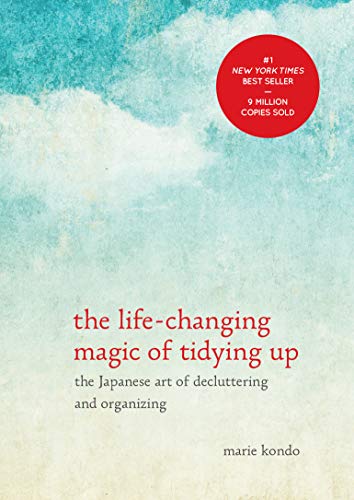
Kondō argues that conventional room-by-room cleaning often fails because it merely relocates clutter. Her method begins with imagining an ideal lifestyle, then gathering every item in a category so its total volume becomes visible. The recommended sequence moves from easier decisions to harder ones: clothes, books, papers, miscellaneous items (komono), and sentimental objects. The central test is personal response: hold each item and decide whether it sparks joy. After discarding, organize what remains and maintain the result by returning each item to its place. The publisher describes the book as the original guide to the method that later inspired the Netflix series.
Core ideas
Tidy by category, not location
Collect all items of one type from throughout the home before deciding. This prevents duplicates and exposes the true scale of a category, unlike cleaning one drawer or room at a time.
Choose what to keep
Instead of asking what can be thrown away, identify possessions worth keeping. “Sparks joy” is a subjective criterion: an item may evoke delight, usefulness, gratitude, beauty, or a meaningful sense of connection.
Complete the process decisively
Kondō distinguishes a concentrated tidying festival from daily maintenance. The major work is making thousands of decisions; afterward, upkeep should mainly involve returning things to their designated places.
Imagine the desired lifestyle first
A vision of how you want to live supplies a decision-making standard. The point is not an abstract ideal of minimalism, but a home whose contents support your preferred activities, atmosphere, and priorities.
Respect possessions while letting them go
The book frames discarding as appreciation rather than failure: acknowledge an object’s service, then release it if it no longer belongs in your future. This ritual can reduce guilt, especially around gifts, unfinished projects, and sentimental items.
Storage follows selection
Do not buy organizing products or devise elaborate systems before discarding. Once the inventory is reduced, store items simply, visibly, and by type; clothing is famously folded vertically so each piece can be seen and accessed.
Practical takeaways
- Set aside a substantial, uninterrupted period rather than tidying in scattered bursts.
- Begin by describing your ideal daily life in concrete terms: what you want to do, see, and feel at home.
- Work through categories in the suggested order, saving emotionally difficult keepsakes for last.
- Bring every item in a category together before evaluating individual pieces.
- Handle each possession individually; keep it because you want it, not merely because it is familiar, expensive, unused, or potentially useful someday.
- Separate discarding from storage: reduce first, then assign a home to everything remaining.
- Use the method as a values exercise, not only a cleanliness project; notice what your choices reveal about your habits and aspirations.
Caveats and counterpoints
- “Sparks joy” can be too vague for necessities, safety equipment, legal records, tools, or objects whose value is practical rather than pleasurable; a broader test such as “does this serve an important purpose?” may be needed.
- The one-time, whole-category approach can be physically, emotionally, or logistically unrealistic for people with disabilities, caregiving duties, very large households, severe clutter, or limited time and space.
- The book presents Kondō’s consulting experience as persuasive evidence, but it is primarily prescriptive rather than a controlled study of long-term behavioral change.
- Discarding advice should be adapted to financial circumstances, environmental responsibility, cultural practices, shared households, and the rights of other people who use the space.
- The method can become counterproductive if “joy” turns into pressure to own very little, replace serviceable possessions, or treat ordinary attachment as a problem. A serious review notes that readers may reasonably select individual techniques rather than follow the entire system rigidly.
Questions worth revisiting
- What kind of daily life am I trying to make room for?
- Which possessions consistently support that life, and which mainly preserve guilt, anxiety, or an outdated identity?
- Am I evaluating items individually, or rationalizing a decision based on cost, sunk effort, or fear of future scarcity?
- Which parts of the method fit my household, and where do practical, ethical, or accessibility constraints require modification?
- After discarding, what recurring acquisition habits could recreate the same clutter?
Return to this when…
Return when your home feels crowded, when ordinary organizing has become an endless maintenance task, or when you want a structured way to examine the relationship between possessions and priorities. The most reusable reminder is: gather by category, choose deliberately, then give what remains a clear home.
References
- The Life-Changing Magic of Tidying Up by Marie Kondo: 9781607747307 | PenguinRandomHouse.com: Books
- Rule 6: Ask Yourself If It Sparks Joy – KonMari | The Official Website of Marie Kondo
- pmb.ox.ac.uk
- lauracarroll.com
- shop.konmari.com
- iamjmkayne.com
- konmari.jp
- queenofthehousehold.com
- colorfulbookreviews.wordpress.com
- goodreads.com
- konmari.com
- bookchatter.net
- time.com