
In one sentence
Silicon Valley is less a meritocratic system than a high-stakes environment shaped by networks, timing, organizational politics, chance, and ruthless competition. Its celebrated innovations emerge from—and often reproduce—a culture willing to exploit attention, talent, data, and people.
Overview
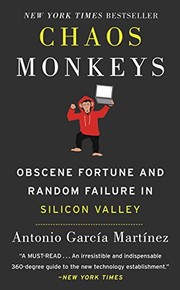
García Martínez narrates his path from Goldman Sachs strategist to co-founder of advertising startup AdGrok, whose technology is acquired by Twitter, and then to Facebook, where he works on advertising products including FBX. The memoir uses these episodes to demystify startup formation, venture capital, acquisitions, employee incentives, and Facebook’s pre-IPO culture. The title invokes “Chaos Monkey,” software designed to introduce failures into systems so their resilience can be tested; García Martínez applies the image to entrepreneurs and institutions that disrupt society while improvising through consequences.
Core ideas
Meritocracy is an incomplete explanation
The book argues that outcomes depend heavily on connections, timing, capital access, reputation, organizational position, and luck—not simply intelligence or effort. A useful refresher is to treat success stories as survivorship-biased accounts of a much larger field of failed or unseen attempts.
A startup is a negotiation system before it is a product
Building a company involves dividing equity, recruiting co-founders, raising money, managing investor expectations, generating publicity, handling legal threats, and deciding when to sell. Product quality matters, but control, leverage, and timing often determine who captures the value.
Acquisition can function as recruitment
A startup sale is not only an exit for investors; it can be a way for a larger company to acquire specialized people, technology, strategic knowledge, or market position. Founders should distinguish the value of the product from the value of the team and understand what the buyer actually wants.
Advertising is an attention-and-data market
The Facebook sections explain digital advertising as an exchange involving users, advertisers, publishers, targeting systems, auctions, measurement, and large-scale behavioral data. The technology is powerful partly because it converts ordinary activity into information that can be priced and optimized.
Organizations preserve startup energy through conflict—and lose it through bureaucracy
The early Facebook culture described in the book rewards experimentation, speed, technical confidence, and a willingness to break existing systems. As companies scale, hierarchy, internal fiefdoms, risk controls, and political competition can displace those incentives. This is the book’s perspective, not a universal law of organizational growth.
The narrator is both witness and exhibit
García Martínez presents himself as an unusually candid guide, but his self-portrayal also demonstrates the culture he criticizes: competitive, status-conscious, opportunistic, and willing to rationalize harmful behavior. The memoir’s credibility is therefore mixed: valuable for access and technical experience, limited by its narrow and self-serving viewpoint. Serious reviews specifically criticize its self-indulgence and abrasive ethics while still finding its startup and advertising details informative.
Practical takeaways
- Research the people across the table—investors, executives, recruiters, co-founders, and buyers—not just their companies. Their incentives, histories, alliances, and constraints affect the negotiation.
- When evaluating a startup opportunity, inspect the cap table, vesting terms, decision rights, liquidation preferences, and likely acquisition paths; enthusiasm is not a substitute for understanding control.
- Ask what a potential acquirer is really buying: revenue, technology, talent, patents, user access, competitive intelligence, or time.
- Separate a company’s public mythology from its operating mechanisms: who makes decisions, who controls data, how performance is measured, and who bears downside risk.
- Treat extreme confidence as a possible strategy rather than evidence. In uncertain markets, narrative, social proof, and timing can be as influential as technical merit.
- Use the book as an inside account of Silicon Valley incentives, not as a neutral history or ethical guide.
Caveats and counterpoints
- The book is a memoir, not a representative survey of Silicon Valley. It foregrounds one unusually combative participant and a particular period: roughly the startup and pre-IPO Facebook era of the late 2000s and early 2010s.
- Its advertising explanations may be most useful to readers interested in ad technology; reviewers found some of the later technical and internal-management detail less compelling for general readers.
- The author’s provocative treatment of sex, gender, status, and personal conduct is central to the book’s controversy and can distort the reader’s assessment of his broader institutional claims. Later reporting also documents backlash to those writings.
- The book often explains behavior through cynicism and individual ruthlessness. That lens can understate structural forces such as labor markets, regulation, discrimination, monopoly power, and the social consequences of surveillance-based advertising.
Questions worth revisiting
- Which parts of the book describe durable features of technology companies, and which depend on Facebook’s specific era and culture?
- When does “disruption” create resilience and innovation, and when does it merely transfer risk to users, workers, or the public?
- Does the author expose Silicon Valley’s moral compromises, or mainly normalize them as the price of winning?
- What would this story look like from the perspective of employees with less power, users whose data is monetized, or founders who failed without an acquisition?
- Which incentives in the advertising system reward genuine usefulness, and which reward manipulation or dependency?
Return to this when…
Return to these notes when evaluating startup glamour, founder narratives, venture-backed career opportunities, acquisition offers, digital advertising businesses, or claims that technology markets reward merit alone.
References
- en.wikipedia.org
- Conversation With Chaos Monkeys Author Antonio Garcia-Martinez
- Chaos Monkeys: Obscene Fortune and Random Failure in Silicon Valley – book review | The National
- jtde.telsoc.org
- wbur.org
- Chaos monkeys by Antonio Garcia Martinez | Open Library
- Ex-Facebook employee Antonio Garcia Mendez gives account of Silicon Valley in new book "Chaos Monkey" - CBS News
- penguin.co.uk
- inc.com
- rnz.co.nz
- goodreads.com
- How a Chaos Monkey Caused an Apple Uprising | WIRED