
In one sentence
Amazon’s rise came from combining a vast long-term ambition with unusually disciplined operating principles: prioritize customers, reinvest cash into growth, build infrastructure before it is obviously needed, and enter adjacent markets aggressively. Stone’s account also argues—through its reporting and criticism—that the same system producing convenience and innovation fostered secrecy, employee pressure, hard bargaining, and growing monopoly power.
Overview
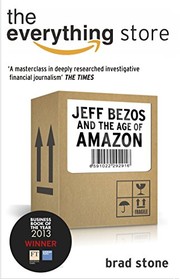
Stone tells a chronological, company-centered story beginning with Bezos’s decision to leave D. E. Shaw and pursue an Internet business in 1994. Amazon starts as an online bookseller, survives the dot-com crash, and expands through third-party selling, fulfillment infrastructure, Prime, Kindle, and Amazon Web Services. Bezos is presented as both visionary strategist and demanding, sometimes abrasive chief executive. The book’s central tension is that Amazon’s consumer benefits—selection, low prices, and convenience—are inseparable from practices that pressure suppliers, employees, competitors, and traditional retailers. The narrative is based on reporting and interviews with current and former employees, executives, and Bezos family members; it is not an authorized biography.
Core ideas
Customer obsession as a strategic weapon
Amazon’s “customer first” orientation is not merely a service ethic. It becomes a decision rule: lower prices, widen selection, simplify purchasing, tolerate short-term losses, and use customer behavior as the primary test of progress. This helps the company win loyalty before conventional financial metrics justify the investment.
Long-term reinvestment and willingness to look irrational
Bezos repeatedly accepts years of low or absent profits to build warehouses, software, distribution capacity, devices, and new businesses. The strategy depends on investors and managers tolerating present sacrifices for compounding scale advantages. It works when reinvestment creates durable infrastructure—not merely growth for its own sake.
Scale is built, not discovered
Amazon’s advantage is operational as much as digital. Warehouses, shipping systems, data centers, pricing tools, marketplace infrastructure, and fulfillment processes turn increasing volume into lower costs and faster service. The “everything store” is therefore a logistics and technology platform, not just a large website.
Adjacency creates a compounding platform
Amazon moves from books into categories and capabilities that reinforce one another: third-party sellers add selection; fulfillment improves delivery; Prime increases purchase frequency; Kindle extends the ecosystem into reading; AWS commercializes internal computing infrastructure. Expansion is strongest when a new business strengthens the existing flywheel.
Failure is tolerated—but only in service of ambition
The company tries initiatives that fail, including auctions and other ventures, while continuing to fund projects with uncertain payoffs. Stone’s account suggests that Amazon’s tolerance for failure is selective: experiments are acceptable when they may unlock a large future market, while complacency or weak execution is treated harshly.
A high-performance culture can externalize its costs
Relentless standards, frugality, internal competition, and secrecy help produce speed and discipline. They can also create fear, burnout, poor work-life balance, and ethically troubling pressure on partners and workers. The book does not treat culture as a neutral management style; it connects organizational intensity to Amazon’s social consequences.
Consumer welfare and market power can coexist
Amazon can genuinely improve consumer choice and convenience while also weakening competitors, extracting concessions from suppliers, and concentrating control over commerce. Evaluating the company only by prices or only by its harms misses the central ambiguity Stone develops.
Practical takeaways
- Define a clear customer benefit, then use it as a consistent filter for product and investment decisions.
- Invest early in infrastructure that competitors will find difficult or expensive to replicate.
- Treat adjacent expansions as strategic only when they reinforce the core platform or create a valuable new capability.
- Use low prices and convenience as growth levers, but track whether they are creating durable economics rather than postponing losses.
- Separate useful intensity—high standards, speed, accountability—from destructive intensity such as humiliation, secrecy, or chronic overwork.
- When assessing a dominant company, examine both sides of the ledger: what customers gain and what employees, suppliers, competitors, and communities may bear.
- Remember that a founder’s strengths can become institutional weaknesses when no counterweight limits their judgment or behavior.
Caveats and counterpoints
- This is a 2013 account, so it does not cover Amazon’s later development, including subsequent changes in leadership, retail, cloud computing, labor relations, and regulation. Stone later revisited Amazon in a separate book, Amazon Unbound.
- The book is investigative business journalism rather than a systematic management study. Its memorable anecdotes illuminate culture and decision-making but should not automatically be treated as representative data.
- Stone’s reporting relies heavily on interviews, including former employees and executives. Some accounts are necessarily contested or difficult for readers to independently verify; the book should be read as a deeply reported interpretation, not the final uncontested record.
- The narrative is strongly organized around Bezos and Amazon’s corporate drama, which can understate broader forces such as Internet adoption, venture capital, labor markets, logistics technology, and regulatory conditions.
- The book’s emphasis on Amazon’s formative years may make founder-driven decisions appear more central than they would be in a mature, professionally managed organization.
Questions worth revisiting
- Which Amazon practices described as necessary for survival remained necessary after the company achieved scale?
- Where is customer obsession genuinely customer-serving, and where does it function as a justification for transferring costs to others?
- Can long-term thinking work without a founder who controls capital allocation and organizational culture?
- Which parts of Amazon’s advantage came from superior execution, and which came from favorable market timing or regulatory conditions?
- What governance mechanisms could preserve experimentation while limiting abuse of power?
- How would the book’s thesis change if employee welfare and supplier resilience were treated as core customer or shareholder metrics?
Return to this when…
Return to these notes when evaluating platform businesses, founder-led companies, scale economics, or claims that low prices and convenience are sufficient evidence of social value. Pair them with a later account of Amazon for developments after 2013 and with independent research on labor, competition, and regulation.
References
- The Everything Store – Brad Stone
- brad-stone.com
- goodreads.com
- The Everything Store: Jeff Bezos and the Age of Amazon by Brad Stone
- kirkusreviews.com
- en.wikipedia.org
- macleans.ca
- microsoft.com
- Opinion | Book review: ‘The Everything Store: Jeff Bezos and the Age of Amazon’ by Brad Stone - The Washington Post
- geekwire.com
- hbglibrary.com
- openlibrary.org
- axios.com