
In one sentence
Advertising works best when it is treated as disciplined salesmanship rather than self-expression: understand the product and audience, identify a compelling promise, communicate it clearly, build a distinctive brand over time, and measure results whenever possible. Creativity matters, but only when it serves persuasion.
Overview
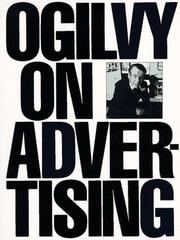
The book is a broad primer rather than a single linear argument. Its chapters cover producing advertising that sells, careers and agency management, client selection, print and television craft, corporate and travel advertising, business-to-business work, direct mail, public-service advertising, research, marketing, and the future of the industry. The original U.S. edition was published by Crown in 1983 and runs 224 pages; later editions preserve the same period-specific framework and examples.
Core ideas
Start with the product, market, and positioning
Ogilvy treats advertising as downstream from business decisions. A weak product, undifferentiated offer, or confused market position cannot be rescued reliably by clever copy. Research should reveal what consumers want, what competitors claim, and which promise gives the brand a defensible place in the buyer’s mind.
The job is to sell—not merely attract attention
He repeatedly evaluates advertising by its commercial effect. An ad can be memorable, fashionable, or entertaining yet fail if it does not create interest in the product and move people toward purchase. Attention is useful only as the first step in a persuasive sequence.
Make one clear promise to a specific audience
Strong campaigns organize themselves around a central benefit or proposition. The promise should be relevant, believable, and easy to understand; piling on several competing messages weakens recall and reduces persuasive force.
Respect information and long copy
Ogilvy argues against assuming that consumers will not read. When the product requires explanation, detailed copy can outperform minimalist executions—provided the writing is clear, organized, and genuinely useful. The headline and visual must earn attention, while the body copy rewards it.
Build a brand image consistently
Individual advertisements contribute to a cumulative impression of the brand. Tone, visual identity, quality cues, and recurring associations should reinforce one another over time instead of being reinvented for every campaign. Short-term novelty can damage long-term distinctiveness.
Research and testing are creative inputs
Research is not presented as a substitute for judgment; it is a way to reduce avoidable guessing. Ogilvy emphasizes consumer knowledge, readership and response evidence, direct-response learning, and testing alternative executions. The underlying discipline is to learn what changes behavior, not merely what people say they like.
Craft differs by medium
Print needs a strong headline, an immediately legible visual idea, and copy that sustains interest. Television needs demonstration, memorability, and a clear sales story rather than spectacle alone. Direct mail benefits from a concrete offer and measurable response. The medium changes the execution, but not the obligation to communicate a benefit.
Professional relationships affect the work
Several chapters address how agencies win clients, how clients should choose agencies, and how agencies should be run. His ideal agency combines strategic understanding, creative quality, research, candor, and respect for the client’s money. Poor briefing, excessive approvals, and conflict over credit undermine effectiveness.
Practical takeaways
- Before writing copy, answer: Who is the prospect? What does the product do? What is the strongest benefit? What evidence supports it? What competing claim must we overcome?
- Write a positioning statement and a single-minded promise before developing executions.
- Draft many headlines; keep the one that makes the benefit clearest to the intended buyer, not the one that most impresses the creative team.
- Use the headline, image, opening, and offer to make the ad understandable even to a hurried reader.
- Prefer specific demonstrations, facts, testimonials, guarantees, comparisons, and reasons to believe over vague brand language.
- Evaluate creative against the brief: audience, promise, proof, brand identity, desired action, and measurement plan.
- Keep a distinction between campaign effectiveness and public approval. An ad can be liked without selling; a less glamorous ad can perform better.
- For contemporary digital work, translate—not blindly copy—his principles: test hooks, offers, landing pages, and audience segments, while accounting for platform algorithms, privacy limits, attribution noise, and rapid creative fatigue.
Caveats and counterpoints
- The book is rooted in 1930s–1980s agency practice: newspapers, magazines, direct mail, broadcast television, and large consumer brands dominate the examples. Its principles transfer better than its media tactics.
- Ogilvy’s confident rules are often useful heuristics, not universal laws. Results depend on category, price, distribution, brand familiarity, competition, creative quality, and the measurement method.
- His sales-centered philosophy underplays broader questions about culture, manipulation, unequal information, privacy, and advertising’s social effects. Public-service and corporate advertising receive attention, but ethical analysis is not the book’s main purpose.
- The book emphasizes measurable response but predates modern experimentation, platform targeting, creator media, search advertising, and privacy-regulated tracking. Modern practitioners must update both the tools and the standards of evidence.
- Because the examples are historical case material, some claims are best read as Ogilvy’s professional judgments rather than independently verified causal findings.
Questions worth revisiting
- Which of Ogilvy’s rules are genuinely medium-independent, and which were products of print and broadcast economics?
- How would his preference for information and long copy change on mobile screens, short-form video, or privacy-limited platforms?
- What evidence would be needed to separate brand-building effects from sales caused by price, distribution, seasonality, or promotion?
- When does a distinctive brand image strengthen a product’s positioning, and when does it obscure a weak or undifferentiated offer?
Return to this when…
Return to the book when developing a campaign brief, reviewing weak creative, choosing between several positioning ideas, onboarding a junior copywriter, or needing a reminder that advertising should begin with the customer and the product—not with an execution. Pair it with newer work on experimentation, digital measurement, privacy, and advertising ethics.
Highlights
I do not regard advertising as entertainment or an art form, but as a medium of information. When I write an advertisement, I don’t want you to tell me that you find it ‘creative.’ I want you to find it so interesting that you buy the product.
There have always been noisy lunatics on the fringes of the advertising business. Their stock-in-trade includes ethnic humor, eccentric art direction, contempt for research, and their self-proclaimed genius. They are seldom found out, because they gravitate to the kind of clients who, bamboozled by their rhetoric, do not hold them responsible for sales results. Their campaigns find favor at cocktail parties in New York, San Francisco and London but are taken less seriously in Chicago.
Meanwhile, most of the advertising techniques which worked when I wrote Confessions of an Advertising Man still work today. Consumers still buy products whose advertising promises them value for money, beauty, nutrition, relief from suffering, social status and so on. All over the world.
The wrong advertising can actually reduce the sales of a product. I am told that George Hay Brown, at one time head of marketing research at Ford, inserted advertisements in every other copy of the Reader’s Digest. At the end of the year, the people who had not been exposed to the advertising had bought more Fords than those who had. In another survey it was found that consumption of a certain brand of beer was lower among people who remembered its advertising than those who did not. The brewer had spent millions of dollars on advertising which un-sold his beer.
I sometimes wonder if there is a tacit conspiracy among clients, media and agencies to avoid putting advertising to such acid tests. Everyone involved has a vested interest in prolonging the myth that all advertising increases sales to some degree. It doesn’t.
Positioning Now consider how you want to ‘position’ your product. This curious verb is in great favor among marketing experts, but no two of them agree what it means. My own definition is ‘what the product does, and who it is for.’ I could have positioned Dove as a detergent bar for men with dirty hands, but chose instead to position it as a toilet bar for women with dry skin. This is still working 25 years later.
First, study the product you are going to advertise. The more you know about it, the more likely you are to come up with a big idea for selling it. When I got the Rolls-Royce account, I spent three weeks reading about the car and came across a statement that ‘at sixty miles an hour, the loudest noise comes from the electric clock.’ This became the headline, and it was followed by 607 words of factual copy.
In Norway, the SAAB car had no measurable profile. We positioned it as a car for winter. Three years later it was voted the best car for Norwegian winters.
Robert Townsend, the eccentric head of Avis, asked me to do his advertising. When conflict with another client forced me to refuse, Doyle Dane Bernbach created one of the most powerful campaigns in the history of advertising. ‘When you’re only Number 2, you try harder. Or else.’ This diabolical positioning made life miserable for Hertz, who was Number 1.
What’s the big idea? You can do homework from now until doomsday, but you will never win fame and fortune unless you also invent big ideas. It takes a big idea to attract the attention of consumers and get them to buy your product. Unless your advertising contains a big idea, it will pass like a ship in the night. I doubt if more than one campaign in a hundred contains a big idea. I am supposed to be one of the more fertile inventors of big ideas, but in my long career as a copywriter I have not had more than 20, if that.
Big ideas come from the unconscious. This is true in art, in science and in advertising. But your unconscious has to be well informed, or your idea will be irrelevant. Stuff your conscious mind with information, then unhook your rational thought process. You can help this process by going for a long walk, or taking a hot bath, or drinking half a pint of claret. Suddenly, if the telephone line from your unconscious is open, a big idea wells up within you.
It will help you recognize a big idea if you ask yourself five questions: 1 Did it make me gasp when I first saw it? 2 Do I wish I had thought of it myself? 3 Is it unique? 4 Does it fit the strategy to perfection? 5 Could it be used for 30 years?
Down with committees Most campaigns are too complicated. They reflect a long list of objectives, and try to reconcile the divergent views of too many executives. By attempting to cover too many things, they achieve nothing. Many commercials and many advertisements look like the minutes of a committee. In my experience, committees can criticize, but they cannot create.
‘Search the parks in all your cities You’ll find no statues of committees’
Advertising agencies waste their client’s money repeating the same mistakes. I recently counted 49 advertisements set in reverse (white type on black background) in one issue of a magazine, long years after research demonstrated that reverse is difficult to read.
In 1947, Harold Rudolph, who had been Research Director in Stirling Getchel’s agency, published a book on the subject.2 One of his observations was that photographs with an element of ‘story appeal’ were far above average in attracting attention. This led me to put an eye-patch on the model in my advertisements for Hathaway shirts.
The Benton & Bowles agency holds that ‘if it doesn’t sell, it isn’t creative.’ Amen. You won’t find ‘creativity’ in the 12-volume Oxford Dictionary. Do you think it means originality? Says Reeves, ‘Originality is the most dangerous word in advertising. Preoccupied with originality, copywriters pursue something as illusory as swamp fire, for which the Latin phrase is ignis fatuus.’ Mozart said, ‘I have never made the slightest effort to compose anything original.’
At the start of your career in advertising, what you learn is more important than what you earn.
You will never become a successful account executive unless you learn to make good presentations. Most of your clients will be corporations, and you must be able to sell campaigns to their committees. Your presentations must be well written, and well delivered. Do not make the common mistake of regarding your clients as dopes. Make friends with them. Buy shares in their companies. But try not to become entangled in their politics.
Chief Executive Officer The most difficult job in an agency is Chief Executive Officer. He (or she) must be a good leader of frightened people. He must have financial acumen, administrative skill, thrust, and the courage to fire non-performers. He must be a good salesman, because he is responsible for bringing in new clients. He must be resilient in adversity. Above all, he must have the physical stamina to work 12 hours a day, dine out several times a week, and spend half his time in airplanes.1 A recent study reveals that the death rate from stress-related causes is 14 per cent higher among senior advertising executives than their counterparts in other white-collar occupations.
Women in advertising Feminists are doing dreadful things to the English language. I refuse to write spokesperson, chairperson, househusband or womanhole cover. Like most boys of my generation, I started life believing that women belonged in the home, until I noticed how much happier my mother was when she went out to work. My first woman Vice-President was Reva Korda, a brilliant copywriter who later became head of the Creative Department. For all her brains and ability, even Reva encountered male copywriters and art directors who felt uncomfortable working under any woman. But there are now 52 women Vice-Presidents in the New York office of Ogilvy & Mather, and there appears to be no resentment of them among the male staff. The majority of people now being recruited by advertising agencies in the United States for so-called ‘professional’ jobs are women.
‘Chess’, wrote Raymond Chandler, ‘is about as elaborate a waste of human intelligence as you could find anywhere outside an advertising agency.’ If advertising is a waste of intelligence, it isn’t a very serious one. Not more than 100,000 men and women work in advertising agencies in the United States – less than 0.1 per cent of the working population. About 15,000 work in British agencies. Most of the people I know in agencies strike me as well cast for their work and reasonably happy in it. Whenever I think that someone is wasting his talents in advertising, I tell him so. One of my partners is a superb naturalist, and secretly resented every day he spent in the agency. On my advice he retired – and went on to save endangered species of fauna from extinction. In the words of the Scottish proverb, ‘Be happy while you’re living, for you’re a long time dead.’ A few advertising people regard advertising as an unworthy occupation. Thus the head of the agency in Paris that helped François Mitterrand become President of France called his autobiography: Don’t tell my mother I work in an advertising agency – she thinks I play the piano in a whorehouse. Poor chap.
4 Be personal, direct and natural You are a human being writing to another human being. Neither of you is an institution. You should be businesslike and courteous, but never stiff and impersonal. The more your letter sounds like you, the more it will stand apart from the letters of your competitors. But don’t try to dazzle your reader with your sparkling personality. You wouldn’t show off in an interview, so why show off in a letter? If you make each sentence sound the way you would say it across a desk, there will be plenty of personality in your letter.
Running an agency requires midnight oil, salesmanship of the highest order, a deep keel, guts, thrust, and a genius for sustaining the morale of men and women who work in a continuous state of anxiety. It is popularly believed that advertising attracts neurotics who are naturally prone to anxiety. I don’t believe this. What happens in agencies is enough to induce anxiety among the most phlegmatic people.
When you are appointed to head an office in the Ogilvy & Mather chain, I send you one of these Russian dolls. Inside the smallest you will find this message: ‘If each of us hires people who are smaller than we are, we shall become a company of dwarfs, but if each of us hires people who are bigger than we are, Ogilvy & Mather will become a company of giants.’
In most agencies there are twice as many account executives as copywriters. If you were a dairy farmer, would you employ twice as many milkers as cows? Friction between copywriters and account executives is endemic in all agencies. Copywriters traditionally regard account executives as brainless bullies. I know a few account executives who fit this stereotype, but most of them are sensitive and well educated. Account executives are apt to regard copywriters as irresponsible prima donnas. Some are.
It is a tragedy of the advertising business that its best practitioners are always promoted into management. I was infinitely more useful to my clients when I wrote copy than when I was Chairman of the Board.
Who not to hire Never hire your friends. I have made this mistake three times, and had to fire all three. They are no longer my friends. Never hire your client’s children. If you have to fire them, you may lose the client. This is another mistake I have made. Never hire your own children, or the children of your partners. However able they may be, ambitious people won’t stay in outfits which practice nepotism. This is one mistake I did not make; my son is in the real estate business, secure in the knowledge that he owes nothing of his success to his father. Think twice before hiring people who have been successful in other fields. I have hired a magazine editor, a lawyer and an economist. None of them developed an interest in advertising. And never hire your clients. The qualities which make someone a good client are not the qualities required for success in the agency business. I have made this mistake twice.
Discipline works Insist that your people arrive on time, even if you have to pay them a bonus to do so. Insist that telephones are answered promptly. Be eternally vigilant about the security of your clients’ secrets; indiscretion in elevators and restaurants, the premature use of outside typesetters, and the display of forthcoming advertisements on notice boards can do grave damage to your clients. Sustain unremitting pressure on the professional standards of your staff. It is suicide to settle for second-rate performance. Above all, insist that due dates are kept, even if it means working all night and over the weekend. Hard work, says the Scottish proverb, never killed a man. People die of boredom and disease. There is nothing like an occasional all-night push to enliven morale – provided you are part of the push. Never leave the bridge in a storm.
I have to admit that I have sometimes found the pressure unbearable; my own fault for frittering away so much time on things which lead nowhere. It is a good idea to start the year by writing down exactly what you want to accomplish, and end the year by measuring how much you have accomplished. McKinsey imposes this discipline on its partners and pays them according to how many of the things on their lists they accomplish.
Mather.) The best leaders are apt to be found among those executives who have a strong component
The best leaders are apt to be found among those executives who have a strong component of unorthodoxy in their characters. Instead of resisting innovation, they symbolize it – and companies cannot grow without innovation.
The most effective leader is the one who satisfies the psychological needs of his followers. For example, it is one thing to be a good leader of Americans, who are raised in a tradition of democracy and have a high need for independence. But the American brand of democratic leadership doesn’t work so well in Europe, where executives have a psychological need for more autocratic leadership. That is one of many reasons why it is wise for American agencies to appoint locals to lead their foreign subsidiaries.
Most of the great leaders I know have the ability to inspire people with their speeches. If you cannot write inspiring speeches yourself, use ghost-writers – but use good ones.
Written principles Marvin Bower, who made McKinsey what it is today, believes that every company should have a written set of principles and purposes. So I drafted mine and sent them to Marvin for comment. On the first page I had listed seven purposes, starting with Earn an increased profit every year. Marvin gave me holy hell. He said that any service business which gave higher priority to profits than to serving its clients deserved to fail. So I relegated profit to seventh place on my list. Do you think it childish to use a set of written principles to guide the management of an advertising agency? I can only tell you that mine have proved invaluable in keeping a complicated enterprise on course.
Five tips 1 Never allow two people to do a job which one could do. George Washington observed, ‘Whenever one person is found adequate to the discharge of a duty by close application thereto, it is worse executed by two persons, and scarcely done at all if three or more are employed therein.’ 2 Never summon people to your office; it frightens them. Instead, go to see them in their offices, unannounced. A boss who never wanders about his agency becomes an invisible hermit. 3 If you want to get action, communicate verbally. If you want the voting to go your way at meetings, go to the meeting. Remember the French saying: ‘He who is absent is always wrong.’ 4 It is bad manners to use products which compete with your clients’ products. When I got the Sears Roebuck account, I started buying all my clothes at Sears. This bugged my wife, but the following year a convention of clothing manufacturers voted me the best-dressed man in America. I would not dream of using any travelers checks except American Express, or drinking any coffee but Maxwell House, or washing with any soap except Dove. As the number of brands advertised by Ogilvy & Mather now exceeds two thousand, my personal inventory is getting complicated. 5 Never allow yourself the luxury of writing letters of complaint. After my first transatlantic voyage I wrote to my travel agency complaining that the service on the Queen Mary was slovenly and the decoration vulgar. Three months later we were on the point of getting the Cunard account when they happened to see my letter. It took them twenty years to forgive me and give us their account.
The easiest way to get new clients is to do good advertising. During one period of seven years, we never failed to win an account for which we competed, and all I did was to show the campaigns we had created. Sometimes, I did not even have to do that. One afternoon, a man walked into my office without an appointment and gave me the IBM account; he knew our work.
In recent years, manufacturers have complicated the process of selecting agencies beyond reason. They start by sending long questionnaires to a dozen or more agencies. Idiotic questions like: ‘How many persons are employed in your print production department?’ To which I answered, ‘I haven’t the foggiest idea. I haven’t been in the department for seven years. Why do you think it matters?’
At the meeting when you make your presentation, don’t sit the client’s team on one side of the table and your team opposite, like adversaries. Mix everybody up.
Rehearse before the meeting, but never speak from a prepared text; it locks you into a position which may become irrelevant during the meeting. Above all, listen. The more you get the prospective client to talk, the easier it will be to decide whether you really want his account.
Tell your prospective client what your weak points are, before he notices them. This will make you more credible when you boast about your strong points.
The differences between agencies are less than they like to believe. Most of them can show that they have produced advertising that increased sales for some of their clients. Most have competent media departments and research departments. Thanks to inflation, almost all of them have grown in billings. So what’s the difference between them? Very often the decisive difference in new business contests is the personality of the head of the agency. Many clients went to Foote, Cone & Belding because they were impressed by Fax Cone’s style. Conversely, many failures to win accounts are caused by the fact that the prospective client finds the head of the agency obnoxious. My personality has lost some contests and won others.
I have resigned accounts five times as often as I have been fired, and always for the same reason: the client’s behavior was eroding the morale of the people working on his account. Erosion of morale does unacceptable damage to an agency.
When you are head of an agency, you know that your staff looks to you to bring in new business, more than anything else. If you fail to do so over an extended period, you sense that you are losing their confidence, and are tempted to grab any account you can get. Don’t.
Ask what the agency charges. If it is 15 per cent, insist on paying 16 per cent. The extra one per cent won’t kill you, but it will double the agency’s normal profit, and you will get better service. Whatever you do, don’t haggle over the agency’s compensation. I know a big corporation which insists that its agencies negotiate terms of business with its Purchasing Department, as though they were selling office furniture. Would they do this with lawyers and accountants?
On the average, five times as many people read the headlines as read the body copy. It follows that unless your headline sells your product, you have wasted 90 per cent of your money.
The headlines which work best are those which promise the reader a benefit – like a whiter wash, more miles per gallon, freedom from pimples, fewer cavities. Riffle through a magazine and count the number of ads whose headlines promise a benefit of any kind.
If you are advertising a kind of product which is only bought by a small group of people, put a word in your headline which will flag them down, like asthma, bedwetters, women over thirty-five.
When you put your headline in quotes, you increase recall by an average of 28 per cent. When you advertise in local newspapers, you get better results if you include the name of each city in your headline. People are most interested in what is happening where they live. A psychologist flashed hundreds of words on a screen and used an electric gadget to measure emotional reactions. High marks went to darling. So I used it in a headline for Dove. Some copywriters write tricky headlines – double meanings, puns and other obscurities. This is counter-productive. In the average newspaper your headline has to compete with 350 others. Readers travel fast through this jungle. Your headline should telegraph what you want to say. Some headlines are ‘blind.’ They don’t say what the product is, or what it will do for you. They are about 20 per cent below average in recall. Since headlines, more than anything else, decide the success or failure of an advertisement, the silliest thing of all is to run an ad without any headline at all – ‘a headless wonder’
My favorite headlines For lanolin as a cure for baldness: Have you ever seen a bald-headed sheep? For a pile remedy: Send us your dollar and we’ll cure your piles, or keep your dollar and keep your piles.
Do not, however, address your readers as though they were gathered together in a stadium. When people read your copy, they are alone. Pretend you are writing each of them a letter on behalf of your client. One human being to another, second person singular.
You cannot bore people into buying your product. You can only interest them in buying it.
Stay away from superlatives like ‘Our product is the best in the world.’ Gallup calls this Brag and Boast. It convinces nobody.
I advise you to avoid analogies. Gallup has found that they are widely misunderstood. If you are writing copy for a face cream and say, ‘Just as plants require moisture, so too does your skin’ readers don’t complete the equation. If you show a Rembrandt and say, Just as this Rembrandt portrait is a masterpiece, so too is our product,’ readers think you are selling the Rembrandt.
Always try to include the price of your products. You may see a necklace in a jeweler’s window, but you don’t consider buying it because the price is not shown and you are too shy to go in and ask. It is the same way with advertisements. When the price of the product is left out, people have a way of turning the page.
I believe that all copy should be signed by the agency. This is never done in the United States, on the ground that manufacturers buy space to advertise their products, not their agencies. Short-sighted. My experience suggests that when agencies sign their ads, they produce better ones. When Reader’s Digest asked me to write an advertisement for their magazine (see this page), they specified that I had to sign it. Golly, did I work hard on that ad. Everyone was going to know who wrote it.
For some years I used this layout in all my magazine advertisements. It gives a large photograph, a headline up to nine words, and 240 words of copy. Recommended when your illustration is to carry the main load of selling.
This is my second perfect layout. It gives a wide, shallow photograph, a headline up to 20 words, a subhead up to 28 words, four or five cross-heads and 600 words of body copy. Recommended when your copy is more important than your illustration.
Look at the news magazines which have been successful in attracting readers: Time and Newsweek in the United States, L’Express and Le Point in France, Der Spiegel in Germany, L’Espresso in Italy, Cambio 16 in Spain. They all use the same graphics: Copy has priority over illustration. The copy is set in serif type. Three columns of type, 35 to 45 characters wide. Every photograph has a caption. The copy starts with drop-initials. The type is set black on white.
Typography – ‘the eye is a creature of habit’ Good typography helps people read your copy, while bad typography prevents them doing so. Advertising agencies usually set their headlines in capital letters. This is a mistake. Professor Tinker of Stanford has established that capitals retard reading. They have no ascenders or descenders to help you recognize words, and tend to be read letter by letter. The eye is a creature of habit. People are accustomed to reading books, magazines and newspapers in lower case. Look how difficult it is to read the all-caps headline in the ABN advertisement opposite. Another way to make headlines hard to read is to superimpose them on your illustration. Another mistake is to put a period at the end of headlines. Periods are also called full stops, because they stop the reader dead in his tracks. You will find no full stops at the end of headlines in newspapers. Yet another common mistake is to set copy in a measure which is too wide or too narrow to be legible. People are accustomed to reading newspapers which are set about 40 characters wide. Which typefaces are easiest to read? Those which people are accustomed to reading, like the Century family, Caslon, Baskerville and Jenson. The more outlandish the typeface, the harder it is to read. The drama belongs in what you say, not in the typeface. Sanserif faces like this are particularly difficult to read. Says John Updike, ‘Serifs exist for a purpose. They help the eye pick up the shape of the letter. Piquant in little amounts, sanserif in page-size sheets repels readership as wax paper repels water; it has a sleazy, cloudy look.’ Some art directors use copy as the raw material for designing queer shapes, thus making it illegible. In a recent issue of a magazine I found 47 advertisements with the copy set in reverse – white type on a black background. It is almost impossible to read. If you have to set very long copy, there are some typographical devices which increase its readership: 1 A subhead of two lines, between your headline and your body copy, heightens the reader’s appetite for the feast to come. 2 If you start your body copy with a drop-initial, you increase readership by an average of 13 per cent. 3 Limit your opening paragraph to a maximum of 11 words. 4 After two or three inches of copy, insert a cross-head, and thereafter throughout. Cross-heads keep the reader marching forward. Make some of them interrogative, to excite curiosity in the next run of copy.
When I was a boy, it was common practice to square up paragraphs. It is now known that widows – short lines – increase readership. 6 Set key paragraphs in bold face or italic. 7 Help the reader into your paragraphs with arrowheads, bullets, asterisks and marginal marks. 8 If you have a lot of unrelated facts to recite, don’t use cumbersome connectives. Simply number them – as I am doing here.
16 The great scandal. Television programs cost about $4 a second to produce, but commercials cost $2,000 a second. Which is $60,000 for a 30-second commercial. This obscene extravagance is largely the fault of the agencies. Says Hooper White, ‘Production dollars are typed into the commercial by the copywriter and drawn into the commercial by the art director.’ Miner Raymond of Procter & Gamble tells the story of an art director who objected to a table on the set. The client pointed out that it was covered by a cloth and thus invisible. ‘But I would know what’s under the cloth’ said the art director, ‘and it just wouldn’t be right.’ So another table was found and the delay cost the client $5,000.1 The easiest way to reduce the cost of a commercial is to cut actors out of the storyboard. Every actor you cut will save you between $350 and $ 10,000, depending on how long you run the commercial. Copywriters specify that a commercial should be shot in Bali When it could equally well be shot in a studio for half the price. They insert expensive animation into live-action commercials. They insist that original music be composed for background purposes, as if there were nothing suitable in the whole repertoire of existing music. Worst of all, they use expensive celebrities when an unknown actor would sell more of the product. I have no research to prove it, but I suspect that there is a negative correlation between the money spent on producing commercials and their power to sell products. My partner Al Eicoff was asked by a client to remake a $15,000 commercial for $100,000. Sales went down.
Most corporate campaigns are short-lived because they don’t start with any clear objective, and because research is not used to track their progress. A glowing exception is DuPont, who for many years measured progress after each television program.
Alphabet soup Whatever you do, for goodness sake, don’t change the name of your corporation to initials.
Information that is useful to the reader in his job can also be effective, provided the information involves your product. For example, you can show the reader how to calculate the amount of money he could save by using your product.
Some copywriters, assuming that the reader will find the product as boring as they do, try to inveigle him into their ads with pictures of babies, beagles and bosoms. This is a mistake. A buyer of flexible pipe for offshore oil rigs is more interested in pipe than anything else in the world. So play it straight.
Layouts should be simple, avoiding the arty devices dear to second-rate art directors – like type which is too big to be readable, eccentric designs and headlines at the bottom of the page. If you make your ads look like editorial pages, you will get more readers. Far more.
Headlines get five times the readership of the body copy. If your headline doesn’t sell, you have wasted your money. Your headline should promise a benefit, or deliver news, or offer a service, or tell a significant story, or recognize a problem, or quote a satisfied customer. Body copy is seldom read by more than 10 per cent of the readers of a publication. But that 10 per cent consists of prospects – people interested enough in what you are selling to take the trouble to read about it. What you say to them determines the success of your advertisement.
When you advertise bubblegum or underwear, there isn’t much to say, but a computer or a generator calls for long copy. Don’t be afraid to write it. Long copy – more than 350 words – actually attracts more readers than short copy. In business publications four-color ads cost only a third more than black and white, but they attract twice as many readers. Four-color is a good buy. Captions should appear under all your photographs. Twice as many people read them as read body copy. And use your captions to sell. The best captions are mini-advertisements in themselves.
Long copy sells more than short copy, particularly when you are asking the reader to spend a lot of money. Only amateurs use short copy.
Advertising which promises no benefit to the consumer does not sell, yet the majority of campaigns contain no promise whatever. (That is the most important sentence in this book. Read it again.)
For all these reasons, I prefer testing methods which measure your commercial’s ability to change brand preferences.
When Gone With the Wind was a runaway best seller, we asked a cross-section of the adult population whether they had read it. The number of yes replies was obviously inflated; people did not want to admit that they hadn’t read it. The following week we put the question differently: ‘Do you plan to read Gone With the Wind?’ It was easy for those who hadn’t read it to answer yes, they planned to read it, while those who had already read it said so. This produced a credible result.
You can use consumer research to find out whether a name says what you think it says, whether it is easily pronounceable, whether it is confused with existing names, and whether it is memorable. Once I told a computer that I wanted a name for a new brand of coffee, specifying that it had to begin with the letter M and contain no more than seven characters. The computer spewed out hundreds of permutations, and I was back where I started. If it is important that
If you want to use the same name in foreign markets, make sure that it does not have an obscene meaning in Turkish or any other language. There have been some nasty accidents. I have suggested names for dozens of new products, but have not yet had one accepted. Good luck to you.
Most marketers spend too much time worrying about how to revive products which are in trouble, and too little time worrying about how to make successful products even more successful. It is the mark of a brave man to admit defeat, cut his loss, and move on. Concentrate your time, your brains, and your advertising money on your successes. Back your winners, and abandon your losers.
Most young men in big corporations behave as if profit were not a function of time. When Jerry Lambert scored his breakthrough with Listerine, he speeded up the whole process of marketing by dividing time into months. He reviewed progress every 30 days, with the result that he made a fortune in record time.
Promotions In 1981, US manufacturers spent 60 per cent more on promotions than on advertising, and distributed 1,024,000,000,000 coupons. Bloody fools. In the long run, the manufacturer who dedicates his advertising to building the most sharply defined image for his product gets the largest share of the market. The manufacturer who finds himself up the creek is the short-sighted opportunist who siphons off his advertising dollars for short-term promotions. Year after year I find myself warning clients about what will happen to their brands if they spend so much on promotion that there is no money left for advertising. Price-off deals and other such hypodermics find favor with sales managers, but their effect is ephemeral, and they can be habit-forming. Said Bev Murphy, who invented Nielsen’s technique for measuring consumer purchases and later became President of Campbell Soup Company: ‘Sales are a function of product-value and advertising. Promotions cannot produce more than a temporary kink in the sales curve.’ Says Dr. Ehrenberg: ‘A cut-price offer can induce people to try a brand, but they return to their habitual brands as if nothing had happened.’ Don’t get me wrong. I am not opposed to all promotions. I would not, for example, think of launching a detergent without sampling to consumers.
Pricing is guesswork It is usually assumed that marketers use scientific methods to determine the price of their products. Nothing could be further from the truth. In almost every case, the process of decision is one of guesswork. The higher you price your product, the more desirable it becomes in the eyes of the consumer. Yet when Professor Reisz of the University of Iowa tried to relate the prices of 679 brands of food products to their quality, he found that the correlation between quality and price was almost zero. Most of the marketers I know are afraid of pricing their products above competiton. At a dinner in Europe three years ago, the head of Research and Development in a famous company told me, ‘I have never seen my company go to market with the best product I could make. Time after time our marketers force me to give them an inferior product at a lower price.’ I was able to tell him that there are now unmistakable signs of a trend in favor of superior products at premium prices. The consumer is not a moron, she is your wife.
Heavy users Thirty-two per cent of beer-drinkers drink 80 per cent of all beer. Twenty-three per cent of laxative users consume 80 per cent of all laxatives. Fourteen per cent of the people who drink gin consume 80 per cent of all the gin. In everything you do, keep your eye glued to the heavy users. They are unlike occasional users in their motivations.
Then John E. Kennedy, a Canadian policeman turned copywriter, came into his life and persuaded him that advertising was ‘salesmanship in print’, a definition that has never been improved. Lasker said later,
‘When the Kotex people came to us, the business wasn’t growing as fast as they thought it should. We didn’t have to make investigations among millions of women. Just a few of us talked to our wives and asked them if they used Kotex, and we found they didn’t, and in almost every case it was because they didn’t like to ask the druggist for it. So we developed the simple idea of putting plain wrapped packages on the dealer’s counter so that you could walk into your dealer and walk away with a wrapped package without embarrassment. The business boomed by leaps and bounds.’
He taught me to resign accounts when they were spoiling the morale of my staff He resigned the huge American Tobacco account because he disliked being bullied by the notorious George Washington Hill. His letter is before me: ‘Young & Rubicam and American Tobacco were both successful companies for some time before our association began. I trust both will continue to be successful companies after our association ceases, which it is doing as of now.’
He did, however, leave behind an aphorism which appeals to the present generation at Young & Rubicam: resist the usual. Or, as his copy chief Roy Whittier put it, ‘In advertising, the beginning of greatness is to be different, and the beginning of failure is to be the same.’ A point of view which was shared by Bill Bernbach.
But it wasn’t until he was 60 that Leo hit his stride. It was as if he suddenly turned on his after-burners. By the time he died, 20 years later, his agency had become the biggest in the world outside New York.
The greatest compliment Leo ever paid me was to tell the Chicago Tribune that there was one agency in New York which belonged to the Chicago school – Ogilvy & Mather. He suggested we merge. His attitude to the creative process can be summed up in three things he said: 1 ‘There is an inherent drama in every product. Our No. 1 job is to dig for it and capitalize on it.’ 2 ‘When you reach for the stars, you may not quite get one, but you won’t come up with a handful of mud either.’ 3 ‘Steep yourself in your subject, work like hell, and love, honor and obey your hunches.’
He did not admire originality for its own sake, and used to quote an old boss of his: ‘If you insist on being different just for the sake of being different, you can always come down in the morning with a sock in your mouth.’
When he saw somebody on his staff using the product of a competitor, he issued this memo: ‘As you well know, your income and mine are derived 100 per cent from the sale of the products of our clients. ‘During the 36 years I have been in the agency business I have always been naïvely guided by the principle that if we do not believe in the products we advertise strongly enough to use them ourselves, we are not completely honest with ourselves in advertising them to others. ‘I recognize the unconscious spirit of rebellious independence that exists in all of us, and the compulsion you or I may have to demonstrate that we wear no man’s yoke. I have always felt, however, that there are better and more rewarding ways of doing this than in conspicuously avoiding or flouting the products of the people who pay our way. ‘I guess my feeling is pretty well summed up in the remarks of the vice president of a competitive agency. When asked why he was smoking a not-too-popular brand of cigarette which his company advertised, he replied: “In my book there is no taste or aroma quite like that of bread and butter.” ’
Leo deplored the tendency of mega-agencies to put their own aggrandizement ahead of service to their clients. Not long before he died, he told his staff: ‘Somewhere along the line, after I’m finally off the premises, you may want to take my name off the premises, too. ‘But let me tell you when I might demand that you take my name off the door. That will be the day when you spend more time trying to make money and less time making advertising. ‘When your main interest becomes a matter of size just to be big, rather than good, hard, wonderful work.’
Nobody should be allowed to have anything to do with advertising until he has read this book seven times. It changed the course of my life.
He held that nobody with a college education should be allowed to write copy for the mass market. I know what he meant.
‘Almost any question can be answered, cheaply, quickly and finally, by a test campaign. And that’s the way to answer them – not by arguments around the table.’ ‘Ad writers forget they are salesmen and try to be performers. Instead of sales, they seek applause.’ ‘Whenever possible we introduce a personality into our ads. By making a man famous we make his product famous.’ ‘It it not uncommon for a change in headlines to multiply returns from five to ten times over.’ ‘Brief ads are never keyed. Every traced ad tells a complete story.’
Hopkins was interested in nothing but advertising. There is macabre pathos in the last sentence of his autobiography: ‘The happiest are those who live closest to nature, an essential to advertising success.’
He was a philosopher. He lived without ostentation, and organized his time with a self-discipline that is rare among heads of agencies. He once told me that he never stayed in the office after five, never took work home, and never worked at weekends. ‘You see, David, I love my family.’
Shortly before he died, Bill was asked what changes he expected in advertising in the eighties. He replied, ‘Human nature hasn’t changed for a billion years. It won’t even vary in the next billion years. Only the superficial things have changed. It is fashionable to talk about changing man. A communicator must be concerned with unchanging man – what compulsions drive him, what instincts dominate his every action, even though his language too often camouflages what really motivates him. For if you know these things about a man, you can touch him at the core of his being. One thing is unchangingly sure. The creative man with an insight into human nature, with the artistry to touch and move people, will succeed. Without them he will fail.’ A gentleman with brains.
Some of the defenders of advertising are equally guilty of overstating their case. Said Leo Burnett, the great Chicago advertising man: ‘Advertising is not the noblest creation of man’s mind, as so many of its advocates would like the public to think. It does not, single-handedly, sustain the whole structure of capitalism and democracy and the Free World. It is just as nonsensical to suggest that we are superhuman as to accept the indictment that we are subhuman. We are merely human, trying to do a necessary human job with dignity, with decency and with competence.’
But how odd that the Commission does not monitor the advertising put out by departments of the US Government. Writes Milton Friedman, ‘Anyone who has bought government bonds over the past decade has been taken to the cleaners. The amount he received on maturity would buy less in goods and services than the amount he paid for the bond, and he has to pay taxes on the mislabeled “interest”. Yet the Treasury continues to advertise the bonds as “building personal security,” and a “gift that keeps on growing”.’3
miles without a breakdown. When I advertised Rolls-Royce, I gave the facts – no hot air, no adjectives. Later, my partner Hank Bernhard used equally factual
When I advertised Rolls-Royce, I gave the facts – no hot air, no adjectives. Later, my partner Hank Bernhard used equally factual advertising for Mercedes. In every case sales went up dramatically – on peppercorn budgets. I have written factual advertising for a bank, for gasoline, for a stockbroker, margarine, foreign travel and many other products. It always sells better than empty advertising.
READING LIST SCIENTIFIC ADVERTISING by Claude Hopkins. Introduction by David Ogilvy. Bell Publishing, NY. TESTED ADVERTISING METHODS by John Caples. Foreword by David Ogilvy. Prentice-Hall (Canada) 1975. REALITY IN ADVERTISING by Rosser Reeves. Alfred Knopf, NY 1961. MADISON AVENUE by Martin Mayer. Harper & Row, NY 1958. CONFESSIONS OF AN ADVERTISING MAN by David Ogilvy. Atheneum, NY 1962. NEW ADVERTISING: TWENTY-ONE SUCCESSFUL CAMPAIGNS FROM AVIS TO VOLKSWAGEN by Robert Glatzer. Citadel Press, NJ 1970. THE 100 GREATEST ADVERTISEMENTS by Julian Watkins. Dover Publications, NY. THE ART OF WRITING ADVERTISING by Denis Higgins. Advertising Publications. HOW TO ADVERTISE by Kenneth Roman and Jane Maas. Foreword by David Ogilvy. St Martin’s Press, NY. ADVERTISING INSIDE OUT by Philip Kleinman. W H Allen, London 1977. SUCCESSFUL DIRECT MARKETING METHODS by Bob Stone, Crain Books, Chicago 1979. OR YOUR MONEY BACK by Alvin Eicoff. Crown, NY 1982. THE ART OF PLAIN TALK by Rudolph Flesch. Collier Macmillan, NY 1962. WRITING THAT WORKS by Kenneth Roman and Joel Raphaelson. Harper & Row, NY 1981. THE ELEMENTS OF STYLE by William Strunk and E B White. Collier Macmillan, NY 1979. THIRTY SECONDS by Michael Arlen. Farrar, Straus & Giroux, NY 1980. SPEECH CAN CHANGE YOUR LIFE by Dorothy Sarnoff. Doubleday, NY 1970. THE DUPING OF THE AMERICAN VOTER: DISHONESTY AND DECEPTION IN PRESIDENTIAL TELEVISION ADVERTISING by Robert Spero. Lippincott & Crowell, NY 1980. OBVIOUS ADAMS by Robert Updegraff. Updegraff Press, Louisville, Kentucky.