
In one sentence
We are poor at predicting future happiness because imagination is incomplete, overly influenced by the present, and prone to rationalizing whatever eventually happens. Since personal forecasting is unreliable, we should improve decisions by consulting people who are already living through the alternatives we are considering.
Overview
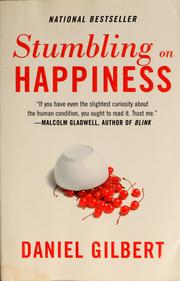
Gilbert frames happiness-seeking as a forecasting problem: we imagine possible futures, predict how they will feel, and choose among them. The book’s target is not happiness itself but the mind’s mistaken confidence that it can preview happiness accurately. It is a scientific, humorous critique rather than a step-by-step self-help manual.
Core ideas
Affective forecasting
Whenever we choose a career, partner, purchase, location, or lifestyle partly because of how we expect it to feel, we are making an affective forecast. Gilbert argues that these forecasts are often systematically wrong, not merely occasionally unlucky.
Imagination leaves things out
When imagining a future event, we tend to construct a simplified version rather than reproduce all the surrounding details, interruptions, trade-offs, and ordinary moments that will shape the actual experience. This makes imagined futures feel more coherent and emotionally decisive than lived ones.
Presentism
Our current emotional and physical state colors predictions about the future. Wanting something intensely now can make it seem likely to produce lasting happiness; being anxious, lonely, or tired can make a future seem worse than it will be. Gilbert compares this problem to trying to imagine one taste while another dominates the palate.
Impact and durability errors
People commonly overestimate how intensely and how long future events will affect them. Major changes matter, but their emotional effects are often moderated by adaptation, competing experiences, and the mind’s ability to reinterpret circumstances. Gilbert’s own account emphasizes that people frequently return nearer to their usual level of happiness than they predicted.
The psychological immune system
When reality differs from expectation, people often reinterpret, rationalize, compare, and accommodate until the outcome becomes more acceptable. This capacity can protect well-being, but it also makes us bad at predicting how we will feel after both good and bad outcomes.
Memory is not a neutral forecast-checker
We cannot simply rely on past experience to correct imagination because memory itself is selective and reconstructive. We remember experiences through later interpretations, salient moments, and current beliefs rather than as complete emotional records.
Use other people as surrogates
The book’s practical answer is to consult people who are already in the situations we are considering—especially people who resemble us in relevant ways. Their current experience can be a better guide than private imagination, although Gilbert notes that people often resist this method because they believe their own future will be uniquely different.
Happiness is not a simple possession formula
Gilbert challenges widely transmitted assumptions that particular achievements or possessions—such as money, marriage, or children—guarantee happiness. Such outcomes may matter, but their effects depend on context, comparison, adaptation, and the rest of a person’s life.
Practical takeaways
- Before a major choice, ask: “Who is already living each option, and what do people like me report about ordinary life there?”
- Seek descriptions of routine experience, not just peak moments or promotional stories.
- Treat strong present feelings as data about now—not definitive evidence about the future.
- When comparing options, imagine the whole situation, including mundane details, inconveniences, alternatives, and what will compete for attention.
- Expect adaptation: a change may matter greatly without determining your long-term happiness.
- Use forecasts comparatively and probabilistically; avoid demanding certainty about which future will feel best.
- Separate the question “What do I want?” from “What do I expect will make me feel good?” They are related but not identical.
Caveats and counterpoints
- The book is primarily a critique of forecasting, not a comprehensive theory of well-being or a guide to building a happy life.
- The recommendation to consult others is useful only when the comparison people are genuinely relevant; different values, resources, relationships, and constraints can make someone else’s experience a poor surrogate.
- Adaptation does not mean all outcomes are emotionally equivalent. Some events have enduring effects, and averaging across people can obscure serious individual differences.
- The book’s examples and research are presented for accessibility and persuasion; its broad conclusions should not be treated as precise predictions for every person or decision. A reviewer praised the research while noting that some conclusions could feel overly prescriptive.
- The book was published in 2006, so it is best read as a landmark popular account of affective-forecasting research at that time, not as a complete update of the field.
Questions worth revisiting
- What decision am I making because I expect it to produce a feeling rather than because it serves a value or obligation?
- Which current mood might be distorting my forecast?
- What ordinary, repetitive details will accompany the outcome I am imagining?
- Who has already experienced each option, and whose circumstances actually resemble mine?
- Am I overestimating the event’s intensity, duration, or uniqueness?
- If the outcome is disappointing, what forms of adaptation or reinterpretation might become available?
- What evidence would change my mind about which future is preferable?
Return to this when…
Return to this book before high-stakes choices driven by imagined happiness—career changes, relocations, relationships, purchases, and status decisions. Its central reminder is especially useful when one vivid future outcome is dominating attention: imagined happiness is evidence, not prophecy.
Highlights
As one philosopher noted, the human brain is an “anticipation machine,” and “making future” is the most important thing it does.2
But notice that while these are the wrong answers to our question, they are the right answers to another question, namely, “What do you want to be now?” Small children cannot say what they want to be later because they don’t really understand what later means.7
A permanent present—what a haunting phrase. How bizarre and surreal it must be to serve a life sentence in the prison of the moment, trapped forever in the perpetual now, a world without end, a time without later. Such an existence is so difficult for most of us to imagine, so alien to our normal experience, that we are tempted to dismiss it as a fluke—an unfortunate, rare, and freakish aberration brought on by traumatic head injury. But in fact, this strange existence is the rule and we are the exception.
No other animal has a frontal lobe quite like ours, which is why we are the only animal that thinks about the future as we do.
The key to happiness, fulfillment, and enlightenment, the ex-professor argued, was to stop thinking so much about the future.
When people daydream about the future, they tend to imagine themselves achieving and succeeding rather than fumbling or failing.26
Indeed, events that challenge our optimistic beliefs can sometimes make us more rather than less optimistic. One study found that cancer patients were more optimistic about their futures than were their healthy counterparts.34
These dire images make us feel dreadful—quite literally—so why do we go to such great lengths to construct them? Two reasons. First, anticipating unpleasant events can minimize their impact.
Our desire to control is so powerful, and the feeling of being in control so rewarding, that people often act as though they can control the uncontrollable.
Even when people forgo happiness in the moment—by dieting when they could be eating, or working late when they could be sleeping—they are usually doing so in order to increase its future yield.
The ancient Athenian legislator Solon suggested that one could not say that a person was happy until the person’s life had ended because happiness is the result of living up to one’s potential—and how can we make such a judgment until we see how the whole thing turns out?
Happiness refers to feelings, virtue refers to actions, and those actions can cause those feelings.
By that reasoning, we should all follow Solon’s advice and never say we are happy until we are dead because otherwise, if the real thing ever does come along, we will have used up the word and won’t have any way to tell the newspapers about it.
All of this means that when people have new experiences that lead them to claim that their language was squished—that they were not really happy even though they said so and thought so at the time—they can be mistaken. In other words, people can be wrong in the present when they say they were wrong in the past.
But doesn’t it seem more reasonable to invoke the experience-stretching hypothesis and say that an experience that once brought me pleasure no longer does? A man who is given a drink of water after being lost in the Mojave Desert for a week may at that moment rate his happiness as eight. A year later, the same drink might induce him to feel no better than two. Are we to believe that he was wrong about how happy he was when he took that life-giving sip from a rusty canteen, or is it more reasonable to say that a sip of water can be a source of ecstasy or a source of moisture depending on one’s experiential background?
realism (rī•ăliz´m) The belief that things are in reality as they appear to be in the mind.
Perhaps it is true that we can’t always get what we want, but at least we feel sure that we know what to want in the first place.
There’s just one catch: The owners of the shoes didn’t seem to agree with our conclusions. Fischer claimed to be happy, Eastman acted like a man who was not, so unless these guys were wrong about how it felt to live their own lives, we are forced to consider the possibility that the mistake is ours—that when we tried to imagine how it would feel to be in Fischer’s or Eastman’s situations, our imaginations failed us in some curious way.
How do we cram the vast universe of our experience into the relatively small storage compartment between our ears? We do what Harpo did: We cheat.
Because those interpretations are usually so good, because they usually bear such a striking resemblance to the world as it is actually constituted, we do not realize that we are seeing an interpretation.
In so doing, you made an error that your future spaghetti-eating self may regret.25
Our inability to think about absences can lead us to make some fairly bizarre judgments.
Because when we are selecting, we consider the positive attributes of our alternatives, and when we are rejecting, we consider the negative attributes.
But just as we tend to treat the details of future events that we do imagine as though they were actually going to happen, we have an equally troubling tendency to treat the details of future events that we don’t imagine as though they were not going to happen. In other words, we fail to consider how much imagination fills in, but we also fail to consider how much it leaves out.
For example, when sighted people imagine being blind, they seem to forget that blindness is not a full-time job. Blind people can’t see, but they do most of the things that sighted people do—they go on picnics, pay their taxes, listen to music, get stuck in traffic—and thus they are just as happy as sighted people are. They can’t do everything sighted people can do, sighted people can’t do everything that they can do, and thus blind and sighted lives are not identical.
we wonder what we were thinking when we said yes. Well, here’s what we were thinking: When we said yes we were thinking about babysitting in terms of why instead of how, in terms of causes and consequences instead of execution, and we failed to consider the fact that the detail-free babysitting we were imagining would not be the detail-laden babysitting we would ultimately experience. Babysitting next month is “an act of love,” whereas babysitting right now is “an act of lunch,” and expressing affection is spiritually rewarding in a way that buying French fries simply isn’t.21
Because a good day tomorrow is imagined in considerable detail, it turns out to be a lumpy mixture of mostly good stuff (“I’ll sleep late, read the paper, go to the movies, and see my best friend”) with a few unpleasant chunks (“But I guess I’ll also have to rake the stupid leaves”). On the other hand, a good day next year is imagined as a smooth purée of happy episodes. What’s more, when people are asked how realistic they think these mental images of the near and far future are, they claim that the smooth purée of next year is every bit as realistic as the lumpy stew of tomorrow.
How can variety be the spice of life when one sits down with a friend at a fancy restaurant but the bane of one’s existence when one orders snacks to be consumed in successive weeks?
Among life’s cruelest truths is this one: Wonderful things are especially wonderful the first time they happen, but their wonderfulness wanes with repetition.8 Just compare the first and last time your child said “Mama” or your partner said “I love you” and you’ll know exactly what I mean.
For instance, most of us would be willing to drive across town to save $50 on the purchase of a $100 radio but not on the purchase of a $100,000 automobile because $50 seems like a fortune when we’re buying radios (“Wow, Target has the same radio for half off!”) but a pittance when we’re buying cars (“Like I’m going to schlep across the city just to get this car for one twentieth of a percent less?”).19
If an international bean embargo suddenly caused the price of coffee to skyrocket to $10,000 per cup, then the only question I would need to ask myself is: “What else can I do with ten thousand dollars, and will it bring me more or less satisfaction than a cup of coffee?” If the answer is “more,” then I should walk away. If the answer is “less,” then I should get a cup of coffee. And an accountant with a whip.
For instance, people are more likely to purchase a vacation package that has been marked down from $600 to $500 than an identical package that costs $400 but that was on sale the previous day for $300.23
The same principle explains why we love new things when we buy them and then stop loving them shortly thereafter. When we start shopping for a new pair of sunglasses, we naturally contrast the hip, stylish ones in the store with the old, outdated ones that are sitting on our noses. So we buy the new ones and stick the old ones in a drawer. But after just a few days of wearing our new sunglasses we stop comparing them with the old pair, and—well, what do you know?
When people are asked to predict how they’ll feel if they lose a job or a romantic partner, if their candidate loses an important election or their team loses an important game, if they flub an interview, flunk an exam, or fail a contest, they consistently overestimate how awful they’ll feel and how long they’ll feel awful.12
We cannot do without reality and we cannot do without illusion. Each serves a purpose, each imposes a limit on the influence of the other, and our experience of the world is the artful compromise that these tough competitors negotiate.26
Rather than thinking of people as hopelessly Panglossian, then, we might think of them as having a psychological immune system that defends the mind against unhappiness in much the same way that the physical immune system defends the body against illness.27
engineered to manipulate the answers they receive.36 A question such as “Am I the best lover you’ve ever had?” is dangerous because it has only one answer that can make us truly happy, but a question such as “What do you like best about my lovemaking?” is brilliant because it has only one answer that can make us truly miserable (or two if you count “It reminds me of Wilt Chamberlain”). Studies show that people intuitively lean toward asking the questions that are most likely to elicit the answers they want to hear.
How do we know how well most other folks do? Why, we look around, of course—but in order to make sure that we see what we want to see, we look around selectively.38
especially pronounced when the stakes are high. People with life-threatening illnesses such as cancer are particularly likely to compare themselves with those who are in worse shape,40 which explains why 96 percent of the cancer patients in one study claimed to be in better health than the average cancer patient.41
Because nihilism and postmodernism are both such unsatisfying philosophies, we tend to set our standard of proof somewhere in the middle.
When we want to believe that someone is smart, then a single letter of recommendation may suffice; but when we don’t want to believe that person is smart, we may demand a thick manila folder full of transcripts, tests, and testimony.
Being rejected by a large and diverse group of people is a demoralizing experience because it is so thoroughly unambiguous, and hence it is difficult for the psychological immune system to find a way to think about it that is both positive and credible. It’s easy to blame failure on the eccentricities of a judge, but it’s much more difficult to blame failure on the eccentricities of a unanimous jury.
We expect the next car, the next house, or the next promotion to make us happy even though the last ones didn’t and even though others keep telling us that the next ones won’t.
Because we tend to remember the best of times and the worst of times instead of the most likely of times, the wealth of experience that young people admire does not always pay clear dividends.
Economists and psychologists have spent decades studying the relation between wealth and happiness, and they have generally concluded that wealth increases human happiness when it lifts people out of abject poverty and into the middle class but that it does little to increase happiness thereafter.9
Americans who earn $50,000 per year are much happier than those who earn $10,000 per year, but Americans who earn $5 million per year are not much happier than those who earn $100,000 per year.
Economists explain that wealth has “declining marginal utility,” which is a fancy way of saying that it hurts to be hungry, cold, sick, tired, and scared, but once you’ve bought your way out of these burdens, the rest of your money is an increasingly useless pile of paper.10
Like so many thinkers, Smith believed that people want just one thing—happiness—hence economies can blossom and grow only if people are deluded into believing that the production of wealth will make them happy.14
As figure 23 shows, couples generally start out quite happy in their marriages and then become progressively less satisfied over the course of their lives together, getting close to their original levels of satisfaction only when their children leave home.17
The belief-transmission game is rigged so that we must believe that children and money bring happiness, regardless of whether such beliefs are true. This doesn’t mean that we should all now quit our jobs and abandon our families. Rather, it means that while we believe we are raising children and earning paychecks to increase our share of happiness, we are actually doing these things for reasons beyond our ken. We are nodes in a social network that arises and falls by a logic of its own, which is why we continue to toil, continue to mate, and continue to be surprised when we do not experience all the joy we so gullibly anticipated.
Perhaps we should give up on remembering and imagining entirely and use other people as surrogates for our future selves.
are deprived of the information that imagination requires and are thus forced to use others as surrogates, they make remarkably accurate predictions about their future feelings, which suggests that the best way to predict our feelings tomorrow is to see how others are feeling today.25
First, even if we aren’t special, the way we know ourselves is.
The second reason is that we enjoy thinking of ourselves as special. Most of us want to fit in well with our peers, but we don’t want to fit in too well.39
The third reason why we tend to overestimate our uniqueness is that we tend to overestimate everyone’s uniqueness—that is, we tend to think of people as more different from one another than they actually are.
Bernoulli’s brilliance lay not in his mathematics but in his psychology—in his realization that what we objectively get (wealth) is not the same as what we subjectively experience when we get it (utility).
Wealth may be measured by counting dollars, but utility must be measured by counting how much goodness those dollars buy.2 Wealth doesn’t matter; utility does.
We don’t care about money or promotions or beach vacations per se; we care about the goodness or pleasure that these forms of wealth may (or may not) induce.
There is no simple formula for finding happiness. But if our great big brains do not allow us to go surefootedly into our futures, they at least allow us to understand what makes us stumble.
References
- Interview: Daniel Gilbert
- Stumbling on happiness | Royal Society
- Stumbling on Happiness by Daniel Gilbert
- STUMBLING ON HAPPINESS | Kirkus Reviews
- Stumbling on Happiness by Daniel Gilbert: 9781400077427 | PenguinRandomHouse.com: Books
- Book Review: Stumbling on Happiness
- mindful.org
- Stumbling on Happiness by Daniel Gilbert | Q&A
- hbr.org
- emerald.com
- goodreads.com
- en.wikipedia.org