
In one sentence
Wake in Fright presents social belonging as both seduction and trap: John Grant is endangered not simply by Bundanyabba’s culture, but by his own resentment, pride, passivity, and desire to escape responsibility. The novel’s horror comes from showing how quickly an outsider can become implicated in what he despises.
Overview
First published in 1961, Cook’s debut draws on his experience as a journalist in Broken Hill. Its five-day structure turns a missed connection and financial setback into a psychological descent. The outback is not romantic frontier space but an isolating environment where heat, boredom, alcohol, gambling, and aggressive fellowship erode individual choice. Critics and later commentators commonly read the book as a dark examination of Australian masculinity, urban–rural hostility, and the uneasy boundary between hospitality and coercion.
Core ideas
Belonging as coercion
The Yabba welcomes newcomers insistently, but refusal is treated as insult. Generosity therefore has a disciplinary edge: the group offers inclusion while demanding surrender to its rituals, language, appetites, and values.
The outsider’s self-deception
Grant begins as a cultivated city man who believes he understands the people around him. His contempt makes him feel morally superior, yet it also blinds him to his own vulnerability. The novel is less about an innocent man corrupted than about a man discovering that his identity is less stable than he imagined.
Masculinity and collective violence
Male bonding is expressed through drinking, gambling, sexual bravado, weapons, endurance, and cruelty. Cook depicts these activities not as isolated excesses but as a social system in which weakness must be concealed and participation becomes proof of manhood.
The landscape as psychological pressure
Heat, distance, dust, and the absence of easy escape intensify the novel’s moral atmosphere. The setting seems to close around Grant, but the physical environment works alongside boredom and social pressure rather than replacing human responsibility.
Alcohol, chance, and the loss of agency
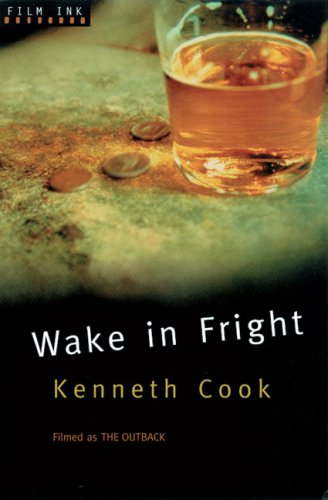
Gambling and drinking give Grant temporary relief from frustration and dependence, while progressively narrowing his options. His downfall feels both self-inflicted and socially engineered: each choice is technically his, but the surrounding culture makes destructive choices appear normal.
A complicated critique of Australia
The novel attacks the myth that roughness, mateship, and local pride are automatically virtues. At the same time, its perspective is shaped by Grant’s prejudices, so the book’s portrait of the outback should be read as a hostile, claustrophobic vision—not a neutral sociological account.
Practical takeaways
- Watch for invitations that become tests of loyalty once refusal is made socially expensive.
- A strong sense of superiority can coexist with intense dependence on the people or institutions one condemns.
- Group norms often become most dangerous when they present cruelty as humor, tradition, or ordinary fellowship.
- The novel asks whether moral collapse begins with one dramatic decision or with a series of small compromises that preserve comfort in the moment.
- Grant’s predicament is a reminder to distinguish genuine hospitality from pressure disguised as welcome.
Caveats and counterpoints
- The book’s depiction of rural and working-class Australians is deliberately grotesque and filtered through an alienated protagonist; it should not be treated as a balanced portrait of outback life.
- Its treatment of gender and sexuality is strongly shaped by the period in which it was written and can feel limited or disturbing to contemporary readers.
- The novel is often discussed alongside Ted Kotcheff’s 1971 film, which has become culturally dominant. The film’s imagery can overshadow the book’s more compressed interior focus; these notes concern Cook’s novel, not the adaptation.
- The novel’s apparent “hope” should not be mistaken for a simple moral redemption arc. Its ending is better approached as a difficult question about survival, responsibility, and what remains after degradation.
Questions worth revisiting
- What does Grant actually hate about Bundanyabba, and what does he fear he might share with its inhabitants?
- When does hospitality stop being generosity and become coercion?
- Does the group create Grant’s moral collapse, or merely expose tendencies he had previously kept under control?
- How does Cook make boredom and repetition feel as threatening as overt violence?
- Is the novel condemning the outback, urban Australian prejudice toward the outback, or both?
- What kind of “second chance” is possible after someone has participated in the world he condemns?
Return to this when…
Return to this book when thinking about coercive group belonging, toxic forms of masculinity, addiction as social practice, or the way contempt can conceal dependence. It is also worth revisiting beside the 1971 film to compare Cook’s terse psychological nightmare with the adaptation’s more visually explicit cultural critique.