
In one sentence
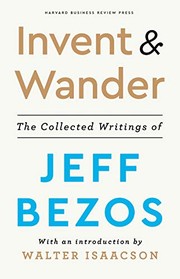
Bezos presents Amazon’s success as the result of a durable operating philosophy: prioritize customers over competitors, make long-term investments, preserve a “Day 1” sense of urgency, use data without surrendering judgment, and keep inventing through experimentation. The collection’s evidence is strongest as a record of how a founder explained Amazon’s evolution—not as an independent assessment of whether those principles always worked or whether they came without costs.
Overview
Core ideas
Customer obsession as the central strategic test
Bezos repeatedly treats customer benefit—not competitor behavior or quarterly optics—as the primary decision criterion. Lower prices, greater selection, convenience, reliable delivery, and easier discovery are presented as mutually reinforcing investments that build a durable customer relationship.
Long-term thinking requires commitment, not slogans
Amazon’s letters defend sacrificing near-term profit when spending improves future scale, capability, or customer experience. The practical model is to identify a compounding advantage, invest before results are obvious, and judge the decision over years rather than quarters.
Day 1 versus Day 2
“Day 1” means urgency, experimentation, customer focus, and resistance to bureaucracy. “Day 2” is institutional decline: decisions slow down, metrics replace judgment, processes become ends in themselves, and the organization protects existing success instead of creating new value.
Invention and wandering work together
The collection treats invention as a mixture of deliberate construction and open-ended curiosity. Exploration, reading, intuition, and apparently unproductive detours can generate ideas that disciplined execution later turns into products or businesses.
Failure is acceptable when it produces learning
Large companies need many experiments because only a minority will become significant successes. Bezos’s logic is asymmetric: limit the downside of individual trials while allowing unusually successful projects—such as new platforms or businesses—to become very large.
High standards are learned and contagious
Quality is described less as a fixed personality trait than as a standard people acquire through exposure, practice, and clear examples. Leaders therefore have to define what “good” looks like, teach it, and prevent organizational growth from lowering expectations.
Scale is an instrument for building capabilities
Amazon’s growth is portrayed not merely as expansion but as a way to fund infrastructure, logistics, technology, and new services. Once built, those capabilities can support additional businesses, creating a reinforcing cycle of scale and invention.
Capital allocation is part of leadership
The letters explain where management chooses to spend money, tolerate losses, and reinvest cash. Bezos favors projects with large potential markets and durable customer value, while acknowledging that investors must accept uncertainty and delayed returns.
Practical takeaways
- For a major decision, write down the customer benefit, the time horizon, the assumptions, and what evidence would change your mind.
- Separate reversible decisions from irreversible ones; move quickly on the former and slow down for the latter.
- Maintain a portfolio of experiments rather than demanding that every initiative succeed immediately.
- Use metrics to expose reality, but do not confuse measurable activity with customer value or sound judgment.
- When scaling a team, explicitly teach quality standards; do not assume new people will infer them from vague principles.
- Protect exploratory time and curiosity, but connect wandering to a mechanism for testing and executing ideas.
- Assess growth investments by the capabilities they create, not only by their immediate profit.
Caveats and counterpoints
- The material is self-presentational: shareholder letters and public speeches explain and defend Bezos’s choices, so they are valuable evidence of managerial philosophy but not neutral verification of Amazon’s history or effects.
- Isaacson’s introduction is interpretive and admiring; the bulk of the book is not a sustained biography, and readers wanting employees’, competitors’, regulators’, or critics’ perspectives will need other sources.
- The principles can fail when long horizons become a justification for unchecked spending, when customer obsession ignores workers or broader social costs, or when experimentation is used to rationalize strategic drift.
- The chronological letters reveal changing emphasis and retrospective framing. Later explanations should not automatically be treated as the original reasons every decision was made.
- The collection is especially useful for understanding Amazon’s stated operating model, less so for evaluating whether that model is transferable to organizations without Amazon’s capital, scale, infrastructure, or market position.
Questions worth revisiting
- Which of Bezos’s principles are genuinely causal, and which are polished descriptions written after success was already visible?
- When does long-term investment create a moat, and when does it merely postpone accountability for weak economics?
- Can customer obsession be reconciled with the interests of workers, sellers, communities, and the environment?
- What organizational mechanisms preserve Day 1 without producing burnout, instability, or perpetual dissatisfaction?
- Which Amazon practices are portable to a small organization, and which depend on extraordinary scale?
- How should a leader decide when an experiment has yielded enough learning to stop?
Return to this when…
Return to the shareholder-letter sequence when reviewing strategy, capital allocation, or founder-led company culture. The most useful rereading path is: 1997–2000 for the long-term thesis; 2005–2010 for decision-making and new businesses; 2014–2018 for experimentation, Day 1, standards, and curiosity; and the final material for Bezos’s broader views on scale, climate, space, and legacy. The book was published November 17, 2020, at 288 pages in the publisher’s listing.
References
- Invent and Wander: The Collected Writings of Jeff Bezos, With an Introduction by Walter Isaacson
- oreilly.com
- INVENT AND WANDER | Kirkus Reviews
- openlibrary.org
- books.google.com
- catalog.kent-school.edu
- books.google.com
- catalog.camdencountylibrary.org
- books.apple.com
- search.worldcat.org
- catalog.kent-school.edu
- oreilly.com