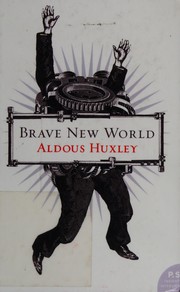

In one sentence
Huxley’s central warning is not simply that technology or dictatorship will become powerful, but that people may surrender freedom willingly when control is made pleasurable, convenient, and psychologically convincing. The novel presents happiness manufactured by the state as a political instrument—and individual suffering as inseparable from meaningful freedom.
Overview
Set in the distant future, the World State maintains social stability through laboratory reproduction, caste engineering, conditioning, consumerism, recreational sex, and the mood-altering drug soma. Bernard Marx’s alienation and John’s encounter with this society expose its assumptions. The plot is less a prediction than a satirical thought experiment about modernity, technocracy, mass production, and the management of desire. The ending is not summarized here.
Core ideas
Pleasure can function as coercion
The World State rarely needs sustained violence because citizens are trained to want what preserves the system. Distraction, instant gratification, and chemical relief prevent dissatisfaction from becoming reflection or political resistance. Huxley’s distinctive insight is that control may succeed by removing the desire to resist.
Stability versus humanity
The regime eliminates grief, passionate attachment, religious commitment, artistic difficulty, and independent judgment because these produce conflict and unpredictability. The trade-off is deliberate: social peace is purchased by narrowing the range of experiences that make life deep, tragic, creative, or morally serious.
Conditioning replaces education
The state does not primarily persuade mature individuals; it manufactures preferences from infancy. Repetition, sleep-teaching, caste training, and engineered environments make social hierarchy feel natural. This raises a lasting question: can a preference be considered genuinely ours if our capacity to question it was designed away?
The body and reproduction become political property
By controlling birth, biology, sexuality, and aging, the World State turns human embodiment into an administrative problem. The novel links reproductive technology to class formation and social control—not because science is inherently oppressive, but because scientific power without moral or political limits can serve domination.
Outsider perspectives are compromised
Bernard, Helmholtz, and John each challenge the World State, but none offers a fully adequate alternative. Bernard’s dissent is mixed with vanity and resentment; Helmholtz seeks greater expressive freedom; John defends suffering, beauty, and spiritual seriousness. Their contrasts prevent the critique from becoming a simple hero-versus-villain story.
Art, Shakespeare, and difficult feeling
The novel treats great literature as a storehouse of emotional and moral possibilities unavailable in a culture optimized for comfort. Shakespeare gives John language for love, violence, shame, transcendence, and grief—but inherited language does not automatically provide wisdom. Huxley presents art as necessary, yet not sufficient, for humane self-understanding.
A satire of its own historical moment
The World State draws on interwar enthusiasm for Fordist mass production, technocracy, advertising, behavioral conditioning, and scientific management. Its symbols and institutions mock the belief that efficiency, standardization, and consumption can solve every human problem. Scholarly readings also emphasize the novel’s engagement with reproduction, education, pleasure, and utopian politics.
Practical takeaways
- Notice when comfort is being offered as a substitute for judgment, intimacy, or civic responsibility.
- Ask which of your desires are reflective commitments and which may have been shaped by repetition, incentives, or social pressure.
- Treat convenience as morally ambiguous: it can expand freedom, but it can also make dependence feel like liberation.
- Preserve contact with experiences that are slow, demanding, ambiguous, or emotionally difficult; Huxley sees these as part of becoming fully human.
- When evaluating technological progress, ask not only what it enables, but who controls it, whose interests it serves, and what kinds of people it encourages us to become.
Caveats and counterpoints
- The novel is often described as prophetic, but that can oversimplify it. It anticipated forms of reproductive control, conditioning, chemical mood management, and mass entertainment, yet its society is a satirical composite rather than a precise forecast.
- Huxley’s critique is not a blanket rejection of science. The sharper target is the political use of science and psychology to eliminate autonomy, unpredictability, and dissent.
- The book’s characters can feel deliberately schematic. Contemporary and later criticism has noted its didactic quality; Huxley himself acknowledged substantial artistic defects and later regretted that the novel offered John too narrow a choice between incompatible social worlds.
- Its treatment of gender, sexuality, colonial difference, disability, and non-Western cultures reflects the prejudices and limits of its period. These elements should be examined critically rather than treated as neutral parts of the argument.
- The novel’s manufactured happiness is not simply contrasted with an uncomplicated natural life: the Reservation also contains suffering, exploitation, illness, and coercion. Huxley makes both alternatives morally troubling.
Questions worth revisiting
- If citizens are genuinely content, does the absence of political freedom still constitute oppression?
- Is suffering necessary for freedom, or is John confusing pain with moral seriousness?
- Which is more dangerous in the novel: direct censorship or the loss of any desire to read, think, and remember?
- Can art remain alive in a society that has eliminated discomfort, or does art depend on conflict and vulnerability?
- Where does legitimate social coordination end and unacceptable control of human nature begin?
- Does the novel criticize consumerism itself, or the use of consumption to prevent citizens from asking larger questions?
Return to this when…
Return to this book when thinking about persuasive technology, algorithmic entertainment, consumer culture, reproductive biotechnology, behavioral conditioning, or the political value of discomfort. Pair it with Huxley’s later Brave New World Revisited, in which he reassessed the novel’s warnings about propaganda, overpopulation, and chemical persuasion.
Highlights
All conditioning aims at that: making people like their unescapable social destiny.”
“They’ll grow up with what the psychologists used to call an ’instinctive’ hatred of books and flowers. Reflexes unalterably conditioned. They’ll be safe from books and botany all their lives.” The Director turned to his nurses. “Take them away again.”
“Yes, everybody’s happy now,” echoed Lenina. They had heard the words repeated a hundred and fifty times every night for twelve years.
Each one of us, of course,” the Controller meditatively continued, “goes through life inside a bottle. But if we happen to be Alphas, our bottles are, relatively speaking, enormous. We should suffer acutely if we were confined in a narrower space.