
In one sentence
The novel treats rebellion as morally ambiguous: bohemian outsiders may recognize corruption more clearly than respectable businessmen, but drinking, sexual jealousy, violence, and professional cynicism can make them complicit in the same destructive culture they mock.
Overview
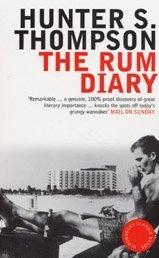
Paul Kemp leaves New York for work at an English-language newspaper in San Juan, joining a staff of broke, eccentric, and hard-drinking journalists. Around him, the island is being reshaped by tourism, speculation, political influence, and American money. The plot’s romance and schemes provide momentum, but the book is especially interested in atmosphere: heat, alcohol, precarious employment, male bravado, and the uneasy gap between journalistic independence and economic survival. Critics have noted that it often works more as a portrait of a milieu than as a tightly constructed story.
Core ideas
Idealism versus impending collapse
Kemp is young enough to want an authentic life but perceptive enough to suspect that his world is already compromised. The novel’s energy comes from this tension between restless idealism and the sense that the entire adventure may be a doomed performance.
Journalism under pressure
The newspaper is both a refuge for misfits and a business vulnerable to advertisers, owners, politics, and expediency. Writing is presented as a form of moral choice: language can expose exploitation, decorate it, or help sell it.
Colonial and capitalist fantasy
San Juan is not merely an exotic backdrop. The novel examines how outsiders imagine the Caribbean as a playground and investment opportunity, while local life is treated as raw material for someone else’s pleasure or profit.
Bohemian freedom and self-destruction
The journalists’ drunkenness, fighting, and sexual recklessness create genuine camaraderie and comic liberation, but they also reveal the costs of confusing irresponsibility with freedom. The book enjoys the spectacle without fully endorsing it.
Thompson before ‘Gonzo’
Written when Thompson was twenty-two and published decades later, the novel shows the roots of his later voice: rhythmic prose, grotesque comedy, distrust of authority, and an observer who is implicated in the disorder he describes. It is less manic than his best-known nonfiction.
The outsider’s limited moral authority
Kemp’s distance from respectable power gives him a useful critical perspective, but he is not innocent. The novel repeatedly asks whether seeing corruption clearly matters if one continues to benefit from, participate in, or romanticize it.
Practical takeaways
- Notice how institutions shape personal behavior: the newspaper’s precarious finances encourage compromises that look like individual weakness but are also structural.
- Distinguish liberation from mere intoxication. The characters’ refusal of conventional respectability sometimes protects independence and sometimes disguises irresponsibility.
- When an outsider criticizes a culture, ask what privileges make that criticism possible—and what the outsider is choosing not to see.
- Pay attention to the contrast between vivid experience and durable purpose: an intense life can still become repetitive, exploitative, or directionless.
- Read the novel as an early work rather than a complete expression of the later Thompson persona; its interest lies partly in watching that sensibility form.
Caveats and counterpoints
- The book’s satire is uneven and its plot can feel loose; Kirkus characterized it as more a portrait than a strongly driven tale.
- Its treatment of women, sex, alcohol, violence, and Puerto Rican life is filtered through a young male expatriate narrator and can reproduce the attitudes it seems to mock.
- The novel’s autobiographical background matters, but Paul Kemp is a fictional character; the book should not be treated as a straightforward memoir. The publisher describes it as based on Thompson’s Puerto Rico period.
- Because the manuscript was begun in 1959 but published in 1998, the work carries both the immediacy of a young writer and the retrospective framing of a late-career publication.
Questions worth revisiting
- Where does Kemp’s moral resistance become active courage, and where does it remain stylish observation?
- Does the novel condemn the expatriate fantasy of the Caribbean, participate in it, or deliberately do both?
- Which characters use “freedom” to avoid responsibility, and which use it to resist corruption?
- How does the newspaper setting complicate the idea that writing can remain independent from money and power?
- What survives after the parties, fights, and romantic obsessions are stripped away: a political critique, a coming-of-age story, or simply a record of a doomed subculture?
Return to this when…
Return to this novel when thinking about Thompson’s development, the ethics of outsider journalism, or the difference between anti-establishment style and genuine resistance. It is also useful to revisit before reading Fear and Loathing in Las Vegas, since it shows a younger, more conventional version of the voice that later became famous.
Highlights
would be a pounding on the screen door. In he would come, his face red, his khaki shirt stained with sweat, his overseas cap crushed down on his bullet-shaped head -- and he would sit down with us for God knows how long, carrying on at the top of his lungs about some international disaster that could easily have been averted if they'd just let the goddamn Marines do their job, instead of keeping us penned up like dogs. For my money, Zimburger should not only have been penned up like a dog, but shot like a mad one. How Sanderson tolerated him I couldn't understand. He was never anything but gracious to Zimburger, even when it became obvious to everyone else that the man should be strapped up and rolled into the sea like a sack of waste. I guessed it was because Sanderson was too much a public relations man. I never once saw him lose his temper, and in his job he was saddled with more bores and bastards and phonies than any man on the island.
One Monday morning I was awakened by what sounded like children being butchered outside the window.
Happy, I muttered, trying to pin the word down. But it is one of those words, like Love, that I have never quite understood. Most people who deal in words don't have much faith in them and I am no exception -- especially the big ones like Happy and Love and Honest and Strong. They are too elusive and far too relative when you compare them to sharp, mean little words like Punk and Cheap and Phony. I feel at home with these, because they're scrawny and easy to pin, but the big ones are tough and it takes either a priest or a fool to use them with any confidence.
He shook his fist at me and spoke as if he were uttering his last words: Somebody has to fight it, Kemp -- they're taking over. These wineheads are taking over the world. If the press goes under, we're sunk -- you understand that? I nodded. By Jesus, he went on, we have a responsibility! A free press is vital! If a pack of deadbeats get hold of this newspaper it's the beginning of the end. First they'll get this one, then they'll get a few more, and one day they'll get the Times -- can you imagine it? I said I couldn't. They'll get us all! he exclaimed. They're dangerous -- insidious! That guy claiming he was the son of Justice Holmes -- I could pick him out of a crowd -- he'd be the one with hair on his neck and a crazy look in his eye!
God knows what he's living on -- they must have a steady diet of lobster and chicken. Hell, Sala remarked, chicken's expensive. I laughed. Not out there. He shoots them with a speargun. God almighty! Sala exclaimed. That's voodoo country -- they'll murder him, sure as hell! I shrugged.
And Yeamon! he shouted. I knew it the minute I saw him! I said to myself, Christ, get rid of this guy quick -- he's pure trouble. He shook a warning finger at us. I want you to stay away from him, understand? What the hell is he doing here anyway? Why doesn't he go back where he came from? What's he living on? We both shrugged. I think he has a trust fund, I said. He's been talking about investing some money. God almighty! Lotterman exclaimed. That's just the kind we don't want here! He shook his head. And he had the nerve to tell me he was broke -- borrowed a hundred dollars and threw it away on a motorcycle -- can you beat that? I couldn't beat it and neither could Sala.
I sat there a long time, and thought about a lot of things. Foremost among them was the suspicion that my strange and ungovernable instincts might do me in before I had a chance to get rich. No matter how much I wanted all those things that I needed money to buy, there was some devilish current pushing me off in another direction -- toward anarchy and poverty and craziness. That maddening delusion that a man can lead a decent life
No sense arguing about it, I said. We're bound to get drunk -- look at all this whiskey. I patted my satchel. And this, said Chenault, pointing to the magnum of champagne under Yeamon's chair. Christ help us, Yeamon muttered. We finished our drinks and wandered over to the Grand Hotel. From the balcony we could see people heading for the ballpark.
Yeah, I said. She's hell on this dancing. She's part nigger, he replied, in a tone that was not soft. Careful, I said quickly. Watch what you say in this place. Balls, he said loudly. Great Jesus, I thought. Here we go. Take it easy, I said. Why don't we head back to town? Fine with me, he replied. Try talking to her. He nodded at Chenault, dancing feverishly just a few feet away.
He opened his coat discreetly and showed me a butcher knife tucked into his belt Look at this, he said. We're ready. Ready? I thought. Ready for what? Slitting Lotterman's throat? The garden was full of rich celebrities and visiting students. I noticed Yeamon standing off from the crowd with his arm around an exceptionally pretty girl. They were sharing a pint of gin and laughing harshly. Yeamon was wearing black nylon gloves, which I took as an ominous sign. Jesus, I thought, these bastards have gone through the looking glass. I wanted no part of