
In one sentence
PayPal’s success emerged less from a single brilliant founder or fully formed plan than from an unusually concentrated network of talent, trust, technical ability, opportunism, and persistent conflict. The company repeatedly survived by improvising faster than competitors, regulators, fraudsters, and its own internal factions.
Overview
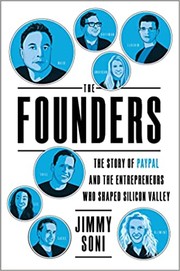
Soni reconstructs PayPal’s early story, roughly 1998–2002: the separate development of X.com and Confinity, their merger, battles over product direction and leadership, viral growth, fraud and regulatory problems, conflict with eBay, and eventual sale to eBay. The central cast includes Peter Thiel, Max Levchin, Elon Musk, Reid Hoffman, David Sacks, Keith Rabois, Roelof Botha, and many less-famous early employees. The account is based on hundreds of interviews and extensive internal correspondence and documents.
Core ideas
Networks are an operating advantage
The “PayPal Mafia” was not merely a post hoc social label. Relationships formed at Stanford, the University of Illinois, computer clubs, labs, and prior startups created trusted channels for hiring, advice, financing, and future collaboration. Social capital—knowing who was capable and how they worked—often mattered as much as formal credentials.
The company was built through iteration, not strategic clarity
X.com and Confinity changed products, names, priorities, and leadership arrangements while operating. The story challenges the polished startup narrative: early companies often advance through improvised experiments, reversals, internal arguments, and partial solutions rather than a coherent master plan.
Distribution can outrank product elegance
PayPal’s growth depended on making online payments easy to initiate and spreading through existing internet behavior, especially marketplace transactions. A technically useful product became powerful when paired with a mechanism that encouraged users to invite or transact with other users.
Conflict can improve decisions—but only up to a point
Soni presents intense disagreement as a recurring feature of the company: debates over product, control, hiring, and leadership sometimes exposed real strategic differences and forced decisions. But the same combativeness also produced destructive factionalism, turnover, and leadership instability. High standards do not require permanent warfare.
Trust enables speed, but creates exclusion
Hiring through trusted networks allowed PayPal to move quickly because founders already had evidence about people’s ability and work ethic. The downside is a self-reinforcing insider culture: the same networks that accelerate execution can narrow access, reproduce similarity, and make outsiders harder to evaluate or include.
Adversaries can clarify the business
Threats from fraud, hackers, regulators, competitors, and eBay forced PayPal to define what it was protecting, which users mattered, and how much risk it could tolerate. External pressure was not merely an obstacle; it helped reveal the company’s real strategic priorities.
Early employees are part of the founding story
The book broadens “founder” beyond the most famous executives. Engineers, operators, recruiters, lawyers, and product people supplied capabilities that the headline personalities lacked. A startup’s identity and future network can be shaped by employees who receive little public credit at the time.
Practical takeaways
- Map the trust network around your company: who knows whose judgment, technical skill, resilience, and work habits? Treat this as an asset—but actively recruit beyond it.
- Expect the initial plan to be wrong. Preserve a fast feedback loop between user behavior, technical constraints, competitive threats, and leadership decisions.
- Separate useful intellectual friction from status contests. Encourage direct disagreement, then establish clear decision rights and deadlines.
- Look for distribution loops, not just product features: who benefits when another person joins, pays, invites, or transacts?
- When hiring through referrals, add structured evaluation and deliberate outreach so speed does not become monoculture.
- Document major decisions and reversals. The PayPal story shows that institutional memory is valuable when a company is changing faster than its org chart.
- Study the unglamorous constraints—fraud, compliance, cash flow, infrastructure, and marketplace dependence—as seriously as the product vision.
Caveats and counterpoints
- This is primarily a fast-moving origin history of PayPal, not a general startup manual or a set of founder profiles; the main narrative largely ends with eBay’s acquisition in 2002.
- The narrative is strongest on the famous male founders and the company’s internal drama. A reviewer specifically notes that the book’s treatment of women is comparatively limited and less developed.
- The book’s access to participants and internal records strengthens its detail, but recollections made decades later remain interpretations shaped by memory, reputation, and later success. Soni’s account should be read as a researched history, not an unquestionable final verdict.
- PayPal operated in a distinctive late-1990s environment: early internet adoption, weak institutional competition, unusual technical talent, and a less-developed startup infrastructure. Its tactics cannot be copied mechanically today.
Questions worth revisiting
- Which advantages in the PayPal story came from deliberate choices, and which came from timing or luck?
- Where is my organization benefiting from trusted relationships, and where might those relationships be excluding better candidates?
- What is our strongest user-driven distribution loop? If none exists, are we relying too heavily on paid acquisition or executive persuasion?
- Which disagreements on my team are productive strategic debates, and which are disguised struggles for control?
- What operational threat—fraud, regulation, infrastructure, or dependency on a platform—could invalidate our current growth plan?
- Would this company still function if its most charismatic founder disappeared tomorrow?
Return to this when…
Return to these notes when evaluating a founder-led company, designing a hiring network, debating whether conflict is productive, or trying to distinguish genuine startup lessons from hindsight-driven mythology.
References
- kirkusreviews.com
- goodreads.com
- Book Marks reviews of The Founders: The Story of Paypal and the Entrepreneurs Who Shaped Silicon Valley by Jimmy Soni Book Marks
- The Founders: The Story of PayPal and the Entrepreneurs Who Shaped Silicon Valley by Jimmy Soni
- hoeijmakers.net
- The Founders | Book by Jimmy Soni | Official Publisher Page | Simon & Schuster
- betaglyph.com
- eprints.lse.ac.uk
- Book Review: The Founders: The Story of PayPal and the Entrepreneurs who Shaped Silicon Valley by Jimmy Soni - LSE Review of Books
- naos.com.au
- #152 The Founders: The story of PayPal and the entrepreneurs who shaped Silicon Valley from Elon Musk to Reid Hoffman to Peter Thiel with bestselling author Jimmy Soni. Plus, lessons learned as the Managing Editor of the Huffington Post.
- Questions posed to Jimmy Soni, author of “The Founders” | Jaya's blog