
In one sentence
Partners may feel unloved when affection is offered in forms they do not readily recognize. Chapman argues that couples can strengthen marriage by identifying each person’s “primary” love language and intentionally practicing it, especially after the initial intensity of romantic infatuation fades.
Overview
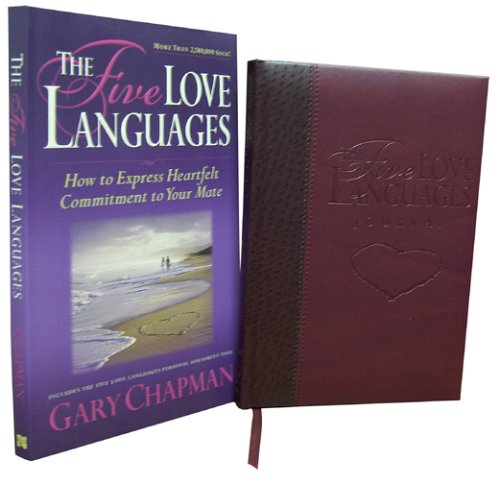
The book moves from the post-wedding decline of romantic excitement to a model of maintaining a full “love tank.” It describes five channels of affection, then offers ways to discover a partner’s preferred channel, treat love as a choice and discipline, and continue loving during conflict or emotional distance. The 2015 edition includes chapters on all five languages, discovering a primary language, love as choice, loving difficult partners, FAQs, and couple profiles.
Core ideas
The five channels
Words of affirmation means praise, encouragement, and appreciation; quality time means focused, undivided attention; receiving gifts treats objects as visible symbols of thoughtfulness; acts of service means helpful action; and physical touch includes affectionate and sexual contact.
The “love tank” model
Chapman treats emotional connection as something that can be depleted or replenished. The practical implication is to notice whether a partner feels cared for rather than assuming that one’s own way of showing love is obvious.
Intentional translation
A key shift is from “I already show love” to “Does my partner experience this as love?” The recommended behavior is to ask, observe, and practice forms of affection that matter to the other person rather than relying only on spontaneous preference.
Love as a choice
The book presents durable love less as a continuous feeling than as repeated decisions to act for a partner’s good. This makes its advice especially relevant when resentment, routine, or disappointment has replaced the early “falling in love” feeling.
Useful metaphor, weak scientific theory
The framework is memorable because it gives couples a shared vocabulary for discussing needs. However, relationship-science reviews find little support for its stronger claims: that everyone has one primary language, that there are exactly five, or that matching languages reliably produces better relationships.
Practical takeaways
- Ask a partner which specific behaviors make them feel appreciated; do not infer the answer solely from a quiz or from how they express love themselves.
- Translate vague requests into observable actions: for example, define “quality time” as phones away and a set period of attention, or define “acts of service” as particular recurring tasks.
- Offer more than one kind of care. Research suggests people generally value all five forms, and expressions of affection can help regardless of a supposed primary preference.
- Use the categories as prompts for conversation, not as fixed identities or excuses to avoid communication, repair, accountability, or conflict resolution.
- Revisit needs as circumstances change: illness, children, work pressure, grief, and changing sexual or emotional needs may alter what support is most meaningful.
Caveats and counterpoints
- The book is grounded in Chapman’s pastoral counseling observations and anecdotes, not a rigorously developed psychological theory.
- The “primary language” idea can oversimplify people. Studies commonly find that people rate all five forms positively, and the forced-choice quiz may create an artificial ranking.
- The five categories may omit important relationship behaviors, including conflict management, integrating partners into social networks, and supporting autonomy or personal goals.
- Knowing a partner’s preferred style may be helpful, but there is no strong evidence that couples with matching primary languages are more satisfied. More fundamental factors—responsiveness, trust, empathy, repair, and equitable behavior—still matter.
- The book’s marriage-centered, Christian framing and traditional examples may not fit every relationship structure, culture, or set of values.
Questions worth revisiting
- Which behaviors make me feel cared for in ordinary life, and which do I merely enjoy in theory?
- What does my partner specifically ask for that I tend to dismiss because I show love differently?
- Am I using a love-language label to clarify a need, or to stereotype, blame, or avoid a harder conversation?
- What forms of repair, respect, fairness, and emotional responsiveness are missing beyond the five categories?
- What small, repeatable action could I practice this week and then evaluate with my partner?
Return to this when…
Return to this book when a relationship has become stuck in a pattern of sincere but ineffective caring—one person believes they are giving a lot, while the other does not feel it. Keep the vocabulary and exercises; treat the fixed five-language theory as a tentative conversation tool, not a diagnosis or evidence-based formula.
Highlights
After studying scores of couples, she concluded that the average life span of a romantic obsession is two years. If it is a secretive love affair, it may last a little longer. Eventually, however, we all descend from the clouds and plant our feet on earth again. Our eyes are opened, and we see the warts of the other person. We recognize that some of his/her personality traits are actually irritating. Her behavior patterns are annoying. He has the capacity for hurt and anger, perhaps even harsh words and critical judgments. Those little traits that we overlooked when we were in love now become huge mountains. We remember Mother’s words and ask ourselves, How could I have been so foolish?
If falling in love is not real love, what is it? Dr. Peck concludes that it “is a genetically determined instinctual component of mating behavior. In other words, the temporary collapse of ego boundaries that constitutes falling in love is a stereotypic response of human beings to a configuration of internal sexual drives and external sexual stimuli, which serves to increase the probability of sexual pairing and bonding so as to enhance the survival of the species.”2
Mark Twain once said, “I can live for two months on a good compliment.” If we take Twain literally, six compliments a year would have kept his emotional love tank at the operational level. Your spouse will probably need more. One way to express love emotionally is to use words that build up. Solomon, author of the ancient Hebrew wisdom literature, wrote, “The tongue has the power of life and death.”1 Many couples have never learned the tremendous power of verbally affirming each other. Solomon further noted, “An anxious heart weighs a man down, but a kind word cheers him up.”2 Verbal compliments, or words of appreciation, are powerful communicators of love. They are best expressed in simple, straightforward statements of affirmation, such as: “You look sharp in that suit.” “Do you ever look nice in that dress! Wow!” “You must be the best potato cook in the world. I love these potatoes.” “I really appreciate your washing the dishes tonight.” “Thanks for getting the baby-sitter lined up tonight. I want you to know I don’t take that for granted.” “I really appreciate your taking the garbage out.” What would happen to the emotional climate of a marriage if the husband and wife heard such words of affirmation regularly?
You may also want to try giving indirect words of affirmation, that is, saying positive things about your spouse when he or she is not present. Eventually, someone will tell your spouse, and you will get full credit for love. Tell your wife’s mother how great your wife is. When her mother tells her what you said, it will be amplified, and you will get even more credit. Also affirm your spouse in front of others when he or she is present. When you are given public honor for an accomplishment, be sure to share the credit with your spouse. You may also try your hand at writing words of affirmation. Written words have the benefit of being read over and over again.
If your spouse’s love language is Words of Affirmation: 1. To remind yourself that “Words of Affirmation” is your spouse’s primary love language, print the following on a 3x5 card and put it on a mirror or other place where you will see it daily: Words are important! Words are important! Words are important! 2. For one week, keep a written record of all the words of affirmation you give your spouse each day. At the end of the week, sit down with your spouse and review your record. On Monday, I said: “You did a great job on this meal.” “You really look nice in that outfit.” “I really appreciate your picking up the laundry.” On Tuesday, I said: etc. You might be surprised how well (or how poorly) you are speaking words of affirmation. 1. Set a goal to give your spouse a different compliment each day for one month. If “an apple a day keeps the doctor away,” maybe a compliment a day will keep the counselor away. (You may want to record these compliments also, so you will not duplicate the statements.) 2. As you read the newspaper, magazines, and books, or watch TV or listen to radio, look for words of affirmation which people use. Observe people in conversation. Write those affirming statements in a notebook. (If they are cartoons, clip and paste them in your notebook.) Read through these periodically and select those you could use with your spouse. When you use one, note the date on which you used it. Your notebook may become your love book. Remember, words are important! 3. Write a love letter, a love paragraph, or a love sentence to your spouse, and give it quietly or with fanfare! (Chances are, when he dies, you will find your love letter tucked away in some special place.) Words are important! 4. Compliment your spouse in the presence of his parents or friends. You will get double credit: Your spouse will feel loved and the parents will feel lucky to have such a great son-in-law or daughter-in-law. 5. Look for your spouse’s strengths and tell her how much you appreciate those strengths. Chances are she will work hard to live up to her reputation. 6. Tell your children how great their mother or father is. Do this behind your spouse’s back and in her presence. 7. Write a poem describing how you feel about your spouse. If you are not a poet, choose a card that expresses how you feel. Underline special words and add a few of your own at the end. 8. If you find speaking “Words of Affirmation” is difficult for you, practice in front of a mirror. Use a cue card if you must, and remember, words are important.
central aspect of quality time is togetherness. I do not mean proximity…. Togetherness has to do with focused attention.
Quality time does not mean that we have to spend our together moments gazing into each other’s eyes. It means that we are doing something together and that we are giving our full attention to the other person. The activity in which we are both engaged is incidental. The important thing emotionally is that we are spending focused time with each other. The activity is a vehicle that creates the sense of togetherness. The important thing about the father rolling the ball to the two-year-old is not the activity itself, but the emotions that are created between the father and his child.
“I would withdraw and go about my business. What a fool I was,” he said, “what a fool! Now I realize that she didn’t want advice when she told me about her struggles at work. She wanted sympathy. She wanted me to listen, to give her attention, to let her know that I could understand the hurt, the stress, the pressure. She wanted to know that I loved her and that I was with her. She didn’t want advice; she just wanted to know that I understood. But I never tried to understand. I was too busy giving advice. What a fool. And now she is gone. Why can’t you see these things when you are going through them?” he asked. “I was blind to what was going on. Only now do I understand how I failed her.”
Many of us are like Patrick. We are trained to analyze problems and create solutions. We forget that marriage is a relationship, not a project to be completed or a problem to solve. A relationship calls for sympathetic listening with a view to understanding the other person’s thoughts, feelings, and desires. We must be willing to give advice but only when it is requested and never in a condescending
Maintain eye contact when your spouse is talking. That keeps your mind from wandering and communicates that he/she has your full attention. 2. Don’t listen to your spouse and do something else at the same time. Remember, quality time is giving someone your undivided attention. If you are watching, reading, or doing something else in which you are keenly interested and cannot turn from immediately, tell your spouse the truth. A positive approach might be, “I know you are trying to talk to me and I’m interested, but I want to give you my full attention. I can’t do that right now, but if you will give me ten minutes to finish this, I’ll sit down and listen to you.” Most spouses will respect such a request. 3. Listen for feelings. Ask yourself, “What emotion is my spouse experiencing?” When you think you have the answer, confirm it. For example, “It sounds to me like you are feeling disappointed because I forgot __________.” That gives him the chance to clarify his feelings. It also communicates that you are listening intently to what he is saying. 4. Observe body language. Clenched fists, trembling hands, tears, furrowed brows, and eye movement may give you clues as to what the other is feeling. Sometimes body language speaks one message while words speak another. Ask for clarification to make sure you know what she is really thinking and feeling. 5. Refuse to interrupt. Recent research has indicated that the average individual listens for only seventeen seconds before interrupting and interjecting his own ideas. If I give you my undivided attention while you are talking, I will refrain from defending myself or hurling accusations at you or dogmatically stating my position. My goal is to discover your thoughts and feelings. My objective is not to defend myself or to set you straight. It is to understand you.
If your spouse’s love language is Quality Time: 1. Take a walk together through the old neighborhood where one of you grew up. Ask questions about your spouse’s childhood. Ask, “What are the fun memories of your childhood?” Then, “What was most painful about your childhood?” 2. Go to the city park and rent bicycles. Ride until you are tired, then sit and watch the ducks. When you get tired of the quacks, roll on to the rose garden. Learn each other’s favorite color of rose and why. (If the bikes are too much, take turns pulling each other in a little red wagon.) 3. In the spring or summer make a luncheon appointment with your spouse. Meet him and drive to the local cemetery. Spread your tablecloth and eat your sandwiches and thank God that you are still alive. Share with each other one thing you would like to do before you die. 4. Ask your spouse for a list of five activities that he would enjoy doing with you. Make plans to do one of them each month for the next five months. If money is a problem, space the freebies between the “we can’t afford this” events. 5. Ask your spouse where she most enjoys sitting when talking with you. The next week, call her one afternoon and say, “I want to make a date with you one evening this week to sit on the yellow sofa and talk. Which night and what time would be best for you?” (Don’t say “yellow sofa” if her favorite place is in the Jacuzzi!) 6. Think of an activity your spouse enjoys, but which brings little pleasure to you: football, symphony, jazz concert, or TV sleeping. Tell your spouse that you are trying to broaden your horizons and would like to join her in this activity sometime this month. Set a date and give it your best effort. Ask questions about the activity at break times. 7. Plan a weekend getaway just for the two of you sometime within the next six months. Be sure it is a weekend when you won’t have to call the office or turn on the TV for a report every thirty minutes. Focus on relaxing together doing what one or both of you enjoy. 8. Make time every day to share with each other some of the events of the day. When you spend more time watching the news than you do listening to each other, you end up more concerned about Bosnia than about your spouse. 9. Have a “Let’s review our history” evening once every three months. Set aside an hour to focus on your history. Select five questions each of you will answer, such as: (1) Who was your best and worst teacher in school and why? (2) When did you feel your parents were proud of you? (3) What is the worst mistake your mother ever made? (4) What is the worst mistake your father ever made? (5) What do you remember about the religious aspect of your childhood? Each evening, agree on your five questions before you begin your sharing. At the end of the five questions, stop and decide upon the five questions you will ask next time. 10. Camp out by the fireplace (or an orange lamp). Spread your blankets and pillows on the floor. Get your Pepsi and popcorn. Pretend the TV is broken and talk like you used to when you were dating. Talk till the sun comes up or something else happens. If the floor gets too hard, go back upstairs and go to bed. You won’t forget this evening!
If your spouse’s love language is Receiving Gifts: 1. Try a parade of gifts: Leave a box of candy for your spouse in the morning (yogurt candy if health is an issue); have flowers delivered in the afternoon (unless your spouse is allergic to flowers); give him a shirt in the evening. When your spouse asks, “What is going on?” you respond: “Just trying to fill your love tank!” 2. Let nature be your guide: The next time you take a walk through the neighborhood, keep your eyes open for a gift for your spouse. It may be a stone, a stick, or a flower (be sure to ask your neighbor, if the flower is not in your own yard). You may even attach special meaning to your natural gift. For example, a smooth stone may symbolize your marriage with many of the rough places now polished. A rose may remind you of the beauty you see in your spouse. 3. Discover the value of “handmade originals.” Make a gift for your spouse. This may require you to enroll in an art or crafts class: ceramics, silversmithing, painting, wood carving, etc. Your main purpose for enrolling is to make your spouse a gift. A handmade gift often becomes a family heirloom. 4. Give your spouse a gift every day for one week. It need not be a special week, just any week. I promise you it will become “The Week That Was!” If you are really energetic, you can make it “The Month That Was!” No—your spouse will not expect you to keep this up for a lifetime. 5. Keep a “Gift Idea Notebook.” Every time you hear your spouse say: “I really like that,” or “Oh, I would really like to have one of those!” write it down in your notebook. Listen carefully and you will get quite a list. This will serve as a guide when you get ready to select a gift. To prime the pump, you may look through a shopping catalog together. 6. “Help! I’m confused!” If you really don’t have a clue as to how to select a gift for your spouse, ask a friend or family member who knows your wife or husband well to help you. Most people enjoy making a friend happy by getting them a gift, especially if it is with your money. 7. Offer the gift of presence. Say to your spouse: “I want to offer the gift of my presence at any event or on any occasion you would like this month. You tell me when, and I will make every effort to be there.” Get ready! Be positive! Who knows, you may enjoy the symphony or the hockey game. 8. Give your spouse a book and agree to read it yourself. Then offer to discuss together a chapter each week. Don’t choose a book that you want him or her to read. Choose a book on a topic in which you know your spouse has an interest: sex, football, needlework, money management, child rearing, religion, or backpacking. 9. Give a lasting tribute. Give a substantial gift to your spouse’s church or favorite charity in honor of her birthday, your anniversary, or another occasion. Ask the charity to send a card informing your spouse of what you have done. The church or charity will be excited and so will your spouse. 10. Give a living gift. Purchase and plant a tree or flowering shrub in honor of your spouse. You may plant it in your own yard, where you can water and nurture it, or in a public park or forest where others can also enjoy it. You will get credit for this one year after year. If it is an apple tree, you may live long enough to get an apple. One warning: Don’t plant a crab apple tree! chapter seven
“You are right,” I said, “and no one likes to be forced to do anything. In fact, love is always freely given. Love cannot be demanded. We can request things of each other, but we must never demand anything. Requests give direction to love, but demands stop the flow of love.”
If your spouse’s love language is Acts of Service: 1. Make a list of all the requests your spouse has made of you over the past few weeks. Select one of these each week and do it as an expression of love. 2. Cut out some heart-shaped note cards and print the following: “Today I will show my love for you by…” Complete the sentence with one of the following: mowing the lawn, vacuuming the floor, washing dishes, taking the dog for a walk, cleaning the fish bowl, etc. Give your spouse a love note accompanied by the act of service every three days for a month. 3. Ask your spouse to make a list of ten things he or she would like for you to do during the next month. Then ask your spouse to prioritize those by numbering them 1–10, with 1 being the most important and 10 being least important. Use this list to plan your strategy for a month of love. (Get ready to live with a happy spouse.) 4. While your spouse is away, get the children to help you with some act of service for him. When he walks in the door, join the children in shouting “Surprise! We love you!” Then share your act of service. 5. What one act of service has your spouse nagged about consistently? Why not decide to see the nag as a tag? Your spouse is tagging this as really important to him or her. If you choose to do it as an expression of love, it is worth more than a thousand roses. 6. If your spouse’s requests for acts of service come across as nags or put-downs, try writing them in words that would be less offensive to you. Share this revised wording with your spouse. For example, “Honey, I love you so much. You are a hardworking man and I really appreciate you. I’d love to thank you in advance for mowing the lawn this week before Thursday when Mary and Bob come over for dinner.” Your husband might even respond: “Where is the lawn mower, I can’t wait!” Try it and see. 7. Do some major acts of service like washing the car, cooking a meal, painting a bedroom, or washing the deck, and then post a sign that reads, “To (spouse’s name) with love,” and sign your name. 8. If you have more money than time, hire someone to do the acts of service that you know your spouse would like for you to do, such as the lawn, the housecleaning, the car washing, the laundry. If you take the responsibility for getting it done, you will be speaking love even when you are away. 9. Ask your spouse to tell you the daily acts of service that would really speak love to him or her. These might include such things as putting your dirty clothes in the hamper, getting the hairs out of the sink, hanging up your clothes at night, closing the door when you go outside, preparing a meal, and washing the dishes. Seek to work these into your daily schedule. “Little things” really do mean a lot. 10. Periodically ask your spouse, “If I could do one special act of service this week, what would you request?” If possible, do it and watch your spouse’s love tank fill up!
If your spouse’s love language is Physical Touch: 1. As you walk from the car to the shopping mall, reach out and hold your spouse’s hand. (Unless, of course, you have three preschool children with you.) 2. While eating together, let your knee or foot drift over and touch your spouse. Be careful you are not rubbing the dog. 3. Walk up to your spouse and say, “Have I told you lately that I love you?” Take her in your arms and hug her while you rub her back and continue. “You are the greatest!” (Resist the temptation to rush to the bedroom.) Untangle yourself and move on to the next thing. 4. While your spouse is seated, walk up behind her and initiate a shoulder massage. Continue for five minutes unless your spouse begs you to stop. 5. If you sit together in church, when the minister calls for prayer reach over and hold your spouse’s hand. 6. Initiate sex by giving your spouse a foot massage. Continue to other parts of the body as long as it brings pleasure to your spouse. 7. Run the water in the Jacuzzi and announce to your spouse that you are looking for a partner to join you. 8. Riding down the road together, reach over and touch your spouse on the leg, stomach, arm, hand, or…If he or she says “stop!” by all means put on the brakes. 9. When family or friends are visiting, touch your spouse in their presence. A hug, running your hand along his or her arm, putting your arm around his as you stand talking, or simply placing your hand on her shoulder can earn double emotional points. It says, “Even with all these people in our house, I still see you.” 10. When your spouse arrives at home, meet him or her one step earlier than usual and give your mate a big hug. If you normally meet at the door, go to the garage. If you normally meet in the garage, go to the street. Then, as the car turns into the driveway, stop your mate, lean into the lowered window, and give him or her a kiss. If you normally meet at the street, hide in the parking area and step out as your mate opens the door and give him or her a hug. (Be sure your mate sees you before you hug him or her.)
I have suggested three ways to discover your own primary love language. 1. What does your spouse do or fail to do that hurts you most deeply? The opposite of what hurts you most is probably your love language. 2. What have you most often requested of your spouse? The thing you have most often requested is likely the thing that would make you feel most loved. 3. In what way do you regularly express love to your spouse? Your method of expressing love may be an indication that that would also make you feel loved.
References
- psychologytoday.com
- Is There Science Behind the Five Love Languages?
- jeevithameyyappan.com
- sciencefocus.com
- livescience.com
- psychologytoday.com
- simplypsychology.com
- pubmed.ncbi.nlm.nih.gov
- washingtonpost.com
- Popular Psychology Through a Scientific Lens: Evaluating Love Languages From a Relationship Science Perspective
- books.apple.com
- 5lovelanguages.com
- cr-assets.localretailconnect.com