
In one sentence
Daytripper argues that a life is understood less through one grand achievement than through the accumulated intensity of relationships, choices, memories, and seemingly ordinary days. Its repeated deaths make mortality a narrative lens: each possible ending changes how the reader sees what came before and what might have followed.
Overview
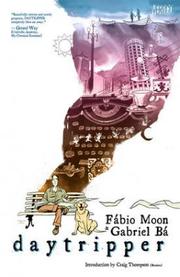
The book centers on Brás, a São Paulo writer who earns a living composing obituaries while struggling with his own ambitions and with the influence of his celebrated novelist father. Chapters visit different ages and turning points rather than proceeding chronologically. The structure resembles memory: associative, selective, and capable of making later knowledge transform earlier moments.
Core ideas
Mortality makes the present legible
Brás’s recurring deaths are less a supernatural mechanism to decode than a repeated reminder that any moment can contain a whole life’s emotional weight. The book asks what changes when an event is treated as potentially final.
Ordinary milestones matter
Love, friendship, family arguments, professional uncertainty, parenthood, travel, and private disappointments receive the same imaginative seriousness as conventional “turning points.” Meaning emerges from attention, not from status alone.
The tension between inheritance and self-definition
Brás’s relationship with his famous father makes artistic ambition inseparable from comparison, admiration, resentment, and the desire to become distinct. Writing obituaries also gives him an intimate but uneasy proximity to other people’s completed lives.
Memory is nonlinear and relational
The chronological jumps do not simply obscure information; they reproduce the way people revise the meaning of earlier experiences as relationships develop and consequences become visible. The authors have identified Brazilian literary influences whose nonlinear, memory-like structures helped shape the book.
A Brazilian, intimate worldview
The settings, family life, landscapes, and social texture ground the existential premise in a specific Brazilian context rather than presenting mortality as an abstract philosophical problem. The visual approach combines expressive drawing with color and occasional surreal touches.
The form depends on reader participation
Because comics place images, words, and gaps beside one another, the reader must infer emotional continuities across panels and across time. Repeated situations gain new significance through juxtaposition rather than exposition.
Practical takeaways
- Notice which apparently minor days remain vivid in memory; the book treats these as evidence of significance, not distractions from a “real” life.
- Separate achievement from identity. Brás’s professional and artistic struggles suggest that a vocation can be important without being the sole measure of a person.
- Relationships are not background conditions for a life story; they are among the events that make the story worth telling.
- When revisiting the past, remember that new knowledge changes interpretation without necessarily erasing the original experience.
- The book invites a reflective question rather than a command: if today were remembered as unusually important, what would make it so?
Caveats and counterpoints
- The recurring-death premise can feel emotionally manipulative to some readers; its effect depends on accepting repetition as meditation rather than seeking a conventional mystery or consistent alternate-world logic.
- The book’s affirmation of everyday life may read as tender and profound to some readers, but as sentimental or overly tidy to others.
- The catalogue description is incomplete: the work is by both Fábio Moon and Gabriel Bá, and Brás’s surname is generally rendered as “Domingos,” not “Dominguez.”
- These notes avoid the ending and do not assume access to any particular edition.
Questions worth revisiting
- Which moments in Brás’s life feel genuinely formative, and which only become important because of how they are framed?
- Does the repeated death structure deepen the characters, or does it chiefly shape the reader’s emotions?
- How does Brás’s work writing obituaries influence his understanding of his own life?
- Is the book more concerned with accepting death or with resisting the habit of postponing life?
- What does the nonlinear order reveal that a straightforward biography would conceal?
Return to this when…
Return to Daytripper when thinking about mortality, memory, family inheritance, parenthood, creative ambition, or the difference between a life’s visible accomplishments and its privately meaningful moments.
References
- Gabriel Bá and Fábio Moon reveal their literary influences | DC
- supersummary.com
- gizmodo.com
- planetebd.com
- Daytripper by Gabriel Ba, Fabio Moon: 9781401229696 | PenguinRandomHouse.com: Books
- anais2ajornada.eca.usp.br
- Daytripper by Fabio Moon, Gabriel Ba
- archiv.comicgate.de
- latinamericanliteraturetoday.org
- madmoizelle.com
- repositorio.uscs.edu.br
- supersummary.com