
In one sentence
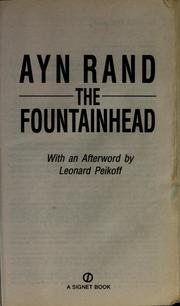
The novel argues that civilization depends on independent creators who think and work from their own judgment, while conformity and dependence on public approval produce spiritual and artistic corruption. Rand presents this as an ethical conflict within individuals—not simply a political dispute between social systems.
Overview
Set largely in the architectural and publishing worlds of New York, the story uses professional competition, romantic entanglements, journalism, and public controversy to test different ways of living. Howard Roark is Rand’s ideal of the “first-hander”: someone who creates from personal conviction. Peter Keating, Ellsworth Toohey, and Gail Wynand represent different forms of second-hand living—borrowing standards, manipulating opinion, or mistaking popularity for power. Dominique Francon complicates the opposition between idealism and compromise through her attraction to Roark and hostility toward a society she considers incapable of recognizing excellence. The plot is deliberately philosophical and symbolic rather than strictly realistic.
Core ideas
Individualism versus collectivism
Rand’s stated theme is individualism versus collectivism “in man’s soul.” The important question is whether a person forms judgments independently or lets institutions, crowds, traditions, or other personalities supply the standards by which life is evaluated.
Architecture as moral metaphor
Architecture makes inner principles visible: a building can express the integrity of its creator or become a compromise assembled from borrowed conventions. The novel treats creative work as purposeful achievement, not merely decoration or service to prevailing taste.
The “second-hander”
Rand’s distinctive term describes people who derive their identity and values from others. Keating seeks recognition, Toohey seeks influence through other people’s dependence, and Wynand discovers that commanding public opinion is not the same as being independent of it.
Integrity and compromise
Roark’s integrity is defined as refusing to make his work contradict his judgment. The novel sharply distinguishes principled cooperation from surrender: working with clients or colleagues is acceptable, but allowing approval, money, or reputation to dictate the substance of one’s work is presented as self-betrayal.
Egoism, altruism, and relationships
Rand uses the characters’ intimate and professional relationships to argue that genuine love and cooperation should arise between independent people, not from duty, pity, guilt, or the demand that one person live for another. This is one of the book’s most controversial philosophical claims.
A novel of ideas—and its limits
The book’s power comes from its clarity, intensity, memorable conflicts, and close integration of theme with plot. Its weakness, for many critics, is the same feature: characters can seem like embodiments of doctrines, speeches can become didactic, and opponents of Rand’s position are often caricatured. Critical responses have consequently ranged from admiration for its force to rejection of its simplifications.
Practical takeaways
- Notice where your standards come from: direct judgment, inherited convention, group approval, or fear of disapproval.
- Separate principled collaboration from compromise that changes the substance of what you believe or make.
- The novel is useful as a provocation about creative integrity, but less reliable as a balanced account of dependence, compassion, institutions, or collective action.
- When revisiting it, compare the book’s ideal of independence with the practical reality that creative work is usually sustained by communities, traditions, clients, and forms of mutual responsibility.
- Pay attention to how Rand links aesthetic judgment, moral worth, and personal success; that connection is central to the novel and also a major point for criticism.
Caveats and counterpoints
- The novel is openly philosophical and polemical, not a neutral exploration of competing ethical systems.
- Its treatment of altruism and collective responsibility is intentionally adversarial and has been criticized as simplistic or politically loaded.
- The character dynamics—especially the sexual politics surrounding Dominique and Roark—can feel coercive or troubling to contemporary readers; adaptations and critics have often reexamined this material rather than accepting Rand’s framing.
- Avoid treating Roark as a realistic model of architectural practice. He functions primarily as a philosophical and symbolic hero, while the architecture world is shaped to serve the novel’s argument.
Questions worth revisiting
- Which forms of compromise does the novel distinguish poorly, if at all?
- Does independence require isolation, or can it coexist with obligation and mutual dependence?
- Are the novel’s antagonists genuinely persuasive opponents, or mainly instruments for Rand’s argument?
- What does Dominique understand about society that Roark does not—and what does she misunderstand about herself?
- Does the novel earn its claim that creative excellence and moral excellence are inseparable?
- How much of the book’s continuing appeal comes from its philosophy, and how much from its fantasy of uncompromised vocation?
Return to this when…
Return to it when thinking about artistic integrity, self-authorship, public opinion, ambition, or the tension between individual excellence and social responsibility. It is especially worth rereading alongside a serious critique, since the novel’s central ideas are clearest when separated from its more sweeping assumptions.
Highlights
“If you wish. I want to be an architect, not an archeologist. I see no purpose in doing Renaissance villas. Why learn to design them, when I’ll never build them?”
“Do you mean to tell me that you’re thinking seriously of building that way, when and if you are an architect?” “Yes.” “My dear fellow, who will let you?” “That’s not the point. The point is, who will stop me?”
Roark looked at him; Roark’s fingers moved in slow rotation, beating against the steps. “If you want my advice, Peter,” he said at last, “you’ve made a mistake already. By asking me. By asking anyone. Never ask people. Not about your work. Don’t you know what you want? How can you stand it, not to know?” “You see, that’s what I admire about you, Howard. You always know.” “Drop the compliments.” “But I mean it. How do you always manage to decide?” “How can you let others decide for you?” “But you see, I’m not sure, Howard. I’m never sure of myself. I don’t know whether I’m as good as they all tell me I am. I wouldn’t admit that to anyone but you. I think it’s because you’re always so sure that I ...”
“Peter, you know how I feel about either one of your opportunities. Take your choice of the lesser evil. What will you learn at the Beaux-Arts? Only more Renaissance palaces and operetta settings. They’ll kill everything you might have in you. You do good work, once in a while, when somebody lets you. If you really want to learn, go to work. Francon is a bastard and a fool, but you will be building. It will prepare you for going on your own that much sooner.”
You’ve seen buildings that look as if they contained a single large hall, they have solid columns and single, solid windows six floors high. But you enter and find six stories inside. Or buildings that contain a single hall, but with a façade cut up into floor lines, band courses, tiers of windows. Do you understand the difference? Your house is made by its own needs. Those others are made by the need to impress. The determining motive of your house is in the house. The determining motive of the other is in the audience.”
“I take the only desire one can really permit oneself. Freedom, Alvah, freedom.” “You call that freedom?” “To ask nothing. To expect nothing. To depend on nothing.”
He tried to explain and to convince. He knew, while he spoke, that it was useless, because his words sounded as if they were hitting a vacuum. There was no such person as Mrs. Wayne Wilmot; there was only a shell containing the opinions of her friends, the picture postcards she had seen, the novels of country squires she had read; it was this that he had to address, this immateriality which could not hear him or answer, deaf and impersonal like a wad of cotton.
“I know I don’t. But that’s what you believe, isn’t it? Now take a human body. Why wouldn’t you like to see a human body with a curling tail with a crest of ostrich feathers at the end? And with ears shaped like acanthus leaves? It would be ornamental, you know, instead of the stark, bare ugliness we have now. Well, why don’t you like the idea? Because it would be useless and pointless. Because the beauty of the human body is that it hasn’t a single muscle which doesn’t serve its purpose; that there’s not a line wasted; that every detail of it fits one idea, the idea of a man and the life of a man. Will you tell me why, when it comes to a building, you don’t want it to look as if it had any sense or purpose, you want to choke it with trimmings, you want to sacrifice its purpose to its envelope—not knowing even why you want that kind of an envelope? You want it to look like a hybrid beast produced by crossing the bastards of ten different species until you get a creature without guts, without heart or brain, a creature all pelt, tail, claws and feathers? Why? You must tell me, because I’ve never been able to understand it.”
“Tell me, Mr. Janss, do you really think that Greek columns and fruit baskets are beautiful on a modern, steel office building?” “I don’t know that I’ve ever thought anything about why a building was beautiful, one way or another,” Mr. Janss confessed, “but I guess that’s what the public wants.” “Why do you suppose they want it?” “I don’t know.” “Then why should you care what they want?” “You’ve got to consider the public.” “Don’t you know that most people take most things because that’s what’s given them, and they have no opinion whatever? Do you wish to be guided by what they expect you to think they think or by your own judgment?” “You can’t force it down their throats.” “You don’t have to. You must only be patient. Because on your side you have reason—oh, I know, it’s something no one really wants to have on his side—and against you, you have just a vague, fat, blind inertia.” “Why do you think that I don’t want reason on my side?” “It’s not you, Mr. Janss. It’s the way most people feel. They have to take a chance, everything they do is taking a chance, but they feel so much safer when they take it on something they know to be ugly, vain and stupid.”
He spoke for a long time. He explained why this structure could not have a Classic motive on its façade. He explained why an honest building, like an honest man, had to be of one piece and one faith; what constituted the life source, the idea in any existing thing or creature, and why—if one smallest part committed treason to that idea—the thing or the creature was dead; and why the good, the high and the noble on earth was only that which kept its integrity. The chairman interrupted him: “Mr. Roark, I agree with you. There’s no answer to what you’re saying. But unfortunately, in practical life, one can’t always be so flawlessly consistent. There’s always the incalculable human element of emotion. We can’t fight that with cold logic. This discussion is actually superfluous. I can agree with you, but I can’t help you. The matter is closed. It was the board’s final decision—after more than usually prolonged consideration, as you know.”
“It’s a secret, Howard. A rare one. I’ll give it to you free of charge with my compliments: always be what people want you to be. Then you’ve got them where you want them. I’m giving it free because you’ll never make use of it. You’ll never know how. You’re brilliant in some respects, Howard, I’ve always said that—and terribly stupid in others.”
I mean that groups of men are vacuums. Great big empty nothings. They say we can’t visualize a total nothing. Hell, sit at any committee meeting. The point is only who chooses to fill that nothing. It’s a tough battle. The toughest. It’s simple enough to fight any enemy, so long as he’s there to be fought. But when he isn’t ... Don’t look at me like that, as if I were crazy. You ought to know. You’ve fought a vacuum all your life.”
“Why are you a good architect? Because you have certain standards of what is good, and they’re your own, and you stand by them. I want a good hotel, and I have certain standards of what is good, and they’re my own, and you’re the one who can give me what I want. And when I fight for you, I’m doing—on my side of it—just what you’re doing when you design a building. Do you think integrity is the monopoly of the artist? And what, incidentally, do you think integrity is? The ability not to pick a watch out of your neighbor’s pocket? No, it’s not as easy as that. If that were all, I’d say ninety-five percent of humanity were honest, upright men. Only, as you can see, they aren’t. Integrity is the ability to stand by an idea. That presupposes the ability to think. Thinking is something one doesn’t borrow or pawn. And yet, if I were asked to choose a symbol for humanity as we know it, I wouldn’t choose a cross nor an eagle nor a lion and unicorn. I’d choose three gilded balls.”
The Banner was permitted to strain truth, taste and credibility, but not its readers’ brain power. Its enormous headlines, glaring pictures and oversimplified text hit the senses and entered men’s consciousness without any necessity for an intermediary process of reason, like food shot through the rectum, requiring no digestion.
The Palmers bore you and the Eddingtons snub you. But you have to flatter people whom you despise in order to impress other people who despise you.”
When he received the invitation, Roark appeared before the committee and explained that he would be glad to design the fair—alone. “But you can’t be serious, Mr. Roark,” the chairman declared. “After all, with a stupendous undertaking of this nature, we want the best that can be had. I mean, two heads are better than one, you know, and eight heads ... why, you can see for yourself—the best talents of the country, the brightest names—you know, friendly consultation, co-operation and collaboration—you know what makes great achievements.” “I do.” “Then you realize ...” “If you want me, you’ll have to let me do it all, alone. I don’t work with councils.” “You wish to reject an opportunity like this, a spot in history, a chance of world fame, practically a chance of immortality ...” “I don’t work with collectives. I don’t consult, I don’t co-operate, I don’t collaborate.”
“What I mean is, what makes people unhappy is not too little choice, but too much,” said Mitchell Layton. “Having to decide, always to decide, torn every which way all of the time. Now in a society of pattern, a man could feel safe. Nobody would come to him all the time pestering him to do something. Nobody would have to do anything. What I mean is, of course, except working for the common good.”
“I mean that you can follow one of two procedures. You can devote your life to pulling out each single weed as it comes up—and then ten lifetimes won’t be enough for the job. Or you can prepare your soil in such a manner—by spreading a certain chemical, let us say—that it will be impossible for weeds to grow. This last is faster. I say ‘weed’ because it is the conventional symbolism and will not frighten you. The same technique, of course, holds true in the case of any other living plant you may wish to eliminate: buckwheat, potatoes, oranges, orchids or morning glories.”
“Howard—anything you ask. Anything. I’d sell my soul ...” “That’s the sort of thing I want you to understand. To sell your soul is the easiest thing in the world. That’s what everybody does every hour of his life. If I asked you to keep your soul—would you understand why that’s much harder?”
“What principle?” “The thing that is destroying the world. The thing you were talking about. Actual selflessness.” “The ideal which they say does not exist?” “They’re wrong. It does exist—though not in the way they imagine. It’s what I couldn’t understand about people for a long time. They have no self. They live within others. They live second-hand. Look at Peter Keating.” “You look at him. I hate his guts.” “I’ve looked at him—at what’s left of him—and it’s helped me to understand. He’s paying the price and wondering for what sin and telling himself that he’s been too selfish. In what act or thought of his has there ever been a self? What was his aim in life? Greatness—in other people’s eyes. Fame, admiration, envy—all that which comes from others. Others dictated his convictions, which he did not hold, but he was satisfied that others believed he held them. Others were his motive power and his prime concern. He didn’t want to be great, but to be thought great. He didn’t want to build, but to be admired as a builder. He borrowed from others in order to make an impression on others. There’s your actual selflessness. It’s his ego that he’s betrayed and given up. But everybody calls him selfish.” “That’s the pattern most people follow.” “Yes! And isn’t that the root of every despicable action? Not selfishness, but precisely the absence of a self. Look at them. The man who cheats and lies, but preserves a respectable front. He knows himself to be dishonest, but others think he’s honest and he derives his self-respect from that, second-hand. The man who takes credit for an achievement which is not his own. He knows himself to be mediocre, but he’s great in the eyes of others. The frustrated wretch who professes love for the inferior and clings to those less endowed, in order to establish his own superiority by comparison. The man whose sole aim is to make money. Now I don’t see anything evil in a desire to make money. But money is only a means to some end. If a man wants it for a personal purpose—to invest in his industry, to create, to study, to travel, to enjoy luxury—he’s completely moral. But the men who place money first go much beyond that. Personal luxury is a limited endeavor. What they want is ostentation: to show, to stun, to entertain, to impress others. They’re second-handers. Look at our so-called cultural endeavors. A lecturer who spouts some borrowed rehash of nothing at all that means nothing at all to him—and the people who listen and don’t give a damn, but sit there in order to tell their friends that they have attended a lecture by a famous name. All second-handers.” “If I were Ellsworth Toohey, I’d say: aren’t you making out a case against selfishness? Aren’t they all acting on a selfish motive—to be noticed, liked, admired?” “—by others. At the price of their own self-respect. In the realm of greatest importance—the realm of values, of judgment, of spirit, of thought—they place others above self, in the exact manner which altruism demands. A truly selfish man cannot be affected by the approval of others. He doesn’t need it.” “I think Toohey understands that. That’s what helps him spread his vicious nonsense. Just weakness and cowardice. It’s so easy to run to others. It’s so hard to stand on one’s own record. You can fake virtue for an audience. You can’t fake it in your own eyes. Your ego is your strictest judge. They run from it. They spend their lives running. It’s easier to donate a few thousands to charity and think oneself noble than to base self-respect on personal standards of personal achievement. It’s simple to seek substitutes for competence—such easy substitutes: love, charm, kindness, charity. But there is no substitute for competence.” “That, precisely, is the deadliness of second-handers. They have no concern for facts, ideas, work. They’re concerned only with people. They don’t ask: ‘Is this true?’ They ask: ‘Is this what others think is true?’ Not to judge, but to repeat. Not to do, but to give the impression of doing. Not creation, but show. Not ability, but friendship. Not merit, but pull. What would happen to the world without those who do, think, work, produce? Those are the egotists. You don’t think through another’s brain and you don’t work through another’s hands. When you suspend your faculty of independent judgment, you suspend consciousness. To stop consciousness is to stop life. Second-handers have no sense of reality. Their reality is not within them, but somewhere in that space which divides one human body from another. Not an entity, but a relation—anchored to nothing. That’s the emptiness I couldn’t understand in people. That’s what stopped me whenever I faced a committee. Men without an ego. Opinion without a rational process. Motion without brakes or motor. Power without responsibility. The second-hander acts, but the source of his actions is scattered in every other living person. It’s everywhere and nowhere and you can’t reason with him. He’s not open to reason. You can’t speak to him—he can’t hear. You’re tried by an empty bench. A blind mass running amuck, to crush you without sense or purpose. Steve Mallory couldn’t define the monster, but he knew. That’s the drooling beast he fears. The second-hander.” “I think your second-handers understand this, try as they might not to admit it to themselves. Notice how they’ll accept anything except a man who stands alone. They recognize him at once. By instinct. There’s a special, insidious kind of hatred for him. They forgive criminals. They admire dictators. Crime and violence are a tie. A form of mutual dependence. They need ties. They’ve got to force their miserable little personalities on every single person they meet. The independent man kills them—because they don’t exist within him and that’s the only form of existence they know. Notice the malignant kind of resentment against any idea that propounds independence. Notice the malice toward an independent man. Look back at your own life, Howard, and at the people you’ve met. They know. They’re afraid. You’re a reproach.” “That’s because some sense of dignity always remains in them. They’re still human beings. But they’ve been taught to seek themselves in others. Yet no man can achieve the kind of absolute humility that would need no self-esteem in any form. He wouldn’t survive. So after centuries of being pounded with the doctrine that altruism is the ultimate ideal, men have accepted it in the only way it could be accepted. By seeking self-esteem through others. By living second-hand. And it has opened the way for every kind of horror. It has become the dreadful form of selfishness which a truly selfish man couldn’t have conceived. And now, to cure a world perishing from selflessness, we’re asked to destroy the self. Listen to what is being preached today. Look at everyone around us. You’ve wondered why they suffer, why they seek happiness and never find it. If any man stopped and asked himself whether he’s ever held a truly personal desire, he’d find the answer. He’d see that all his wishes, his efforts, his dreams, his ambitions are motivated by other men. He’s not really struggling even for material wealth, but for the second-hander’s delusion—prestige. A stamp of approval, not his own. He can find no joy in the struggle and no joy when he has succeeded. He can’t say about a single thing: ‘This is what I wanted because I wanted it, not because it made my neighbors gape at me.’ Then he wonders why he’s unhappy. Every form of happiness is private. Our greatest moments are personal, self-motivated, not to be touched. The things which are sacred or precious to us are the things we withdraw from promiscuous sharing. But now we are taught to throw everything within us into public light and common pawing. To seek joy in meeting halls. We haven’t even got a word for the quality I mean—for the self-sufficiency of man’s spirit. It’s difficult to call it selfishness or egotism, the words have been perverted, they’ve come to mean Peter Keating. Gail, I think the only cardinal evil on earth is that of placing your prime concern within other men. I’ve always demanded a certain quality in the people I liked. I’ve always recognized it at once—and it’s the only quality I respect in men. I chose my friends by that. Now I know what it is. A self-sufficient ego. Nothing else matters.” “I’m glad you admit that you have friends.” “I even admit that I love them. But I couldn’t love them if they were my chief reason for living. Do you notice that Peter Keating hasn’t a single friend left? Do you see why? If one doesn’t respect oneself one can have neither love nor respect for others.” “To hell with Peter Keating. I’m thinking of you—and your friends.” Roark smiled. “Gail, if this boat were sinking, I’d give my life to save you. Not because it’s any kind of duty. Only because I like you, for reasons and standards of my own. I could die for you. But I couldn’t and wouldn’t live for you.” “Howard, what were the reasons and standards?” Roark looked at him and realized that he had said all the things he had tried not to say to Wynand. He answered: “That you weren’t born to be a second-hander.” Wynand smiled. He heard the sentence—and nothing else. Afterward, when Wynand had gone below to his cabin, Roark remained alone on deck. He stood at the rail, staring out at the ocean, at nothing. He thought: I haven’t mentioned to him the worst second-hander of all—the man who goes after power.
“We have come to hold, in a kind of mawkish stupor, that greatness is to be gauged by self-sacrifice. Self-sacrifice, we drool, is the ultimate virtue. Let’s stop and think for a moment. Is sacrifice a virtue? Can a man sacrifice his integrity? His honor? His freedom? His ideal? His convictions? The honesty of his feeling? The independence of his thought? But these are a man’s supreme possessions. Anything he gives up for them is not a sacrifice but an easy bargain. They, however, are above sacrificing to any cause or consideration whatsoever. Should we not, then, stop preaching dangerous and vicious nonsense? Self-sacrifice? But it is precisely the self that cannot and must not be sacrificed. It is the unsacrificed self that we must respect in man above all.”
The world I want. A world of obedience and of unity. A world where the thought of each man will not be his own, but an attempt to guess the thought in the brain of his neighbor who’ll have no thought of his own but an attempt to guess the thought of the next neighbor who’ll have no thought—and so on, Peter, around the globe. Since all must agree with all. A world where no man will hold a desire for himself, but will direct all his efforts to satisfy the desires of his neighbor who’ll have no desires except to satisfy the desires of the next neighbor who’ll have no desires—around the globe, Peter. Since all must serve all. A world in which man will not work for so innocent an incentive as money, but for that headless monster—prestige. The approval of his fellows—their good opinion—the opinion of men who’ll be allowed to hold no opinion. An octopus, all tentacles and no brain. Judgment, Peter? Not judgment, but public polls. An average drawn upon zeroes—since no individuality will be permitted. A world with its motor cut off and a single heart, pumped by hand. My hand—and the hands of a few, a very few other men like me.
You held a leash. A leash is only a rope with a noose at both ends.
“No creator was prompted by a desire to serve his brothers, for his brothers rejected the gift he offered and that gift destroyed the slothful routine of their lives. His truth was his only motive. His own truth, and his own work to achieve it in his own way. A symphony, a book, an engine, a philosophy, an airplane or a building—that was his goal and his life. Not those who heard, read, operated, believed, flew or inhabited the thing he had created. The creation, not its users. The creation, not the benefits others derived from it. The creation which gave form to his truth. He held his truth above all things and against all men.
“But the mind is an attribute of the individual. There is no such thing as a collective brain. There is no such thing as a collective thought. An agreement reached by a group of men is only a compromise or an average drawn upon many individual thoughts. It is a secondary consequence. The primary act—the process of reason—must be performed by each man alone. We can divide a meal among many men. We cannot digest it in a collective stomach. No man can use his lungs to breathe for another man. No man can use his brain to think for another. All the functions of body and spirit are private. They cannot be shared or transferred.
“Men have been taught that the highest virtue is not to achieve, but to give. Yet one cannot give that which has not been created. Creation comes before distribution—or there will be nothing to distribute. The need of the creator comes before the need of any possible beneficiary. Yet we are taught to admire the second-hander who dispenses gifts he has not produced above the man who made the gifts possible. We praise an act of charity. We shrug at an act of achievement.
“In all proper relationships there is no sacrifice of anyone to anyone. An architect needs clients, but he does not subordinate his work to their wishes. They need him, but they do not order a house just to give him a commission. Men exchange their work by free, mutual consent to mutual advantage when their personal interests agree and they both desire the exchange. If they do not desire it, they are not forced to deal with each other. They seek further. This is the only possible form of relationship between equals. Anything else is a relation of slave to master, or victim to executioner.